| Availability: | |
|---|---|
| Quantity: | |
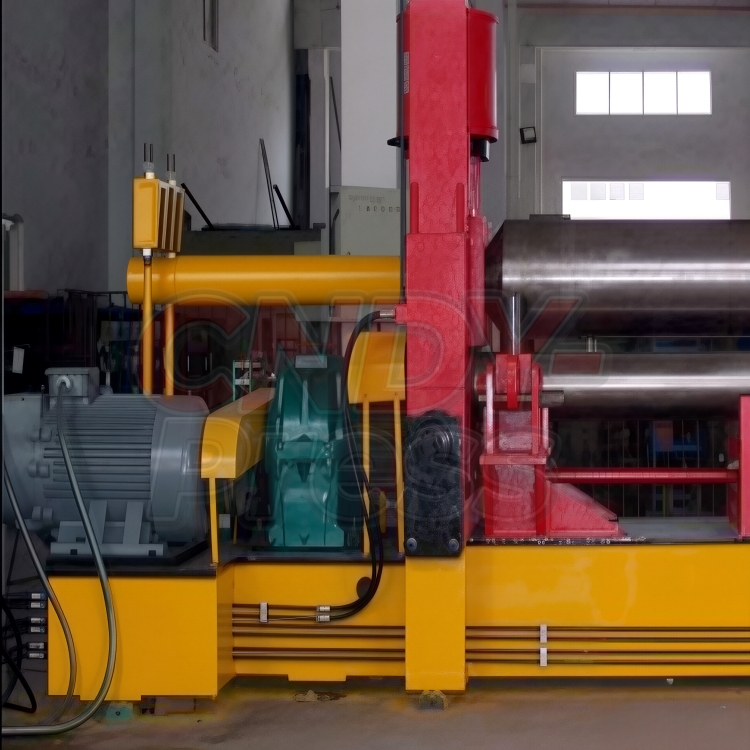
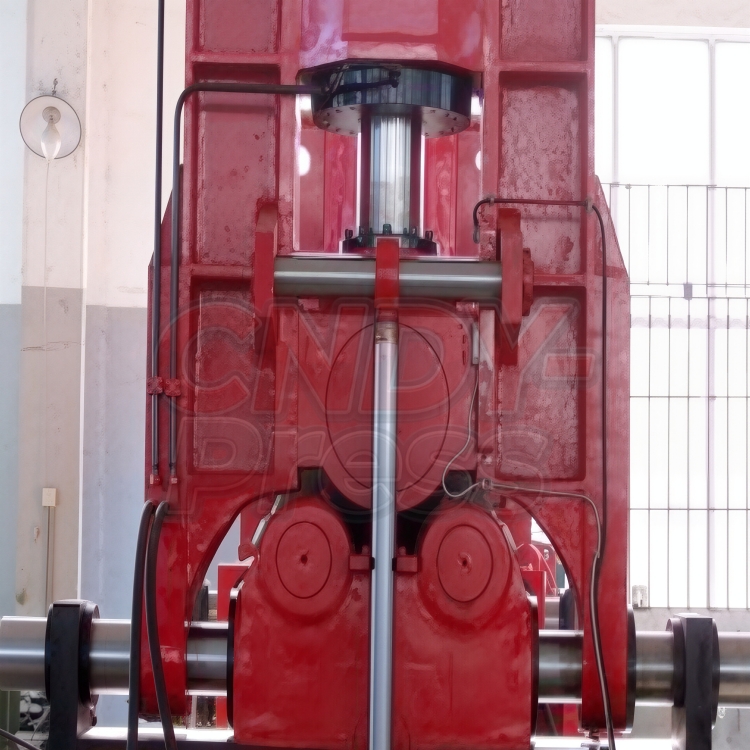
The upper roller of the universal plate bending machine can move up and down as well as horizontally. The movement of the upper roller up and down is used to change the curvature of the bent plate, while the movement of the upper roller front and back is used to change the vertical symmetrical position of the upper roller relative to the center axes of the two lower rollers, achieving the bending of the plate ends and meeting the process requirements for various bending operations. During the production process, no additional equipment such as a press machine is required. After one-time feeding, the pre-bending and forming functions of the plate ends can be completed without turning around, and it can also be used for the correction of formed workpieces.
Upper roller and lower roller, bearings and seals, main frame and side frame of the machine, main motor and auxiliary motor, main reducer and auxiliary reducer, PLC programmable controller with touch screen and displacement sensor (rotary encoder), electrical components, hydraulic components: pumps, valves, cylinders, etc.
High-precision end pre-bending: The straight edge length can be freely set. The upper roller directly applies pressure for pre-bending, enabling high-precision end pre-bending.
Superior product accuracy: The upper roller is in a conical shape, and the lower roller moves left and right for coordinated adjustment. Continuous bending can be achieved from thin plates to thick plates over a wide range, allowing for the production of ideal products.
Rich bending shapes: It has the functions of rolling O-shaped, U-shaped, multi-segment R-shaped, and auxiliary cone reduction devices. It can roll cone tubes within a certain range. O-shaped bending: rearward bending method; U-shaped bending: forward bending method; multi-segment R-shaped bending: combined method.
More suitable for thick metal plate rolling;
Rolling the steel plate into cylinders, cones, multi-R, U, R shapes at room temperature;
Applicable to the processing and rolling of parts such as circular and conical tanks;
Applied in the manufacturing industries of machinery and equipment such as petroleum, chemical, cement, shipbuilding, boilers, aviation, water conservancy, power transmission towers, etc.

Hot tags: Upper Roller Universal Plate Rolling Machine, Plate Rolling Machine, Custom Plate Rolling Machine, Custom CNC Plate Rolling Machine, Hydraulic CNC Plate Rolling Machine, China, private label, Customized, OEM, ODM, manufacturing company, manufacturers, suppliers, factory, price
Pipe laser cutting can consolidate tube cutting, drilling, slotting, notching, marking, and contour work into one CNC process. This guide compares pipe laser cutting with manual tube processing across speed, waste, labor, quality, cost, automation, safety, and purchasing decisions for fabricators and OEM equipment buyers.
This 2026 guide compares 10 CNC shearing machine manufacturers in China for professional global buyers. It covers supplier strengths, OEM and ODM capability, industrial clusters, machine specifications, factory verification, ISO certificate checks, acceptance testing, freight risks, procurement traps, and sourcing guidance for long-term sheet-metal equipment partnerships.
Compare CNC turret punch presses and fiber laser cutting machines for sheet metal fabrication. Learn the differences in speed, tooling, cost, forming, precision, materials, automation, and OEM production applications.
Compare single table and exchange table laser cutters for sheet metal production. Learn how table design affects machine uptime, material flow, labor efficiency, floor space, investment, and return on investment. Find practical selection criteria for custom fabrication, batch manufacturing, OEM projects, and scalable automation.
A procurement-focused guide to metal laser cutter manufacturers and suppliers relevant to Turkey. Compare machinery and manufacturing providers, evaluate fiber-laser technology, verify certifications, assess service readiness, avoid common sourcing risks, and select equipment based on real material, throughput, safety, logistics, and lifecycle requirements.
Swing beam and guillotine shears are both widely used for sheet metal cutting, but they serve different production needs. Swing beam shears are often a practical option for standard thin-to-medium sheet work. Guillotine shears provide stronger rigidity, adjustable rake angle, more consistent blade clearance, and better control for thicker materials and precision fabrication.
Fiber laser cutting machines are generally the preferred choice for stainless steel fabrication because they provide high cutting speed, strong energy efficiency, simplified beam delivery, and lower routine maintenance requirements. This guide compares fiber and CO2 laser systems across performance, cost, quality, maintenance, gas use, applications, and purchasing decisions.
This guide compares 10 China-based sheet metal laser cutter manufacturers for global buyers. It evaluates manufacturing capability, customization support, certifications, MOQ flexibility, service, and procurement risks—helping OEMs, distributors, and metal fabricators shortlist suitable long-term partners.
This article compares CNC press brakes and finger brakes for sheet metal bending. It explains their working principles, strengths, limitations, material suitability, tooling considerations, production applications, safety factors, and machine-selection criteria. CNC press brakes are better suited to high-precision and repeatable manufacturing, while finger brakes remain effective for light-gauge, low-volume, and box-shaped components.
This guide compares box and pan brakes with CNC press brakes for sheet-metal fabrication. Box and pan brakes suit low-volume manual work, trays, boxes, and simple folded components. CNC press brakes provide repeatability, higher capacity, complex bending capability, and industrial scalability. The right time to upgrade is when manual bending creates rework, delays, inconsistent quality, or limited growth.
This guide reviews metal laser cutter manufacturers and suppliers serving Russia, with a focus on supplier verification, machine configuration, OEM and ODM support, factory acceptance testing, and logistics planning. It highlights Maanshan Deyan Precision Machinery Technology Co., Ltd. as a flexible sheet-metal equipment partner and distinguishes complete machine manufacturers from custom-part suppliers.
This article compares 80-ton and 200-ton CNC press brakes by bending force, bed length, stroke, open height, tooling, backgauge flexibility, installation needs, and production suitability. It explains how material thickness, tensile strength, bend length, V-die opening, and bending method affect tonnage requirements, helping fabricators select a machine configuration that supports accurate, stable, and efficient sheet-metal production.
Compare hybrid press brakes and traditional hydraulic press brakes for sheet-metal fabrication. Learn how servo-controlled hydraulic technology affects energy use, oil volume, heat, noise, precision, maintenance, total cost, and production flexibility. Choose a CNC press brake that matches your materials, tonnage, workflow, and factory goals.
Explore ten metal laser cutter manufacturers in China for global sourcing. This guide compares supplier focus, customization support, technical validation, compliance checks, factory acceptance testing, logistics planning, and hidden procurement risks. It helps buyers identify a capable fiber laser cutting machine partner for long-term sheet-metal production.
This guide compares 3 roll and 4 roll plate rolling machines for sheet metal fabrication. It explains pre-bending, springback, machine accuracy, material handling, selection criteria, safety, and common purchasing mistakes. A 3 roll plate roll suits flexible, lower-volume work, while a 4 roll plate roll supports faster, more repeatable, and more automated production.
Precision ground tooling and planed tooling differ in manufacturing method, dimensional control, surface finish, setup speed, and long-term bending repeatability. Planed tools can suit simple, low-volume fabrication. Precision ground press brake tooling is better suited to tight tolerances, frequent changeovers, segmented setups, automation, and consistent CNC bending performance.
Offline programming and on-machine programming both support efficient press brake production, but each suits different workflows. This guide compares their effects on setup time, first-part quality, tooling preparation, operator efficiency, and machine uptime, helping sheet metal manufacturers choose a practical programming strategy.
This guide reviews press brake manufacturers and suppliers serving Europe, including Maanshan Deyan Precision Machinery Technology Co., Ltd., Anebon Metal, SC Rapid Manufacturing, FLYcncpart, Uneed Precision Machine, TRUMPF, Bystronic, LVD, and SafanDarley. It covers supplier evaluation, press brake specifications, technical verification, quality-control requirements, common purchasing risks, factory acceptance testing, certification review, and logistics planning.
Compare pneumatic and CNC hydraulic press brakes by bending force, control, precision, operating cost, maintenance, safety, and production suitability. This practical guide helps OEMs, fabricators, and equipment buyers select a customized press brake solution based on real parts, materials, tolerances, and output requirements.
This guide reviews ten China-based suppliers relevant to mechanical and CNC shearing machine projects. It compares their manufacturing focus, customization capability, production suitability, and buyer considerations, while explaining how importers can control material, documentation, factory-testing, and delivery risks.