


Views: 293 Author: CNDY-Press Publish Time: 2026-08-22 Origin: Site


Content Menu
● What Is the Difference Between a Press Brake and a Finger Brake?
● Press Brake vs. Finger Brake Comparison
● How Does a CNC Press Brake Work?
>> Typical CNC Press Brake Process
>> Why CNC Control Improves Production Consistency
● How Does a Finger Brake Work?
>> Typical Finger Brake Process
● Material Capacity, Tonnage, and Bend Quality
>> Tooling Factors That Affect Results
● When Should You Choose a CNC Press Brake?
>> Electrical Enclosure Manufacturing
>> Planning for Future Production Growth
● When Is a Finger Brake the Better Choice?
● Practical Selection Checklist
● FAQ
>> 1. What is the main difference between a press brake and a finger brake?
>> 2. Can a finger brake replace a CNC press brake?
>> 3. Is a CNC press brake more accurate than a finger brake?
>> 4. What materials can a CNC press brake bend?
>> 5. How is press brake tonnage calculated?
Choosing between a CNC press brake and a finger brake depends on more than the machine's initial cost. Material thickness, bend geometry, production volume, accuracy requirements, operator workflow, tooling, and future capacity all affect the right decision.
For manufacturers producing repeatable metal components at scale, a CNC press brake is generally the more capable and flexible solution. A finger brake remains valuable for light-gauge materials, prototype work, repair applications, and box-shaped components with challenging flange access.
A press brake is a sheet metal forming machine that bends material by pressing an upper punch into a lower die. CNC models use programmable controls, backgauges, precision tooling, and controlled ram movement to achieve consistent bend angles and flange dimensions.
A finger brake, also known as a box-and-pan brake or leaf brake, bends sheet metal using a clamping bar and adjustable fingers. The operator clamps the material and raises a bending leaf to form the desired angle.
The main difference is simple:
- A CNC press brake is built for higher bending force, repeatable accuracy, large components, complex bend sequences, and scalable production.
- A finger brake is designed for lighter materials, simple bends, prototypes, maintenance work, and box or pan components that need clearance around formed flanges.
For OEM and ODM production, the best machine is determined by the final part requirements rather than the simplest-looking drawing. A basic component may still need high tonnage, specialized tooling, springback compensation, precise backgauge positioning, or a documented inspection process.
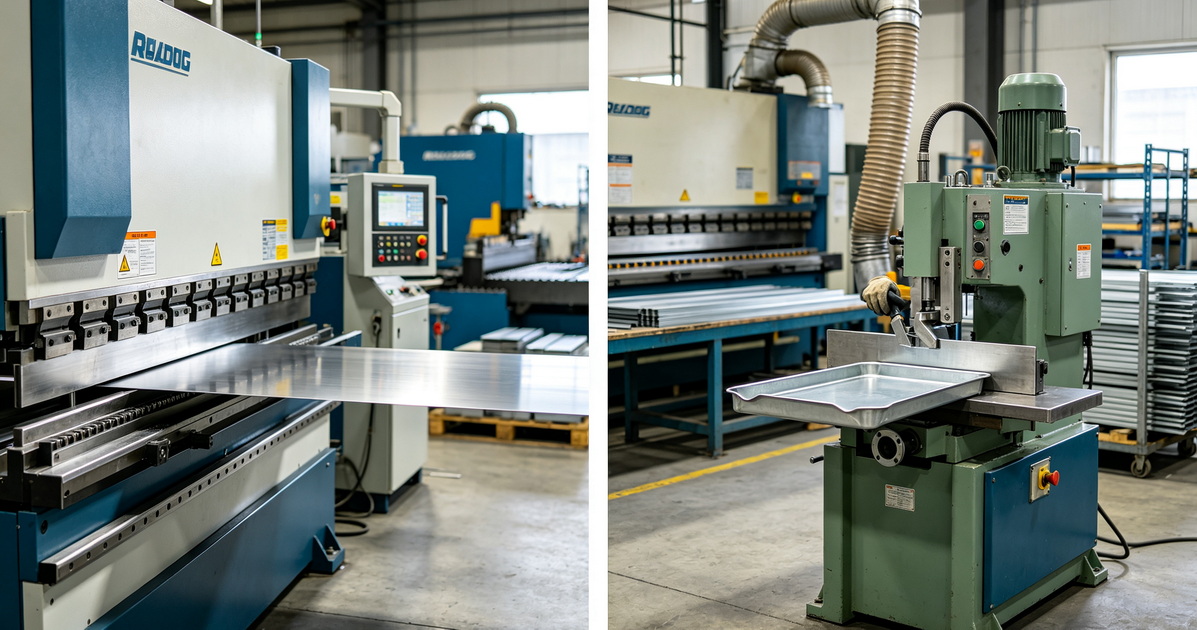
| Factor | CNC Press Brake | Finger Brake |
|---|---|---|
| Bending method | A punch presses metal into a V-die or dedicated forming die | A clamped sheet is raised by a bending leaf |
| Machine control | CNC, hydraulic, electric, hybrid, or servo-controlled | Usually manual, with some powered options |
| Production volume | Medium to high-volume production | Prototype, repair, low-volume, and small-batch production |
| Accuracy | High repeatability with correct tooling and setup | Highly dependent on operator technique |
| Material capacity | Suitable for a wide range of sheet and plate thicknesses | Best for light-gauge sheet metal |
| Part complexity | Suitable for multi-bend, long, deep, and precision components | Best for boxes, pans, trays, and simple flanges |
| Tooling | Punches, V-dies, hemming tools, radius tools, gooseneck punches, and more | Removable fingers and clamping bar |
| Setup approach | Programmed setup with tooling and backgauge positioning | Fast manual adjustment for simple jobs |
| Automation potential | High | Limited |
| Long-term scalability | Strong potential for growing production requirements | Best for stable, lower-output applications |
A press brake becomes more valuable when a manufacturer needs controlled quality, repeatable parts, and higher throughput. A finger brake is often more practical when flexibility for low-volume work is more important than cycle time.
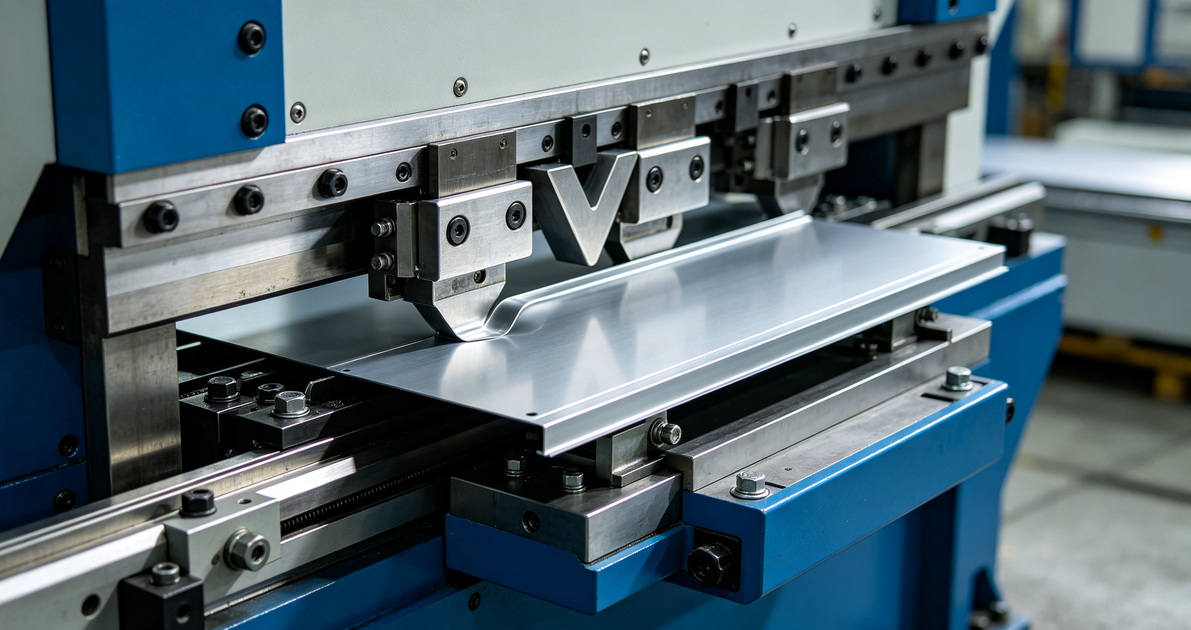
A CNC press brake forms metal by moving an upper punch toward a lower die. The workpiece is positioned against backgauge fingers, while the controller manages ram depth, bend angle, backgauge locations, bend sequence, and correction values.
Modern machines may also include crowning systems, angle measurement technology, automatic tool clamping, multi-axis backgauges, and material-handling options.
1. Review the part drawing and material data
Confirm material grade, thickness, bend radius, tolerance, grain direction, surface condition, and finished-part requirements.
2. Select suitable tooling
Choose the correct punch profile, V-die opening, tooling length, tool segmentation, and clamping method.
3. Verify bending force
Required tonnage depends on material tensile strength, material thickness, bend length, die opening, and bending method.
4. Prepare the bending program
The program controls backgauge position, ram depth, bend sequence, tool assignment, bend angle, and correction settings.
5. Set up the machine and tooling
Ensure that punches and dies are clean, aligned, fully seated, and securely clamped.
6. Produce and inspect the first article
Check bend angle, flange dimensions, hole-to-bend positions, flatness, cosmetic condition, and overall part geometry.
7. Maintain in-process quality checks
Inspect parts throughout production, particularly when changing material lots, operators, tooling, or bend programs.
CNC control helps standardize the bending process between operators, shifts, and repeat orders. It is especially valuable for manufacturers supplying enclosure parts, electrical cabinets, machinery covers, brackets, frames, transportation components, and custom fabricated assemblies.
A properly configured CNC press brake can improve:
- Bend-angle consistency
- Flange-length accuracy
- Backgauge positioning
- First-piece setup efficiency
- Repeat-order reliability
- Complex multi-bend sequencing
- Operator guidance
- Production traceability
For long-term OEM programs, consistency is essential because customers expect the same dimensions and assembly fit from the first production batch to later repeat orders.
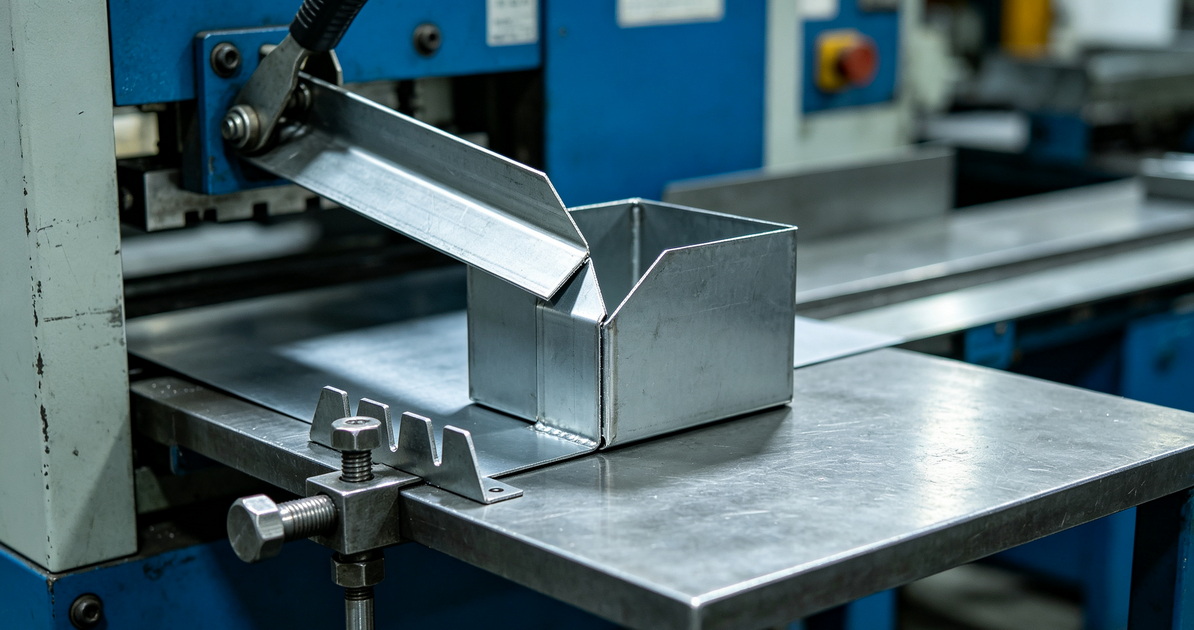
A finger brake uses a clamping bar with removable fingers in different widths. The operator places the workpiece under the fingers, aligns it with the bend line, clamps the sheet, and raises the bending leaf to form the metal.
The removable fingers create clearance for formed flanges, which is why this machine is useful for making trays, pans, boxes, ducts, and covers.
1. Place the sheet metal against the bending edge or positioning stop.
2. Select and arrange the fingers to match the part width and bend geometry.
3. Clamp the material firmly in place.
4. Lift the bending leaf until the required angle is reached.
5. Release the clamping bar and remove the part.
6. Reposition the workpiece for additional bends if required.
The key advantage is part access. Adjustable fingers allow an operator to form a box-like shape after earlier flanges have already been bent.
However, finger brakes have practical limits. Manual force, leaf rigidity, clamping capacity, and operator technique restrict their ability to process thick materials, long workpieces, high-strength alloys, and large production quantities.
Material thickness is important, but it is not the only factor when selecting a bending machine. Material strength, actual thickness, bend length, inside radius, die opening, grain direction, surface requirements, and tolerance all influence the result.
For example, 2 mm mild steel, 2 mm stainless steel, and 2 mm aluminum require different forming conditions. Stainless steel commonly requires more force and may show greater springback. Aluminum behavior can vary significantly based on alloy and temper.
Bend allowance helps calculate the correct flat length before forming. It is influenced by bend angle, material thickness, inside radius, and K-factor.
Bend Allowance=θ×(π/180)×(R+K×T)
Where:
- θ = bend angle in degrees
- RRR = inside bend radius
- KKK = K-factor
- TTT = material thickness
In real production, generic bend tables are useful starting points, but they should be verified through sample bending using the actual material, tooling, bend method, and quality requirement.
When selecting tooling, manufacturers should evaluate:
- Material thickness and actual thickness variation
- Material tensile strength
- Required inside bend radius
- Punch radius
- V-die opening
- Bending length
- Machine tonnage
- Springback behavior
- Surface marking risk
- Tool interference with return flanges
- Dimensional tolerance requirements
For common air-bending applications, the V-die opening is often selected at approximately six to eight times the material thickness. The final choice should be adjusted based on material properties, bend-radius needs, available tonnage, and the desired surface finish.
A CNC press brake is the preferred option when production requires precision, repeatability, capacity, and expansion potential.
It is particularly suitable for:
- Long metal panels and large sheet components
- Electrical cabinets and industrial enclosures
- Machine frames and fabricated structural parts
- Stainless-steel kitchen equipment
- HVAC panels and ductwork components
- Agricultural and construction equipment parts
- Automotive brackets and fabricated assemblies
- Multi-bend sheet metal components
- Parts with strict dimensional tolerances
- Medium- and high-volume OEM production
- Projects requiring consistent repeat orders
- Components with holes or cutouts that must remain accurately positioned after bending
An electrical enclosure may require four side bends, mounting holes, door-clearance accuracy, corner alignment, and consistent dimensions across thousands of units.
A finger brake may be suitable for an early sample or a low-volume repair batch. However, a CNC press brake is more appropriate for serial production because it provides better control over:
- Flange dimensions
- Bend-angle repeatability
- Hole-to-bend relationship
- Tooling consistency
- Production speed
- Inspection stability
- Repeat-order quality
In this type of project, the press brake does more than increase output. It helps reduce variation that could affect welding, assembly, powder coating, sealing, hardware installation, and final field performance.
Manufacturers should also consider the next stage of production. A machine that supports programmable bending, flexible tooling, multi-axis backgauges, and optional material handling can provide a stronger foundation for future growth.
For repeatable product families, press brake automation can reduce handling time and help maintain production continuity. Options may include automatic tool clamping, robotic loading, robotic unloading, part turning, angle measurement, offline programming, and integrated production cells.
A finger brake is often the better choice for light, simple, and frequently changing sheet metal work.
It is well suited for:
- Small trays and pans
- Light-gauge boxes and covers
- Repair and maintenance departments
- Prototype fabrication
- Short production runs
- Simple sheet metal ducts
- Parts with closed sides
- Components requiring clearance around formed flanges
- Workshops with limited floor space
- Businesses with modest initial equipment requirements
The primary reason to choose a finger brake is flexibility around formed geometry. Its adjustable fingers can simplify the production of box-shaped parts that may be difficult to access with conventional press brake tooling.
However, the total production cost should be considered carefully. A manual bending method may be economical for 20 pieces per month but become inefficient when demand increases to hundreds or thousands of parts.
As volume grows, labor time, angle variation, handling steps, operator fatigue, rework, and delivery consistency become increasingly important.
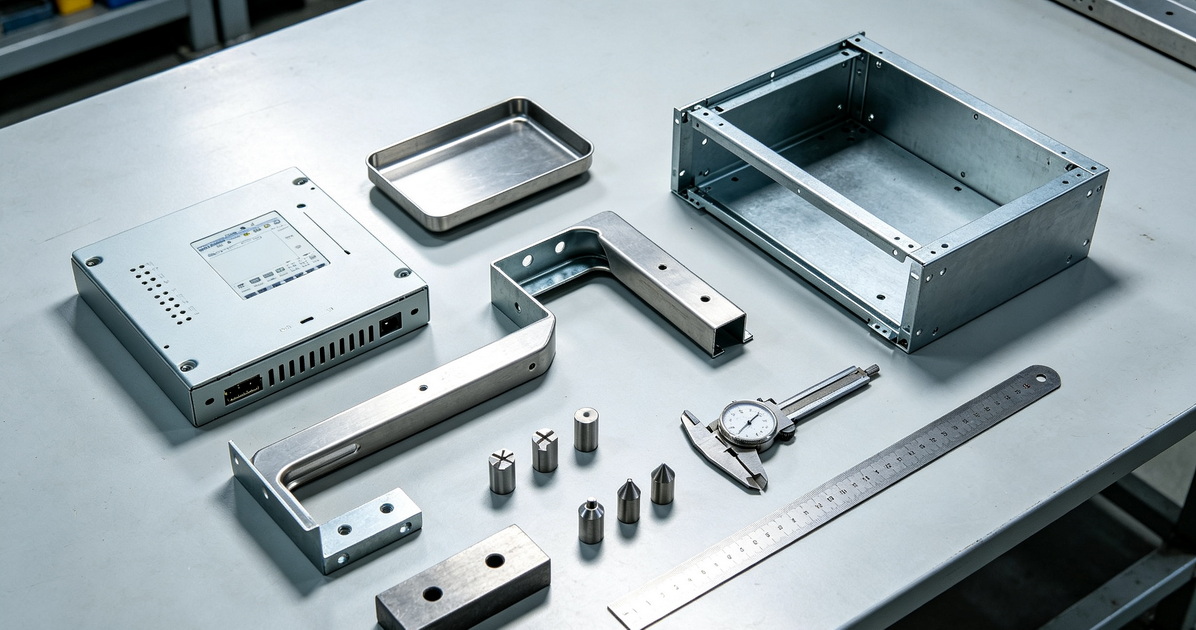
Before selecting a press brake or finger brake, prepare complete project information.
1. Part drawings
Provide PDF drawings and, where available, DXF, DWG, STEP, or IGES files.
2. Material requirements
Specify material grade, thickness, tensile strength, temper, finish, coating, and protective-film requirements.
3. Maximum workpiece size
Include bend length, overall part dimensions, blank size, and formed-part height.
4. Bend details
List bend angles, inside radii, flange dimensions, return bends, hems, offsets, and tolerances.
5. Production volume
State estimated monthly or annual quantities, including expected repeat orders.
6. Quality requirements
Clarify dimensional tolerances, cosmetic standards, measurement methods, inspection reports, and packaging requirements.
7. Downstream processing
Confirm whether parts will be welded, riveted, powder coated, painted, assembled, or shipped as finished products.
8. Future capacity expectations
Consider whether increased demand may require additional tooling, upgraded controls, automated handling, or a larger machine.
A complete review of these details makes it easier to determine appropriate machine tonnage, bending length, open height, throat depth, backgauge configuration, tooling, safety features, and optional automation.
Sheet metal bending involves pinch points, crush hazards, sharp edges, tool-loading risks, and manual handling challenges. These risks increase when bending large sheets, heavy materials, or complex components.
A reliable operating process should include:
- Emergency-stop verification
- Appropriate point-of-operation protection
- Secure tool clamping
- Regular tooling inspection
- Operator training
- Safe handling procedures for large sheets
- First-piece inspection
- Periodic in-process measurement
- Documented maintenance procedures
- Clear lockout procedures during servicing
Machine selection should consider safety equipment, workpiece support, operator access, material loading methods, tooling changes, and the physical layout of the production area.
The most productive bending operation is one that combines accurate equipment, suitable tooling, trained operators, stable material control, and a practical quality-inspection process.
A finger brake is a practical and economical solution for light-gauge sheet metal, prototypes, repairs, small trays, pans, and box-shaped parts. Its adjustable fingers provide useful clearance when working around already formed flanges.
A CNC press brake is the stronger choice for manufacturers that need higher force, repeatable bend accuracy, larger workpieces, complex bend sequences, higher output, and long-term production scalability.
The most effective choice comes from evaluating the complete application: material type, thickness, bend geometry, dimensional tolerance, production volume, tooling requirements, operator workflow, safety conditions, and future growth plans.
For custom sheet metal production projects, CNDY-Press can assist in evaluating part drawings, material specifications, bending requirements, tooling options, machine configuration, and customized manufacturing needs.
A press brake bends metal by pressing a punch into a die, while a finger brake clamps the sheet and lifts it with a bending leaf. Press brakes offer greater force, accuracy, and production capability. Finger brakes offer easier access for certain box and pan shapes.
In most industrial applications, no. A finger brake is suitable for light-gauge, low-volume, and simple bending work. A CNC press brake is better for heavy materials, larger parts, precise dimensions, repeat production, and complex bend sequences.
Yes, in most production applications. CNC backgauges, programmable ram movement, controlled bend sequences, and precision tooling make a CNC press brake more suitable for repeatable bend angles and flange dimensions.
Depending on tonnage and tooling, a CNC press brake can bend mild steel, stainless steel, aluminum, galvanized steel, copper, brass, high-strength steel, and other sheet or plate materials.
Press brake tonnage depends on material type, tensile strength, actual thickness, bend length, die opening, and bending method. Tonnage should always be verified using an appropriate bending-force chart and the machine manufacturer's load limitations.
1. [MYT CNC, "Press Brake VS Finger Brake"]
2. [TRUMPF, "Bending Machines"]
3. [TRUMPF, "Automation for Bending Machines"]
4. [TRUMPF, "Flex Cell"]
5. [AMADA America, "Press Brake Tooling"]
6. [HARSLE, "Bend Allowance Calculation Guide for Press Brakes"]


