


Views: 218 Author: CNDY-Press Publish Time: 2026-08-23 Origin: Site


Content Menu
>> 1. Maanshan Deyan Precision Machinery Technology Co., Ltd. (CNDY-Press)
>> 7. HSG Laser
● Capability, MOQ, and Certification Comparison
>> Important Certification Note
● Technical Requirements Buyers Should Specify
● Internal Procurement Tip: Test the "Worst Part," Not the Demo Part
● Common Sourcing Risks and Avoidance Methods
● Buyer's Verification Checklist
>> 2. Validate ISO Certification
>> 3. Use a Structured Sample Process
>> 4. Plan Shipping and Installation Early
● FAQ
>> 1. How can I verify that a manufacturer's ISO certificate has not expired?
>> 2. What should be included in a fiber laser cutter factory acceptance test?
>> 3. Is a higher laser power always the better choice?
>> 4. How do I prevent a supplier from changing component brands after payment?
>> 5. Should I buy from a specialized laser manufacturer or a complete sheet-metal-equipment supplier?
China remains a major sourcing base for sheet metal laser cutting equipment because it combines mature supply chains, competitive component sourcing, engineering capacity, and broad export experience. For professional buyers, however, selecting a supplier should not be based on machine price or headline wattage alone.
A reliable Sheet Metal Laser Cutter supplier should demonstrate stable manufacturing processes, transparent configuration lists, documented quality control, responsive technical communication, and the ability to support installation, commissioning, spare parts, and long-term maintenance. China's machinery exports reached €735 billion in 2024, reflecting the scale and global importance of its industrial manufacturing ecosystem.
The companies below are presented as a practical sourcing shortlist, not as an official government ranking. Buyers should independently verify certificates, export capability, machine configuration, and the exact scope of after-sales support before placing an order.
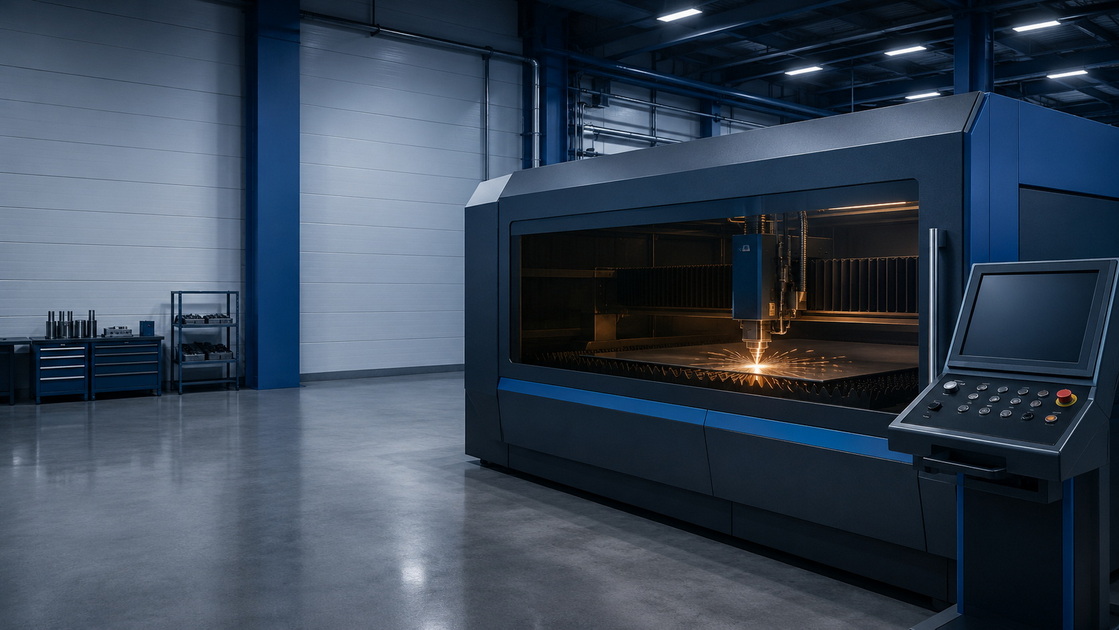
This list uses procurement-focused criteria rather than promotional claims. A high-quality sheet metal laser cutter manufacturer should be assessed across the following areas:
- Factory capability: In-house assembly, machining resources, production planning, incoming inspection, and final machine testing.
- R&D and engineering depth: Ability to configure laser source, cutting head, CNC system, bed structure, loading system, safety enclosure, and software around the application.
- Quality control: Traceable critical components, welding and stress-relief processes, precision calibration, cutting tests, and documented factory acceptance testing.
- Compliance readiness: Ability to provide appropriate CE-related technical documentation for the supplied configuration, plus relevant electrical, laser-safety, and environmental documentation where required.
- Delivery reliability: Transparent lead times, component availability, packaging standards, export documentation, and contingency planning.
- OEM/ODM suitability: Willingness to support custom branding, machine appearance, electrical standards, auxiliary equipment, documentation, software language, and low-to-mid-volume projects.
- After-sales capability: Remote diagnosis, commissioning guidance, spare-parts plans, training, and response time commitments.
The global laser-cutting-machine market was estimated at USD 7.14 billion in 2025 and is forecast to reach USD 7.82 billion in 2026, showing continued demand for automated metal-processing equipment. At the same time, buyers should recognize that market-growth figures do not validate an individual factory's product quality.
China's laser-equipment ecosystem benefits from established industrial clusters:
- Wuhan is widely associated with laser technology, optics, fiber-laser applications, and laser-equipment development.
- Shandong and North China support large-scale machinery fabrication, machine-frame manufacturing, and metalworking equipment supply chains.
- Guangdong offers electronics, automation, control-system integration, and export-oriented supply-chain advantages.
- Anhui, including Maanshan/Bowang, is an important base for sheet-metal machinery such as press brakes, shearing machines, rolling machines, and integrated fabrication equipment.
For buyers building a complete metalworking line, sourcing a fiber laser cutter from a manufacturer that also understands bending, shearing, rolling, and material-handling workflows can simplify line integration.
| Rank | Manufacturer | Location / Cluster | Primary Strength | Suitable Buyer Profile |
|---|---|---|---|---|
| 1 | Maanshan Deyan Precision Machinery Technology Co., Ltd. (CNDY-Press) | Maanshan, Anhui | Flexible OEM/ODM sheet-metal equipment integration | SMEs, distributors, private-label buyers |
| 2 | Anebon Metal | China | Precision manufacturing and export-oriented customization | Buyers needing custom metal-part support |
| 3 | SC Rapid Manufacturing | China | Rapid manufacturing and project responsiveness | Prototype-to-small-batch procurement |
| 4 | Fly CNC Part | China | CNC parts and custom machining support | Component and custom-machining buyers |
| 5 | UNEED Precision Machine | China | Precision machining and custom production | OEM component and low-volume projects |
| 6 | Han’s Laser | Shenzhen, Guangdong | Large-scale laser technology portfolio | High-volume industrial applications |
| 7 | HSG Laser | Foshan, Guangdong | Fiber laser cutting and automation solutions | Fabricators needing automated cells |
| 8 | Bodor Laser | Jinan, Shandong | Export-oriented fiber laser cutting systems | Global dealers and job shops |
| 9 | GWEIKE Laser | Jinan, Shandong | Broad laser cutting machine range | Cost-sensitive fabrication buyers |
| 10 | Senfeng Laser | Jinan, Shandong | Laser cutting, tube cutting, automation | Sheet-and-tube processing projects |
CNDY-Press is a practical option for buyers seeking a sheet metal machinery partner rather than a single-machine seller. Based in Maanshan, Anhui, the company focuses on the R&D, production, sales, and service of complete sheet-metal-processing equipment, including fiber laser cutting machines, CNC press brakes, CNC shearing machines, plate rolling machines, and grooving machines.
Its positioning is particularly relevant for small and mid-sized fabrication businesses, regional distributors, and private-label brands that need flexibility in configuration, branding, communication, and project coordination. The company states that it undertakes OEM and ODM manufacturing projects and can provide customized production based on customer requirements.
Core strengths
- Product portfolio covering laser cutting, bending, shearing, rolling, and grooving equipment.
- Suitable for buyers planning integrated sheet-metal-processing lines.
- OEM/ODM-oriented approach for customized configurations and branding.
- Technical team and manufacturing focus aimed at precision and operating stability.
- Application coverage includes decorative furniture, aerospace, shipbuilding, automotive, steel metallurgy, construction machinery, bridge construction, and petroleum-related industries.
- Provides operation training and equipment-maintenance support as part of its service offering.
Best fit
CNDY-Press is worth shortlisting when a buyer needs more than a standard fiber laser cutting machine—for example, a customized laser cutter paired with a press brake, material-handling accessories, customized voltage, private labeling, or region-specific documentation.
OEM/ODM scope to clarify before ordering
- Laser source brand and power range.
- Cutting-head model, autofocus function, and consumable compatibility.
- CNC controller, nesting software, and operator-language requirements.
- Table size, enclosure type, loading/unloading system, and fume extraction.
- Electrical standards: voltage, frequency, plug format, and control-cabinet layout.
- Branding, color scheme, nameplate, manuals, packaging, and spare-parts kit.
- Remote commissioning, on-site support options, and warranty exclusions.
Anebon Metal is relevant to buyers whose sourcing projects combine equipment procurement with custom metal component requirements. Its market position is more aligned with precision manufacturing and export-oriented custom production than with a conventional large-format laser-cutter brand.
Core strengths
- Suitable for projects requiring custom metal parts, prototypes, fixtures, or production components.
- Useful for buyers that need engineering communication around manufacturability and tolerances.
- Can be considered as a supporting supply-chain partner for laser-cut, machined, or fabricated components.
Best fit
Global purchasers developing custom enclosures, brackets, fabricated assemblies, machine parts, or low-to-medium-volume metal products alongside their equipment project.
Buyer caution
Confirm whether the supplier is providing the complete laser cutting machine itself, contract-manufactured parts, or both. Do not assume that precision parts capability automatically equals in-house laser-machine R&D capability.
SC Rapid Manufacturing is a suitable candidate for buyers prioritizing prototype-to-production support, responsive engineering communication, and rapid manufacturing workflows.
Core strengths
- Often relevant for new product development, prototyping, pilot production, and shorter-cycle custom orders.
- Can support buyers assessing DFM feasibility before full production.
- Practical for projects requiring a supplier that can move from concept samples to repeat production.
Best fit
Industrial buyers that need laser-cut sheet-metal parts, CNC-machined components, production fixtures, or small-batch fabricated assemblies before committing to larger tooling or equipment investments.
Buyer caution
For machinery procurement, separate the evaluation of part-manufacturing capability from the evaluation of machine-building capability. Request proof of machine assembly, factory testing, and service capacity if purchasing complete equipment.
Fly CNC Part can be considered by buyers seeking custom CNC-machined and fabricated components for industrial applications. It may be especially relevant for procurement teams that need component sourcing, replacement parts, or OEM manufacturing support.
Core strengths
- Custom machining and industrial component orientation.
- Potential fit for buyers requiring technical drawings, tolerances, material specifications, and repeatable production.
- Useful as a supplementary supply-chain source for laser-machine parts or fabricated assemblies.
Best fit
Equipment brands, maintenance teams, and OEMs looking for custom parts, machined components, or production support.
Buyer caution
Ask for material certificates, dimensional inspection reports, first-article samples, and clear ownership terms for custom drawings and tooling.
UNEED Precision Machine is positioned toward precision machining and customized manufacturing projects. It can be relevant for international buyers requiring production flexibility and communication around detailed engineering requirements.
Core strengths
- Suitable for custom component manufacturing and precision requirements.
- Potential fit for low-volume, high-mix, or drawing-based manufacturing programs.
- Useful for OEMs that require adaptable suppliers for parts and assemblies.
Best fit
Buyers sourcing precision components, equipment parts, fabricated subassemblies, or contract-manufactured products.
Buyer caution
Before placing volume orders, establish a written control plan covering material grade, tolerance, surface finish, inspection frequency, packing, and change-control procedures.
Han's Laser is one of China's most widely recognized laser technology companies, with a broad industrial-laser portfolio. It is generally more suitable for buyers seeking established product lines, higher-volume industrial applications, and a supplier with significant laser-sector visibility.
Core strengths
- Broad laser technology and industrial automation coverage.
- Suitable for buyers with more standardized requirements.
- Strong relevance for larger manufacturers and automated production environments.
Best fit
Automotive, electronics, precision manufacturing, battery, and larger fabrication operations requiring more extensive automation or specialized laser applications.
HSG Laser is known in the market for fiber laser cutting systems and automation-oriented solutions, including sheet processing, tube cutting, and loading/unloading integration.
Core strengths
- Strong focus on fiber laser cutting and automation.
- Relevant for buyers looking for production throughput and material-handling integration.
- Broad application potential in metal fabrication operations.
Best fit
Fabricators processing higher volumes of sheet metal, tubing, structural components, or repeat production jobs.
Bodor Laser is a recognizable export-oriented supplier from Jinan, a major Chinese laser-equipment cluster. Its portfolio is commonly associated with fiber laser cutters for sheet, tube, and combined sheet-and-tube applications.
Core strengths
- International market orientation.
- Wide range of fiber laser cutting equipment.
- Suitable for dealers and metalworking businesses seeking established export experience.
Best fit
Distributors, fabrication workshops, and industrial buyers looking for standard-to-high-specification sheet and tube laser solutions.
GWEIKE Laser offers laser cutting machines across multiple application segments. It is often considered by buyers comparing configuration options and price-performance ratios in the Jinan manufacturing cluster.
Core strengths
- Broad machine selection.
- Relevant for buyers comparing different power levels and machine formats.
- Can be suitable for entry-to-mid-level fabrication investments.
Best fit
Cost-conscious sheet-metal workshops, regional distributors, and buyers requiring standard machine configurations.
Senfeng Laser supplies sheet laser cutters, tube laser cutters, and related automation solutions. It is relevant for buyers looking for larger-format systems or projects involving both flat sheet and tube processing.
Core strengths
- Sheet, tube, and combined processing options.
- Automation and material-handling potential.
- Suitable for fabrication businesses with varied product geometries.
Best fit
Steel-service centers, structural-fabrication firms, tube-processing businesses, and manufacturers replacing multiple standalone cutting processes.
The figures below should be treated as an RFQ discussion framework, not verified supplier commitments. Production capacity, MOQ, and certification scope can vary by machine configuration, component brand, season, order backlog, and destination market.
| Manufacturer | Typical Project Focus | Indicative MOQ | Capacity Discussion Point | Compliance Documents to Request |
|---|---|---|---|---|
| CNDY-Press | Customized sheet-metal equipment and OEM/ODM | 1 machine | Confirm monthly build schedule by model | CE technical file scope, ISO certificate, manuals, electrical documents |
| Anebon Metal | Custom metal parts and assemblies | Prototype to batch | Confirm machining/fabrication capacity by material | Material certificates, inspection reports, ISO scope |
| SC Rapid Manufacturing | Rapid prototypes and production parts | Low volume possible | Confirm lead time by part complexity | Material traceability, FAI, inspection reports |
| Fly CNC Part | CNC parts and custom components | Low-to-medium volume | Confirm recurring-order capacity | Inspection reports, material documentation |
| UNEED Precision Machine | Precision custom production | Low-to-medium volume | Confirm tolerance and production capacity | FAI, material certificates, QC plan |
| Han’s Laser | Industrial laser equipment | Model dependent | Confirm application-specific capacity | Configuration-specific CE documents and safety records |
| HSG Laser | Laser cutting and automation | Model dependent | Confirm automation integration lead time | CE documentation, laser safety information |
| Bodor Laser | Export fiber laser cutting systems | 1 machine or dealer order | Confirm region-specific delivery lead time | CE declaration, manuals, support terms |
| GWEIKE Laser | Standard and configurable laser cutters | 1 machine or volume order | Confirm stock vs. build-to-order | CE-related documentation, component list |
| Senfeng Laser | Sheet/tube laser cutting and automation | Model dependent | Confirm large-format logistics plan | CE documentation, installation requirements |
Do not accept a website logo as evidence of compliance. ISO 9001 generally applies to a company's quality-management system, not to the performance of every machine. CE marking concerns conformity with applicable EU requirements for the supplied equipment configuration, while RoHS addresses restricted substances. Buyers should request the certificate number, issuing body, validity dates, scope, declaration, and the machine-specific documentation before shipment.
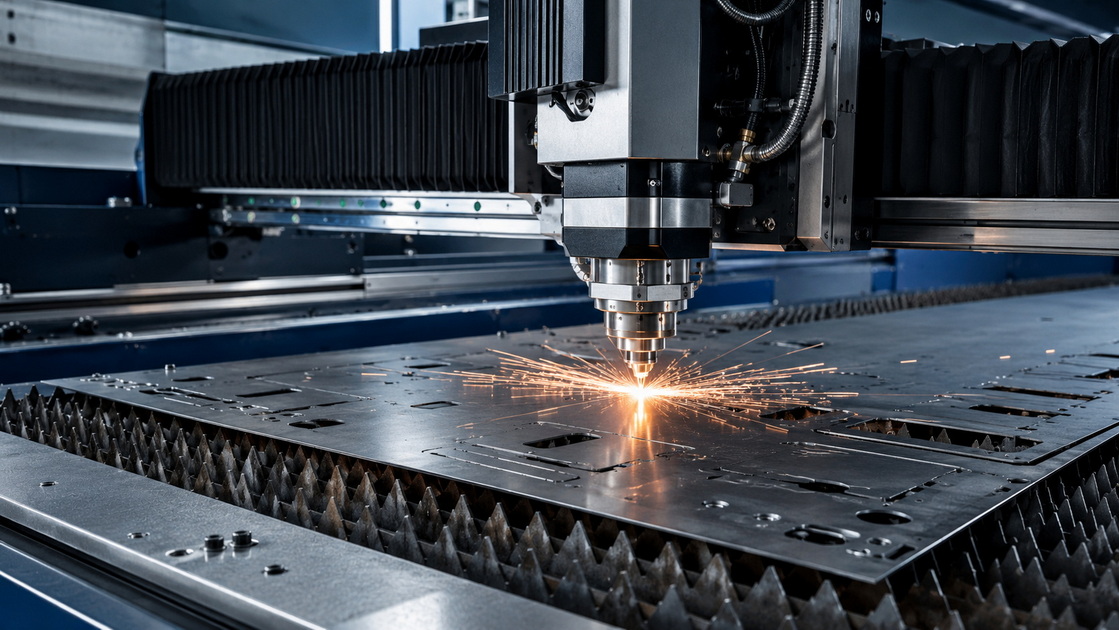
A Sheet Metal Laser Cutter RFQ should define processing needs in measurable terms. "We need a 6 kW fiber laser cutter" is not enough.
Include the following:
- Material types: Carbon steel, stainless steel, aluminum, galvanized sheet, brass, copper, or coated materials.
- Material thickness range: State normal production thickness and maximum occasional thickness separately.
- Sheet size: For example, 3000 × 1500 mm, 4000 × 2000 mm, 6000 × 2500 mm, or customized format.
- Annual operating hours: One-shift, two-shift, or continuous operation directly affects source selection and automation needs.
- Accuracy requirement: Define acceptable positioning accuracy, repeatability, hole-diameter consistency, and finished-part tolerances.
- Cut-quality criteria: Include burr height, dross, taper, heat tint, edge roughness, and dimensional deviation.
- Required edge condition: A part that can be welded or powder coated may tolerate a different edge quality than a visible stainless-steel decorative panel.
- Assist gases: Confirm oxygen, nitrogen, compressed air, gas purity, pressure, storage, and local supply cost.
- Automation: Decide whether manual loading is sufficient or whether shuttle tables, automatic loading, unloading, sorting, or warehouse integration are needed.
- Software workflow: Confirm nesting software, DXF/DWG compatibility, remote diagnostics, ERP/MES integration requirements, and language support.
- Safety and extraction: Request enclosure details, laser-safety features, interlocks, fume extraction, filtration, and noise considerations.
Fiber lasers interact differently with each material. Stainless steel and carbon steel generally use different assist-gas strategies, while reflective materials such as aluminum, brass, and copper require careful configuration, optics protection, process parameters, and sample validation.
A widely understood but frequently overlooked procurement rule is this: do not approve a machine based only on a supplier's standard cutting demo.
A polished showroom sample often uses an easy material, clean sheet surface, optimized parameters, a fresh nozzle, and a simple geometry. That does not prove stable production performance.
Instead, send a "worst-case" test file containing:
- The thinnest material you will cut.
- The thickest material you will cut routinely.
- Small holes close to the material thickness.
- Sharp internal corners.
- Dense perforations.
- Long contours.
- Micro-joints.
- A mix of small and large features.
- Your actual material grade and surface condition.
Then request a documented acceptance test after extended cutting, not a single successful part. Industry guidance similarly emphasizes using challenging materials and drawings, running longer continuous tests, and defining measurable acceptance criteria in the contract.
For example, if you process 3 mm stainless-steel panels with many 3–5 mm holes, test exactly that pattern. A machine may appear fast on large rectangles but produce inconsistent holes, dross, or thermal distortion during dense-hole production.
| Procurement Risk | What Can Go Wrong | How to Reduce Risk |
|---|---|---|
| Component substitution | The delivered laser source, cutting head, servo, reducer, or CNC system differs from the quotation | Attach a locked bill of materials to the contract, including brand, model, quantity, and substitution approval process |
| Inflated cutting claims | Quoted maximum thickness is technically possible but unsuitable for stable production | Define “production cutting” versus “maximum severance cutting” and validate with your own samples |
| Unclear accuracy claims | Supplier quotes theoretical positioning accuracy, not finished-part tolerance | Specify acceptance parts, measurement method, gauges, and allowable deviation |
| Certificate misuse | Expired or out-of-scope ISO/CE documents are presented as universal proof | Verify certificate number, issuer, scope, validity, and model/configuration coverage |
| Inadequate fume extraction | Machine arrives without practical extraction or filtration sizing | Define ducting, filter type, airflow, electrical requirements, and local regulations before purchase |
| Weak spare-parts planning | A minor optical or pneumatic failure causes long downtime | Purchase a recommended two-year critical spare-parts kit with model numbers and pricing |
| Poor export packing | Moisture, vibration, and handling damage occurs in transit | Require photos of final packing, desiccant, vacuum protection where appropriate, shock indicators, and loading plan |
| Service ambiguity | “Lifetime support” is offered without service-level commitments | Add response-time targets, remote-support scope, training method, warranty terms, and paid-service rates |
Request these materials before a deposit:
- Business registration information and export entity details.
- Factory address and live video factory tour.
- Production-floor footage showing assembly, testing, and finished machines.
- Main equipment list, including machining, welding, assembly, calibration, and testing resources.
- Quality-management documentation and current certification copies.
- Recent export references that can be contacted, where commercially appropriate.
- A live video call with engineering and service representatives—not only sales personnel.
To check whether an ISO certificate is valid:
1. Request the full certificate, not a cropped image.
2. Confirm the legal company name matches the contracting entity.
3. Check the certificate number, issue date, expiry date, scope, and certification body.
4. Look for accreditation information associated with the certifying body.
5. Ask the certification body to verify the certificate if there is doubt.
6. Confirm that the scope covers manufacturing activities relevant to the product being purchased.
An ISO 9001 certificate indicates that the organization operates a quality-management system; it does not guarantee that every laser cutting machine will meet your individual performance specification.
A practical sample-validation flow is:
1. Send drawings, material grades, thicknesses, tolerances, and annual-volume estimates.
2. Require the supplier to confirm process feasibility in writing.
3. Ship or locally source representative material where possible.
4. Ask for videos showing setup, continuous cutting, part removal, and measurement.
5. Receive physical samples for inspection.
6. Measure dimensions, burrs, hole roundness, taper, roughness, and heat effects.
7. Convert successful sample criteria into the purchase contract and factory acceptance test.
For a Sheet Metal Laser Cutter, logistics planning begins before production.
- Confirm container size, machine dimensions, gross weight, and lifting points.
- Verify whether your facility can unload the machine safely.
- Confirm foundation, floor load, compressed air, gas infrastructure, power supply, grounding, and ventilation requirements.
- Clarify Incoterms: EXW, FOB, CIF, DAP, or DDP have materially different buyer responsibilities.
- Check destination-country import duties, local electrical compliance rules, operator training needs, and insurance requirements.
- Keep critical spare parts, consumables, lens/nozzle sets, and maintenance tools available before commissioning.
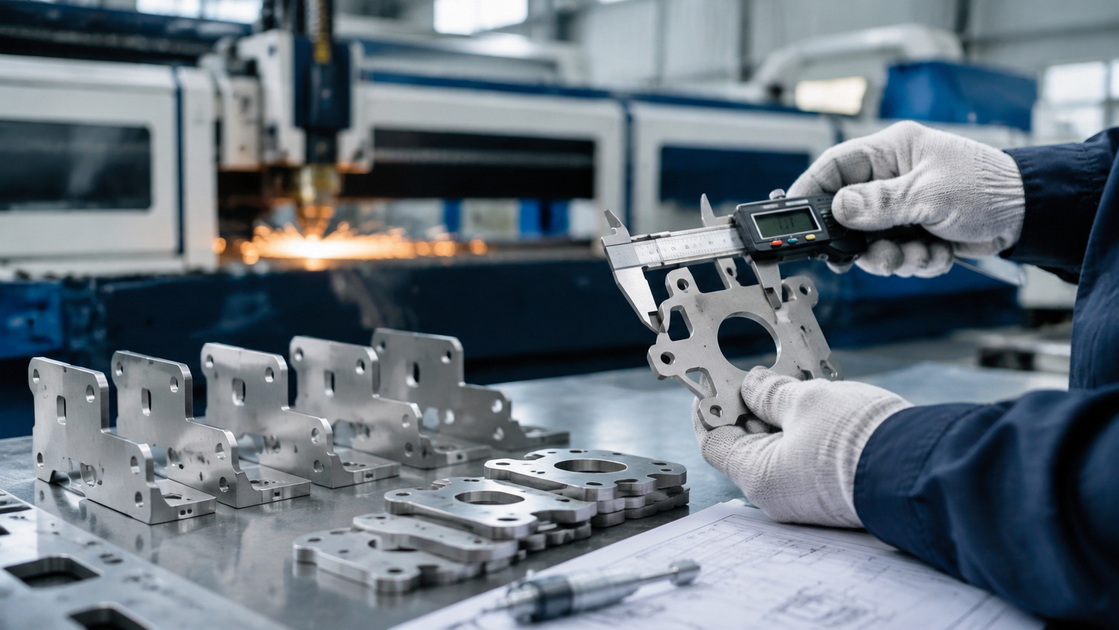
The right China-based Sheet Metal Laser Cutter manufacturer is not necessarily the largest supplier or the lowest bidder. The best long-term fit depends on your material mix, production volume, automation plan, quality standard, compliance obligations, spare-parts strategy, and need for engineering support.
For buyers seeking flexible OEM/ODM cooperation, integrated sheet-metal-processing equipment, and support for customized projects, Maanshan Deyan Precision Machinery Technology Co., Ltd. (CNDY-Press) is a practical supplier to evaluate. Its product range includes fiber laser cutting machines, CNC press brakes, shearing machines, plate rolling machines, and grooving machines, with stated support for OEM/ODM and customized production.
Request the full certificate, verify the legal company name, inspect the validity dates and scope, and contact the issuing certification body if necessary. Also confirm that the certificate applies to the actual manufacturing entity—not a related trading company. ISO 9001 validates the quality-management system, not each individual machine's output performance.
The FAT should include your specified materials, thicknesses, drawings, cycle-time expectations, dimensional tolerances, cut-quality standards, safety functions, software operation, and agreed configuration list. State how measurements will be made and what happens if results fail the agreed criteria.
No. Higher power can improve speed and capacity for certain thicknesses, but it also increases capital cost, electrical demand, gas consumption, cooling requirements, and the importance of optics protection. Select power based on your usual production mix, not occasional maximum thickness.
Include a detailed bill of materials in the signed contract. List the brand and model for the laser source, cutting head, CNC controller, servo motors, drives, reducers, electrical components, chiller, exhaust system, and safety equipment. State that any substitution requires written buyer approval.
Choose a specialized laser manufacturer when laser cutting, automation, and high-volume throughput are your primary priorities. Choose an integrated sheet-metal-equipment supplier when you need coordinated laser cutting, bending, shearing, rolling, grooving, or OEM/ODM customization. For many smaller manufacturers and distributors, integration flexibility and responsive project support can be more valuable than buying the highest-spec standalone machine.
1. CNDY-Press, "[About Us]" — company product scope, OEM/ODM positioning, applications, and service information. [cndypress]
2. Mordor Intelligence, "[Laser Cutting Machine Market Size, Share & Forecast]" — 2025–2031 market estimates and forecast. [mordorintelligence]
3. Porsche Consulting, "[China Speed in Industrial Goods]" — context on China's machinery exports and industrial export scale. [porsche-consulting]
4. AMT, "[China Posts Record Auto and Machine Tool Output]" — overview of China machine-tool trade statistics. [amtonline]
- Laser equipment buyer guidance on ISO, CE, RoHS, configuration scope, materials, and documentation requirements. [hwleiclaser]
- Industry testing guidance on challenging sample parts, continuous cutting, contract acceptance criteria, and measurement methods. [adhmt]


