


Views: 222 Author: CNDY-Press Publish Time: 2026-08-30 Origin: Site


Content Menu
● What Pipe Laser Cutting and Manual Tube Processing Include
● Pipe Laser Cutting vs. Manual Tube Processing
● Speed: Look Beyond Cutting Time
>> Where Pipe Laser Cutting Saves Time
>> When Manual Processing Can Still Be Faster
● Waste Reduction: The Real Value of Digital Tube Processing
>> Labor Waste
● Technical Comparison for Buyers
>> Tube Profiles and Materials
● The Hidden Bottleneck: Material Loading and Offloading
>> Questions to Ask Before Buying
>> Manual Tube Processing Cost Drivers
>> Pipe Laser Cutting Cost Drivers
● A Decision Framework for Fabricators
>> Consider Pipe Laser Cutting If You Have
>> Stay With Manual Processing If You Have
● Safety, Compliance, and Operating Discipline
● FAQ
>> 1. Is pipe laser cutting always faster than manual tube processing?
>> 2. How does pipe laser cutting reduce material waste?
>> 3. Can a fiber laser tube cutting machine replace drilling and milling?
>> 4. What information should I provide before requesting a pipe laser cutting machine quotation?
>> 5. What is the biggest hidden cost of manual tube processing?
For fabricators processing round tube, square tube, rectangular tube, channel, angle, or complex profiles, the comparison between pipe laser cutting and manual tube processing is no longer only about cutting speed. It is about total lead time, material yield, dimensional consistency, labor dependence, part complexity, and the number of downstream operations required.
Manual tube processing still has a role in repair work, simple one-off jobs, and low-utilization workshops. However, for repeat production, mixed part families, tight tolerances, or labor-intensive fabrication routes, a fiber laser tube cutting machine can consolidate sawing, drilling, slotting, notching, marking, and contour cutting into a controlled CNC process.
At CNDY-Press, we work with sheet-metal fabricators and equipment buyers who need more than a generic machine specification. They need a production method that fits their tube profiles, material grades, order mix, labor availability, OEM requirements, and future growth plan. This guide compares pipe laser cutting with manual tube processing from that practical perspective.
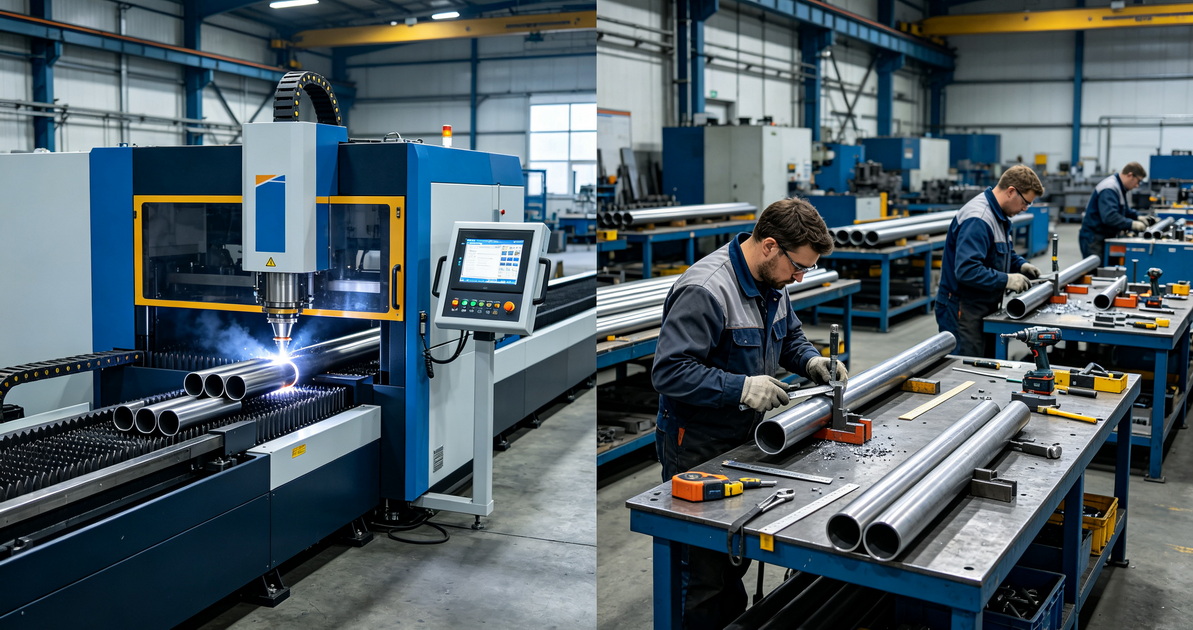
A meaningful comparison begins with the full workflow. A saw may appear fast when measured only by cut time, but the part may still need marking, clamping, drilling, milling, deburring, inspection, sorting, and transfer to the next workstation.
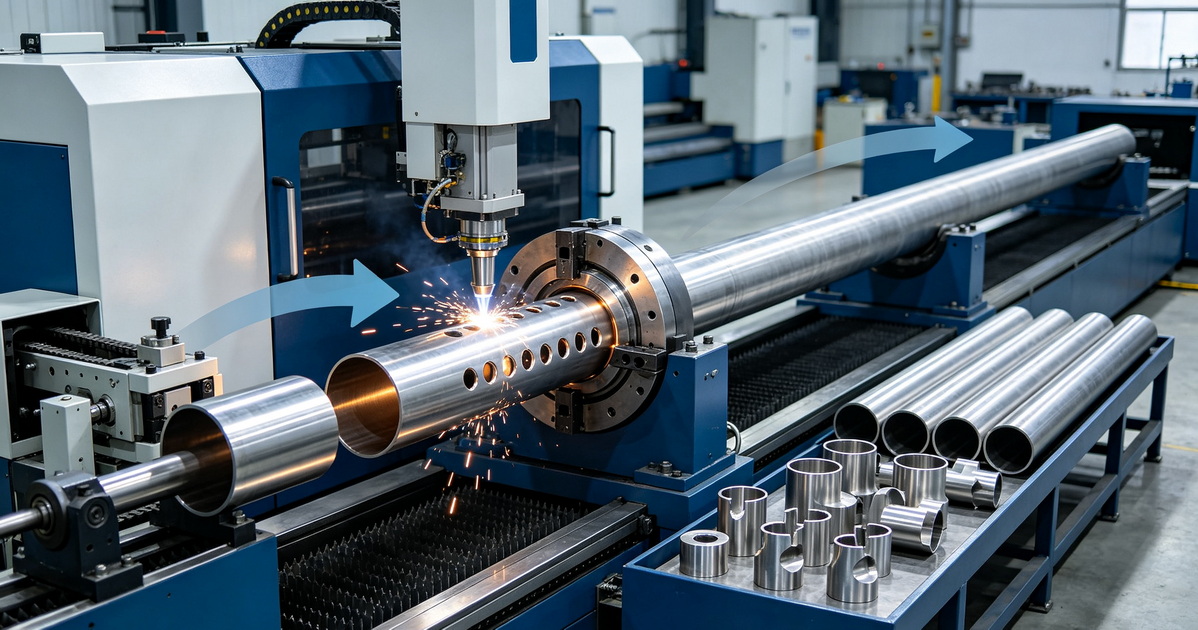
Pipe laser cutting uses a fiber laser source, CNC controls, cutting head, chucks, profile support system, and often optional automatic loading and unloading equipment. The system can process tubes and profiles with programmed cuts, holes, slots, tabs, bevels, marks, and complex contours.
A modern pipe laser cutting machine can process:
- Round tubes
- Square and rectangular tubes
- Oval tubes
- Angle steel
- Channel steel
- I-beams and H-beams on applicable equipment
- Stainless steel tubes
- Carbon steel tubes
- Aluminum profiles
- Copper and brass profiles on suitable configurations
The process is contactless. The laser follows programmed geometry, while the machine positions and rotates the tube.
Manual tube processing may include several separate machines and workstations:
- Band saws or circular saws
- Manual measuring and marking stations
- Drill presses
- Manual punching equipment
- Hand grinders
- Milling machines
- Notching machines
- Welding preparation stations
- Manual inspection tools
This route can be effective for basic cuts and low-volume work. But as part geometry becomes more complex, manual handling and variation increase.
TRUMPF notes that tube laser cutting can replace conventional tube-processing steps such as sawing, drilling, and milling. This is one reason laser systems are often evaluated as process-consolidation equipment rather than only as cutting machines.
| Comparison Factor | Pipe Laser Cutting | Manual Tube Processing |
|---|---|---|
| Process steps | Can combine cutting, holes, slots, notches, and marking | Usually requires multiple workstations |
| Setup | Program-driven after job preparation | Repeated manual measuring, marking, tooling, and clamping |
| Part complexity | Suitable for complex contours and repeated patterns | Complexity increases labor time and error risk |
| Cutting repeatability | Controlled by CNC program, machine condition, and setup | Depends heavily on operator skill and fixture quality |
| Material handling | Can be automated or semi-automated | High manual handling requirement |
| Waste control | Supports programmed cut planning and nesting | More vulnerable to measuring errors, trim loss, and remakes |
| Changeover | Digital changeover between approved programs | May require new stops, fixtures, tools, and operator setup |
| Secondary operations | Often reduced, though not always eliminated | Frequently required |
| Best fit | Repeat orders, product families, complex profiles, scalable output | Simple jobs, repairs, prototypes, very low utilization |
| Capital requirement | Higher initial investment | Lower initial equipment cost |
The central difference is workflow control. Pipe laser cutting puts more of the production process into one digital system. Manual processing distributes work across people, tools, and stations.
A common mistake is to compare only the cutting speed of a laser against a saw. This is not how production managers experience the job.
The useful metric is finished-part lead time:
Finished-Part Lead Time=Setup+Material Handling+Cutting+Secondary Operations+Inspection+Rework
A manual workflow may cut a straight tube quickly. But if the part also needs three holes, a rectangular slot, a fish-mouth notch, part identification, edge cleanup, and a transfer to welding, the total job time can increase substantially.
Pipe laser cutting can improve throughput by reducing or consolidating:
- Manual measuring and marking
- Repeated clamping and repositioning
- Saw-to-drill transfer time
- Tool changes for different hole sizes
- Fixture changes between part designs
- Grinding and deburring work on suitable materials and parameters
- Sorting errors through part marking
- Rework caused by incorrect hole or notch locations
A tube laser can also create interfaces that simplify downstream welding. Tabs, slots, fit-up features, and part marks can help operators assemble fabricated structures faster and more consistently.
Bystronic describes tube-laser automation as a method to increase productivity, reduce manual effort, and improve output consistency. Its automated tube systems are intended to process closed tubes, angles, channels, and other profile types with less manual intervention.
Manual processing may remain the better option when:
- The work is an emergency repair.
- The job consists only of a few simple straight cuts.
- Tube sizes change constantly without repeat demand.
- The workshop lacks digital drawing files.
- Material quantity is too low to justify programming and setup.
- The business has unused manual-machine capacity.
- Capital investment is not currently justified.
The goal is not to eliminate manual work in every scenario. It is to understand which work should be standardized through CNC laser cutting and which work remains appropriate for flexible manual handling.
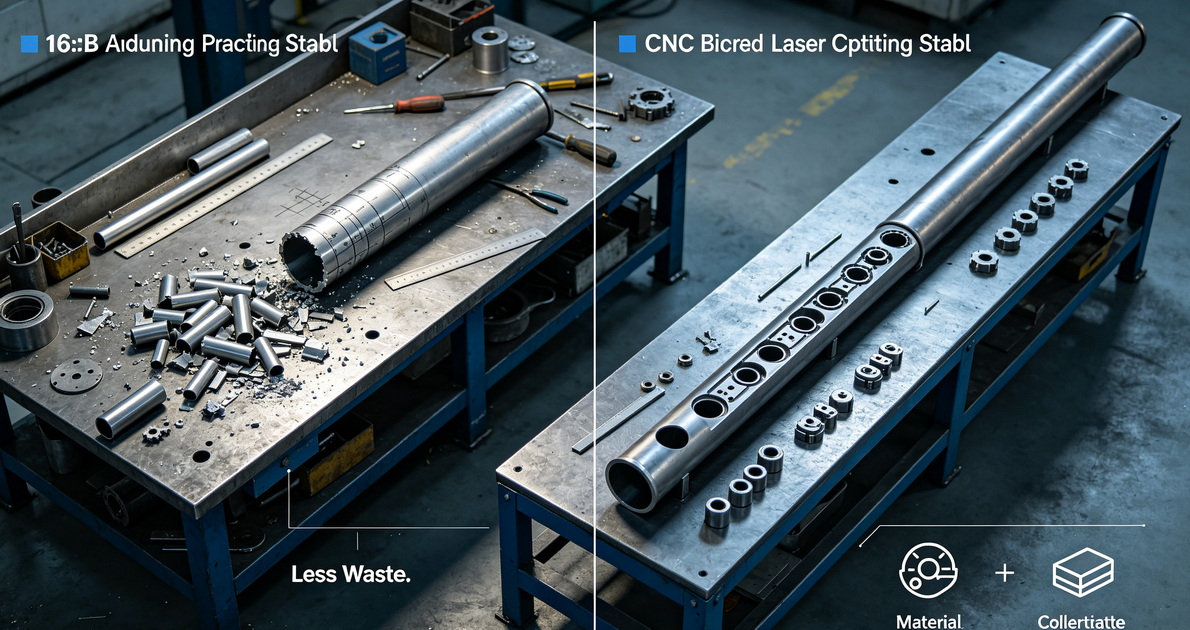
Waste is more than scrap metal. In fabrication, waste can include rejected parts, excess trim, unused offcuts, labor spent correcting mistakes, unnecessary fixtures, duplicated operations, and production delays.
Pipe laser cutting can reduce material waste through better programmed part layouts, repeatable cut positioning, and optimized management of usable remnants. A narrow laser kerf can also reduce material removal compared with broader mechanical cutting methods, though the actual result depends on material, thickness, gas, cutting parameters, and part geometry.
Bystronic states that material can represent 50% to 75% of total cost per part in certain laser-cutting contexts, which makes material-utilization planning commercially important. It also notes that automated cutting plans can improve yields, forecast delivery performance, and produce more parts from available material.
For tube fabrication, the buyer should ask a different question from "How fast is the machine?" Ask:
How much usable finished output can we obtain from each purchased length of tube?
Manual processing can generate hidden waste through:
- Incorrect manual measurements
- Wrong hole locations
- Tube rotation errors
- Mislabeled parts
- Improper fixture placement
- Inconsistent notch geometry
- Excessive rework
- Repeated transfers between workstations
- Damage from handling or stacking
A digital program does not eliminate mistakes. Incorrect CAD data, poor material quality, wrong cutting parameters, or unsuitable chucking can still create defects. But a controlled program makes a validated part more repeatable once it is released to production.
Fabricators often underestimate the labor spent moving material rather than transforming it.
A manual process may require one person to measure, another to cut, another to drill, and another to deburr or inspect. A pipe laser system can reduce touches per part by completing multiple features during one controlled cycle.
That does not mean labor disappears. It changes. The operation shifts toward programming, material preparation, quality control, preventive maintenance, and machine supervision.
A pipe laser cutting machine can repeatedly follow an approved CNC program. However, quoted accuracy should never be accepted as a generic marketing number.
Actual result depends on:
- Tube straightness
- Tube outside-diameter variation
- Wall-thickness variation
- Material grade
- Surface condition
- Chucking method
- Support configuration
- Laser power
- Cutting head and nozzle condition
- Focus settings
- Assist gas
- Machine calibration
- Part length and geometry
Manual processing can achieve good results with experienced operators, quality fixtures, and careful inspection. Yet process variation normally rises as the number of manual steps increases.
Manual fabrication becomes difficult when a part includes intersecting holes, angled cuts, multiple notches, part marks, and assembly tabs.
A fiber laser tube cutting machine can create complex geometry without changing a physical cutting tool for each feature. TRUMPF highlights the ability to cut free-form shapes and to consolidate sawing, drilling, and milling into a single automated process.
This gives design teams more freedom. But it also requires manufacturable design rules. Sharp internal corners, inaccessible areas, unstable small features, and impractical tolerances should be reviewed before release.
The right machine configuration depends on your actual production mix.
Before choosing a pipe laser cutter, identify:
- Round-tube diameter range
- Square and rectangular profile range
- Maximum tube length
- Minimum and maximum wall thickness
- Carbon steel, stainless steel, aluminum, copper, or brass requirements
- Open-profile requirements such as channel, angle, or beam
- Expected annual production volume
- Desired loading automation level
- Required beveling or welding-preparation features
Do not choose a machine based only on maximum power. A well-matched chuck range, profile support design, loading system, software capability, and service plan can matter as much as the laser source rating.
Here is a practical issue that is widely known on factory floors but often overlooked in online machine comparisons: a fast cutting head cannot compensate for slow tube loading, poor stock preparation, or disorderly finished-part handling.
A manual tube process has visible labor. A laser system can hide the same inefficiency upstream and downstream if material logistics are not planned.
- How will long tubes be stored and moved safely?
- Can the material loader handle your normal tube condition?
- Are tubes straight enough for stable chucking and support?
- Who will remove, sort, label, and stage finished parts?
- Can the machine operate while the previous batch is being cleared?
- How will usable remnants be labeled and reused?
- Can the facility handle the machine footprint, loading zone, and safety clearance?
- Does the production schedule justify automatic loading?
For low to medium production volumes, semi-automatic loading may be the better balance. For repeated high-volume work, automatic loading can reduce labor dependency and keep the cutting system supplied.
The investment decision should be based on the cost per accepted finished part—not the machine's purchase price alone.
Cost Per Accepted Part=(Material+Labor+Machine Cost+Energy+Gas+Tooling+Scrap+Rework)/Accepted Parts
- Operator labor across multiple stations
- Saw blades, drill bits, punches, grinding discs, and fixtures
- Setup time for different part families
- Material losses from trim and mistakes
- Work-in-progress inventory
- Rework and quality inspection
- Production delays between departments
- Machine capital cost
- Programming and nesting time
- Electricity and assist gas
- Laser consumables, including nozzles and protective windows
- Preventive maintenance
- Operator and programmer training
- Material loading and finished-part handling
- Depreciation and utilization rate
A laser machine has a higher fixed cost. Its value grows when it replaces enough repeatable labor, secondary operations, scrap, and lead time.
Use the following framework before moving from manual tube processing to pipe laser cutting.
- Repeated part families
- Frequent drilling, notching, slotting, or contour cutting
- Labor shortages or inconsistent manual output
- High rework or scrap rates
- Long production lead times
- Need for better assembly fit-up
- Demand for shorter delivery cycles
- Growing order volumes
- OEM customers requiring consistent documentation
- A clear plan for programming, loading, and maintenance
- Very low annual tube volume
- Simple straight-cut requirements
- Mostly repair and job-shop work
- Limited digital part data
- No reliable power, gas, ventilation, or floor-space capacity
- No qualified operator, programmer, or service support plan
- A business case that does not yet justify machine utilization
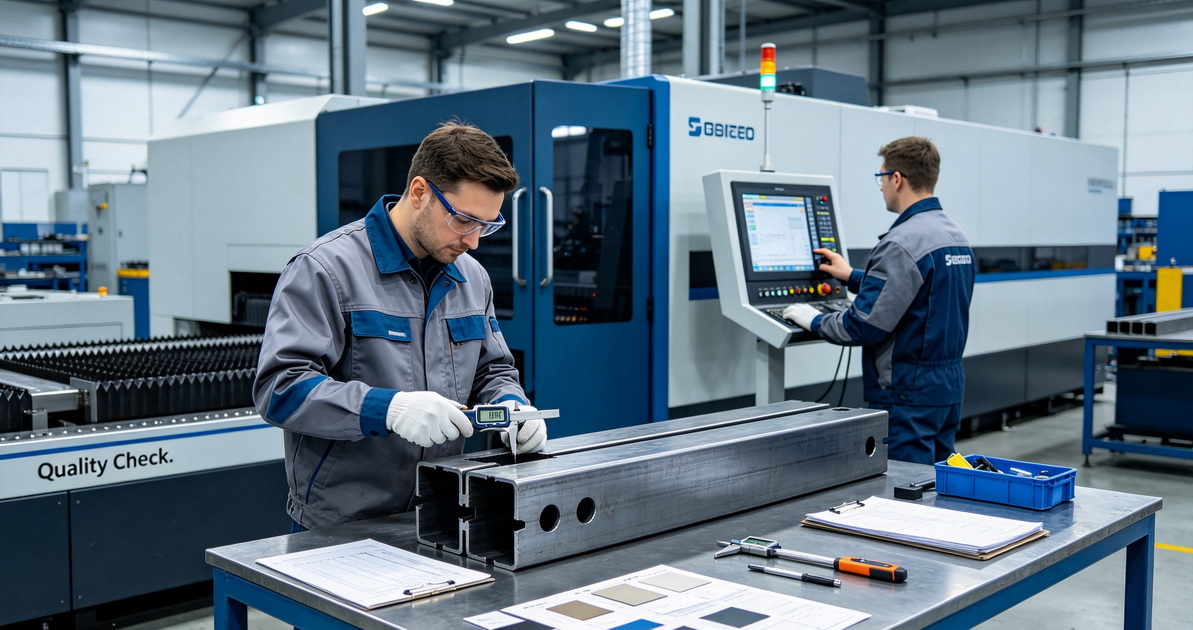
Laser cutting equipment requires engineered safety systems and disciplined operation. Buyers should not treat extraction, guarding, training, or maintenance as optional accessories.
OSHA states that adequate ventilation should be installed to reduce potentially hazardous fumes and vapors generated during laser cutting and related operations. Proper ventilation also helps control fire and exposure risks associated with laser-generated contaminants.
For buyers supplying or operating equipment in the European market, CE marking is a legal conformity process rather than a general quality label. CECIMO notes that machinery subject to applicable European requirements cannot be placed on the single market without CE marking and compliance with relevant essential health and safety requirements.
Confirm the following with your machine supplier:
- Fully enclosed cutting area where appropriate
- Interlocks and emergency-stop functions
- Fume extraction interface and requirements
- Electrical protection and local voltage compatibility
- Laser safety classification information
- Operating and maintenance documentation
- Training plan
- Risk-assessment and conformity documentation where required
- Spare-parts and remote-support process
CNDY-Press develops, manufactures, sells, and supports fiber laser cutting machines and other sheet-metal processing equipment. The company also undertakes OEM and ODM manufacturing projects and provides customization based on buyer requirements.
For pipe laser cutting projects, a useful supplier conversation should begin with the fabrication workflow, not simply a power rating. CNDY-Press can help buyers discuss:
- Tube and profile types
- Diameter and section-size range
- Material grades and thicknesses
- Finished-part geometry
- Daily and annual production volumes
- Semi-automatic or automatic loading
- CNC control and software preferences
- Electrical and safety requirements
- OEM branding requirements
- Packing, shipping, installation, and after-sales support
The objective is to match the machine configuration to the real production bottleneck—whether that bottleneck is cutting, setup, material movement, quality variation, or delivery speed.
Pipe laser cutting can reduce total processing time and material waste by combining multiple tube-processing operations into a programmable workflow. Its greatest value appears in repeat production, complex geometries, high labor content, and applications where part consistency matters.
Manual tube processing remains useful for simple, low-volume, repair, and highly variable work. But when manual steps create delays, scrap, inconsistent fit-up, and repeated handling, a fiber laser tube cutting machine can become a more controlled route to finished parts.
If you are assessing a pipe laser cutting investment, prepare a representative list of tube profiles, materials, thicknesses, lengths, part drawings, monthly quantities, and current manual process steps. Share that information with CNDY-Press to evaluate a tailored machine configuration and an OEM or ODM production solution for your workshop.
Not always. For a few simple straight cuts, a manual saw may be quicker because programming and setup take time. Pipe laser cutting becomes more advantageous when parts need holes, slots, notches, contours, marking, repeated setups, or consistent higher-volume production.
It can reduce waste through programmed cut positioning, more repeatable part placement, narrower kerf, fewer measurement errors, and improved remnant management. The actual material yield depends on tube length, part geometry, nesting strategy, trim requirements, and product quality.
For many holes, slots, contours, and cutouts, it can reduce or eliminate separate drilling and milling steps. Whether it fully replaces those operations depends on material, thickness, hole quality requirements, thread requirements, tolerance, and downstream finishing specifications.
Provide tube and profile drawings, materials, grade, wall thickness, diameter or section dimensions, tube length, minimum and maximum part length, quantities, tolerance requirements, required features, loading preference, electrical standard, delivery location, and desired automation level.
The hidden cost is often not the saw blade or drill bit. It is the accumulated labor from measuring, marking, moving, clamping, drilling, deburring, inspecting, sorting, and correcting errors across several workstations.
1. TRUMPF. "[Advantages of Laser Tube Cutting Machines]"
2. TRUMPF. "[Laser Tube Cutting for Beginners and Experts]"
3. TRUMPF. "[The Great Freedom of Tube Processing With Laser Tube Cutting]"
4. Bystronic. "[Automated Tube Laser Cutting Systems]"
5. Bystronic. "[Profiting With High-Power Fiber Lasers]"
6. Bystronic. "[Fiber Laser Cutting Solutions]"
7. OSHA. "[Technical Manual: Laser Hazards]"
8. University of Wisconsin–Madison Environment, Health & Safety. "[Laser Cutter Safety]"
9. CECIMO. "[Guidelines of CE Marking on Laser Machines]"
10. CNDY-Press. "[About Us]"


