


Views: 214 Author: CNDY-Press Publish Time: 2026-09-01 Origin: Site


Content Menu
● Is It Press Brake or Brake Press?
>> Main Components of a CNC Press Brake
● Why Is It Called a Press Brake?
● Press Brake vs Brake Press: Why the Difference Matters
>> Clear RFQs and Machine Specifications
>> Accurate Searches and Better Supplier Comparisons
>> Better Training and Safer Operation
● Common Press Brake Terminology Mistakes
>> Bending Machine vs Press Brake
>> Press Brake vs Folding Machine
>> Tonnage
>> Crowning
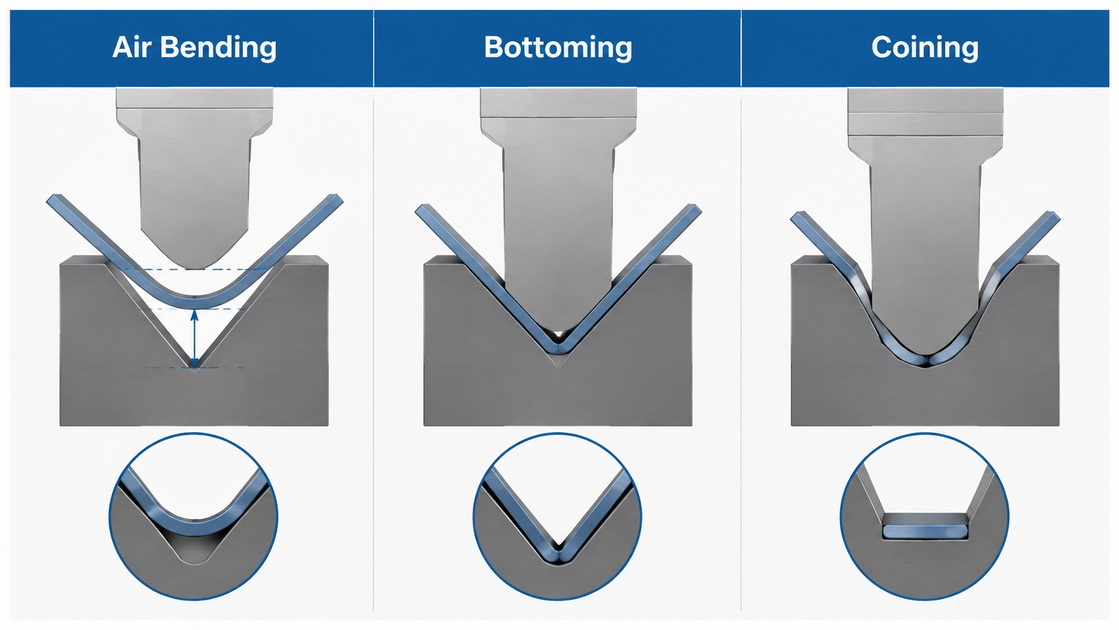
>> Air Bending, Bottoming, and Coining
● How to Select the Right CNC Press Brake
>> Step 1: Analyze Your Parts Before Choosing Tonnage
>> Step 2: Confirm the Bending Method and Tooling
>> Step 3: Review Accuracy Requirements
>> Step 4: Plan Safety Before Installation
>> Step 5: Evaluate Supplier Capability
● Expert Perspective: A Correct Name Does Not Replace Correct Engineering
● FAQ
>> 1. Is it called a press brake or a brake press?
>> 2. Why is a press brake called a brake?
>> 3. What is the difference between a CNC press brake and a hydraulic press brake?
>> 4. How do I calculate press brake tonnage?
>> 5. What is air bending on a press brake?
In sheet-metal fabrication, press brake is the accepted technical and commercial term for a machine that bends sheet metal or plate using controlled force, tooling, and a programmable or manual positioning system. "Brake press" is commonly understood in informal workshop conversation, but it is not the preferred term for machine specifications, RFQs, training documents, operator manuals, spare-parts requests, or international procurement.
For buyers evaluating a CNC press brake, correct terminology is not a minor grammar issue. It affects how efficiently teams search for equipment, compare machine specifications, communicate with manufacturers, assess tooling compatibility, train operators, and request after-sales service. For global OEM and ODM manufacturing projects, using the phrase CNC press brake creates a clearer connection to industry-standard machine categories, safety guidance, technical documentation, and supplier catalogs.
CNDY-Press develops, manufactures, sells, and services sheet-metal fabrication equipment, including CNC press brakes. We also support OEM, ODM, and customized manufacturing projects based on customers' production requirements. From our engineering perspective, the correct name helps buyers begin with the correct machine—but successful selection ultimately depends on tonnage, bending length, material, tooling, control system, backgauge configuration, safety system, and application requirements.
Short answer: Say and write press brake, not brake press, when referring to a machine designed to bend sheet metal.
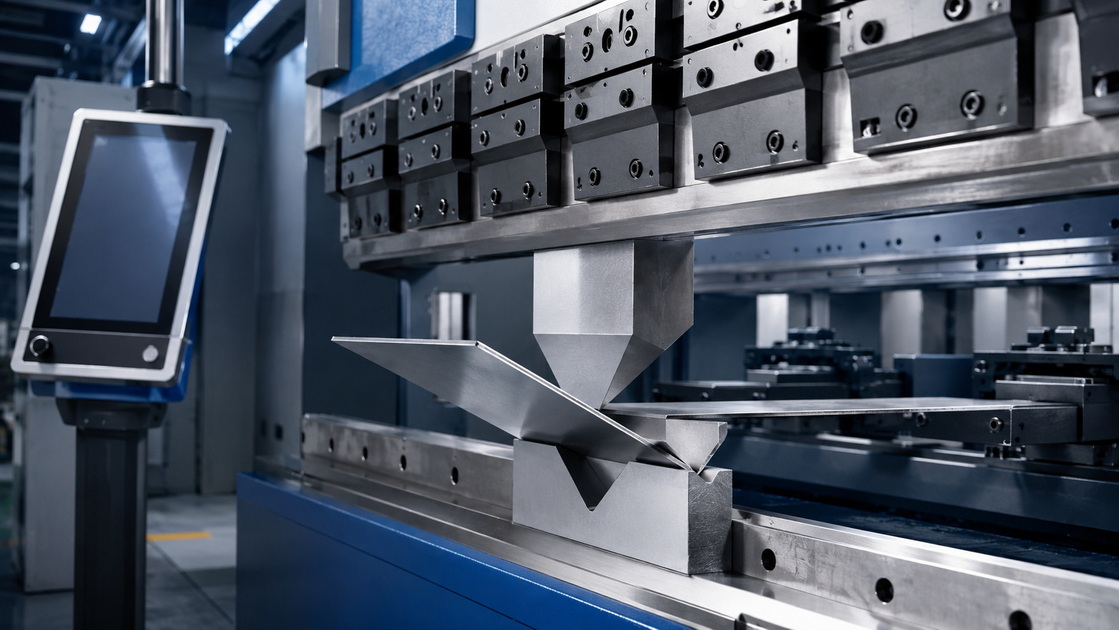
Both "press brake" and "brake press" are usually intended to describe the same class of metal bending machine: a machine that forms sheet metal by pressing a punch into a die.
However, only press brake is the standard order used across most machine catalogs, technical manuals, training resources, machine-safety standards, and industrial purchasing documents.
| Term | Meaning in Metal Fabrication | Recommended for Professional Use? | Notes |
|---|---|---|---|
| Press brake | A machine that bends sheet metal or plate using force, a ram, punch, die, and bed | Yes | The recognized technical and commercial term |
| CNC press brake | A press brake controlled by CNC for accurate backgauge positioning, bend sequences, and repeatable production | Yes | Preferred term for modern automated bending equipment |
| Hydraulic press brake | A press brake driven primarily by hydraulic cylinders | Yes | Common machine category |
| Servo electric press brake | A press brake powered by an electric servo-drive system | Yes | Common energy-efficient machine category |
| Brake press | Informal reversal of “press brake” | No | Usually understood but less precise in procurement and documentation |
| Press break | Incorrect term | No | “Break” means fracture, not controlled bending |
| Sheet metal bending machine | Broad descriptive term | Yes, with context | Useful when describing general capability, but less specific than “press brake” |
The source article correctly identifies "press brake" as the standard terminology and explains that both expressions usually refer to a machine with the same essential bending components: a ram, bed, punch, die, backgauge, and drive system.
A press brake is a machine tool used to bend sheet metal and metal plate into a controlled shape or angle. The workpiece is positioned over a lower die, and an upper punch moves downward to form the bend.
The machine may use hydraulic, mechanical, pneumatic, servo-electric, or hybrid drive technology. Modern CNC press brakes commonly use programmable axes to control ram movement, backgauge location, bend angle, crowning, and multi-step bending sequences.
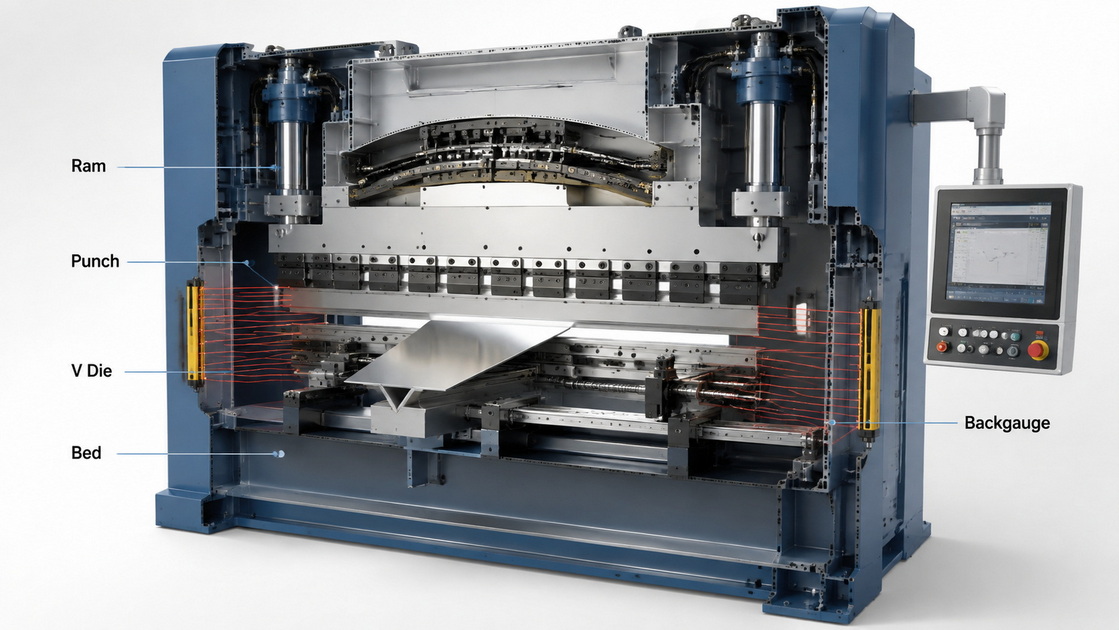
A typical CNC press brake includes:
- Ram: The moving upper beam that carries the punch.
- Bed: The lower structure that supports the die.
- Punch: The upper bending tool that presses the sheet.
- Die: The lower tool, often a V-die, that supports and shapes the material.
- Backgauge: The positioning system that controls flange length and repeatability.
- CNC controller: The interface used to program bend angles, material parameters, sequences, and axis movements.
- Hydraulic or servo drive: The power system that moves the ram.
- Crowning system: A compensation mechanism that helps maintain consistent bend angles along long workpieces.
- Safety system: Guarding and protective devices that help reduce exposure to point-of-operation hazards.
- Tooling clamps: Systems that secure punches and dies for accurate, repeatable bending.
A press brake is specifically classified as a machine designed and constructed for the purpose of bending material under ANSI B11.3-2022, the U.S. machine-specific safety standard for power press brakes.
The phrase "press brake" combines two ideas:
- Press: A machine that applies controlled force.
- Brake: A historical metalworking term for a device that bends, shapes, or breaks material through force.
In modern fabrication, the term does not mean the machine "breaks" sheet metal. A press brake is designed to deform metal plastically into a desired bend angle, radius, flange, channel, box, bracket, panel, or profile.
The source article notes that "brake" evolved from an older term connected with crushing, bending, or shaping devices, while "press" refers to the controlled force applied by the machine. Together, the term describes a bending machine that presses material into shape rather than fractures it.
In English machine terminology, the last word often identifies the core machine type, while the preceding word describes how it works or what variation it is.
For example:
- Press brake: A brake operated by pressing force
- Box and pan brake: A brake designed for box and pan fabrication
- Hydraulic press brake: A press brake driven by hydraulic power
- CNC press brake: A press brake controlled by computer numerical control
- Servo electric press brake: A press brake powered by servo-electric technology
"Brake press" reverses that conventional machine-category wording. It may be recognizable in casual conversation, but it can create inconsistent documentation and less accurate search behavior.
Most experienced fabricators will understand both terms. But in a professional environment, vocabulary affects process control.
When sending a request for quotation, use CNC press brake and state the required machine specifications. This reduces ambiguity between suppliers and helps sales engineers identify the correct configuration.
A clear press-brake RFQ should include:
- Required bending length
- Maximum material thickness
- Material grade and tensile strength
- Maximum bend length
- Required tonnage
- Production volume
- Typical part drawings
- Desired bend accuracy
- Number of backgauge axes
- Tooling preference
- Automation requirements
- Safety requirements
- Electrical standards and destination country
- Installation, training, and service expectations
Instead of writing:
"We need a brake press for metal."
Write:
"We require a 100-ton CNC press brake with a 3,200 mm bending length for air bending mild steel and stainless steel parts. Please quote a multi-axis backgauge, hydraulic crowning, segmented tooling, and safety guarding."
The second request gives an equipment manufacturer enough technical information to recommend an appropriate press brake configuration.
Search engines, supplier websites, machine catalogs, and technical resources overwhelmingly use press brake as the main term. Searching "CNC press brake manufacturer," "hydraulic press brake," "press brake tooling," or "press brake bending tonnage" produces more relevant industrial information than "brake press."
Using the standard expression is especially important for international sourcing. Equipment suppliers may organize their categories by "press brake," while service manuals, tooling providers, and CNC-control documentation use the same terminology.
Machine terminology should remain consistent in:
- Operator manuals
- Safety instructions
- Lockout/tagout procedures
- Work instructions
- Preventive-maintenance schedules
- CNC program sheets
- Tooling setup sheets
- Spare-parts lists
- Incident reports
- Training presentations
Press brakes present point-of-operation hazards where the punch and die close on the workpiece. OSHA identifies 29 CFR 1910.212 as the relevant machine-guarding framework for mechanical power press brakes, and OSHA references ANSI B11.3 as the consensus safety standard for power press brakes.
Using a precise machine name helps operators, supervisors, contractors, and safety teams identify the correct safety information and applicable procedures.
Press break is incorrect when referring to a sheet-metal bending machine.
"Break" means to fracture, separate, or damage material. A press brake is normally used to bend material without breaking it. Because "brake" and "break" sound alike, spell-check tools may not identify the error.
Use:
- Press brake
- CNC press brake
- Hydraulic press brake
- Sheet metal bending machine
Avoid:
- Press break
- CNC press break
- Hydraulic press break
"Bending machine" is not wrong. It is a broad term that may include:
- Press brakes
- Panel benders
- Folding machines
- Roll benders
- Tube benders
- Wire benders
- Manual sheet-metal brakes
- Profile-bending machines
Use press brake when you mean the specific punch-and-die machine used to bend sheet metal or plate.
A press brake forms metal using a punch and die. A folding machine typically holds the sheet with a clamping beam and moves a folding blade to create the bend. Both form sheet metal, but they use different processes, tooling, handling methods, and ideal applications.
| Machine Type | Main Forming Method | Typical Strength | Common Applications |
|---|---|---|---|
| CNC press brake | Punch presses sheet into a die | Versatile bending, high tonnage, complex parts | Brackets, enclosures, cabinets, frames, channels |
| Folding machine | Folding blade rotates or moves material around a bend line | Large panels, low marking, complex flanges | Architectural panels, HVAC panels, façade parts |
| Panel bender | Automated blank handling and folding tools | High-volume automation and repeatability | Cabinets, appliance panels, electrical enclosures |
| Roll bender | Rolls progressively curve material | Radius and cylindrical forms | Tanks, cones, ducts, curved panels |
| Manual brake | Hand-operated leaf or clamping action | Low-volume and light-gauge work | Small workshops, flashing, simple panels |
CNC Press Brake Terminology Buyers Should Know
Correct terminology helps buyers compare machines more efficiently. Below are common terms that should appear in a serious CNC press brake quotation, proposal, specification sheet, or machine acceptance checklist.
Tonnage is the maximum forming force a press brake can apply. It is usually expressed in tons or kilonewtons.
Required tonnage depends on:
- Material tensile strength
- Sheet thickness
- Bend length
- Die opening
- Bending method
- Tooling geometry
- Grain direction
- Required bend radius
The required force rises sharply as material thickness increases. In common tonnage calculations, thickness is squared, meaning a small increase in material thickness can substantially increase bending force. Bystronic's example formula incorporates material thickness, die opening, bend length, tensile-strength factor, bending method, and tooling factors.
Bending length is the maximum workpiece length that can be bent between the press brake's side frames. Common specifications include 1,250 mm, 2,500 mm, 3,200 mm, 4,000 mm, 6,000 mm, and larger custom configurations.
Do not select bending length only from your longest current part. Consider future product sizes, tool setup space, side-frame clearance, and whether a long part requires multi-station tooling.
A backgauge positions the workpiece for repeatable flange lengths. A CNC backgauge may include several axes, such as:
- X axis: Front-to-back movement
- R axis: Vertical movement
- Z1 and Z2 axes: Independent finger positioning across the machine width
- X1 and X2 axes: Independent depth positioning on advanced systems
More axes can improve setup flexibility for complex bends and irregular parts. But additional axes should be justified by part mix and production requirements rather than selected only for specification value.
Crowning compensates for deflection in the ram and bed during long bends. Without adequate compensation, a long workpiece may bend more in the center or at the ends, depending on the setup and machine behavior.
Hydraulic or mechanical crowning can help achieve more uniform angles across long parts, especially when bending high-strength material or using long tooling stations.
These are different bending methods.
| Method | Description | Force Requirement | Typical Use |
|---|---|---|---|
| Air bending | Punch presses material partially into a V-die without fully contacting die sides | Lowest | Flexible angle control, common CNC press brake method |
| Bottoming | Material is pressed more deeply into the die to achieve the target angle | Higher than air bending | Greater repeatability with dedicated tooling |
| Coining | Punch forces material into the die with high pressure, plastically setting the bend | Highest | High-precision applications, special cases |
Bystronic notes that bending method significantly changes tonnage requirements. In its published formula, method factors increase from air bending to bottom bending and increase again for coining.
Engineering warning: Never choose press brake tonnage using a simple "tons per meter" estimate alone. Review actual material, tooling, bend length, and forming method with the machine supplier.
Correct terminology helps you find the correct product category. Technical selection helps you purchase a machine that will perform reliably in production.
Collect drawings for your representative parts—not only your easiest parts. Include:
- Longest bends
- Thickest materials
- Highest-strength materials
- Smallest flange lengths
- Tightest bend radii
- Multi-bend parts
- High-volume products
- Parts requiring cosmetic surface protection
If your product mix includes carbon steel, stainless steel, aluminum, galvanized steel, and high-strength steel, calculate requirements for each material.
Tooling selection affects tonnage, bend radius, marking, part quality, setup time, and production flexibility.
Discuss:
- Punch angle
- Punch radius
- V-die opening
- Die shoulder radius
- Tooling segmentation
- Quick-clamping system
- Gooseneck tooling requirement
- Hemming or offset tooling
- Surface-protection film
- Tooling compatibility standard
For repeatable parts, assess:
- Ram repeatability
- Angle-control system
- Backgauge repeatability
- Crowning type
- Frame rigidity
- Tooling condition
- Material variation
- Operator workflow
- CNC programming capability
The press brake cannot compensate for every variation in incoming sheet material. Thickness and tensile-strength variation can change springback. For demanding work, test actual production material rather than relying on nominal values.
Safety is not an optional accessory. A press brake must be assessed as a complete work system that includes the machine, tooling, part geometry, operator access, material handling, safeguarding, setup procedures, maintenance, and training.
OSHA's machine-guarding rules require one or more safeguarding methods to protect employees from hazards such as point-of-operation danger zones, ingoing nip points, rotating parts, flying chips, and sparks. OSHA references physical barriers, devices, and safe-distance methods, with safe-distance methods accepted only when physical barriers or devices are not feasible.
Potential press-brake safeguarding approaches include:
- Laser-based active optoelectronic protective devices
- Light curtains
- Physical barrier guards
- Two-hand controls for applicable operations
- Foot controls with appropriate safeguarding
- Safe-speed modes
- Interlocked side and rear guards
- Emergency-stop systems
- Operator training and documented risk assessment
The ANSI B11.3-2022 standard applies specifically to machines classified as power press brakes and establishes safety requirements for machines designed to bend material.
For OEM and ODM press brake projects, assess more than the machine's catalog parameters.
Ask potential suppliers about:
- Engineering consultation and part analysis
- Machine-frame design and stress control
- Hydraulic, electric, or hybrid drive options
- CNC controller brand and support
- Backgauge configuration
- Tooling compatibility
- Crowning system
- Safety system options
- Factory acceptance testing
- Installation and commissioning support
- Operator training
- Spare-parts availability
- Remote technical support
- Warranty scope
- Export packaging
- Electrical standards for your market
- Custom colors, branding, and OEM documentation
A reliable supplier should review your parts and recommend a configuration based on your actual application, not simply quote the highest tonnage model available.
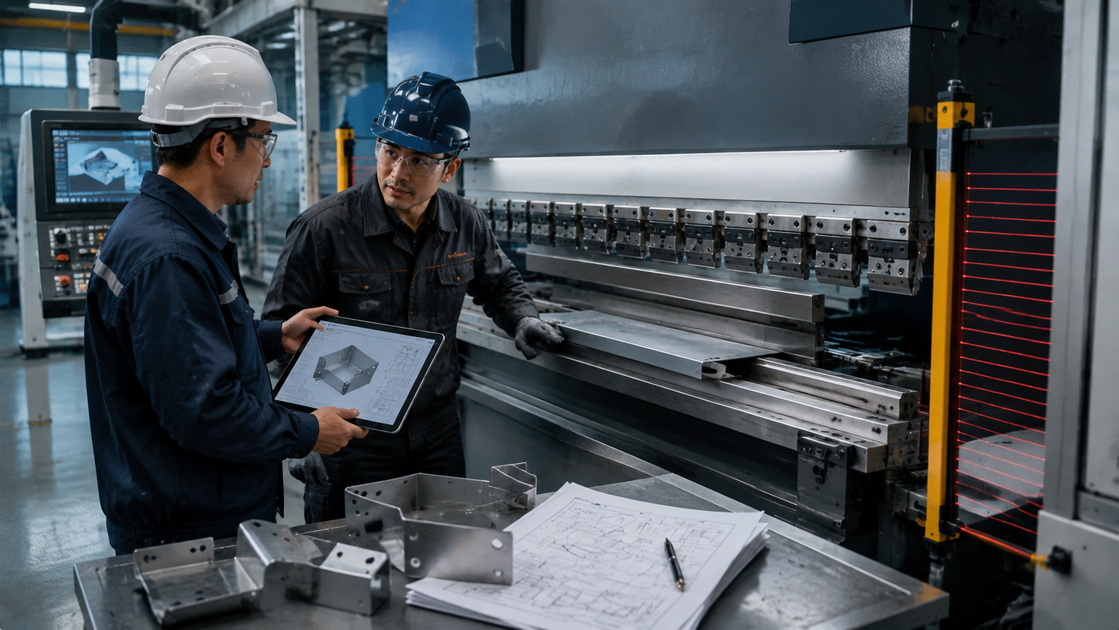
"Press brake" is the correct industry term. But the name alone does not guarantee that a machine fits the job.
A 100-ton, 3,200 mm CNC press brake may be ideal for one fabricator and insufficient or excessive for another. The difference comes from the application.
Consider two companies:
- A cabinet manufacturer bends thin-gauge mild steel in high volumes. It may prioritize speed, backgauge flexibility, repeatable angles, and fast tooling changes.
- A heavy-equipment supplier bends thicker, high-strength plate in longer lengths. It may prioritize tonnage, frame rigidity, wider dies, crowning, material handling, and advanced safety protection.
Both companies need a press brake. They may require completely different machine configurations.
This is why CNDY-Press recommends treating the machine purchase as a production-system project. A well-matched CNC press brake can support better first-part accuracy, faster setup, lower material waste, safer operation, and more predictable output. An improperly specified machine can create angle variation, tooling damage, poor cycle time, and avoidable safety risk.
The correct term is press brake. "Brake press" may be understood informally, but it is not the standard expression for professional documentation, international sourcing, machine catalogs, or training.
When you are ready to purchase or customize a CNC press brake, use precise language and provide detailed application data. This gives manufacturers the information needed to recommend the correct tonnage, bending length, tooling, CNC control, backgauge, crowning, safety system, and automation options.
CNDY-Press provides CNC press brakes and integrated sheet-metal fabrication equipment for global manufacturing customers. We support standard machines, customized configurations, OEM branding, ODM development, and project-based technical consultation.
The correct and standard industry term is press brake. "Brake press" is an informal reversed phrase that usually refers to the same machine but is less suitable for technical documentation, procurement, equipment listings, and operator training.
In metalworking, "brake" historically refers to a device that bends, shapes, or forms material. A press brake bends sheet metal by applying controlled force through a punch and die. It does not "break" the material.
A CNC press brake uses a programmable control system to manage functions such as ram position, bend angle, backgauge position, bend sequence, and crowning. A hydraulic press brake describes the drive system used to move the ram. Many modern machines are both CNC-controlled and hydraulically driven.
Required tonnage depends on material thickness, tensile strength, bend length, die opening, bending method, and tooling configuration. Because thickness has a squared effect in common tonnage formulas, small thickness increases can require substantially more force. Use a verified tonnage chart or consult the machine and tooling manufacturer before production.
Air bending is a process in which the punch pushes the sheet into a V-die without forcing it fully to the bottom of the die. It is the most common press-brake method because one die can produce different angles through CNC ram-depth control, usually with lower force than bottoming or coining.
1. CNHAWE. "[Press Brake vs Brake Press: Understanding the Correct Terminology]." Explains why "press brake" is the standard term, outlines its historical language roots, and distinguishes it from common naming mistakes. [cnhawe]
2. American National Standards Institute. "[ANSI B11.3-2022: Safety Requirements for Power Press Brakes]." Describes the machine-specific safety requirements that apply to power press brakes designed for material bending. [webstore.ansi]
3. Occupational Safety and Health Administration. "[Power Press Brakes]." Identifies 29 CFR 1910.212 and ANSI B11.3 as relevant references for power press-brake point-of-operation safeguarding. [osha]
4. Occupational Safety and Health Administration. "[Guidelines for Point of Operation Guarding of Power Press Brakes]." Describes machine-guarding methods, including physical barriers, physical devices, and limited safe-distance approaches. [osha]
5. Bystronic. "[How to Calculate Press Brake Tonnage]." Provides a tonnage calculation framework covering material thickness, die opening, bend length, tensile strength, bending method, and tooling factors. [bystronic]
6. The Fabricator. "[An Overview of Press Brake Safeguarding]." Discusses the relationship between OSHA guidance, ANSI B11.3, point-of-operation safeguarding, safety devices, and training. [thefabricator]
7. The Fabricator. "[What Excess Tonnage Does to a Press Brake and Tooling]." Explains why excessive force can damage tooling, the ram, and the bed, and discusses tonnage safety margins. [thefabricator]


