


Views: 288 Author: CNDY-Press Publish Time: 2026-11-09 Origin: Site


Content Menu
● Why Source a Press Brake for Galvanized Steel from China?
>> What Recent Industry Data Shows
● How We Selected These Press Brake Manufacturers
● 1. CNDY-Press: Customization for OEM and Distributor Projects
>> Core Strengths and Buyer Fit
● 2. Yawei: Automated Sheet-Metal Processing
● 3. Yangli: An Established Metal-Forming Machinery Business
● 4. JFY: Standardized Equipment and an International Service Network
● 5. YSD: Heavy-Duty and Industrial Forming Equipment
● 6. ACCURL: Multiple Drive Technologies and Export Support
● 7. ADH: Configurable Machinery and Manufacturing Development
● 8. HARSLE: Sheet-Metal Equipment and Application Packages
● 9. DURMAPRESS: Export-Oriented Configurable Equipment
● 10. PrimaPress: Custom Configurations and Broader Machinery Supply
● Capacity, MOQ, and Certification Comparison
● Technical Requirements for Galvanized Steel Bending
>> Identify the Steel Grade and Coating
>> Select Force and Tooling Together
● A Clean Demo Die Can Hide Production Problems
● Buyer's Guide: Factory Verification, Testing, and Logistics
>> Verify the Manufacturing Process
>> Define a Part-Based Acceptance Test
>> Review Compliance and Delivery Timing
>> 1. How Do I Check Whether an ISO Certificate Is Still Valid?
>> 2. Can a Standard CNC Press Brake Bend Galvanized Steel?
>> 3. Does a Larger Punch Radius Always Prevent Zinc Cracking?
>> 4. What If the Supplier Substitutes Components After Approval?
>> 5. How Should We Accept an OEM Machine Under Our Own Brand?
Selecting a press brake for galvanized steel requires more than comparing nominal tonnage and controller brands. The machine must achieve the required geometry while controlling zinc-coating damage, dimensional variation, and handling marks.
For professional buyers, supplier evaluation should cover manufacturing capability, engineering support, quality-control records, delivery reliability, and destination-market compliance. A convincing demonstration should use representative galvanized material—not an unidentified mild-steel sample.
This guide examines ten Chinese manufacturers: CNDY-Press, Yawei, Yangli, JFY, YSD, ACCURL, ADH, HARSLE, DURMAPRESS, and PrimaPress.
The purchasing priority is repeatability: can the proposed configuration produce acceptable parts consistently, with the agreed tooling, material, operator workflow, and safeguards?
This article was commissioned for Maanshan Deyan Precision Machinery Technology Co., Ltd., trading as CNDY-Press, which appears first. The shortlist is not an independently audited performance ranking. No comparative machine tests or factory inspections were conducted.
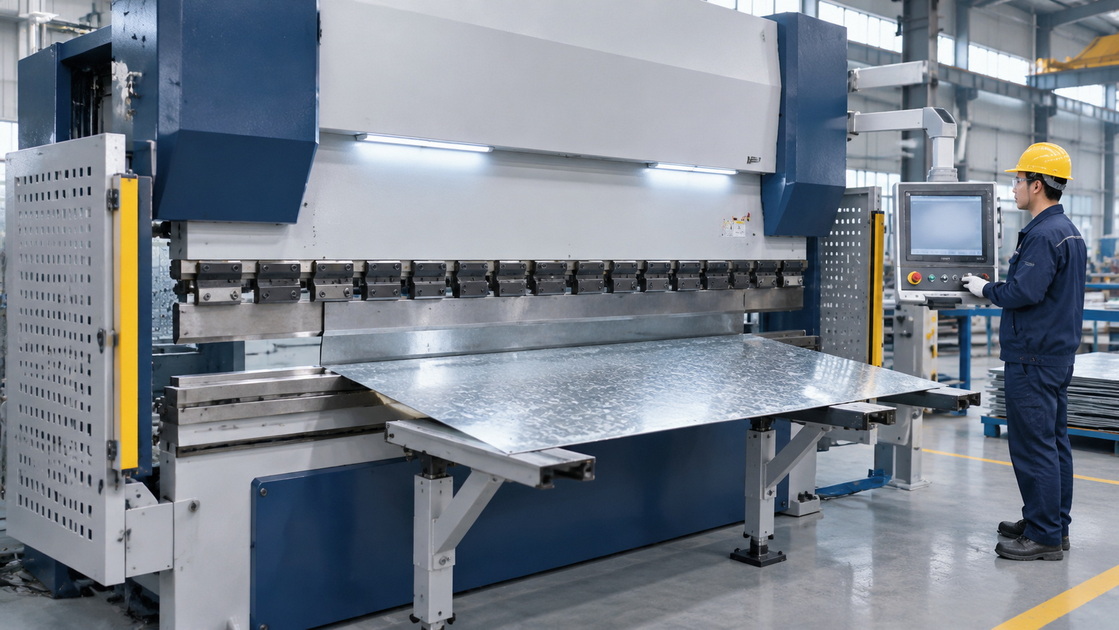
China offers a broad metal-forming equipment supply chain, including machine builders, tooling suppliers, control-system integrators, and automation specialists.
The reviewed manufacturers illustrate concentrations around Ma'anshan and Bowang in Anhui, Yangzhou in Jiangsu, and other established machinery centers such as Huangshi in Hubei.
These locations offer buyers multiple sourcing options. However, proximity to an industrial cluster does not establish that every seller manufactures its own frames, integrates safety systems competently, or maintains reliable service capacity.
The China Machine Tool & Tool Builders' Association reported that China's metalworking machine-tool exports reached USD 9.68 billion in 2025, up 17.9% year on year.
Its January–August 2026 update reported broader machine-tool industry revenue growth of 7.5%, while the metal-forming machine-tool segment recorded a 4.2% decline.
These figures show why buyers should distinguish broad industry expansion from the performance of individual equipment categories.
Neither report isolates press brakes for galvanized steel. The data supports China's relevance as a machinery sourcing market—not a product-specific supplier ranking.
The shortlist prioritizes manufacturers with identifiable press-brake offerings and published company or service information.
Before approving any supplier, examine:
1. Engineering capability: machine selection, tooling, bend simulation, and automation.
2. Manufacturing controls: frame preparation, machining, assembly, and inspection.
3. Application testing: actual galvanized grades, coating conditions, and finished parts.
4. Commercial transparency: configuration, substitutions, warranty, and delivery assumptions.
5. Service readiness: commissioning, training, spare parts, and escalation procedures.
6. Compliance evidence: documentation for the exact machine and destination.
Not all companies disclose current capacity, minimum order quantities, or principal sales markets. Those gaps are identified rather than filled with estimates.
Maanshan Deyan Precision Machinery Technology Co., Ltd. manufactures sheet-metal processing equipment under the CNDY-Press name.
Its official profile describes CNC press brakes, shears, laser cutting machines, rolling machines, and grooving equipment. It explicitly states that it undertakes OEM/ODM projects and customized production.
CNDY-Press is a relevant candidate for smaller machinery brands, distributors, and fabricators seeking configurable equipment and direct engineering discussions.
Its profile also describes an R&D and production team, operational training, and maintenance support.
For galvanized applications, buyers should request a proposal connecting the machine, tooling, coating-protection measures, and acceptance test.
- Founding year: not stated on the reviewed profile.
- Markets: international cooperation is described; principal geographic markets are not quantified.
- OEM/ODM scope: explicitly offered, with project details requiring agreement.
- Value proposition: assess through matched quotations and production trials, not unsupported price comparisons.
Confirm communication responsibilities, drawing approvals, component specifications, and service response arrangements before placing an order.
Yawei's official website states that the company was founded in 1956 and offers digital, flexible, automated, and intelligent sheet-metal processing solutions.
Its positioning makes it relevant to buyers evaluating a press brake within a wider production system.
- Core strength: integrated sheet-metal machinery and automation.
- Markets: Chinese and international buyers; geographic sales shares were not verified.
- Customization scope: discuss application engineering, handling, and automation.
- OEM/ODM limitation: private-label manufacturing was not established by the reviewed evidence.
For galvanized panels, test both bending performance and surface handling throughout the proposed workflow.
Yangli states that it was established in 1966 in Yangzhou, Jiangsu, and describes a broad metal-forming equipment business.
It is relevant for buyers considering bending alongside other forming operations.
- Core strength: a wider metal-forming equipment portfolio.
- Markets: domestic and export activity; principal destinations require confirmation.
- Customization scope: obtain model-specific engineering and integration proposals.
- OEM/ODM limitation: branding rights and contract-manufacturing services need written confirmation.
Do not substitute group-wide production figures for the available capacity of the press-brake line being quoted.
JFY International publishes bending, laser, punching, software, and service offerings.
Its website lists more than 30 sales and service partners, including partners in Europe, Asia, the Americas, and other regions.
- Founding year: not established from the reviewed international page.
- Core strength: standardized machinery supported by a visible partner network.
- Markets: international markets represented through listed partners.
- Customization scope: machine, tooling, software, and workflow configuration.
- OEM/ODM limitation: do not assume private-label availability.
Confirm which local partner will commission the machine, supply parts, and provide warranty support.
Hubei Tri-Ring Metalforming Equipment Co., Ltd., also known as YSD, states that it was established in 1958.
Its official portfolio includes heavy-duty press brakes and other metal-forming systems.
- Core strength: industrial and heavy-duty forming equipment.
- Markets: domestic and international industrial customers; sales distribution was not verified.
- Customization scope: discuss large-format machines and application engineering.
- OEM/ODM limitation: private-label supply requires confirmation.
YSD reports annual output of 1,500 precision CNC forming machines across its business. This is not a verified annual press-brake figure or available capacity commitment.
ACCURL's current company history traces workshop roots to 1988 and identifies 2009 as the launch of the ACCURL brand.
Its website lists hydraulic, hybrid, electric, and tandem press brakes, together with overseas showrooms and dealers.
- Core strength: multiple machine architectures and configurable equipment.
- Markets: published locations include the United States, several European countries, Australia, Mexico, Malaysia, and Israel.
- Customization scope: configurable machines and production solutions.
- OEM/ODM limitation: historical OEM work does not establish current private-label terms.
For galvanized work, compare configurations through the same part trial rather than assuming one drive type inherently protects zinc better.
ADH's published timeline distinguishes the founder's 1982 industry background from a company-establishment milestone in 2001.
Its profile describes manufacturing development, technical investment, and an import/export subsidiary.
- Core strength: sheet-metal machinery and configurable production equipment.
- Markets: China and export customers; principal geographic shares were not established.
- Customization scope: confirm tooling, axes, controls, and handling options.
- OEM/ODM limitation: negotiate private-label and documentation responsibilities explicitly.
Match the contracting entity, factory, payment beneficiary, and machine nameplate. Brand history alone does not resolve these details.
HARSLE's official profile describes press brakes, shears, hydraulic presses, and complete processing solutions for applications such as metal doors.
It also describes overseas agents and training-related support.
- Founding year: not reliably established from the accessible profile text.
- Core strength: equipment packages and application-oriented supply.
- Markets: domestic and overseas customers; current principal markets require confirmation.
- Customization scope: discuss machine packages and production-line requirements.
The website reports ISO and CE-related achievements. Obtain current documents and verify their scope rather than treating historical statements as proof for the quoted machine.
DURMAPRESS advertises CNC press brakes and related sheet-metal equipment from Ma'anshan.
Its current company page identifies a 2014 foundation milestone, while another company page refers to a first factory in 2000. These statements require clarification.
- Core strength: configurable sheet-metal equipment.
- Markets: international customers are addressed; principal sales destinations were not verified.
- Customization scope: obtain a project-specific configuration proposal.
- Buyer precaution: verify the legal entity and distinguish it from similarly named machinery brands.
Inconsistent historical dates do not establish poor machine quality, but they justify a registration check.
PrimaPress publishes hydraulic, servo-hybrid, and automation-related press-brake offerings.
Its product information explicitly describes machinery built with customer-specified configurations.
- Founding year: not established; a founder's industry experience is not an incorporation date.
- Core strength: configuration flexibility and wider sheet-metal equipment supply.
- Markets: international buyers are addressed; principal destinations were not verified.
- Customization scope: controls, machine configurations, and robotic options are described.
Request exact component models, tooling ratings, and contractual performance criteria instead of relying on a broad advertised tonnage range.
MOQ and production capacity are different questions. A supplier may accept a single-machine order without having an immediate manufacturing slot.
| Manufacturer | Public Capacity Evidence | MOQ | Certification or Compliance Check |
|---|---|---|---|
| CNDY-Press | Current output not disclosed | Confirm by configuration | Request current site and machine documents |
| Yawei | Available order slots unverified | Confirm directly | Check exact model and destination |
| Yangli | Group scale is not press-brake capacity | Confirm directly | Verify relevant site and product scope |
| JFY | Service network published; output unverified | Confirm through supplier | Match machine and local installation requirements |
| YSD | Reports 1,500 forming machines annually | Confirm directly | Separate corporate claims from machine conformity |
| ACCURL | Historical factory-capacity claims published | Confirm directly | Request current documents, not legacy certificates |
| ADH | Multiple manufacturing milestones published | Confirm directly | Match brand, legal entity, and factory |
| HARSLE | Expansion described; current output unverified | Confirm directly | Verify published ISO/CE claims |
| DURMAPRESS | Current press-brake output unverified | Confirm directly | Resolve entity and document consistency |
| PrimaPress | Product range published, not annual output | Confirm directly | Check configuration-specific evidence |
"Galvanized steel" describes a coating condition, not one strength grade.
Record the steel grade, thickness range, tensile properties, coating designation, rolling direction, and required appearance.
For example, SSAB publishes different minimum bend-radius recommendations for different coated Docol grades and warns that tight radii can cause coating microcracking.
A single universal radius rule is therefore inappropriate.
Press-brake force requirements depend on thickness, bend length, material strength, die opening, and bending method.
Confirm the loading limits of the machine, punch, die, and clamping system. Full-machine tonnage does not authorize the same load over a short tool section.
A wider die opening may reduce force, but it also changes minimum flange requirements and the resulting bend geometry.
Discuss polished tooling, clean die shoulders, suitable protection films or anti-marking systems, and panel support.
Test protective materials under the intended load. They can affect friction, geometry, and dimensional consistency.
Also distinguish bending pregalvanized sheet from bending steel before hot-dip galvanizing. Guidance for one process should not automatically be transferred to the other.
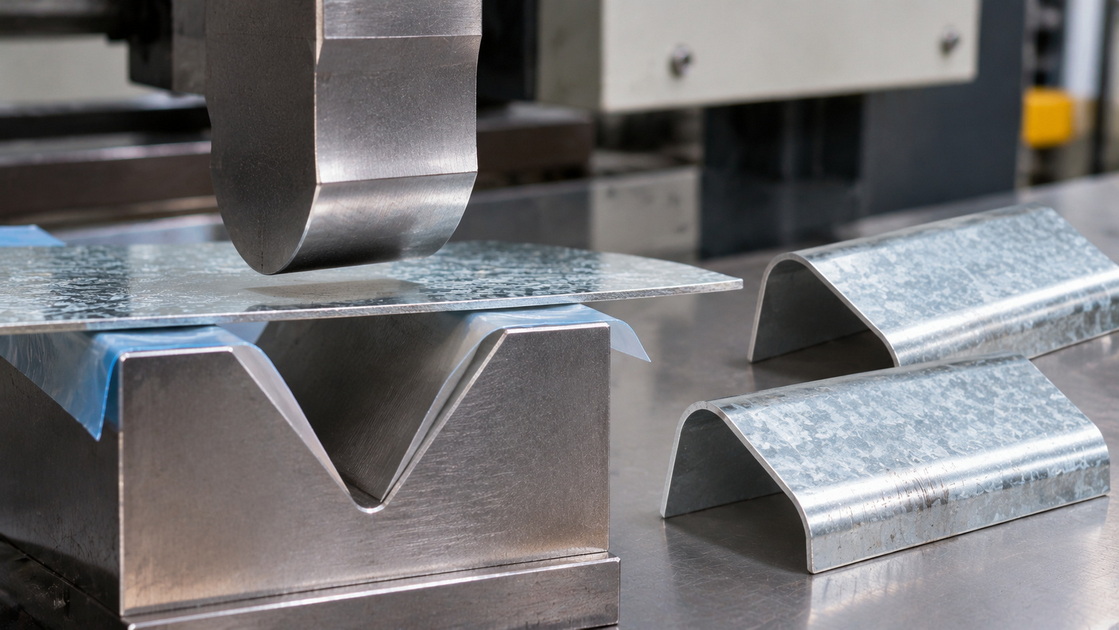
A freshly cleaned tool may produce attractive demonstration parts while failing to reveal progressive zinc pickup.
SSAB's tooling guidance notes that zinc can adhere to tool surfaces during production and should be removed periodically.
Therefore, include an agreed consecutive-part run in the factory acceptance test.
Inspect early and later parts, document cleaning intervals, and prohibit undisclosed polishing, material changes, or selective presentation of successful pieces.
The number of parts should reflect the application. There is no universal run length that proves every galvanized-steel process.
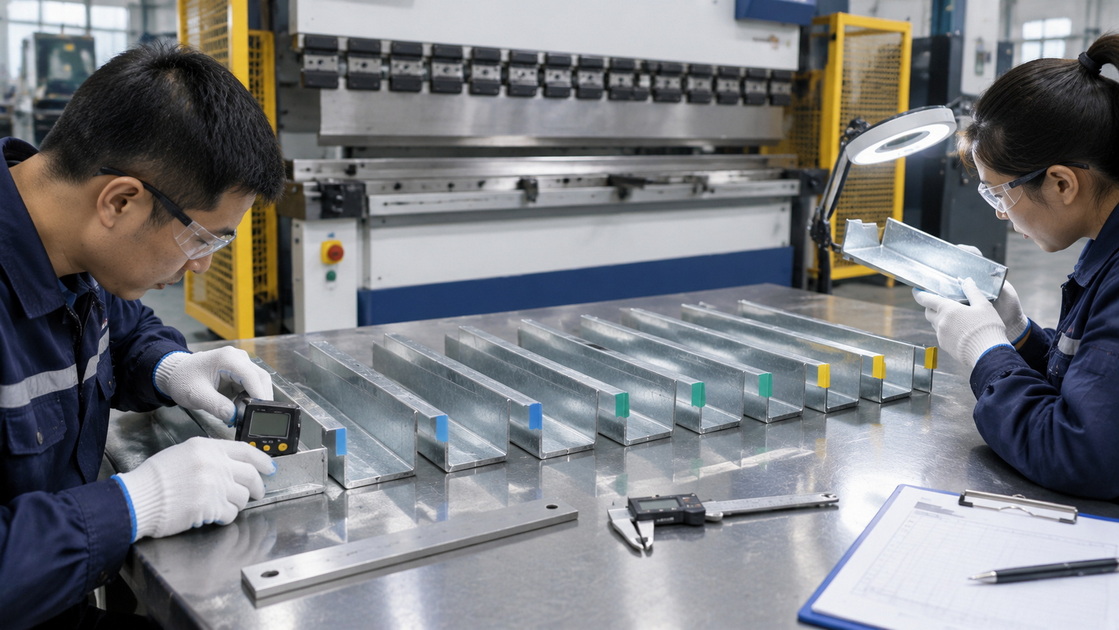
Request evidence of frame preparation, machining, assembly, geometry inspection, and final testing.
Freeze the bill of materials. "Same brand" does not necessarily mean the same servo drive, valve, controller license, or safety-device model.
Supply representative drawings and material.
Agree on angle, flange dimensions, straightness, coating appearance, tooling, cycle definition, and measurement method.
Distinguish axis-positioning accuracy from finished-part accuracy.
For EU supply, the Machinery Regulation becomes mandatory on January 20, 2027. Resolve the applicable regime using the intended market-placement date—not merely the order date.
CE marking is not an environmental certificate. RoHS applicability requires a scope assessment; it should not be demanded or promised automatically for every industrial machine.
For shipping, confirm machine weight, center of gravity, lifting arrangements, packing, corrosion protection, foundation, utilities, installation access, and commissioning responsibilities.
The right supplier must connect machine capability with tooling, material variability, coating protection, safety, and after-sales support.
Use the shortlist to begin technical qualification—not to bypass it.
Verify it through the issuing body or an appropriate accredited-certification database. Match the entity, site, scope, standard, and current status.
ISO certification does not establish machine-specific conformity or finished-part accuracy.
Often yes, provided force, tooling, clearance, handling, and coating-protection requirements are suitable. The word "galvanized" alone does not establish the required machine specification.
No. Results depend on the steel grade, coating, actual formed radius, tooling, and process. Use mill guidance and representative trials.
Require written change approval and model-level specifications. Define inspection rights, documentation updates, and remedies before production begins.
Define responsibility for conformity assessment, documentation, nameplates, manuals, spare parts, and warranty. Rebranding can create legal responsibilities; obtain destination-specific professional advice.
1. CNDY-Press. ["About Us."] Official source for equipment categories, OEM/ODM services, customization, engineering-team statements, training, and maintenance support. Supplier-reported claims were not independently audited. [cndypress]
2. China Machine Tool & Tool Builders' Association. ["2025 Annual Economic Operation Report."] Published March 2, 2026. Industry analysis using customs, official production statistics, association estimates, and member-company data. Source for USD 9.68 billion in metalworking machine-tool exports and 17.9% growth. [cmtba.org]
3. China Machine Tool & Tool Builders' Association. ["January–August 2026 Industry Update."] Published October 10, 2026. Source for broader industry revenue growth and the separate metal-forming segment result. [cmtba.org]
4. Yawei. [Official company website]. Founding year and digital, flexible, automated sheet-metal equipment positioning. [en.yawei]
5. Yangli. [Official company website]. Establishment in 1966 and metal-forming machinery profile. [yanglipress]
6. JFY International. [Official product and partner-network website]. Bending products, service positioning, and international sales/service partners. Dynamically displayed zero-value counters were not treated as valid operating statistics. [jfy-international]
7. Hubei Tri-Ring Metalforming Equipment. [Official YSD website] and [company profile]. Founding year, product scope, and supplier-reported annual output across forming-machine categories. [en.ysd-hd]
8. ACCURL. ["About ACCURL."] Workshop history, brand development, manufacturing scope, and overseas network. Historical capacity statements are not current available-slot guarantees. [accurl]
9. ADH Machine Tool. ["About Us."] Published history distinguishes the founder's earlier industry activity from company-establishment milestones. [adhmt]
10. HARSLE. ["About Us."] Machinery portfolio, overseas-agent statements, and historical certification claims. Current validity and model coverage require verification. [harsle]
11. DURMAPRESS. [Current company profile] and [alternative company history]. These contain different founding-history statements, disclosed in the article rather than silently reconciled. [durmapress]
12. PrimaPress. ["Hydraulic Press Brakes and CNC Bending Solutions."] Source for configurable machinery and robotic options. Advertised capacities are product ranges, not annual factory output. [prima-press]
13. SSAB. ["Docol 500DP."] and ["Docol 1000DP."] Grade-specific bend recommendations and coating microcracking qualifications. [ssab]
14. SSAB. ["Tooling Solutions for Advanced High Strength Steels."] Technical background on bending, tooling, die width, and zinc accumulation. Guidance must be applied to the relevant material and process. [ssab]
15. American Galvanizers Association. ["Bend Diameters."] Guidance specifically addressing bending before galvanizing. It is not presented as a universal rule for pregalvanized sheet. [galvanizeit]
16. European Commission. ["Machinery."] Official machinery legislation and January 20, 2027 application date. [Harmonised machinery standards information] provides additional transition context. [single-market-economy.ec.europa]


