


Views: 233 Author: CNDY-Press Publish Time: 2026-11-20 Origin: Site


Content Menu
● What Is a Hydraulic CNC Folding Machine?
>> Why Machine Terminology Matters
● Hydraulic CNC Folding Machine vs. CNC Press Brake
● How to Specify a CNC Sheet Metal Bending Machine
>> Define the Material Precisely
>> Confirm Length, Geometry, and Clearance
>> Check Tooling Before Comparing Capacity
● What Actually Determines Bending Accuracy?
>> Springback and Material Variation
>> Backgauge Positioning and Part Contact
● A Practical Factory Acceptance Test
>> Step 1: Select Representative Components
>> Step 2: Agree on Measurement Rules
>> Step 3: Measure Repeatability and Changeover
>> Step 4: Document the Accepted Configuration
● Compare Cost per Accepted Part, Not Purchase Price Alone
● Safety and Maintainability Belong in the Specification
● OEM and ODM Customization with CNDY-Press
>> Build the Request Around a Production Brief
>> Separate Essential Requirements from Options
>> 1. Is a CNC folding machine the same as a CNC press brake?
>> 2. Can the same machine bend mild steel, stainless steel, and aluminum?
>> 3. Does a CNC controller guarantee accurate finished parts?
>> 4. Can one operator handle large sheets?
>> 5. What should be included in a machine quotation?
A hydraulic CNC folding machine can simplify sheet metal production, but it is not interchangeable with a CNC press brake. Although suppliers sometimes use these names loosely, the machines form metal differently. Choosing the right system starts with your parts, material specifications, and production workflow—not the product name alone.
At CNDY-Press, our focus is the development, manufacturing, sales, and service of CNC press brakes and related sheet metal processing equipment. We also undertake OEM and ODM manufacturing projects and provide customized production based on customer requirements.
Our purchasing perspective is straightforward: define the finished component first, then evaluate the machine, tooling, controls, and support needed to produce it consistently.
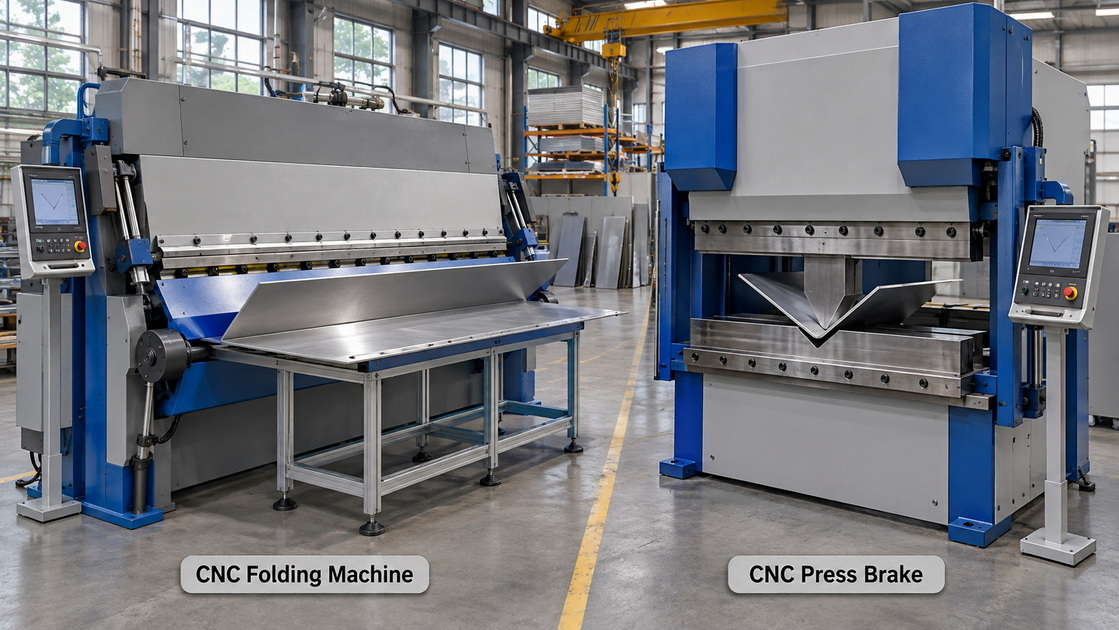
A hydraulic CNC folding machine clamps sheet metal between upper and lower beams. A folding beam then rotates the projecting flange to create the bend. Much of the workpiece remains supported on a table.
A CNC hydraulic press brake uses a different arrangement. A punch pushes the sheet into a lower die, and the tool movement forms the bend.
Both processes produce sheet metal components. However, their tooling requirements, material handling, and geometric limitations differ.
Search terms such as "metal sheet CNC folder machine" and "iron plate hydraulic folding machine" can describe different equipment across supplier websites.
Before requesting a quotation, ask for a working-cycle video and tooling diagram. Confirm whether the machine uses a rotating folding beam or a punch-and-die system.
This simple check prevents unsuitable capacity comparisons and helps ensure that competing quotations cover the same manufacturing process.
Neither machine is universally better. The stronger choice depends on the part family and how operators handle it.
| Selection factor | CNC folding machine | CNC press brake |
|---|---|---|
| Forming action | Clamps the sheet and rotates a folding beam | Drives a punch toward a lower die |
| Workpiece support | Much of the sheet rests on a support table | Support requirements change as the sheet bends |
| Typical evaluation priority | Panel handling, flange access, folding clearance | Force, tooling, bend length, and working clearance |
| Tooling considerations | Beam tooling, segmentation, and clamping geometry | Punch profile, die opening, and tool load limits |
| Large-panel production | Table support may reduce manual handling | Followers or other support equipment may be needed |
| Application suitability | Often attractive for panel-based components | Often attractive for varied profiles and heavier bending |
For large panels, handling may be the deciding factor. For thicker plate or diverse formed profiles, press brake capacity and tooling flexibility may carry greater weight.
Avoid treating either column as a guarantee. The supplier should prove suitability using representative drawings and material.
A thickness-and-length description is not a complete specification. A machine advertised for a particular sheet thickness may achieve that rating only with a defined material strength, working length, and tooling arrangement.
Provide:
- Material grade and applicable specification.
- Nominal thickness and expected variation.
- Tensile strength where available.
- Surface condition, coating, or protective film.
- Rolling direction when relevant to the component.
Stainless steel, mild steel, and aluminum should not be treated as equivalent workloads. Different alloys and tempers can also change forming behavior.
For appearance-sensitive parts, include an acceptable surface sample or written cosmetic criteria.
Specify the longest bend, shortest flange, required inside radius, and deepest return flange.
Also identify closed profiles, narrow channels, hems, and bends near existing features. A machine can have sufficient force yet still lack the clearance needed to complete the sequence or remove the finished part.
For press brakes, review daylight, stroke, throat depth, and the proposed tooling layout.
For folding machines, review clamping-beam geometry, segmented tooling, folding-beam access, and available part support.
In press brake air bending, the die opening affects required force, achievable radius, and minimum practical flange length.
As an initial guideline, WILA describes a V-opening of approximately six to eight times sheet thickness for certain steel air-bending applications up to about 3 mm. This is a starting point, not a universal tooling specification.
Final selection must account for the material, drawing requirements, tool ratings, and machine limits. Press brake die-selection rules should not be applied directly to folding-beam machines.
A programmable controller improves repeatability, but the controller alone does not determine finished-part accuracy.
The result depends on the interaction between material, tooling, positioning, machine behavior, and operator practice.
Metal recovers elastically after the forming load is removed. This springback means the programmed forming position may require adjustment to achieve the final unloaded angle.
A setup proven on one material batch may need correction on another.
During evaluation, ask how the proposed system manages first-piece adjustment, stored corrections, and any available angle-measurement functions. Confirm which functions are included rather than assuming they are standard.
A backgauge helps locate the sheet, but positioning also depends on how the blank contacts the fingers.
Burrs, distorted blanks, inconsistent cut edges, and poor support can undermine an otherwise repeatable positioning system.
The best demonstration therefore uses real production blanks, not only ideal rectangular samples.
For long press brake bends, machine and tooling deflection can affect angle consistency along the workpiece. Crowning is one method used to compensate.
Ask the supplier to measure the finished angle at several positions along a representative long bend.
For folding equipment, similarly verify bend straightness and angle consistency over the required working length. Do not substitute a short test piece for a full-length requirement.
One of the most useful additions to a purchase agreement is a written acceptance procedure.
The following is a recommended purchasing framework, not a report of a completed CNDY-Press customer project.
Choose parts that expose different challenges:
1. The longest production bend.
2. A component with a short flange.
3. A multi-bend part with possible interference.
4. A surface-sensitive component.
5. A part requiring demanding dimensional consistency.
Together, these reveal more than a single demonstration coupon.
Record the drawing revision, material grade, thickness, tooling, and programmed sequence.
Define the measurement instruments, inspection locations, and acceptance criteria before testing.
Where relevant, distinguish machine positioning specifications from finished-part tolerances. They describe different things and should not be presented as interchangeable.
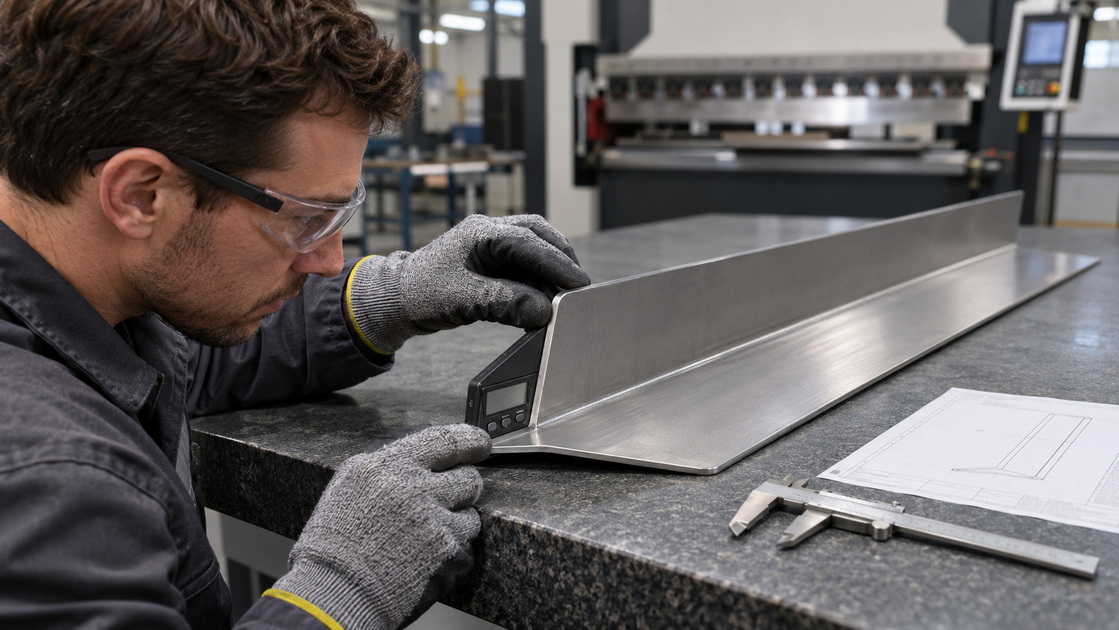
Inspect multiple consecutive parts rather than approving one successful sample.
Record setup time, correction time, handling requirements, and the number of operators involved.
Then change to another job and return to the original program. This checks whether saved settings support practical repeat production.
Retain the test report, program files, tooling list, and component configuration.
Record any unresolved issues and the agreed corrective actions before shipment. A clear baseline makes installation and later troubleshooting easier.
A lower machine price does not automatically produce a lower manufacturing cost.
For a useful comparison, estimate:
Cost per accepted part = allocated setup, operating, labor, tooling, maintenance, and quality-related costs ÷ accepted output.
Apply the same assumptions to every quotation. Include the actual batch sizes and staffing requirements.
A folding machine may offer handling advantages for large panels. A press brake may offer greater flexibility across varied profiles. Whether either advantage creates savings depends on the production mix.
Ask suppliers to demonstrate the complete cycle: program selection, tool preparation, loading, bending, repositioning, unloading, and inspection.
Avoid comparing one machine's bending movement with another machine's complete part cycle.
For imported equipment, also consider installation, training, spare-parts delivery, and downtime exposure. These costs can matter more than a small difference in the initial quotation.
A foot switch is a control device, not a complete safeguarding system.
Bending equipment creates hazards at the forming area and around moving sheets, tooling, gauges, and drive components. Protective measures must suit the machine, task, and installation location.
Request a documented review of:
- Point-of-operation protection.
- Side and rear access.
- Emergency-stop functions.
- Setup and adjustment modes.
- Tool-changing procedures.
- Electrical and hydraulic isolation.
- Operator training and maintenance access.
Do not assume that a low-voltage pedal or controlled opening distance proves the entire machine is safe.
Press brake guidance also should not automatically be treated as a complete compliance framework for a folding machine. Confirm the requirements applicable to the actual equipment and destination.
For maintainability, request electrical and hydraulic diagrams, component identification, lubrication instructions, and a recommended spare-parts list.
Customization should solve a defined production problem rather than simply add features.
CNDY-Press undertakes OEM and ODM projects and can discuss customized production based on your requirements.
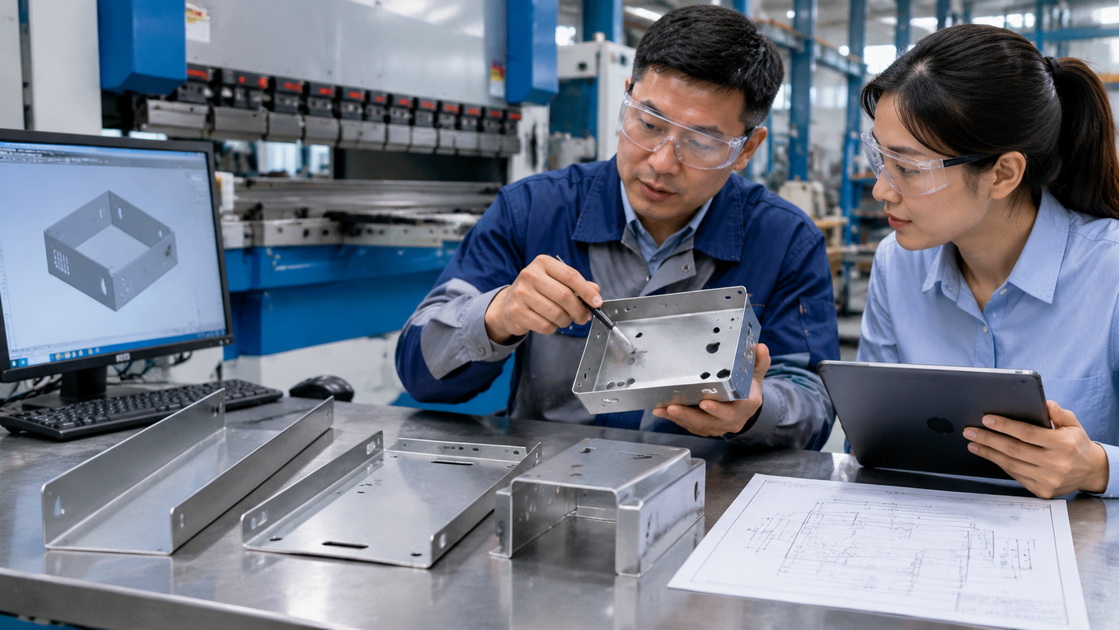
Prepare a concise package containing:
- Dimensioned part drawings and available models.
- Material grades and thickness range.
- Maximum bend length and required tolerances.
- Expected batch sizes and annual demand.
- Surface-quality requirements.
- Available floor space and utility conditions.
- Destination-market requirements.
- Branding, documentation, and service expectations.
This information supports a more meaningful discussion than requesting a price for an unspecified "CNC bending machine."
Group requested features into three categories: necessary for part production, valuable for productivity, and optional for future expansion.
Potential discussion areas include tooling, control interfaces, material support, installation arrangements, and documentation. Availability and suitability should be confirmed for the proposed configuration.
Define responsibilities for installation, training, acceptance, warranty, and technical support in writing.
No. A folding machine clamps the sheet and rotates a beam to form the flange. A press brake uses a punch-and-die arrangement. They overlap in application but differ in forming action, handling, and tooling.
Potentially, but suitability depends on material grade, thickness, strength, tooling, geometry, and machine capacity. Ask the supplier to verify each required material rather than applying a mild-steel rating to everything.
No. Material variation, springback, tooling condition, blank quality, positioning, and support all affect results. Evaluate finished parts against drawings under an agreed test procedure.
Sometimes. Folding tables and suitable handling equipment can reduce manual effort, but sheet size, weight, rotation, unloading, and risk assessment determine staffing needs. Confirm this during a representative demonstration.
Request the machine configuration, tooling, included software functions, safeguarding, utilities, installation scope, training, warranty, documentation, and spare-parts provisions. List exclusions clearly so quotations can be compared fairly.
1. [PrimaPress — "iron plate hydraulic cnc folding machine metal sheet cnc folder machine"]. Published November 26, 2020. Original page supplied for restructuring. Its descriptions of clamping, a folding apron, programmable angles, and backgauge positioning establish the original equipment context. Its distributor statement and specifications are not presented as CNDY-Press experience or verified customer feedback. [prima-press]
2. [The Fabricator — "How metal folding contrasts with press brake bending"]. Published October 15, 2021. Technical background for the distinction between folding and press brake bending, including sheet support, tooling, material handling, and surface-contact considerations. Its application-dependent productivity statements are not used as guaranteed performance claims. [thefabricator]
3. [WILA — "V-opening"]. Technical basis for the qualified six-to-eight-times-thickness starting guideline for certain steel air-bending applications up to approximately 3 mm. This guidance concerns press brake air bending, not folding-beam capacity. [wilatooling]
4. [WILA — Catalog GB, Air-Bending Reference Charts]. Reference for the relationship between sheet thickness, die opening, bending force, inside radius, and minimum flange dimensions. No chart value is presented as a confirmed CNDY-Press machine rating. [catalog.wilatooling]
5. [Occupational Safety and Health Administration — "Powered Press Brakes"]. Authoritative background on press brake operation, guarding methods, moving-stock hazards, and power-transmission protection. This is U.S. press brake guidance, not certification of a particular machine or a universal folding-machine compliance checklist. [osha]
6. [RAS Systems — "Press Brakes vs. Folding Machines: Which is Better for Your Business?"]. Published May 22, 2025. Manufacturer perspective supporting application-based comparison of folding machines and press brakes. Brand-specific speed, energy, and space claims have not been adopted as general guarantees. [ras-systems]


