


Views: 273 Author: CNDY-Press Publish Time: 2026-10-17 Origin: Site


Content Menu
● What Does a Press Brake Operator Do?
>> Operator, Setter, and Programmer Responsibilities
● Press Brake Operator Salary and Job Outlook in 2026
● Essential Skills for CNC Press Brake Operator Jobs
>> Drawing Interpretation and Measurement
>> Tooling and Material Understanding
>> Communication and Traceability
● How to Become a Press Brake Operator
>> Choose Training With Practical Assessment
● A Practical 90-Day Training Framework
>> Days 1–30: Establish Safe Foundations
>> Days 31–60: Build Repeat-Job Consistency
>> Days 61–90: Develop Troubleshooting Judgment
● Press Brake Safety: Know the Limits of Your Authorization
>> Safeguarding Must Match the Application
>> Servicing Is Not Ordinary Production
● Separating a Part Problem From a Process Problem
● How to Assess a Press Brake Operator Job Offer
● How CNC Press Brake Selection Affects Operator Performance
>> Evaluate Equipment With Representative Parts
● How CNDY-Press Can Support a Better Equipment Brief
● FAQ
>> 1. Can I become a press brake operator without experience?
>> 2. How long does press brake training take?
>> 3. Is a press brake certificate mandatory?
>> 4. Will automation eliminate press brake operator jobs?
>> 5. What should I emphasize on my résumé?
Press brake operator jobs involve more than loading sheet metal and starting a bending cycle. Skilled operators interpret drawings, verify setups, inspect formed parts, and recognize when a process needs attention.
For job seekers, the strongest career strategy is to develop measurable competence rather than collect machine names on a résumé. For fabrication businesses, the priority is matching operator responsibilities, training, and equipment to the parts being produced.
This guide explains CNC press brake operator duties, current U.S. salary benchmarks, training options, safety expectations, and practical routes into more advanced roles.
My central recommendation is competence: assess what someone can safely demonstrate, not simply how long they have worked near a machine.
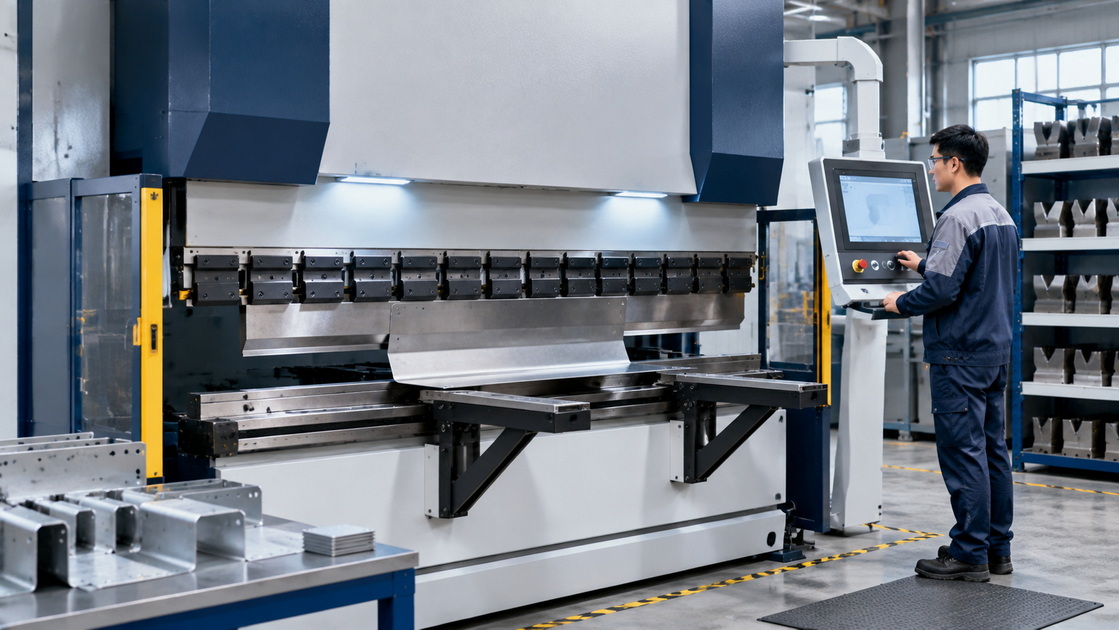
A press brake operator uses a forming machine and tooling to bend sheet metal to specified dimensions and angles.
Responsibilities vary considerably between employers. One operator may run an approved repeat job. Another may select tooling, develop a setup, prove the program, and inspect the first component.
| Role | Typical Responsibility | What Employers Should Clarify |
|---|---|---|
| Production operator | Runs approved jobs and checks parts | Permitted adjustments and escalation rules |
| Setup operator or setter | Prepares tooling and proves the setup | Setup authorization and first-piece approval |
| CNC programmer | Develops or modifies programs and sequences | Software, controls, and validation responsibilities |
| Lead operator | Coordinates work and supports colleagues | Training, scheduling, and quality authority |
These titles are not standardized internationally. Read the actual job description before assuming the level of independence required.
The distinction matters when comparing pay, applying for work, or designing an internal training program.
The latest U.S. Bureau of Labor Statistics information available for this guide reports the following May 2025 median wages:
| Occupational Group | Median Annual Wage |
|---|---|
| Cutting, punching, and press machine setters, operators, and tenders | $46,330 |
| CNC tool operators | $50,690 |
| CNC tool programmers | $68,120 |
| All metal and plastic machine workers | $47,700 |
These categories include work beyond press brakes. The figures are useful benchmarks, not a dedicated national salary survey for CNC press brake operators.
BLS projects a 7% employment decline across metal and plastic machine workers from 2025 to 2035. However, approximately 78,100 openings are projected annually because workers change occupations or leave the workforce.
For CNC tool programmers, BLS projects 6% growth over the same period.
The practical message is that replacement hiring remains significant, while programming and broader technical capability can strengthen career options.
Compare local offers by considering:
- Base pay and guaranteed hours.
- Overtime and shift arrangements.
- Setup and programming duties.
- Benefits and paid training.
- Progression criteria.
- Commuting and relocation costs.
Do not compare a supervised production role directly with a position requiring independent setup and program development.
Operators need to identify material specifications, dimensions, tolerances, bend directions, and inspection requirements.
Useful foundations include:
- Reading orthographic views.
- Understanding the drawing revision.
- Distinguishing finished dimensions from reference information.
- Selecting suitable measuring instruments.
- Recording inspection results consistently.
A strong candidate can explain how a measurement was taken, not merely report the number.
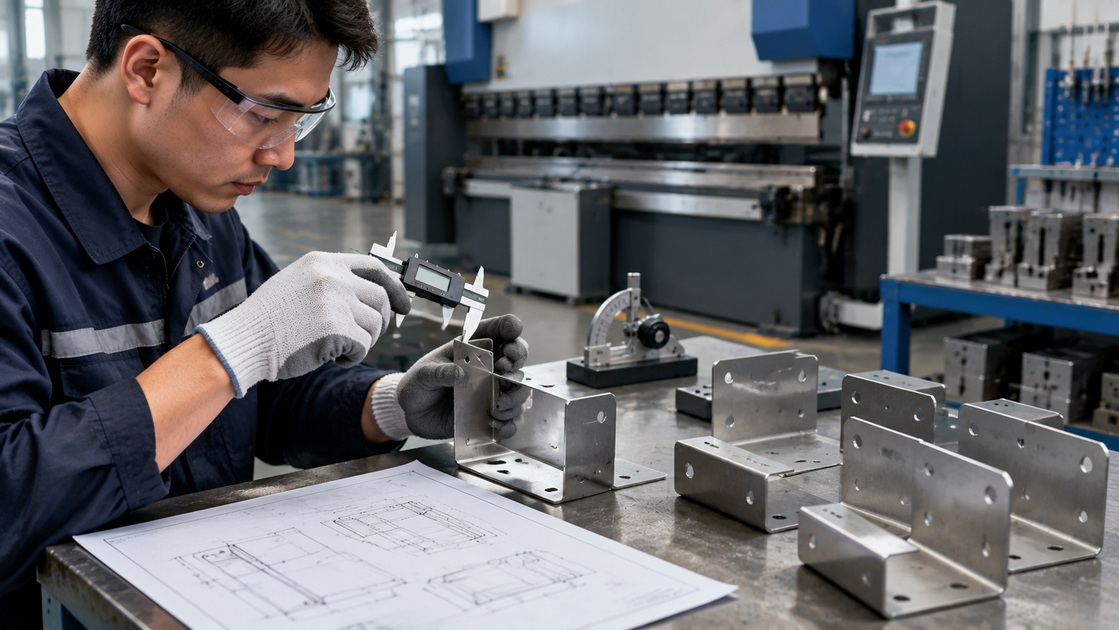
Press brake work involves understanding the interaction between the part, tooling, machine, and forming method.
Relevant training topics include bend allowance, bend deduction, springback, grain direction, tooling selection, and load limits.
These subjects are important because a program cannot compensate for every mismatch between the intended part and the physical setup.
New operators should learn the principles under supervision rather than rely on memorized rules detached from the actual equipment.
Control familiarity is valuable, but screen navigation alone is insufficient.
Employers should assess whether a candidate can interpret the approved program, verify its relationship to the setup, and recognize when changes require authorization.
Experience with one controller may transfer conceptually to another. It does not eliminate the need for machine-specific instruction.
Good operators communicate defects, material changes, unusual behavior, and incomplete work clearly.
A useful handover identifies:
- Current job and drawing revision.
- Approved program version.
- Inspection status.
- Remaining quantity.
- Known issues.
- Restrictions on further production.
Clear records help the next shift continue the process without guessing.
A high school diploma or equivalent is commonly requested in U.S. manufacturing, but it is not a universal legal requirement for every press brake job.
BLS describes high school education and on-the-job training as typical for the broader occupational group. CNC programming positions commonly require additional education.
For beginners, useful preparation includes mathematics, technical drawing, measurement, computer skills, and supervised fabrication experience.
Consider employer training, vocational programs, community colleges, and relevant industry courses.
Ask a training provider:
1. How much supervised machine practice is included?
2. Which equipment and controls are used?
3. How are safety and inspection assessed?
4. Does the course teach setup principles?
5. What does its certificate actually represent?
FMA offers a Precision Press Brake Certificate covering bending theory, calculations, tooling, inspection, and safety. Its published course information explicitly states that the certificate is not a professional certification.
An examination-based course can support learning. It does not replace employer authorization to operate a particular machine.
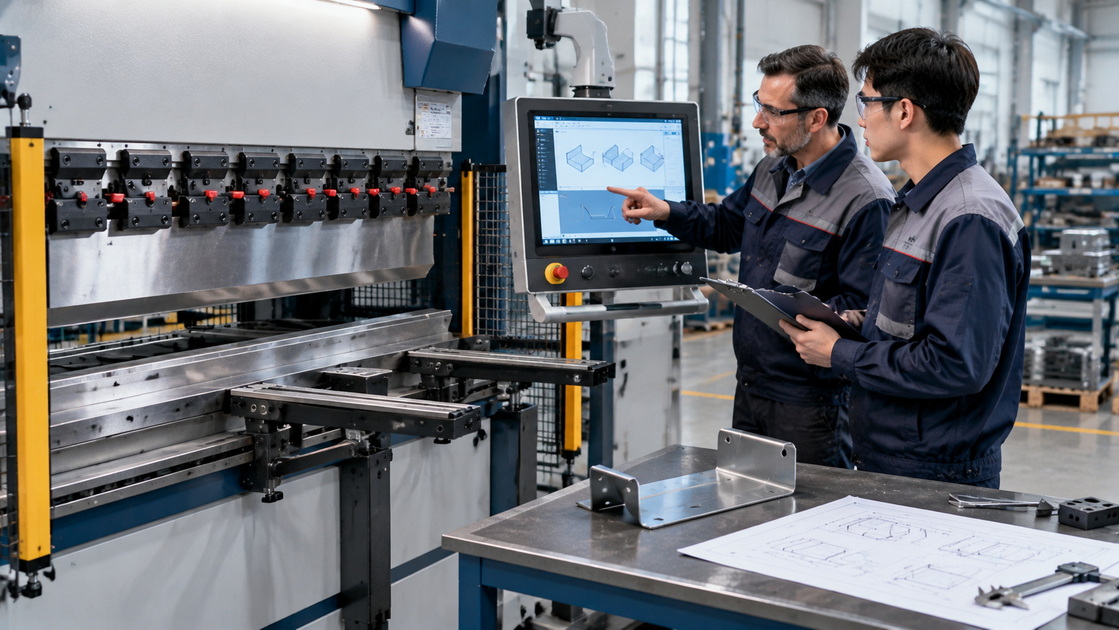
The following is a proposed framework, not a universal qualification standard. Progress should depend on demonstrated ability rather than elapsed time.
Focus on site induction, hazard recognition, drawing basics, measurement, and observation of approved operating procedures.
The trainee should understand who can authorize setups, adjustments, maintenance, and production release.
Under appropriate supervision, develop consistency on approved work.
Review part identification, inspection frequency, recordkeeping, material handling, and escalation decisions.
The objective is repeatable execution—not speed at the expense of checks.
Where suitable, introduce controlled problem-solving and more complex inspection tasks.
Ask the trainee to explain:
- What changed?
- What evidence supports the suspected cause?
- What is within their authority?
- When must production stop?
Independent setup approval should remain a separate decision requiring suitable assessment.
Press brakes create serious crushing and trapping hazards. The moving workpiece can also create hazards as it rises or rotates during bending.
OSHA identifies point-of-operation exposure, accidental cycling, and workpiece movement among the risks associated with powered press brakes.
Employers must establish suitable safeguarding and operating procedures for the machine and work.
Do not assume that a light curtain, laser device, or two-hand control makes every task safe. Its suitability depends on the equipment, task, configuration, and applicable requirements.
Never bypass protective systems to maintain output.
If safeguarding is damaged, ineffective, or incompatible with the intended task, stop and escalate through the employer's procedure.
An emergency stop is not a substitute for hazardous-energy isolation.
Servicing, jam clearing, and adjustments that expose people to unexpected movement may require lockout/tagout or other specifically applicable controls.
Operators should perform only the tasks for which they are trained and authorized. Electrical work, hydraulic intervention, and safety-system repair should not become informal production duties.
This article supports awareness; it does not replace machine-specific training or a workplace risk assessment.
When a bend is incorrect, changing a machine value immediately may hide the cause rather than resolve it.
A useful diagnostic framework asks whether the issue relates to:
| Area | Questions to Investigate |
|---|---|
| Documentation | Is the correct drawing revision being used? |
| Material | Does the material match the approved job? |
| Tooling | Does the installed tooling match the setup record? |
| Program | Is the approved version selected? |
| Measurement | Are the method and reference surfaces consistent? |
| Equipment | Is the condition within the operator’s authority to assess? |
This is a proposed reasoning framework, not permission to make unsupervised adjustments.
From an employer's perspective, an operator who recognizes uncertainty and stops appropriately can be more valuable than someone who makes repeated undocumented corrections.
A credible job description should explain the responsibilities and working conditions clearly.
Look for information about:
- Materials and typical components.
- Equipment and control systems.
- Setup expectations.
- Inspection responsibilities.
- Training and supervision.
- Shift and overtime arrangements.
- Pay and progression.
- Material-handling support.
During an interview, ask:
"Who approves the first piece?"
"What changes may an operator make?"
"How is training recorded?"
"What happens when a safety device faults?"
"How are setup problems escalated?"
A vague advertisement does not automatically indicate fraud. However, unclear answers about responsibilities and safety justify further investigation.
Practical assessments should be supervised and appropriate to the candidate's competence. Applicants should not be expected to prove themselves through unsafe work on unfamiliar equipment.
Better equipment can support the operator, but it does not remove the need for process knowledge.
When evaluating a CNC press brake, consider:
- Control usability.
- Tooling access and compatibility.
- Part-support arrangements.
- Visibility and ergonomics.
- Program management.
- Inspection support.
- Documentation and service access.
Avoid treating a back-gauge repeatability figure as a guarantee of finished-part accuracy.
Finished results also depend on material variation, tooling, setup, measurement, and the component geometry.
For a buying project, request a demonstration using representative materials and components.
Record setup time, operator interventions, inspection results, and repeat-job recovery.
Do not judge a machine solely by an easy demonstration part or maximum cycle speed.
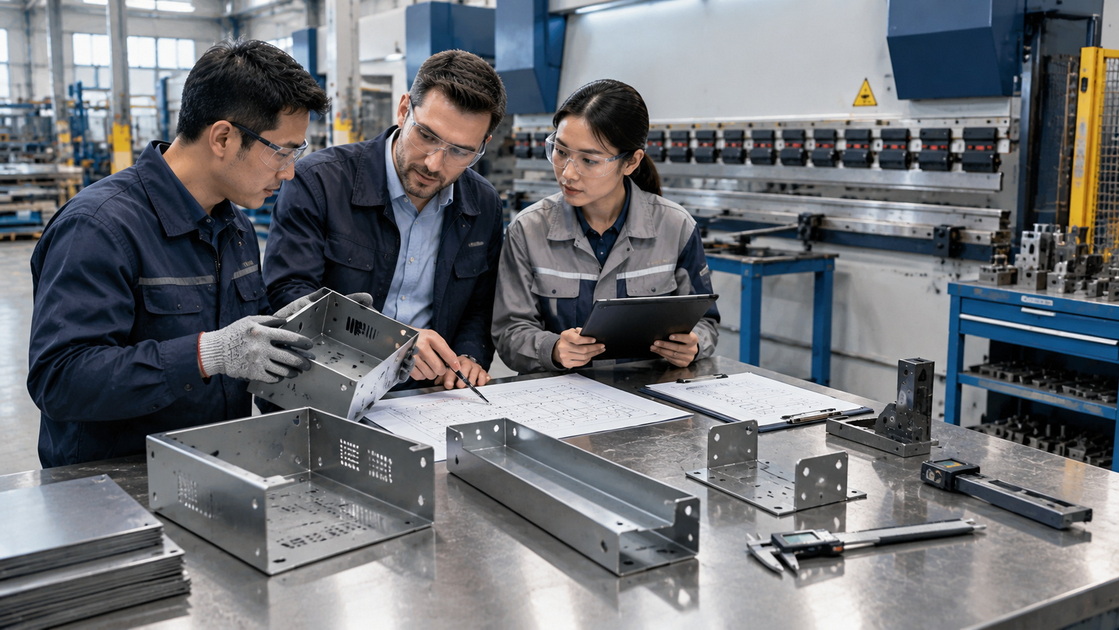
CNDY-Press describes its business as the development, manufacture, sale, and servicing of sheet-metal processing equipment, including CNC press brakes, with OEM, ODM, and customized production support.
For buyers, customization should begin with the work the operator must perform.
Provide CNDY-Press with:
- Representative drawings and materials.
- Production quantities and batch sizes.
- Available tooling.
- Operator experience levels.
- Installation constraints.
- Required documentation and training deliverables.
Request a written proposal covering the machine configuration, acceptance process, commissioning responsibilities, and available service arrangements.
OEM or ODM capability should not be interpreted as confirmation that every control, guarding, or training option is included.
Press brake operator jobs offer routes into setup, programming, quality, and production leadership.
The strongest foundation combines safe working practices, drawing interpretation, measurement, process understanding, and clear communication.
Job seekers should pursue supervised practice and evidence of competence. Employers should define responsibilities before recruitment and connect training to actual equipment.
Yes, some employers recruit trainees. Look for structured supervision and clearly defined responsibilities rather than immediate independent setup expectations.
It varies with the work and equipment. BLS notes that broader machine-operator training ranges from several months to about a year. Complex setup competence may require further development.
Requirements depend on the employer and jurisdiction. A course certificate can support an application but does not replace machine-specific training and authorization.
Automation changes duties and staffing requirements. Broader BLS projections show declining operator employment but continuing replacement openings and stronger prospects for CNC programming.
Describe materials, controls, setup responsibilities, inspection methods, and authorized tasks. Include measurable improvements only when you can explain and substantiate them.
1. CNHAWE — "The Ultimate Guide to Press Brake Operator Jobs in 2025," published September 11, 2025. Original article reviewed for structure, content gaps, and claims requiring correction. [cnhawe]
2. U.S. Bureau of Labor Statistics — "Metal and Plastic Machine Workers," Occupational Outlook Handbook, updated September 14, 2026. Source for May 2025 wages, typical training, occupational distinctions, and 2025–2035 projections. These are broader occupational statistics, not press-brake-only figures. [bls]
3. Fabricators & Manufacturers Association — "Precision Press Brake Certificate." Source for curriculum, assessment, and the distinction between a certificate and professional certification. [fmamfg]
4. Occupational Safety and Health Administration — "Machine Guarding: Powered Press Brakes." Source for point-of-operation hazards, workpiece movement, accidental cycling, and safeguarding considerations. [osha]
5. Occupational Safety and Health Administration — "Safeguarding Equipment and Protecting Employees from Amputations," OSHA 3170. Source for safeguarding, training, and hazardous-energy control principles. [osha]
6. Occupational Safety and Health Administration — Lockout/Tagout eTool, examples explaining the relationship between servicing activities and machine guarding. [osha]


