


Views: 256 Author: CNDY-Press Publish Time: 2026-08-07 Origin: Site


Content Menu
● What Is a Press Brake Machine?
● Working Principle of a Press Brake
>> From Elastic Bending to Permanent Shape
● Types of Press Brakes and Drive Systems
>> Electric and Hybrid Press Brakes
● CNC Press Brakes: How They Work and Their Advantages
>> Benefits in Industrial Production
● Press Brake Tooling and Its Influence on Quality
● Industrial Applications of Press Brakes
● Practical Setup Steps for CNC Press Brake Operation
● Common Bending Challenges and Modern Solutions
>> Springback and Angle Control
>> Variations in Material and Thickness
>> Collision Avoidance and Complex Geometry
● Selecting a Press Brake for Industrial Use
>> Essential Selection Criteria
>> Matching Machine Type to Workload
● Press Brakes in the Sheet Metal Process Chain
>> Role in a Complete Production Flow
>> Data, Programs, and Connectivity
Press brake machines are the backbone of modern sheet metal bending. From automotive body panels to electrical enclosures and architectural façades, these machines shape flat sheet metal into precise angles and complex forms. Drawing on practical experience with CNC press brakes and supporting OEM and ODM projects in metal fabrication, this guide explains what a press brake is, how it works, and how CNC technology transforms its performance for industrial users.
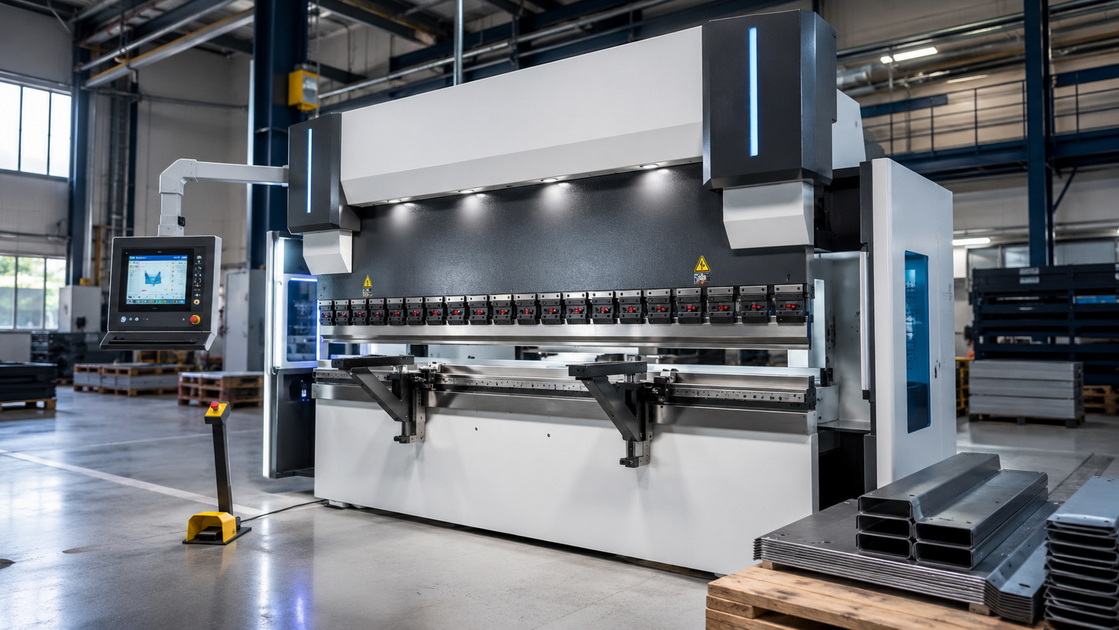
A press brake is a metalworking machine designed to bend sheet metal by applying controlled force through a punch and die. The sheet is clamped between these tools, and the machine forces the material to deform along a defined line until it reaches the required angle and shape.
In its basic configuration, a press brake includes:
- A ram or beam, moving vertically.
- An upper tool (punch) mounted to the ram.
- A lower tool (die) fixed on the bed.
- A backgauge system for precise part positioning.
- A drive system, which may be mechanical, hydraulic, electric, or hybrid.
Modern machines often integrate computer control to automate positioning, force application, and angle corrections, making them suitable for high‑precision, high‑volume production.
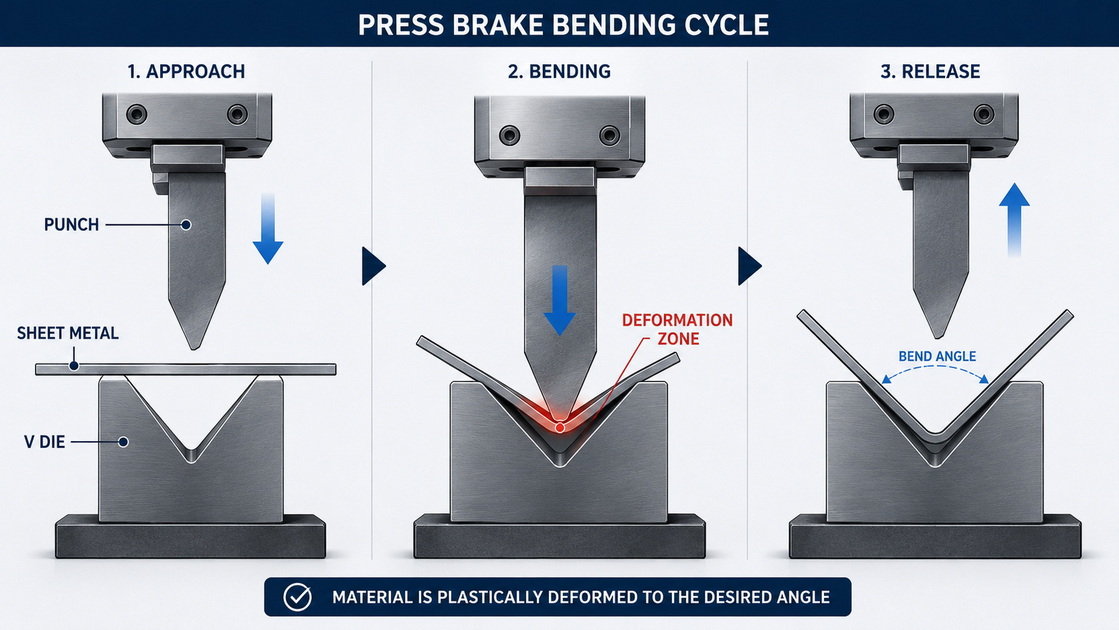
When a press brake bends metal, it relies on plastic deformation:
1. The sheet metal is placed over the die opening.
2. The punch descends and presses the material into the die.
3. The metal first deforms elastically; it would spring back if the force were removed.
4. As force increases, deformation enters the plastic range, creating a permanent bend.
The machine must apply enough force to surpass the yield strength of the material, but not so much that it causes cracking or damages tooling. Maintaining this balance is essential for repeatable, accurate bends.
A typical bending cycle on a modern press brake involves:
- Preparation – The operator chooses a bending program, installs the correct punch and die, and sets material parameters such as thickness and grade.
- Positioning – The sheet is aligned against backgauge fingers to define the bend line and ensure consistent location.
- Bending – The ram moves down, forcing the punch into the sheet and die to create the target angle.
- Angle Adjustment – The system compensates for springback and material variability so the final angle matches the program.
- Return and Removal – The ram retracts, the part is removed, and the cycle repeats.
This controlled sequence allows the machine to produce identical bends over large production batches.
Mechanical press brakes use a flywheel and crank mechanism to drive the ram. Their main characteristics are:
- High stroke rates and fast cycles.
- Simple mechanical architecture.
- Limited flexibility compared with advanced controlled systems.
They are suitable for straightforward bending jobs, especially where repeat parts are produced with relatively simple geometries.
Hydraulic press brakes rely on hydraulic cylinders powered by pressurized oil. They offer:
- Smooth, controllable ram movement.
- High tonnage capacity for thick sheets.
- Good integration with computer control for precision and automation.
These machines are widely used in general fabrication, automotive parts, heavy equipment components, and many other applications that require both power and flexibility.
Electric and hybrid press brakes use:
- Servo‑electric drives to control the ram.
- Reduced hydraulic oil volume or fully electric actuation.
- High positioning accuracy and notable energy efficiency.
They are often chosen where a clean work environment, tight tolerances, and lower operating costs are priorities, such as in electronics, appliance manufacturing, and fine sheet metal work.
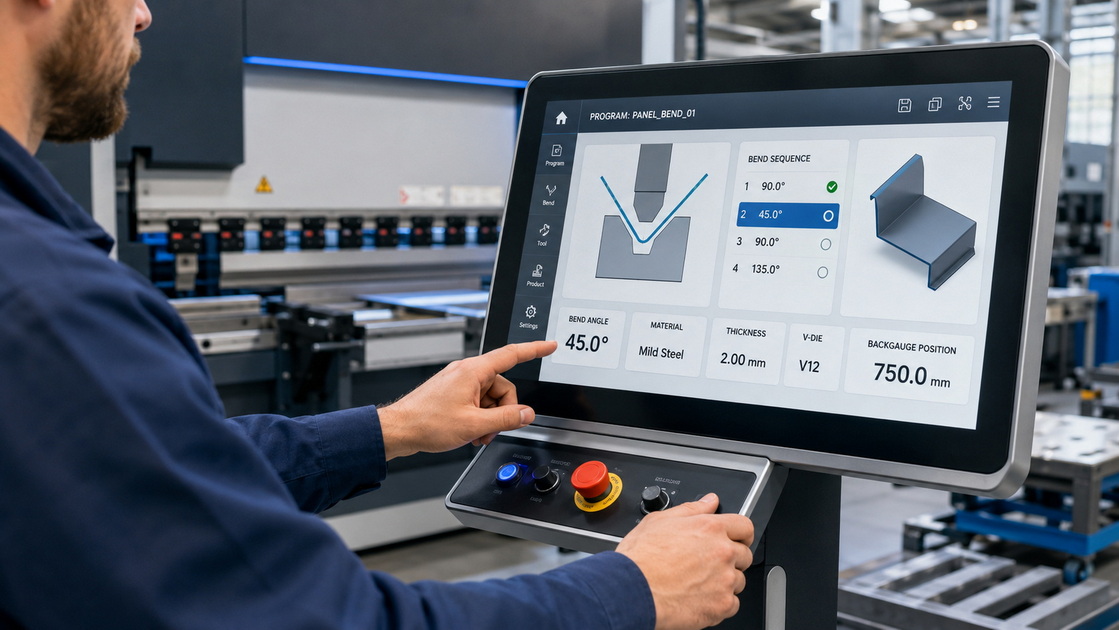
A CNC press brake uses a computer controller to manage:
- Ram movement, speed, and stopping position.
- Backgauge positioning in multiple axes.
- Bending sequence and angle corrections.
- Tool selection, program storage, and recall.
Operators enter key parameters such as material type, thickness, bend length, and target angle. The controller then executes the bending cycle, ensuring consistent results with minimal manual intervention.
CNC press brakes provide several important benefits:
- High precision and repeatability for complex parts and assemblies.
- Reduced setup time through program storage and recall.
- Capability to perform multiple bends and complex geometries in one clamping.
- Support for offline programming and 3D simulation, which helps plan jobs and avoid collisions.
For manufacturers serving global markets or working on OEM and ODM projects, these capabilities make it easier to maintain consistent quality across different product families and batches.
Tooling determines the shape, radius, and accuracy of each bend. Common tooling types include:
- V‑dies for general bending tasks.
- Channel and U‑dies for forming channels and profiles.
- Gooseneck punches to avoid collisions on deep box shapes.
- Radius tools for larger radii or sensitive materials.
Selecting the right tooling depends on material thickness, strength, required angle, bend radius, and part geometry.
Correct tooling setup is critical for reliable results:
- Tools should be clean and free of damage.
- Clamping surfaces must be aligned and properly tightened.
- Tool changes should follow documented procedures to avoid misalignment and collisions.
Regular inspection and cleaning of tools help maintain surface quality on finished parts, reduce burrs or marks, and prolong tool life.
Press brakes are used wherever flat sheet metal needs to be formed into functional shapes. Typical applications include:
- Electrical cabinets and control panels
- Machine guards and equipment enclosures
- Brackets, supports, and structural frames
- Architectural cladding, façades, and decorative panels
- Automotive components and vehicle body parts
- HVAC ducts, shelving, and storage systems
In each of these areas, the press brake provides controlled deformation that turns standard sheet stock into repeatable parts which fit accurately into larger assemblies.
In an industrial environment, a practical workflow for CNC press brake operation often follows these steps:
1. Determine bending parameters
Evaluate material, thickness, bend length, and angle to estimate the required force and select appropriate tooling.
2. Program the machine
Input material data, angles, bend sequence, and backgauge positions into the controller, or load an existing program.
3. Install and align tooling
Mount the chosen punch and die, verify alignment, and perform initial test bends if needed.
4. Adjust backgauge positions
Set up backgauge fingers to define each bend line and ensure consistent edge locations for the part.
5. Run sample parts
Perform test cycles to check angles and part geometry, then fine‑tune the program or apply angle compensation.
6. Start production
Once tests confirm accuracy, continue with full production, monitoring part quality and machine behavior throughout.
This structured approach helps maintain process stability and limits the number of errors or adjustments required during production.
Metal tends to spring back slightly after bending. If springback is not compensated, the final angle may differ from the target. Modern systems address this by:
- Providing automatic angle correction functions.
- Allowing operators to store compensation values for specific materials.
- Refining programs over time as more data is collected on real‑world behavior.
Different material batches can vary in thickness and mechanical properties. To handle these variations:
- The machine can use material libraries with typical values.
- Operators adjust bending parameters based on test pieces.
- Updated values can be stored with job programs for future runs.
These measures help maintain correct angles even when material properties are not perfectly uniform.
Parts with many bends or deep forms can create collision risks between the workpiece, tooling, and machine frame. To reduce these risks:
- Bending sequences are planned carefully to avoid interference.
- Different tooling combinations are used to clear obstacles.
- Advanced installations may use simulation software to preview bending sequences and detect potential collisions before production.
Choosing the right press brake involves balancing immediate needs with future growth. Important factors include:
- Maximum bending length and tonnage required for both routine and peak jobs.
- Materials processed, such as mild steel, stainless steel, aluminum, and specialty alloys.
- Level of automation desired, from basic controls to multi‑axis CNC systems.
- Floor space and power availability in the facility.
- Production volume and part mix, ranging from prototypes to high‑volume runs.
These criteria help ensure that the chosen machine can handle both current and upcoming demands without frequent limitations.
Different machine types are better suited to different workloads:
- Mechanical and simple hydraulic machines fit smaller shops with standard bending tasks and limited part complexity.
- CNC hydraulic press brakes serve general fabrication environments that produce diverse parts and require flexibility.
- Electric and hybrid machines support high‑precision work, reduced energy usage, and limited hydraulic maintenance in more specialized applications.
Manufacturers that offer customization can configure press brakes with appropriate options, tooling packages, and control features tailored to specific industries and workflows.
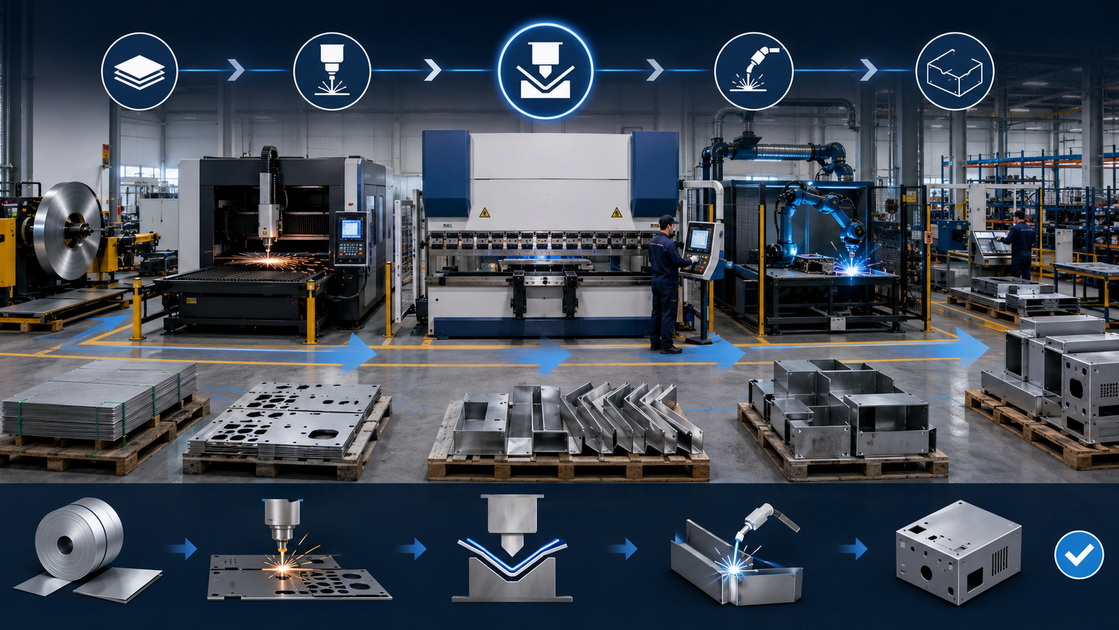
Press brakes typically form part of a wider sheet metal process chain, which may include:
- Laser, plasma, or punch cutting.
- Forming operations and embossing.
- Deburring and surface finishing.
- Welding, assembly, and painting.
To integrate effectively, press brake operations must align with upstream cutting and downstream assembly requirements. This includes consistent datum points, well‑planned tolerances, and efficient part handling.
In advanced setups, press brakes can be connected to:
- Offline programming tools that generate bending programs based on 3D models.
- Central servers or networks for storing job data and programs.
- Production tracking systems that log each batch with its associated program and quality checks.
This level of connectivity supports traceability, allows better planning of workloads, and helps teams refine bending strategies based on historical performance.
Press brake machines are fundamental to transforming flat sheet metal into functional parts across industries such as automotive, machinery, architecture, and electronics. They operate by applying controlled force through punch and die tooling to achieve permanent bends, and their effectiveness depends on the drive system, control technology, tooling quality, and setup procedures.
Modern CNC press brakes take this basic principle further by providing precise, repeatable control over angles, backgauge positions, sequences, and compensation. By understanding how different press brake types work, how tooling and material behavior influence results, and how to select and integrate machines into a broader production flow, manufacturers can achieve stable quality, efficient workflows, and reliable long‑term performance.
1. What is the main function of a press brake in sheet metal production?
The main function of a press brake is to bend flat sheet metal into specific angles and shapes using controlled force and precision tooling. It turns cut blanks into structural or enclosure components that fit into larger assemblies.
2. How does a CNC press brake improve on a conventional machine?
A CNC press brake uses computer control to manage ram motion, backgauge positions, angle compensation, and bending sequences. This reduces manual adjustments, improves accuracy, and speeds up setup for repeated jobs.
3. Why is tooling selection so important for bending quality?
Tooling defines the bend radius, angle capabilities, and clearance around the part. The wrong tooling can cause poor angles, surface marks, cracking, or collisions. Proper selection and maintenance support consistent quality and long tool life.
4. What factors influence the tonnage required for a bending job?
Tonnage depends on material type, thickness, bend length, and target angle. Stronger materials and thicker sheets require higher force. Calculating or consulting charts for these factors helps ensure that the machine's capacity is sufficient.
5. Can press brakes be integrated with other machines in an automated line?
Yes. Press brakes can be integrated with cutting, punching, and welding stations as part of an automated or semi‑automated line. Successful integration relies on coordinated part design, shared datum points, and data exchange between machines and planning systems.
1. Wikipedia – Press Brake
[https://en.wikipedia.org/wiki/Press_brake]
2. Xometry – Sheet Metal Bending: Definition, Purpose, How It Works
[https://www.xometry.com/resources/sheet/sheet-metal-bending/]
3. Komaspec – An Engineers' Guide to Sheet Metal Bending
[https://www.komaspec.com/about-us/blog/guide-to-sheet-metal-bending/]
4. CNCWMT – Press Brake: Guide to Working Principles and Applications
[https://cncwmt.com/qa/press-brake-a-comprehensive-guide-to-working-principles-and-applications/]
5. ECI – Understanding CNC Press Brakes: Hydraulic, Mechanical, Electric and Hybrid Differences
6. Otinus – How Does a Press Brake Work and What Is It Used For?
[https://otinus.com/2025/11/07/how-does-a-press-brake-work-and-what-is-it-used-for/]
7. ACCURL – What Is a CNC Press Brake Machine and How Does It Work?
[https://www.accurl.com/blog/how-does-the-cnc-press-brake-machine-work/]
8. Boyd Metals – Press Brake Forming: What It Is, How It Works, and When to Use It
[https://blog.boydmetals.com/everything-you-need-to-know-about-press-brakes]
9. VICLA – What Is a Press Brake and How Does It Work?
[https://www.vicla.eu/en/blog/press-brake-what-it-is-and-how-does-it-work]
10. DiMar Manufacturing – How Press Brakes Shape Metal


