


Views: 266 Author: CNDY-Press Publish Time: 2026-08-06 Origin: Site


Content Menu
● How Cooling Works in Hydraulic CNC Press Brakes
● Defining Hydraulic Oil Cooling vs. Standard Systems
>> What Is a "Standard" Cooling System?
>> What Is a Hydraulic Oil Cooling System?
● Why Hot Climates Change the Equation
>> Thermal Stress on Hydraulic Components
>> Influence on Accuracy and Product Quality
>> Performance and Reliability
>> Suitability for Different Operating Conditions
● How Hydraulic Oil Cooling Extends Machine Life
>> Protecting Hydraulic Oil Integrity
>> Reducing Wear on Seals and Hoses
>> Protecting Electronics and Control Elements
● Where Standard Cooling Still Fits
>> Good Practices to Support Standard Systems
● Practical Selection Guide for Fabricators in Hot Climates
>> Key Questions Before Choosing a Cooling Approach
● Implementation Checklist for Hydraulic Oil Cooling
>> Steps for a Robust Cooling Setup
>> Long‑Term Benefits of Doing It Right
● Lifecycle Perspective for Equipment Owners
>> Balancing Cost and Durability
>> Aligning Cooling Strategy with Production Goals
In a hydraulic CNC press brake, most of the energy used during a bending cycle eventually turns into heat inside the hydraulic oil. When this heat is not managed effectively—especially in hot environments—the oil gets too hot, its properties change, and critical components are exposed to additional stress.
Standard cooling methods depend heavily on ambient conditions and passive heat dissipation. Dedicated hydraulic oil cooling systems, in contrast, are designed to keep the hydraulic circuit within a defined temperature window regardless of weather or workload. For fabricators in hot regions, this difference has a direct impact on machine lifespan, process stability, and maintenance frequency.
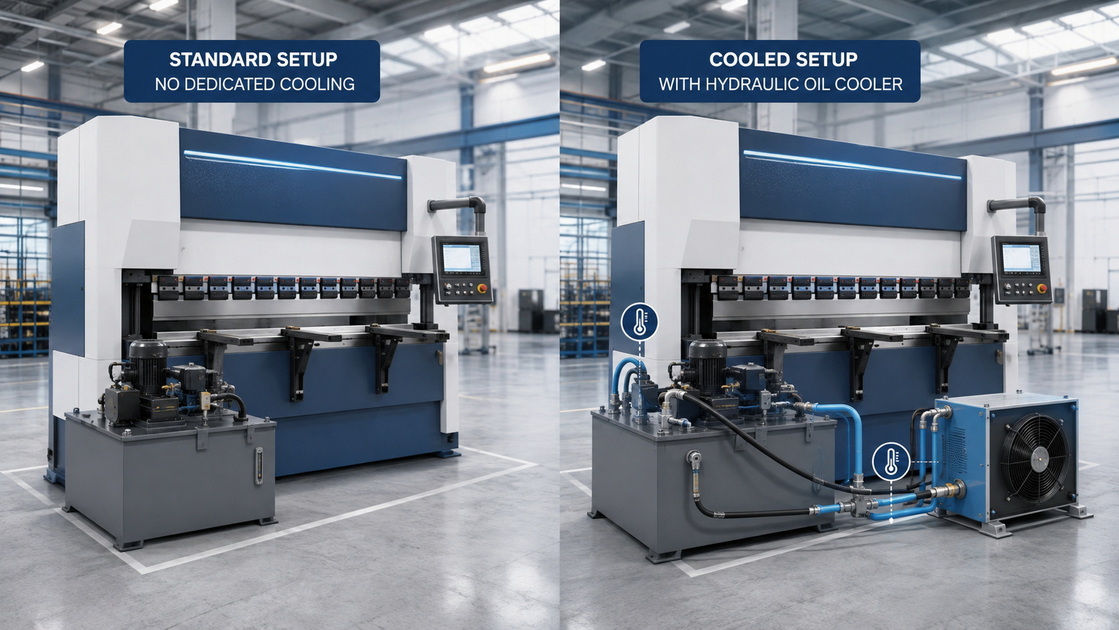
Hydraulic CNC press brakes use a pump to pressurize hydraulic oil, which then drives cylinders to apply force during bending. During pressure holding and repeated cycles, the hydraulic oil absorbs heat generated by friction and compression. This heat is carried back to the tank, where it must be released to the surrounding environment.
In a typical setup, cooling relies on three main elements:
- Hydraulic tank surface area to dissipate heat.
- Airflow around the tank and frame to carry heat away.
- Optional external cooling devices such as oil coolers or chillers.
When ambient temperature rises, especially over long production shifts, the balance between heat input and heat removal becomes critical. If that balance is lost, oil temperature climbs, and the system begins to operate outside its ideal range.
In many fabrication workshops, a standard cooling system for hydraulic press brakes and similar equipment includes:
- Passive cooling via the hydraulic tank walls.
- Basic airflow created by fans or general facility ventilation.
- Occasional use of general climate control for the building.
These measures are simple and cost‑effective. However, they are not designed to precisely control hydraulic oil temperature when the machine runs at high duty cycles or under extreme ambient conditions.
A hydraulic oil cooling system is a dedicated solution built around the hydraulic circuit. Typical elements include:
- Heat exchangers or oil chillers connected directly to the hydraulic tank.
- Thermostatic control to maintain a target oil temperature range.
- Temperature sensors and monitoring integrated into the machine's control system.
This type of system actively removes excess heat from the oil. The goal is to keep the hydraulic loop stable so that the machine behaves predictably even in hot climates and under continuous heavy loading.
In hot climates, hydraulic machines operate under higher ambient temperatures for extended periods. This environment increases thermal stress on:
- Seals and hoses, which soften, expand, and contract more rapidly.
- Valves and pump components, which are sensitive to changes in oil viscosity.
- Mounting points and fittings, which experience more expansion and contraction cycles.
When oil temperature rises too far beyond the recommended range, seals are more likely to harden or crack, hoses experience more fatigue, and leaks become more frequent. Over time, this translates into an increased risk of failures and unscheduled maintenance.
Temperature also affects machine precision. As hydraulic oil heats and its viscosity changes, pressure stability can be affected. At the same time, large steel frames and backgauge structures expand slightly under heat.
Together, these effects can lead to:
- Variations in bending angle over long shifts.
- Small shifts in backgauge positions.
- Greater difficulty maintaining tight tolerances on critical parts.
Stable hydraulic oil temperature helps keep these changes under control. The result is more consistent bending angles, fewer adjustments during production, and lower scrap and rework rates.
Hydraulic Oil Cooling Systems:
- Maintain a more consistent oil temperature.
- Keep oil viscosity closer to its designed range.
- Reduce wear and tear on seals, pumps, and valves.
- Support more stable force application and bending accuracy over time.
Standard Cooling Systems:
- Depend on ambient air and passive tank cooling.
- Allow larger swings in oil temperature, especially in hot environments.
- Expose components to more thermal cycles and stress.
- Show more variation in performance during long, heavy production runs.
Hydraulic oil cooling is particularly beneficial when:
- Machines run long hours or multiple shifts.
- Heavy gauge materials and high tonnage are common.
- Ambient temperatures stay high for much of the year.
- Tight deadlines and production reliability are critical.
Standard systems can be acceptable when:
- Duty cycles are low or intermittent.
- Ambient conditions remain moderate.
- The shop prioritizes low initial investment and light use.
- Occasional, non‑critical variations in performance are tolerable.
Hydraulic oil has a defined operating window. When temperature rises above that window for long periods, oxidation speeds up, additives degrade, and sludge or varnish can form. Once oil loses its protective properties, pumps, valves, and cylinders experience more wear.
Maintaining a stable temperature with hydraulic oil cooling helps:
- Keep viscosity within the optimal range for the selected grade.
- Preserve film strength and lubricating capacity.
- Extend intervals between oil changes and reduce the risk of premature component damage.
Over years of operation, this contributes to a longer effective service life for both the oil itself and the hydraulic components it protects.
Seals and hoses are often among the first components to show signs of heat‑related fatigue. Excessive temperature cycles accelerate:
- Hardening, cracking, and loss of elasticity in seals.
- Expansion and contraction in hoses that weaken connections.
- Micro‑leaks that worsen over time.
With controlled oil temperature, these components operate within the range they were designed for. That means fewer leak incidents, less need for emergency repairs, and a lower risk of contamination from external particles entering through compromised seals.
Modern CNC press brakes frequently integrate advanced electronics and drive systems. Heat from the hydraulic unit adds to the general heat load around cabinets and control components. When cooling keeps the hydraulic side under control, it becomes easier to maintain acceptable conditions for:
- Servo drives and amplifiers.
- PLCs and control boards.
- Sensors and feedback devices.
Over time, keeping these components cooler can reduce failure rates and extend the operational life of the entire control system.
Standard cooling still has applications where operating conditions are less demanding. Typical scenarios include:
- Shops with shorter daily runs and low duty cycles.
- Facilities located in regions with moderate temperatures most of the year.
- Machines used mainly for thin materials or occasional bending tasks.
- Operations where minor performance fluctuations are acceptable.
In these cases, passive tank cooling and basic airflow can be enough to keep the machine within a safe working range.
Even without dedicated hydraulic oil cooling, certain practices can improve equipment longevity:
- Keeping machines in well‑ventilated areas and away from direct sunlight.
- Cleaning fans, filters, and accessible cooling surfaces regularly.
- Scheduling the heaviest jobs during cooler times of day where possible.
- Following a structured maintenance plan with regular inspections.
These measures help reduce the risk of temperature‑related issues and support stable operation in less extreme environments.
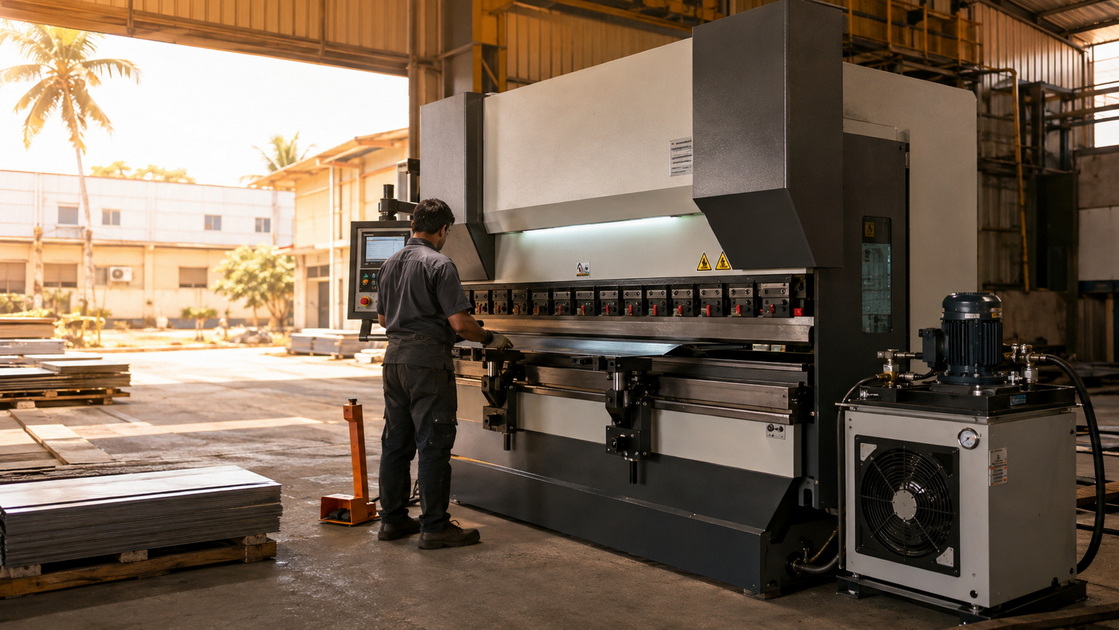
Fabricators considering whether to invest in hydraulic oil cooling can start with a few practical questions:
- How high does ambient temperature get, and for how long?
Long periods above moderate temperatures increase the risk of overheating with standard systems.
- How many hours per day does the press brake run?
Continuous multi‑shift operation generates more cumulative heat.
- What material thicknesses and forces are typical?
Heavier loads and higher tonnages generate more heat per cycle.
- How critical is uptime to business performance?
Frequent unplanned stops can disrupt production schedules and delivery timelines.
- How strong is the maintenance culture in the facility?
Teams that follow systematic procedures can gain more benefit from a dedicated cooling system.
By answering these questions honestly, it becomes easier to determine whether standard cooling will be enough or whether hydraulic oil cooling is a justified investment.
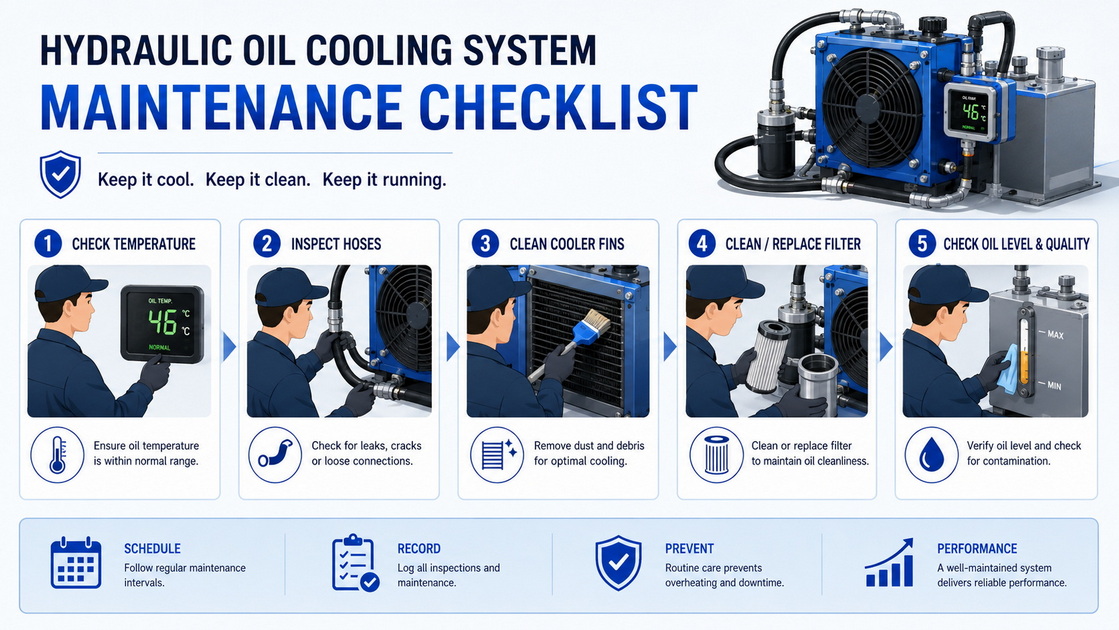
When adding hydraulic oil cooling to a CNC press brake or specifying it for a new machine, a structured approach helps achieve reliable results:
1. Measure real operating temperatures
Record tank wall temperature during typical and peak production to understand the actual thermal load.
2. Select hydraulic oil grade based on temperature and system limits
Choose an oil viscosity class that remains effective within expected operating temperatures and matches pump design.
3. Size the cooler appropriately
Calculate approximate heat load based on pump power, duty cycle, and ambient conditions, then choose a cooler that can handle peak requirements.
4. Integrate temperature monitoring and alarms
Include sensors and display values in the control system, with clear alarm thresholds for over‑temperature conditions.
5. Define a maintenance plan for the cooling system
Set intervals for cleaning, inspection, and performance checks for filters, pumps, and any coolant used in the system.
A well‑implemented hydraulic oil cooling system supports:
- More predictable machine behavior during extended runs.
- Lower risk of emergency stops due to overheating.
- Reduced wear and longer service life for key components.
- More reliable planning and scheduling for high‑volume production.
Over the full life of the machine, these benefits can offset the added initial cost and power consumption associated with the cooling system.
Owners and managers often weigh investment decisions against expected returns over many years. Hydraulic oil cooling represents an additional upfront cost, but it also offers long‑term advantages:
- Fewer oil changes and lower disposal volumes.
- Reduced spending on replacement seals, hoses, and valve repairs.
- Less unplanned downtime and fewer emergency service calls.
- More stable performance for precision bending and critical projects.
From a lifecycle perspective, many shops find that the total cost of ownership is lower when machines are equipped with appropriate cooling from the beginning.
Cooling choices should align with the role of the machine in overall production. For a press brake that forms a central part of output, stability and durability carry more weight. For equipment used occasionally or for less demanding work, standard cooling and careful maintenance may still provide a reasonable balance.
In high‑volume, export‑oriented operations, where consistent performance is closely linked to reputation and delivery reliability, a robust hydraulic oil cooling system becomes a practical tool for safeguarding long‑term performance.
Hydraulic CNC press brakes generate significant heat in the hydraulic circuit, and the way that heat is managed plays a crucial role in overall machine performance and durability. Standard cooling measures rely on ambient conditions and passive tank dissipation, which can be acceptable under moderate loads and climates.
Dedicated hydraulic oil cooling systems go further, actively controlling temperature, stabilizing oil properties, and lowering stress on hydraulic and electronic components. In hot climates and heavy‑duty applications, this added control reduces failures, supports consistent bending quality, and extends equipment life. Matching the cooling approach to real operating conditions allows fabricators and equipment owners to achieve a more stable and predictable performance over the full machine lifespan.
1. Do all CNC press brakes need hydraulic oil cooling?
No. Machines operating in moderate climates with low duty cycles may perform well with standard cooling. Hydraulic oil cooling becomes increasingly valuable as ambient temperatures, duty cycles, and tonnage levels rise.
2. How can a facility identify temperature‑related issues in their press brake?
Typical signs include frequent high‑temperature alarms, visible changes in bending results over long runs, unusual changes in oil appearance, and an increase in leaks or seal failures. Measuring tank temperature during peak production is a practical way to confirm whether the machine is running too hot.
3. Will adding hydraulic oil cooling significantly increase energy usage?
It does add some energy consumption because pumps, fans, and chillers must run. However, this consumption is often outweighed by reduced downtime, fewer component replacements, and more stable productivity throughout the machine's service life.
4. What routine tasks are involved in maintaining a hydraulic oil cooling system?
Routine tasks typically include monitoring temperature readings, inspecting hoses and connections for leaks, cleaning filters and heat exchange surfaces, checking fluid levels in coolant circuits, and verifying that alarms and sensors work correctly.
5. Can hydraulic oil cooling be added to an existing machine that currently uses only standard cooling?
In many cases, it is possible to retrofit hydraulic oil cooling. This usually involves adding a cooler or heat exchanger to the hydraulic circuit, installing sensors and controls, and adapting the tank and piping layout to accommodate the new equipment.
1. DurmaPress – How to Choose Hydraulic Oil for Press Brakes
2. Cooling Power Corp – Preventing Heat-Related Equipment Failures in Industrial Facilities
3. Protex Canada – 7 Ways to Keep My Fabrication Equipment Cool
[https://protexcanada.com/en/blog/7-ways-to-keep-my-fabrication-equipment-cool/]
4. Ascendum Machinery – Equipment Cooling Systems Maintenance Tips
[https://ascendummachinery.com/equipment-cooling-systems-tips/]
5. Acctek CNC – What Cooling Methods Are Needed for Metal CNC Routers?
[https://acctekcnc.com/what-cooling-methods-are-needed-for-metal-cnc-routers/]
6. Master Fluids – The Value of Machine Lifespan in Manufacturing
[https://www.masterfluids.com/blog/2023/09/12/the-value-of-machine-lifespan-in-manufacturing/]
7. Altg – Maintenance Tips to Extend Equipment Life Span
[https://altg.ca/blog/maintenance-tips-to-extend-equipment-lifespan/]
8. Apple Rubber – How to Effectively Extend the Lifespan of Your Equipment
[https://www.applerubber.com/blog/how-to-effectively-extend-the-lifespan-of-your-equipment/]


