


Views: 246 Author: CNDY-Press Publish Time: 2026-07-28 Origin: Site


Content Menu
● Where Standard Machines Still Win
● Technology Trends Worth Noticing
● A Practical Selection Framework
● Expert View From the Shop Floor
>> 1. Are high-speed press brakes always more profitable?
>> 2. Do standard press brakes still make sense in 2026?
>> 3. What type of press brake is best for OEM manufacturing?
>> 4. Does faster cycle time reduce labor needs?
>> 5. Should I choose hydraulic or electric technology?
In metal fabrication, the real question is not whether a faster press brake exists. The real question is whether cycle time savings translate into enough throughput, labor efficiency, and quality consistency to justify the higher machine investment. For many OEM and ODM manufacturers, the answer depends on part mix, material thickness, operator skill, and annual production volume.

A standard press brake is built to balance versatility, force, and cost. It is commonly used for general sheet metal forming, thicker material, and mixed production environments where flexibility matters more than maximum speed.
A high-speed press brake is designed to reduce non-productive time and shorten the bending cycle. In practice, that usually means faster approach, faster bending response, quicker return, and better control automation. Mechanical systems have historically delivered faster cycle times, while modern electric and servo-driven systems also improve speed, precision, and energy efficiency.
| Factor | High-Speed Press Brake | Standard Press Brake |
|---|---|---|
| Cycle Time | Shorter | Longer |
| Best For | High-volume, repeat jobs, small-to-medium parts | Mixed jobs, thicker material, flexible production |
| Accuracy | Strong on repeatable, optimized parts | Strong across a wider range of jobs |
| Energy Use | Often lower in electric or servo-driven models | Often higher in conventional hydraulic systems |
| Upfront Cost | Higher | Lower |
| Operator Dependence | Lower when automation is advanced | Higher in manual-heavy workflows |
| Maintenance | Can be lower in electric designs | Usually more established and familiar |
Speed matters most when a machine spends much of the day repeating similar bends. In those cases, a few seconds saved per cycle can compound into meaningful capacity gains across a shift. This is especially relevant for automotive parts, electronics enclosures, appliance components, and other high-repeat production lines.
Faster cycle time also helps when labor is tight. If one operator can produce more parts in less time, the machine reduces queue pressure and helps stabilize delivery performance. That matters because skilled CNC labor shortages continue to challenge fabricators across regions.
Standard press brakes are often the smarter choice when part variety is high and production runs are short. If a shop changes tooling frequently, works with thick plate, or produces custom orders with irregular geometry, the extra speed of a high-speed machine may not produce enough return. Hydraulic systems remain attractive because they deliver force, flexibility, and proven reliability for heavy-duty applications.
They also make sense for manufacturers prioritizing lower entry cost. A machine that is slightly slower but easier to justify financially can be the better long-term fit, especially when production volume is unstable or customers demand a wide range of bends.
The cycle time question should be calculated in business terms, not just machine terms. A faster press brake is worth the investment only if the savings outweigh the purchase price, setup time, training, tooling requirements, and maintenance costs.
A practical evaluation should include:
1. Parts per shift.
2. Average bend count per part.
3. Changeover frequency.
4. Material thickness range.
5. Labor cost per hour.
6. Scrap and rework rate.
7. Annual machine utilization.
If a machine runs only part of the day, the payback window can stretch quickly. If it runs continuously with repeatable jobs, the return improves much faster.

The press brake market continues to expand, with market research projecting steady growth through 2033. That growth is being driven by automation, precision manufacturing, infrastructure demand, and the move toward more energy-efficient equipment.
At the same time, recent industry trends show growing interest in servo-electric drive, electro-hydraulic servo control, angle measurement, robotic bending cells, and smart connectivity. These capabilities do more than improve speed. They also reduce setup waste, improve first-run quality, and support predictive maintenance.
Use the machine that fits your current and near-future workload:
- Choose high-speed press brakes if you run repeat jobs, high volumes, tight delivery schedules, and smaller-to-medium gauge parts.
- Choose standard press brakes if you need broad flexibility, heavier material capability, and lower capital commitment.
- Consider servo-electric or hybrid options if you want a balance of speed, precision, and lower energy consumption.
For OEM and ODM projects, the best machine is often the one that aligns with target part families, annual output, and customer quality standards rather than the fastest machine on paper.
In actual production, cycle time is only one part of the equation. A machine that bends fast but requires constant intervention can lose its advantage. A slightly slower machine that runs consistently, holds tolerances, and minimizes downtime may deliver better throughput over the full month.
That is why experienced fabricators often evaluate the whole system: machine speed, backgauge movement, programming efficiency, tool setup, automation, and operator skill. When these factors are optimized together, the cycle time improvement becomes more valuable.
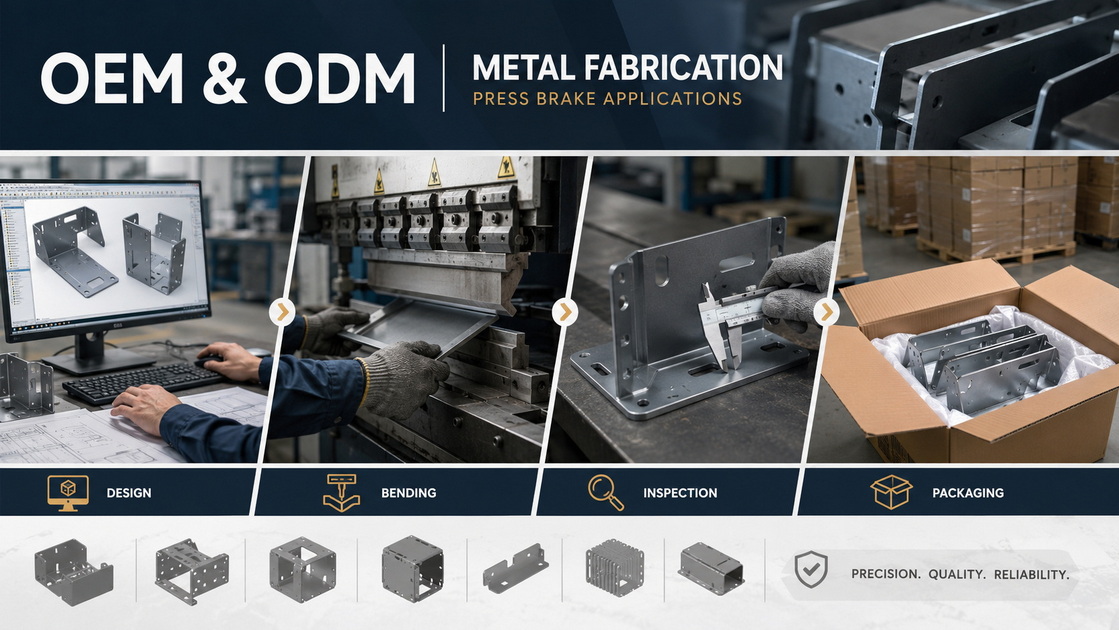
CNDY Press supports OEM and ODM manufacturing projects and customized production for sheet metal equipment buyers. For companies evaluating a new CNC press brake line, that means the final recommendation can be tailored to real application needs instead of a one-size-fits-all machine spec.
If your production mix includes both speed-sensitive and complex bending requirements, a customized machine plan may offer better value than a simple purchase based on tonnage or headline cycle time alone.

High-speed press brakes are worth the investment when production volume, labor constraints, and repetitive jobs make cycle time a direct profit lever. Standard press brakes remain the better fit when flexibility, thick material handling, and lower capital cost are the priority. The best choice is the one that matches your part mix, utilization rate, and long-term production strategy.
No. They are most profitable when they run repeat jobs at high utilization. If the machine is underused, the extra investment may not pay back quickly.
Yes. Standard press brakes remain relevant for mixed production, heavier materials, and fabricators that need versatility more than maximum speed.
That depends on the parts being produced. OEM manufacturers often benefit from a customized solution that balances speed, accuracy, and tooling flexibility.
It can reduce labor pressure, especially in repetitive production. However, automation, programming efficiency, and training also affect labor efficiency.
Hydraulic machines are strong for heavy-duty bending, while electric and servo-driven systems are often better for energy efficiency, speed, and precision in lighter-to-medium applications.
1. Cincinnati Incorporated. "Understanding CNC Press Brakes: Hydraulic, Mechanical, Electric, and Hybrid Differences." [https://www.e-ci.com/news/understanding-cnc-press-brakes-hydraulic-mechanical-electric-and-hybrid-differences]
2. Power & Motion. "Servo-Driven vs. Hydraulic Press Brakes - Comparing Their Capabilities." [https://www.powermotiontech.com/technologies/article/55384869/servo-driven-vs-hydraulic-press-brakes-comparing-their-capabilitie]
3. Persistence Market Research. "Press Brake Machine Market Size & Trends Report, 2033." [https://www.persistencemarketresearch.com/market-research/press-brake-machine-market.asp]
4. CNHAWE. "CNC Press Brake for Metal Fabrication: Trends in 2026." [https://www.cnhawe.com/cnc-press-brake-for-metal-fabrication-2026-trends/]
5. Mac-Tech. "Comparing Hydraulic and Electric Press Brakes." [https://mac-tech.com/metal-fab-equip/comparing-hydraulic-and-electric-press-brakes-key-differences/]
6. Northern Metal Products. "OEM Metal Fabrication Solutions." [https://www.northernmetalproducts.com/oem-manufacturing/]
7. OpenMill. "Metals & Fabrication Manufacturers." [https://openmill.com/manufacturers/category/metals-and-fabrication]
8. SMAC ITC. "2026 CNC Press Brake Innovations and Trends." [https://www.smacitc.com/blog/2026-cnc-press-brake-innovations-and-trends/]


