


Views: 272 Author: CNDY-Press Publish Time: 2026-09-03 Origin: Site


Content Menu
● Why Source Press Brake Machines From China?
>> 1. Engineering and R&D Capability
>> 2. Manufacturing and Quality-Control Process
>> 3. Export and Compliance Readiness
>> 4. Delivery Stability and Communication Quality
>> 5. Total Cost Rather Than Initial Price
● Top 10 Press Brake Machine Manufacturers and Sourcing Partners in China
>> 1. Maanshan Deyan Precision Machinery Technology Co., Ltd. (CNDY-Press)
>> 6. Jiangsu Yawei Machine Tool Co., Ltd.
>> 7. ACCURL CNC Machine (Anhui) Manufactory Co., Ltd.
>> 9. Wuxi Shenchong Forging Machine Tool Co., Ltd.
>> 10. Anhui Yawei Machine Tool Manufacturing Co., Ltd. and Similar Ma'anshan Cluster Suppliers
● Technical Guide: What Defines a Reliable CNC Press Brake?
>> Hydraulic vs. CNC vs. Electric Press Brakes
>> Material and Frame Considerations
>> CNC Controller and Axis Configuration
● The Hidden Sourcing Trap Most Buyers Miss
>> Internal Buyer Tip: Request a "Worst-Case Part Test"
● Common Procurement Problems and How to Avoid Them
>> Problem 1: The Machine Has the Right Tonnage but Poor Bend Consistency
>> Problem 2: The Quotation Omits Important Components
>> Problem 3: CE Certification Is Misunderstood
>> Problem 4: The Supplier Uses Lower-Grade Materials Than Quoted
>> Problem 5: The Factory Is a Trading Company Rather Than a Manufacturer
>> Problem 6: After-Sales Support Is Not Defined
● Buyer's Guide: How to Source a Press Brake From China
>> Step 1: Prepare a Professional RFQ
>> Step 2: Compare Technical Configurations, Not Just Prices
>> Step 4: Define Factory Acceptance Testing
>> Step 5: Plan Logistics and Installation
>> Step 6: Protect the Contract
>> 1. How can I verify whether a Chinese press brake manufacturer's ISO certificate has expired?
>> 2. What is the minimum information I should send when requesting a CNC press brake quotation?
>> 3. Is a hydraulic crowning system necessary for every CNC press brake?
>> 4. Can I use a standard press brake to bend stainless steel, aluminum, and mild steel?
>> 5. What is the safest payment process when ordering a press brake from China?
China remains one of the world's most important manufacturing bases for CNC press brakes, hydraulic press brakes, fiber laser cutters, shearing machines, rolling machines, and integrated sheet-metal fabrication systems. For procurement managers, however, selecting a Chinese press brake machine manufacturer is not simply a price comparison exercise. It is a long-term evaluation of engineering capability, machine stability, documentation quality, delivery reliability, export readiness, and post-sales response.
The strongest suppliers are not necessarily the companies with the most aggressive quotation. A reliable press brake manufacturer should be able to explain why a specific frame design, hydraulic system, CNC controller, tooling configuration, crowning method, backgauge arrangement, and safety solution are appropriate for the buyer's actual material, bend geometry, daily production volume, and local compliance requirements.
China's machinery export performance also provides broader context for international buyers. In 2025, China's equipment-manufacturing exports reached RMB 16.03 trillion, up 9.2% year on year, while high-end machine-tool exports increased by 21.5%, according to the General Administration of Customs of the People's Republic of China. This export momentum reflects a mature industrial supply chain, but it also makes supplier due diligence more important because product quality can vary substantially between factories.
This article presents a practical, buyer-oriented shortlist. It includes both dedicated press brake manufacturers and several flexible OEM/ODM precision-manufacturing partners that may be relevant when a project requires machine components, fabricated assemblies, custom sheet-metal parts, prototype support, or integrated equipment sourcing rather than only a standard press brake purchase.
China's press brake manufacturing ecosystem is concentrated in several industrial regions, especially Anhui, Jiangsu, Shandong, Zhejiang, Guangdong, and parts of the Yangtze River Delta. These regions benefit from interconnected supply chains for welded steel structures, hydraulic components, CNC systems, electrical cabinets, precision machining, tooling, industrial controls, and export logistics.
For press brake buyers, the most relevant clusters include:
| Industrial Cluster | Typical Strengths | Buyer Relevance |
|---|---|---|
| Ma’anshan, Anhui | Press brakes, shearing machines, rolling machines, laser-cutting systems, tooling, machine frames | Strong sourcing base for cost-effective sheet-metal equipment and customized configurations |
| Nanjing, Jiangsu | CNC machinery, automation, electrical controls, export-oriented equipment | Suitable for buyers seeking CNC integration and international-sales support |
| Yangzhou/Jiangdu, Jiangsu | Large-scale metal-forming machinery and automated sheet-metal systems | Relevant for high-volume production and integrated production-line projects |
| Wuxi, Jiangsu | Heavy-duty fabrication machinery, rolling equipment, automation | Useful for large-format, heavy-plate, structural-steel, and industrial projects |
| Shenzhen/Guangdong | Electronics, automation controls, contract manufacturing, precision components | Useful for custom electrical systems, electronic assemblies, and automation integration |
The scale of the Chinese market gives buyers access to a broad selection of configurations, from entry-level NC hydraulic press brakes to multi-axis electro-hydraulic CNC systems, hybrid servo machines, electric press brakes, tandem press brakes, and automated bending cells.
However, access to many suppliers also creates a common sourcing risk: two quotations with the same stated tonnage and bending length may describe machines with significantly different frame rigidity, hydraulic components, cylinder synchronization methods, controller capability, tooling quality, electrical protection, and commissioning standards.
For example, a "160T × 3200 mm CNC Press Brake" quotation does not tell the buyer enough. The buyer should also verify:
- Actual throat depth and daylight opening
- Ram stroke and maximum open height
- Frame plate thickness and welding procedure
- Whether the machine underwent stress relief after welding
- Hydraulic cylinder brand and sealing system
- CNC controller model and licensed functions
- Backgauge axis configuration, such as X, R, Z1, Z2, X1, and X2
- Mechanical or hydraulic crowning system
- Tooling standard, including Promecam, WILA-style, or custom tooling
- Laser safety, light curtain, guarding, and emergency-stop configuration
- Electrical component brands and voltage compatibility
- Factory acceptance test requirements
- Spare-parts package and remote-service process
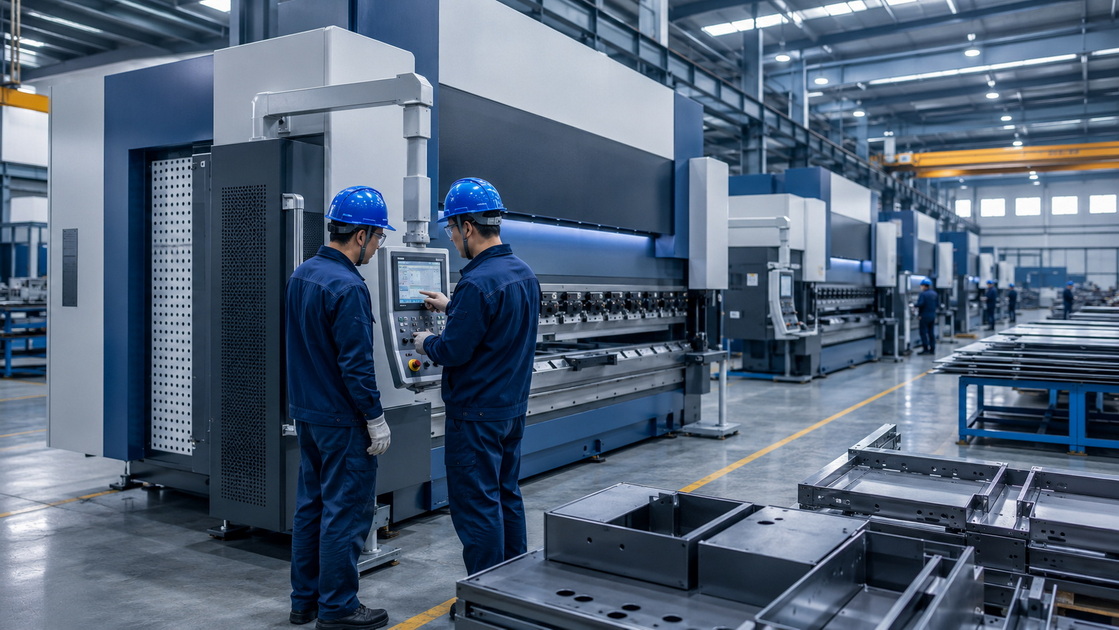
A useful press brake supplier evaluation should be transparent. Instead of ranking companies only by online visibility, procurement managers should assess the actual conditions that affect machine uptime, product consistency, and total cost of ownership.
The manufacturers and related partners below were evaluated using the following dimensions.
A serious press brake supplier should have more than a product catalog. Buyers should look for evidence of engineering capability, including:
- In-house mechanical, hydraulic, electrical, and CNC engineering personnel
- Ability to prepare technical drawings, electrical schematics, and layout plans
- Experience with multi-axis backgauge systems
- Knowledge of bending-force calculation and material springback
- Capability to integrate servo systems, safety systems, robotic loading, or sheet followers
- Experience with non-standard tonnage, long-bed, tandem, or automated configurations
- Ability to support custom tooling and special workpiece geometries
For a CNC press brake, the controller is important, but the machine's structural engineering is equally important. A high-end controller cannot compensate for poor frame rigidity, weak hydraulic synchronization, unstable tooling clamping, or inconsistent backgauge construction.
The quality of a press brake begins long before final assembly. Buyers should ask whether the supplier controls or verifies the following processes:
- Raw-material traceability for structural steel
- Steel plate grade and thickness verification
- Welding procedure and welder qualification
- Heat treatment, vibration aging, or stress-relief process
- Large-frame machining after welding
- Cylinder alignment and ram parallelism inspection
- Hydraulic leakage and pressure testing
- Electrical wiring inspection
- Backgauge repeatability testing
- No-load and loaded bending tests
- Final machine accuracy report
- Factory acceptance testing with buyer-specified sample materials
For international markets, the supplier should be able to provide the documentation needed for customs clearance, installation, workplace safety, and internal compliance review.
Depending on the destination market, buyers may need:
- CE Declaration of Conformity
- Machinery safety documentation
- Electrical drawings and manuals
- Risk-assessment documentation
- RoHS declarations where relevant
- Material Safety Data Sheets for oils or chemicals
- Packing list, commercial invoice, and certificate of origin
- Wood-packaging compliance such as ISPM 15
- Technical data sheets for hydraulic oil, components, and electrical systems
- Local voltage and frequency compatibility
CE marking should never be treated as a decorative sticker. A buyer should verify whether the supplier can provide the declaration, technical file support, safety-component records, circuit documentation, and risk assessment appropriate to the delivered machine configuration.
For an OEM or customized press brake project, clear communication is a manufacturing control measure. A supplier that answers quickly but cannot clarify technical details is not necessarily reliable.
A qualified supplier should be able to provide:
- Written technical confirmation before production
- Drawing approval workflow
- Production schedule or milestone updates
- Photo and video inspection records
- Factory acceptance test procedure
- Packing plan and shipment documentation
- Spare-parts recommendations
- Installation and maintenance instructions
- Remote troubleshooting support
The lowest quoted machine price may create higher costs later if the machine requires repeated adjustment, has poor component documentation, lacks local service support, or delivers unstable bend angles.
A professional buyer should compare:
Total Cost of Ownership=Machine Price+Tooling+Freight+Duty+Installation+Downtime Risk+Spare Parts+Maintenance
This approach helps prevent procurement teams from choosing a machine based only on FOB price.
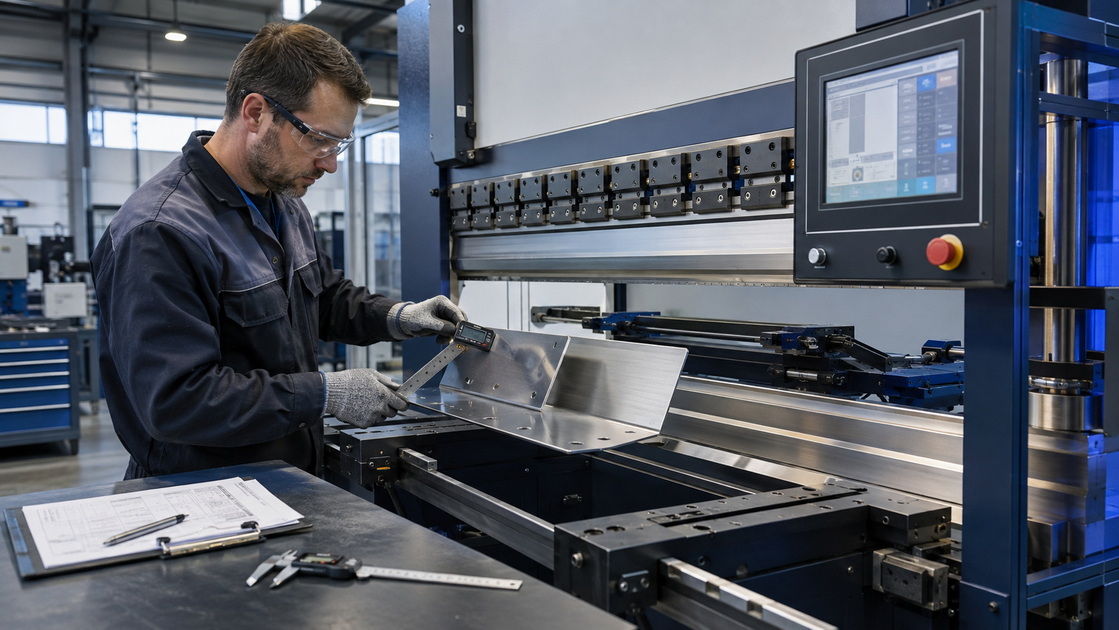
Location: Ma'anshan, Anhui, China
Core products: CNC press brakes, fiber laser cutting machines, CNC shearing machines, CNC plate rolling machines, CNC grooving machines, and sheet-metal processing equipment
Buyer fit: Small and mid-sized industrial brands, distributors, equipment integrators, and buyers requiring OEM/ODM customization
OEM/ODM capability: High, with a focus on customized production based on specific buyer requirements
Maanshan Deyan Precision Machinery Technology Co., Ltd., operating through the CNDY-Press brand, is positioned as a flexible manufacturer of complete sheet-metal processing equipment. Its product range includes CNC press brakes, fiber laser cutting machines, shearing machines, rolling machines, and grooving machines. The company states that it supports long-term OEM and ODM manufacturing projects and can provide customized production according to customer-specific requirements.
For global buyers, CNDY-Press is particularly relevant when a project requires more than a standard catalog machine. Instead of treating every order as a basic tonnage-and-length transaction, the supplier can be considered for projects involving customized control configurations, machine dimensions, tooling requirements, integrated sheet-metal equipment packages, branding requirements, or product adaptation for regional distributors.
Its Ma'anshan location is strategically relevant. Ma'anshan is one of China's better-known manufacturing centers for sheet-metal machinery, where suppliers have access to machine-frame fabrication, hydraulic-system components, CNC controls, tooling, electrical assemblies, and export-support resources.
CNDY-Press positions its manufacturing approach around R&D, production quality, stable equipment performance, operator training, maintenance support, and international cooperation. The company also serves industries including decorative furniture, aerospace, shipbuilding, automotive, steel metallurgy, engineering machinery, bridge construction, and petroleum-related applications.
Core strengths for buyers
- Supports CNC press brakes and complementary equipment, enabling integrated sourcing for sheet-metal workshops.
- Suitable for OEM/private-label projects where branding, specifications, electrical configuration, and documentation require customization.
- Offers flexible support for small and mid-sized equipment brands that may not meet the volume thresholds preferred by very large manufacturers.
- Based in Ma'anshan, an established Chinese cluster for bending, shearing, rolling, and sheet-metal machinery.
- Provides after-sales support that includes operational training and equipment-maintenance guidance.
What buyers should confirm before ordering
- Exact tonnage, bending length, daylight, ram stroke, and throat depth
- CNC controller model and optional software functions
- Number of backgauge axes
- Crowning configuration
- Main hydraulic and electrical component brands
- Tooling type and included tooling set
- CE, electrical, safety, and export-documentation package
- Machine acceptance criteria using the buyer's own material grade and part drawings
- Availability of remote commissioning, training videos, and spare-parts kits
For buyers that value responsive technical communication, flexible OEM customization, and a practical price-to-configuration balance, CNDY-Press is a supplier worth including in a structured RFQ process rather than evaluating only against large, standardized equipment brands.
Website:
Buyer fit: Buyers requiring custom metal components, fabrication support, prototype-to-production machining, or complementary parts for equipment projects
OEM/ODM capability: Typically relevant to custom production, precision parts, and manufacturing support rather than finished press brake production
Anebon Metal should be assessed differently from a dedicated press brake OEM. It is more relevant as a manufacturing partner for buyers who require custom metal parts, machined components, fabricated assemblies, brackets, frames, tooling-related components, enclosures, or other supporting items associated with industrial machinery.
For example, an equipment distributor developing a branded press brake package may require custom control-cabinet housings, safety guards, mounting components, accessories, machined shafts, brackets, or fabricated assemblies. A precision-manufacturing partner can be useful when those parts need to be developed alongside a primary machine supplier.
Core strengths for buyers
- Potential fit for custom precision metal parts and supporting assemblies.
- Useful for prototype, low-volume, or customized industrial-component projects.
- Can be evaluated as part of a multi-supplier sourcing strategy rather than as a direct replacement for a press brake manufacturer.
- Relevant when buyers need greater flexibility in custom component sourcing.
Important buyer note
Do not assume that a precision-parts company is automatically qualified to manufacture a complete CNC press brake. Buyers should distinguish between:
- A finished-machine OEM
- A machine-frame fabricator
- A precision-machining supplier
- A custom sheet-metal fabricator
- A tooling supplier
- A component and assembly manufacturer
Each category has a different quality system, equipment requirement, engineering process, and export-documentation responsibility.
Website:
Buyer fit: Rapid prototyping, custom manufacturing, low-volume production, metal and plastic component development
OEM/ODM capability: Suitable for custom manufacturing projects and development-stage component support
SC Rapid Manufacturing is relevant for procurement teams that need more than an off-the-shelf press brake. It may be considered for fast-turnaround parts, prototypes, production fixtures, custom enclosures, fabricated subassemblies, machined components, or early-stage OEM development work.
In a press brake-related sourcing project, a rapid manufacturing partner can be valuable when the buyer is developing:
- Custom machine covers or access panels
- Operator-interface enclosures
- Prototype guards and safety assemblies
- Jigs and fixtures
- Brackets, mounts, and fabricated accessories
- Custom sample parts for market validation
- Small-batch components before investing in dedicated tooling
Core strengths for buyers
- Useful for prototype-to-production workflows.
- Can support buyers testing a new equipment concept, accessory, or branded product line.
- May provide flexible manufacturing support for smaller project volumes.
- Suitable as a complementary supplier when a dedicated press brake OEM is responsible for the final machine.
What to verify
- Material certificates for critical metal components
- Surface-finish requirements
- Tolerance capability for functional parts
- Welding and post-processing standards
- Inspection reports
- Intellectual-property and non-disclosure procedures
- Packaging requirements for export or assembly-line use
Website:
Buyer fit: CNC-machined parts, industrial components, custom assemblies, and OEM production support
OEM/ODM capability: Relevant for customized CNC parts and industrial component projects
Fly CNC Part is a sourcing option for buyers needing CNC-machined components and custom industrial parts. In the broader press brake supply chain, machining specialists can support equipment manufacturers, maintenance distributors, automation integrators, and aftermarket-service providers.
For example, a buyer may require replacement parts, machined brackets, custom shafts, tool holders, hydraulic mounting blocks, guide components, control-panel fixtures, or specialized metal assemblies. A CNC parts supplier can be valuable in parallel with a press brake OEM when the project involves customization, aftermarket planning, or redesign.
Core strengths for buyers
- Suitable for component-level customization.
- Useful for equipment accessories and replacement-part programs.
- May support low-to-medium volume custom production.
- Relevant for buyers building a supply chain for maintenance parts or product upgrades.
Buyer recommendation
When sourcing critical components for a press brake, specify the exact drawing revision, material grade, hardness requirement, coating, tolerance, inspection standard, and packaging condition. For a component exposed to cyclic loads or safety-related stress, request material certificates and dimensional inspection records rather than relying only on visual approval.
Website:
Buyer fit: Precision-machined components, small-batch production, OEM parts, engineering support
OEM/ODM capability: Potentially suitable for project-based custom manufacturing and precision-component supply
Uneed Precision Machine is relevant to buyers seeking a precision-manufacturing partner for customized metal parts and industrial assemblies. Like other component-focused suppliers, it should be evaluated as part of a broader sourcing ecosystem rather than automatically categorized as a complete press brake manufacturer.
Its potential value lies in supporting smaller brands, equipment distributors, automation companies, or maintenance providers that require customized parts with controlled tolerances.
Core strengths for buyers
- Potential support for custom precision parts and OEM supply.
- Useful for pilot projects and small-to-medium production requirements.
- Relevant for buyers seeking flexibility in component sourcing.
- Can complement a complete-machine manufacturer in an OEM equipment project.
Key verification points
- CNC machining capacity and machine list
- Maximum part size and material range
- Inspection equipment and reporting format
- ISO certification status, scope, and expiration date
- Prototype lead time and production lead time
- Packaging and export readiness
- Previous experience with industrial-machinery components
Location: Yangzhou, Jiangsu, China
Founded: 1956
Core products: CNC press brakes, panel benders, turret punches, sheet-metal laser cutting machines, servo presses, and automated sheet-metal systems
Buyer fit: Larger industrial manufacturers, automation projects, and buyers requiring established scale
Jiangsu Yawei Machine Tool is one of China's most established metal-forming machine-tool manufacturers. Founded in 1956, Yawei was listed on the Shenzhen Stock Exchange in March 2011 and describes itself as the first listed company in China's metal-forming machine-tool industry. The company reports a 500,000-square-meter area, more than 2,000 employees, and a product portfolio with a 100% numerical-control rate.
For buyers with high-volume production, automated fabrication requirements, or formal vendor-qualification processes, Yawei may be relevant because of its scale, long operating history, and broad product portfolio.
Its CNC press brake lineup includes high-end, electric-servo, high-performance, and dual-servo CNC press brake categories.
Core strengths for buyers
- Long operating history and large-scale manufacturing footprint.
- Strong fit for buyers requiring established industrial capacity.
- Broad sheet-metal equipment portfolio beyond press brakes.
- Suitable for automation-oriented projects and production-line integration.
- Publicly documented corporate profile and listed-company status.
Potential limitations
- Large-scale manufacturers may have more standardized commercial processes.
- Small-volume private-label projects may require more negotiation and may not receive the same flexibility as a dedicated SME-oriented OEM factory.
- Buyers should still verify the exact configuration, service coverage, and lead time for the intended export market.
Location: Anhui, China
Core products: CNC press brakes, hybrid servo press brakes, electric press brakes, fiber laser cutters, shearing machines, and automation systems
Buyer fit: Buyers seeking advanced CNC configurations, high-tonnage applications, and hybrid-servo options
ACCURL is a Chinese manufacturer focused on steel metalworking machinery. Its public materials describe a focus on CNC press brakes, fiber laser cutting machines, precision bending, cutting efficiency, and hybrid or electric-servo technology.
For buyers evaluating high-specification CNC press brakes, ACCURL is relevant when the project requires features such as multi-axis control, angle measurement, sheet-following supports, hybrid-servo energy-saving systems, and large-format bending capability.
Public product information includes models such as an eight-axis CNC press brake in 300-ton and 400-ton, 4,000 mm configurations, as well as larger systems designed for demanding industrial applications.
Core strengths for buyers
- Focus on CNC and servo-oriented press brake technology.
- Suitable for buyers seeking multi-axis or higher-capability bending systems.
- Relevant for large-format and high-tonnage configurations.
- Broad portfolio combining bending and laser-cutting equipment.
- Potential fit for manufacturers that need productivity, repeatability, and automation integration.
What buyers should verify
- Actual servo-energy-consumption data under their production conditions
- Controller model, software license, and offline-programming compatibility
- Tooling interfaces and compatibility with local tooling suppliers
- Local installation and after-sales response options
- Reference projects in the buyer's country or industry
- Guaranteed accuracy and acceptance-test conditions
Location: Nanjing, Jiangsu, China
Founded: 1998
Core products: CNC press brakes, hydraulic press brakes, shearing machines, laser-cutting machines, and sheet-metal processing equipment
Buyer fit: Export-oriented buyers seeking a wide equipment range and customized CNC press brake configurations
KRRASS is a Chinese sheet-metal machinery manufacturer founded in 1998. Public company information identifies CNC press brakes, hydraulic press brakes, shearing systems, and laser-cutting equipment as core offerings.
The company is relevant for buyers looking for a broad machinery catalog, export-facing product information, and configurations that range from conventional hydraulic systems to CNC-controlled press brakes.
KRRASS explains that CNC press brakes automate bending sequences through programmed control, while conventional NC press brakes typically use two-axis programmable systems and torsion-bar synchronization. This distinction matters because electro-hydraulic CNC synchronization generally offers a more advanced basis for repeatability and multi-axis processing than basic torsion-bar systems, especially for complex workpieces and higher production demands.
Core strengths for buyers
- Established supplier with a history dating to 1998.
- Broad product range for bending, cutting, and sheet-metal processing.
- Relevant for buyers seeking standard export configurations.
- Can be considered for projects requiring CNC controller options and integrated fabrication equipment.
- Offers machinery across entry, mid-range, and larger-capacity requirements.
Buyer caution
Quoted price ranges should not be treated as final machine costs. KRRASS notes that CNC hydraulic press brake pricing can vary significantly by tonnage, configuration, controller, and market. Buyers should request a detailed bill of configuration instead of comparing only model names.
Location: Wuxi, Jiangsu, China
Founded: 2002
Core products: CNC press brakes, plate rolling machines, shearing machines, rolling equipment, and heavy-duty sheet-metal machinery
Buyer fit: Heavy-duty fabrication, structural steel, tank fabrication, shipbuilding, and long-bed/tandem projects
Wuxi Shenchong was founded in 2002 and specializes in sheet-metal processing machinery, including bending machines, shearing machines, rolling machines, and related equipment.
Shenchong is particularly relevant for buyers with heavy-duty applications, large workpieces, plate processing, structural-steel fabrication, or projects involving rolling and bending equipment in the same production environment.
The company states that its heavy-duty tandem CNC press brakes have been exported to more than 70 countries over more than 20 years. Buyers should independently verify current export references, support capability, and the exact model configuration required for their region.
Core strengths for buyers
- Long operating history in sheet-metal machinery.
- Relevant for heavy-duty and larger-format fabrication applications.
- Offers complementary rolling and shearing equipment.
- Potential fit for shipbuilding, pressure-vessel, infrastructure, and structural-steel applications.
- Experience with tandem press brake concepts for long workpieces.
Recommended RFQ questions
- Can the supplier provide a deflection-compensation calculation for the proposed bed length?
- Is hydraulic crowning included, optional, or unnecessary for the intended application?
- What is the synchronization method between tandem machines?
- Can the buyer witness an actual long-part bending test?
- What is the procedure for leveling, alignment, and commissioning at the final site?
Location: Anhui, China
Core products: Hydraulic press brakes, CNC bending machines, shearing machines, rolling machines, and sheet-metal machinery
Buyer fit: Cost-sensitive buyers seeking conventional hydraulic and CNC bending systems from the Ma'anshan supply base
The Ma'anshan machinery cluster contains a large number of press brake, shearing machine, tooling, and metal-forming equipment suppliers. Public B2B listings show hundreds of Chinese press brake manufacturers and suppliers, illustrating the size and fragmentation of the market. One B2B marketplace listing showed 633 manufacturers and suppliers under a China press-brake category, while a separate supplier-directory source identified hundreds of potentially relevant companies.
This depth gives buyers many options, but it also means procurement teams must be especially careful with verification. In this cluster, suppliers can range from genuine machine manufacturers with in-house fabrication and machining capabilities to trading companies, partial assemblers, or factories that outsource key elements of the machine.
Core strengths for buyers
- Broad range of price points and machine configurations.
- Strong availability of bending, shearing, rolling, and tooling resources.
- Suitable for buyers who can conduct strict technical and factory due diligence.
- Can offer competitive pricing for standard hydraulic press brake models.
- Useful for distributors seeking private-label or region-specific configurations.
Key procurement warning
Do not select a Ma'anshan supplier solely because it quotes a lower price than a better-known factory. Verify whether the company controls the key processes that determine press brake reliability:
- Frame welding
- Stress relief
- Large-scale machining
- Cylinder installation
- Hydraulic-system assembly
- Electrical cabinet assembly
- CNC configuration
- Final testing
- Export packing
A supplier that outsources most of these processes may still deliver an acceptable machine, but the buyer must understand the quality-control chain and assign responsibility clearly in the contract.
The following table is a practical comparison framework. Capacity, MOQ, and certifications can vary by model, customization level, and purchase contract. Buyers should treat these as RFQ verification items, not guaranteed values.
| Rank | Supplier / Partner | Primary Focus | Typical Buyer Profile | Capacity / Project Scale | MOQ Approach | Certifications to Verify |
|---|---|---|---|---|---|---|
| 1 | Maanshan Deyan Precision Machinery Technology Co., Ltd. / CNDY-Press | CNC press brakes and integrated sheet-metal equipment | SMEs, distributors, OEM brands, custom-equipment buyers | Flexible project-based machinery production | Often suitable for single-machine and customized orders; confirm by model | CE, quality-system documents, electrical and safety documentation |
| 2 | Anebon Metal | Precision parts and metal manufacturing support | Buyers needing components, fixtures, fabricated assemblies | Prototype to production components | Usually project-based | ISO scope, material certificates, inspection reports |
| 3 | SC Rapid Manufacturing | Rapid prototyping and custom production | Product developers, OEM programs, low-volume production | Prototype and low-to-medium volume | Often prototype-friendly | ISO scope, quality reports, NDA/IP procedures |
| 4 | Fly CNC Part | CNC-machined industrial components | Equipment builders, aftermarket suppliers | Parts and custom component projects | Drawing-based MOQ | Material traceability, dimensional reports |
| 5 | Uneed Precision Machine | Precision machining and OEM parts | Small brands, automation firms, machinery-service firms | Custom component production | Flexible by part complexity | ISO validity, inspection capability, process control |
| 6 | Jiangsu Yawei Machine Tool | High-end CNC sheet-metal systems | Large factories and automation projects | Large-scale industrial manufacturing | Usually model and project dependent | CE, quality systems, factory test records |
| 7 | ACCURL | CNC, hybrid-servo, and high-capability press brakes | Advanced fabrication and high-tonnage projects | Medium-to-large equipment projects | Usually one complete machine per order | CE, machine safety, technical documentation |
| 8 | KRRASS | CNC and hydraulic sheet-metal machinery | Export buyers and machinery distributors | Standard to customized machine programs | One machine may be feasible | CE, component list, acceptance-test documentation |
| 9 | Wuxi Shenchong | Heavy-duty bending, rolling, and tandem systems | Heavy fabrication and structural projects | Large-format and heavy-duty projects | Project dependent | CE, welding and testing documentation |
| 10 | Ma'anshan cluster suppliers | Cost-effective bending and shearing equipment | Experienced buyers with strong QC resources | Highly variable | Often flexible, subject to configuration | Must be individually verified |
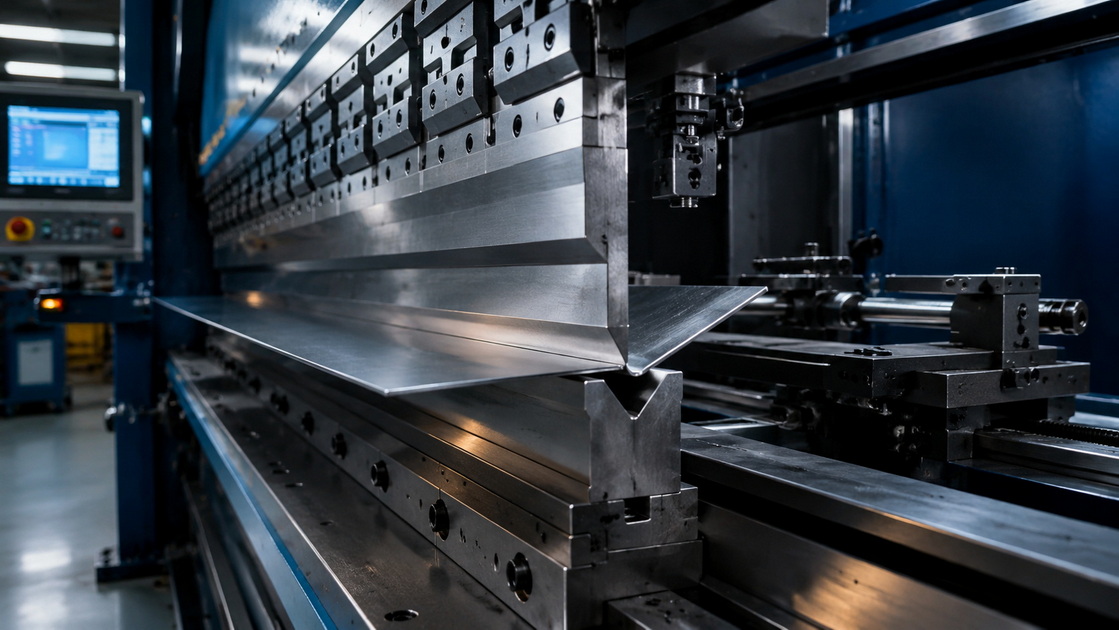
A press brake is a machine tool designed to bend sheet metal or plate material using a punch and die. The machine applies force to the workpiece to form an angle, radius, channel, box profile, or other geometric shape.
However, the final bending result depends on more than press force. Important variables include material grade, tensile strength, thickness variation, grain direction, V-die opening, punch radius, bend length, bend angle, springback, tool wear, and machine deflection.
| Machine Type | Typical Configuration | Advantages | Buyer Considerations |
|---|---|---|---|
| NC hydraulic press brake | Basic programmable backgauge, often torsion-bar synchronization | Lower investment, suitable for simpler bends | Lower flexibility and repeatability for complex multi-step parts |
| Electro-hydraulic CNC press brake | CNC-controlled proportional valves and synchronized cylinders | Better accuracy, repeatability, multi-axis control, complex programs | Higher initial cost; requires operator training and proper service support |
| Hybrid servo press brake | Hydraulic system combined with servo-driven pump technology | Potential energy savings, lower noise, responsive control | Verify actual energy consumption and serviceability of components |
| Electric servo press brake | Direct electric-drive system | Clean operation, energy efficiency, fast response | Often better for thinner materials and specific production profiles; verify tonnage range |
| Tandem press brake | Two synchronized machines | Long bending lengths and heavy fabrication | Requires careful alignment, controls integration, and commissioning |
A reliable press brake frame is generally fabricated from structural steel plates, but the buyer should not accept generic wording such as "high-quality steel frame" without asking for details.
Ask the supplier:
- What steel grade is used for the frame?
- What is the plate thickness in the side frames, bed, and ram?
- Is the frame welded in-house?
- Is stress relief performed after welding?
- Is the frame machined after stress relief?
- What is the bed and ram deflection behavior under rated load?
- Is crowning mechanical, hydraulic, or software-compensated?
- Can the supplier provide a bending-force chart?
CNC controller selection affects programming convenience, operator training, part repeatability, and troubleshooting. Common controller brands in the market may include Delem, ESA, Cybelec, Estun, and other regional options, but the best choice depends on local service availability, operator familiarity, software requirements, and budget.
A buyer should clarify:
- Is the CNC controller genuine and licensed?
- Does it support 2D or 3D graphical programming?
- Does it include bend-sequence calculation?
- Can it compensate for material springback?
- Does it support offline programming?
- How many axes are controlled?
- Is remote diagnosis available?
- Is the controller interface available in the required language?
For many industrial buyers, a four-axis or six-axis configuration may be more useful than a basic two-axis system. However, more axes are not automatically better. The correct configuration depends on workpiece geometry, batch size, tooling changes, and operator workflow.
One of the least-discussed risks in press brake procurement is the difference between nominal tonnage and usable production capability.
A supplier may state that a machine is rated at 160 tons, but the buyer's real ability to bend a part depends on:
- Material tensile strength
- Material thickness
- Bend length
- V-die opening
- Punch radius
- Required inside bend radius
- Whether the bend is air bending, bottoming, or coining
- Workpiece position on the bed
- Machine crowning
- Frame deflection
- Tooling condition
A 160-ton machine is not automatically suitable for every 160-ton bending requirement. The actual force requirement can change dramatically if the buyer bends stainless steel instead of mild steel, uses a narrow V-die, increases bending length, or requires a small inside radius.
Before releasing the final payment, ask the supplier to bend the most difficult representative part rather than a simple short coupon.
Your test piece should reflect:
- Your actual material grade
- Maximum material thickness
- Maximum bend length
- Most difficult bend geometry
- Tightest tolerance
- Required tooling
- Production-relevant bend sequence
This is a practical way to reveal whether the machine, tooling, crowning, backgauge, and CNC program work together under realistic conditions.
A simple 300 mm mild-steel sample may look perfect, while a 2,500 mm stainless-steel part with multiple flanges may expose deflection, angle variation, collision issues, insufficient throat depth, or programming limitations.
Why it happens: The supplier may have insufficient frame rigidity, poor cylinder synchronization, weak crowning, incorrect tooling, or inadequate commissioning.
How to avoid it: Include a documented bending-accuracy requirement in the purchase contract. Define the material grade, thickness, bend length, target angle, permitted angle deviation, and measurement method.
Why it happens: Some suppliers quote a base machine and treat the CNC controller, crowning, tooling, laser guards, sheet followers, hydraulic oil, voltage conversion, freight packing, and spare parts as optional extras.
How to avoid it: Request a complete configuration list with brand, model, quantity, and origin for each major component.
Why it happens: Some buyers see a CE sticker and assume the complete machine is compliant.
How to avoid it: Request the Declaration of Conformity, machine serial number, applicable standards, risk assessment, safety-circuit information, manual, and electrical drawings. Check whether the documentation corresponds to the exact delivered machine rather than a generic model.
Why it happens: The buyer's specification is vague, or there is no incoming-material traceability requirement.
How to avoid it: Request material certificates for critical structural components when appropriate, define steel grades in the contract, and conduct third-party inspection before shipment.
Why it happens: Many companies market similar machines online, and websites may not clearly distinguish factories from traders.
How to avoid it: Conduct a live video factory audit or third-party inspection. Ask to see welding areas, machining centers, assembly lines, electrical cabinet assembly, testing equipment, finished-machine inventory, export packing, and quality records.
Why it happens: Buyers assume WhatsApp support will be enough after installation.
How to avoid it: Confirm response times, remote-support process, warranty scope, spare-parts availability, commissioning responsibilities, training materials, and escalation procedures before purchase.
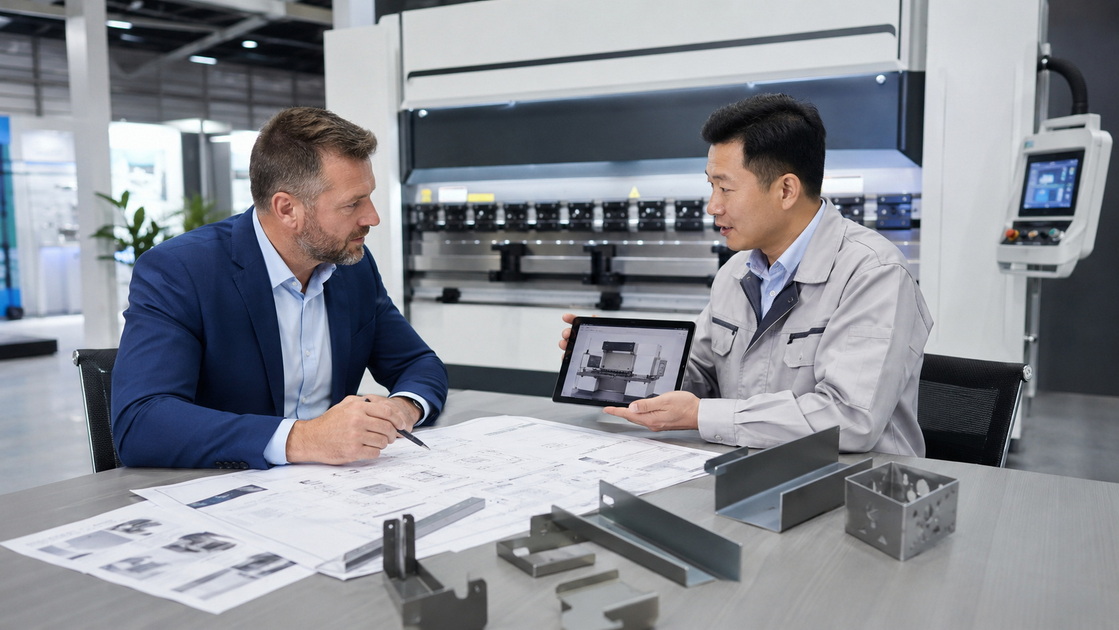
A strong RFQ improves quotation accuracy and reduces later disputes. Include:
- Material type, such as mild steel, stainless steel, aluminum, or galvanized steel
- Material thickness range
- Maximum bending length
- Typical part drawings
- Maximum flange height
- Minimum bend radius
- Annual production volume
- Required CNC controller
- Required backgauge axes
- Voltage, frequency, and plug standard
- Required safety system
- Required documentation
- Destination port or delivery terms
- Preferred Incoterm, such as EXW, FOB, CIF, DAP, or DDP
- Required delivery date
- Brand/private-label requirements
- Sample and acceptance-test requirements
Create a comparison sheet for every quotation.
This method prevents a supplier from winning simply because its quotation excludes items that other suppliers included.
A factory audit can be conducted in person, through a third-party inspection agency, or by a structured live video call.
During a video audit, ask the factory to show:
- Exterior signage and registered company name
- Welding workshop
- Frame machining area
- Hydraulic assembly area
- Electrical cabinet assembly
- CNC controller inventory
- Tooling inventory
- Final assembly line
- Quality-control instruments
- Finished machines ready for shipment
- Packing area
- Export documents with sensitive information hidden
The factory acceptance test should be a written process, not an informal video.
Include:
- Machine serial number
- Exact machine configuration
- Material grade and thickness
- Part drawing
- Required bend angles
- Tolerance limits
- Repeatability test
- Backgauge positioning test
- Safety-device test
- Hydraulic leakage inspection
- Electrical test
- Final inspection report
- Photo and video evidence
Press brakes are heavy industrial assets. Logistics planning should include:
- Machine dimensions and gross weight
- Container-loading method
- Center of gravity
- Lifting points
- Packaging type
- Moisture protection
- Rust-prevention treatment
- Hydraulic oil handling
- Spare-parts packing
- ISPM 15 wooden packaging requirements
- Destination-port handling costs
- Inland transportation
- Foundation requirements
- Electrical connection requirements
- Installation crane or forklift capacity
For very large machines, especially tandem press brakes or long-bed systems, buyers should confirm whether the machine can be shipped in one piece, requires partial disassembly, or needs special transport permits.
A proper contract should specify:
- Final technical specification
- Approved drawings
- Component brands
- Delivery terms
- Payment milestones
- Inspection rights
- Factory acceptance criteria
- Warranty period
- Spare-parts scope
- Installation support
- Training obligations
- Penalties for non-conforming delivery
- Intellectual-property and branding terms for OEM projects
- Dispute-resolution mechanism
China offers a broad and increasingly sophisticated supply base for CNC press brakes, hydraulic press brakes, laser cutting machines, shearing machines, rolling machines, and integrated sheet-metal fabrication systems. The country's machinery-export growth and expanding high-end machine-tool exports reinforce its importance to international equipment buyers.
However, the right supplier is not simply the one that offers the lowest price or the highest stated tonnage. A dependable long-term partner should demonstrate engineering competence, material and process control, clear documentation, transparent inspection procedures, stable delivery management, and responsive after-sales support.
For buyers seeking a flexible partner that can support CNC press brakes and broader sheet-metal equipment requirements, Maanshan Deyan Precision Machinery Technology Co., Ltd. (CNDY-Press) is a practical supplier to include in a formal RFQ and technical-comparison process. Its product coverage, OEM/ODM positioning, Ma'anshan manufacturing location, and stated focus on customized equipment production make it relevant for small and mid-sized brands, distributors, and industrial buyers seeking configuration flexibility rather than only standardized machinery.
Before placing an order, request a complete technical proposal, verify the factory's production capabilities, define a realistic factory acceptance test, and evaluate the full lifecycle cost of the machine—not just the initial quotation.
Ask the supplier for the certificate number, issuing certification body, certification scope, issue date, and expiry date. Then verify the certificate through the certification body's public database or by contacting the issuing organization directly. Do not rely only on a PDF file or website logo.
Also verify that the scope covers the actual manufacturing activity. A certificate for "trading of machinery" is not the same as certification covering the manufacture of CNC sheet-metal machinery.
At minimum, provide material type, maximum thickness, maximum bending length, desired part drawings, bend angle requirements, annual production volume, destination voltage, required controller, required safety configuration, and delivery destination.
Without this information, suppliers may quote a generic machine that does not match your production requirements.
Not always. Crowning becomes more important as bending lengths increase, material thickness increases, tolerances become tighter, and the workpiece requires consistent angle accuracy across the full bed length.
For short parts or lower-precision work, a basic configuration may be sufficient. For long parts, stainless steel, high-strength materials, or tight-tolerance production, buyers should evaluate hydraulic or mechanical crowning carefully.
Yes, but material properties change the bending-force requirement, springback behavior, tooling choice, and achievable radius. Stainless steel usually requires more force than mild steel at the same thickness, while aluminum may require different tooling and surface-protection considerations.
Always provide the exact material grade, tensile strength, thickness, and bend length to the supplier before selecting machine tonnage.
A common approach is staged payment linked to contract milestones, such as a deposit after technical confirmation, a second payment after production progress or factory acceptance testing, and a balance payment before shipment or against shipping documents.
For higher-value orders, buyers should consider third-party inspection, documentary verification, trade insurance where available, and clear written acceptance criteria. Avoid paying the final balance solely because a supplier sends general factory photos or a short test video.
1. General Administration of Customs of the People's Republic of China, 2025 annual import and export briefing: China's equipment-manufacturing exports reached RMB 16.03 trillion in 2025, while high-end machine-tool exports rose by 21.5%. [customs.gov]
2. China Machine Tool & Tool Builders' Association, 2025 import/export data analysis for machine-tool-related products. [cmtba.org]
3. Jiangsu Yawei Machine Tool Co., Ltd., company profile and product information. [en.yawei]
4. CNDY-Press, company profile and product coverage for CNC press brakes, laser cutting, shearing, rolling, grooving, OEM, ODM, and customized production. [cndypress]
5. ACCURL, press brake and sheet-metal machinery information. [accurl]
6. KRRASS, CNC press brake technology, company history, and market information. [krrass]
7. Wuxi Shenchong, company history and tandem CNC press brake export information. [shenchong]
8. General Administration of Customs, export data by major customs regimes. [english.customs.gov]


