


Views: 222 Author: CNDY-Press Publish Time: 2026-05-29 Origin: Site


Content Menu
● How to Evaluate a "Real" Quality Supplier
>> What should a factory be able to prove?
>> Technical details that matter for laser cutting machines
>> Why China's industrial clusters matter
>> What you should expect each shortlisted factory to disclose
● Top 10 Laser Cutting Machine Manufacturers in China
>> 1. Maanshan Deyan Precision Machinery Technology Co., Ltd. (CNDY‑Press) – Agile OEM/ODM Partner
>> 5. HSGLASER
>> 7. Yawei
>> 9. YUEMING
● Snapshot Table: Focus Areas of Representative Manufacturers
● Hidden Industry Pain Points (and How to Avoid Them)
>> 1. Component downgrading behind a "brand name"
>> 2. Over‑promised thickness capacity
>> 3. Weak local after‑sales support
>> 4. "Demo machine effect" – the insider tip
● How to Verify a Chinese Laser Cutting Machine Manufacturer
>> 1. Business license and legal status
>> 2. ISO and system certifications
>> 3. Product compliance (CE, RoHS, etc.)
>> 4. Operational verification and third‑party audits
● Buyer's Guide: From RFQ to Commissioning
>> Step 1: Define your real requirement
>> Step 3: Technical and commercial comparison
>> Step 4: Sampling, FAT, and logistics
>> Step 5: Installation, training, and ramp‑up
● Capacity, MOQ, and Certification Overview (High‑Level Guide)
● Conclusion and Next Steps (CTA)
● FAQ
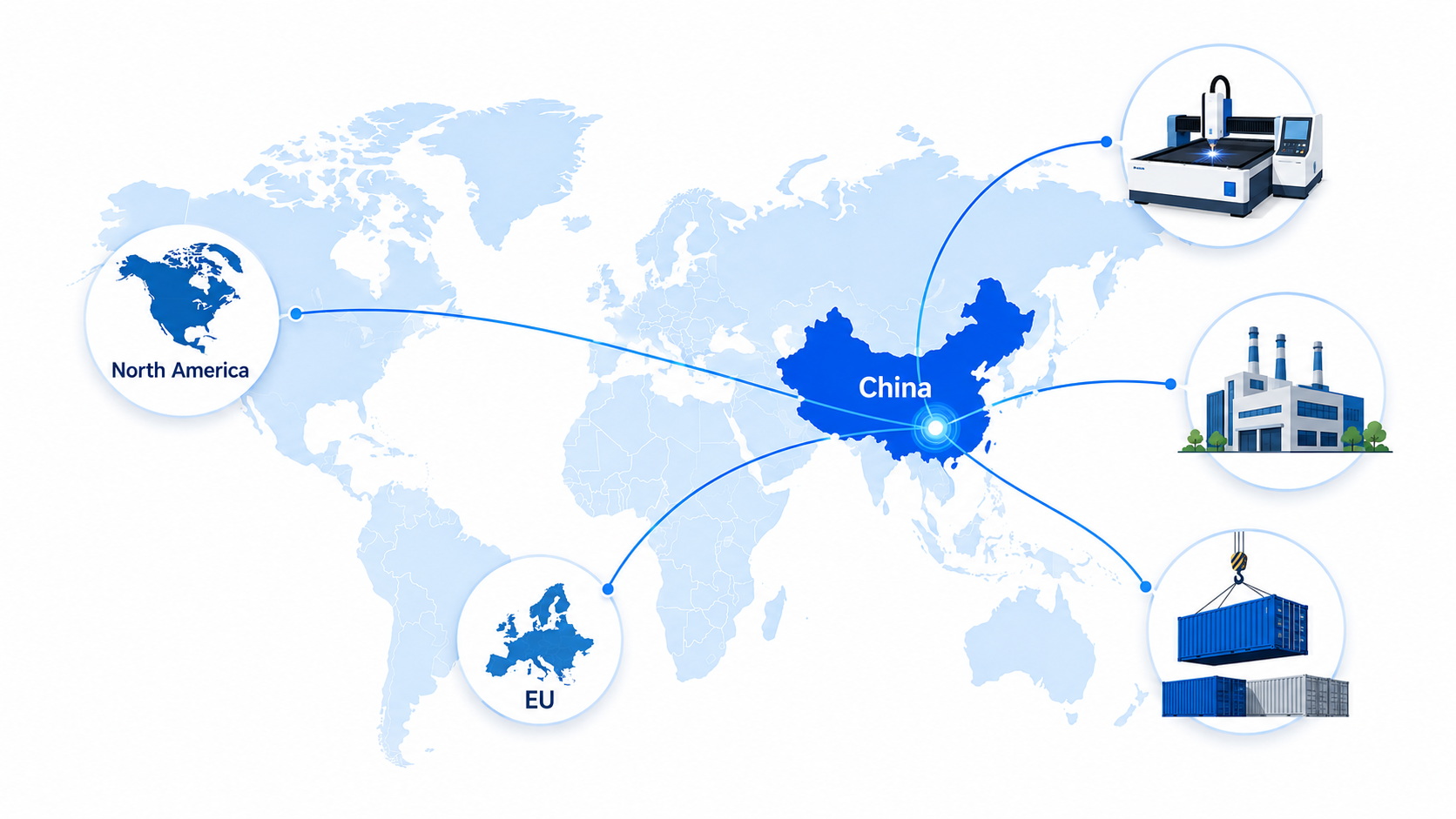
China is the largest and fastest‑growing production base for laser cutting machines, driven by mature sheet‑metal, automotive, and equipment manufacturing clusters in regions such as Shenzhen, Foshan, and Jiangsu. Asia–Pacific accounts for roughly 45–46% of global laser cutting machine revenue, with China contributing a major share of that volume. [mordorintelligence]
Market research indicates the global laser cutting machine market will grow from around 7.1 billion USD in 2025 to over 12.3 billion USD by 2031, a compound annual growth rate close to 9.6%. Chinese suppliers benefit from economies of scale in fiber lasers, motion systems, and sheet‑metal fabrication, allowing them to offer competitive pricing without sacrificing industrial‑grade performance. [dxtech]
For professional buyers, China's advantage is not only lower unit cost but also wide power ranges (1–30 kW), diversified machine formats (flat‑bed, tube, 3D), and increasingly internationalized support (multi‑language service, overseas warehouses, and local agents). However, this density of suppliers makes structured evaluation essential to avoid inconsistent quality, weak after‑sales support, and hidden compliance risks. [facebook]
- Stable production history: Look for consistent model evolutions, reference customers in your industry, and repeat export records to your target region. [adhmt]
- Process transparency: A serious supplier can walk you through laser source selection, cutting head options, gas systems, nesting software, and maintenance cycles with clear data instead of generic promises. [dxtech]
Professional buyers should pay attention to:
- Power and configuration
- Power ranges from 1 kW for thin sheets up to 20 kW+ for heavy plate cutting. [dxtech]
- Rack‑and‑pinion vs linear motor, helical gears, and servo brands (e.g., Yaskawa, Siemens) heavily influence cutting stability.
- Materials and process standards
- Key materials: Q235/Q345 carbon steels, stainless grades like 304/316L, and aluminum in 5‑ and 6‑series; the supplier should provide cutting parameter tables by material and thickness. [adhmt]
- Tolerances: industrial fiber machines should routinely achieve around ±0.03 mm positioning accuracy for properly leveled, well‑maintained units. [dxtech]
- Compliance and safety
- For exports to Europe, CE compliance for machinery safety, EMC, and low‑voltage directives is essential; for electrical components, RoHS alignment reduces hazardous substances in wiring and boards. [futuremarketinsights]
- Safety elements like full enclosures, interlocks, and fume extraction systems help both compliance and operator safety.
China's laser and sheet‑metal equipment manufacturers sit inside dense industrial clusters, especially around:
- The Pearl River Delta (Shenzhen, Dongguan, Foshan) for electronics, appliances, and contract manufacturing. [dxtech]
- The Yangtze River Delta (Suzhou, Wuxi, Ningbo) and central provinces like Hubei and Anhui for automotive components, machinery, and metalworking. [adhmt]
These clusters give manufacturers fast access to laser sources, motion components, sheet‑metal subcontractors, and experienced technicians, which in turn supports lower costs, faster customization, and better spare‑parts availability. [mordorintelligence]
A trustworthy supplier will usually provide:
- Company profile with year of establishment, site area, and production capacity.
- Main export markets and key application industries (e.g., automotive, agricultural machinery, steel structure). [dxtech]
- QC workflow from incoming inspection, wiring checks, and 24–72 hour test runs to final laser calibration. [metafuro]
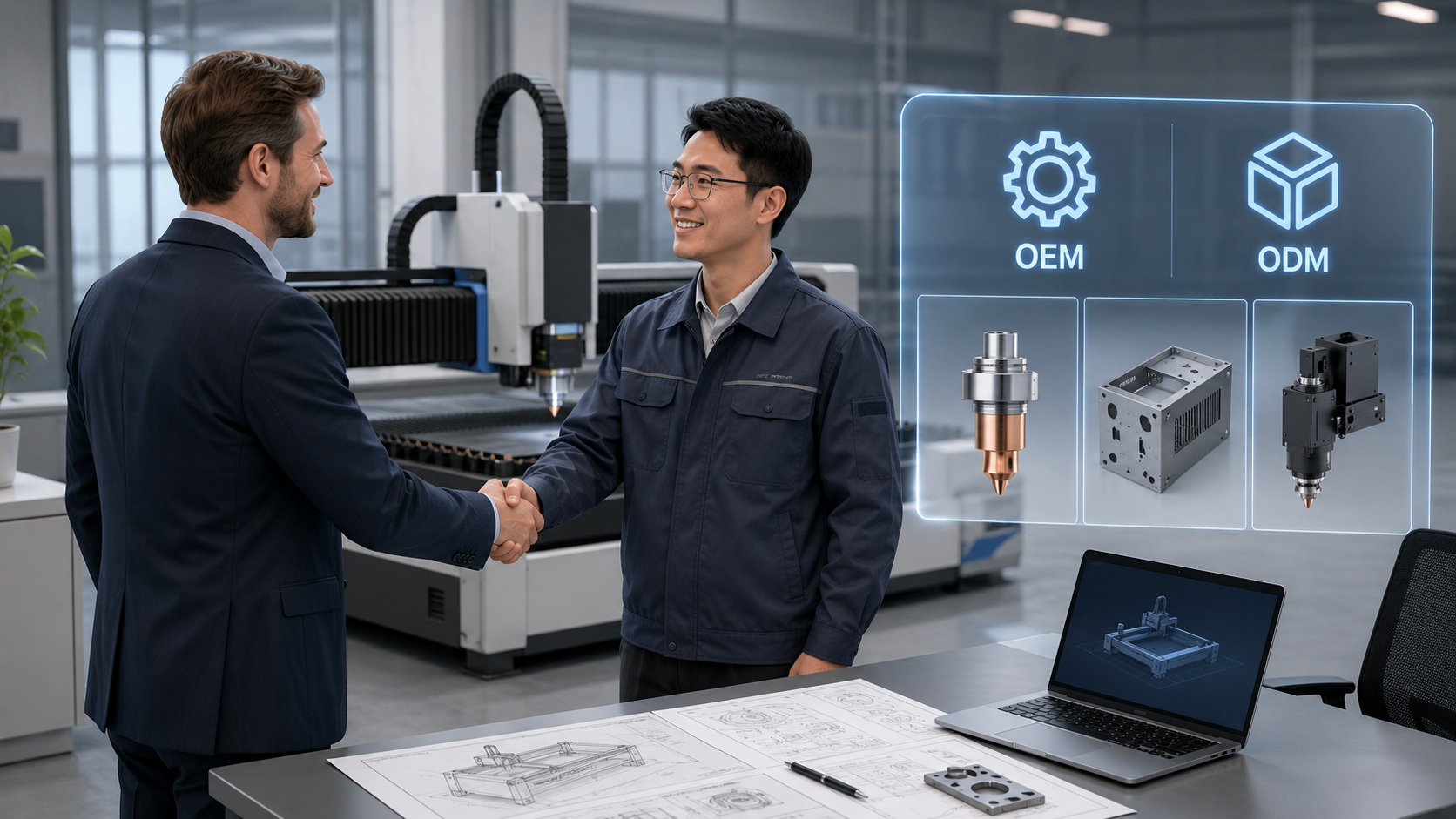
- OEM/ODM scope: logo and color customization, localized interface language, integration with existing ERP/MES, and tailor‑made automation.

Below is a curated list of 10 representative manufacturers active in China's laser cutting machine segment, including both large integrated brands and agile OEM‑oriented factories. [dxtech]
Maanshan Deyan Precision Machinery Technology Co., Ltd. (CNDY‑Press) is a specialized manufacturer dedicated to R&D, manufacturing, and service of sheet‑metal processing equipment including fiber laser cutting machines. Located in an established machinery cluster in Ma'anshan, Anhui, the company benefits from regional supply chains for structural parts, machining, and metal components. [dxtech]
Unlike some large brands that primarily push standard models, CNDY‑Press positions itself as an agile, engineering‑driven partner for OEM and ODM projects, particularly for small and mid‑sized brands. The company emphasizes flexible customization of machine configuration, appearance, and software integration, as well as responsive communication during specification, sampling, and after‑sales phases. [dxtech]
Key characteristics buyers typically value include:
- Focus on cost‑effective configurations that balance branded core components with competitive local parts, targeting reliable performance and manageable budgets. [dxtech]
- Experience supporting overseas OEM clients who need private‑label machines, adapted HMI languages, and tailored safety options to meet local regulations. [dxtech]
- Shorter decision chains and direct engineer‑to‑engineer communication, which often accelerates custom projects and troubleshooting compared with large, highly layered organizations. [dxtech]
For procurement managers building or expanding their own machine brand portfolio, or integrators who require deeper customization without large‑brand price premiums, CNDY‑Press is a practical candidate for evaluation.
RITMAN, founded in 1996 and based in Xuzhou, focuses on high‑power laser cutting, 3D cutting systems, and laser welding automation. Its product range includes large‑format cutters, tube lasers, handheld and robotic welding equipment, and turnkey automated lines. [dxtech]
The brand is known for experience in 10 kW+ power levels and the ability to engineer complete cells, making it relevant for automotive and heavy‑industry buyers who require both cutting and welding under one supplier. RITMAN is a better fit when you need strong process integration rather than just a stand‑alone cutting table. [dxtech]
Established in 2007, PENTA LASER specializes in high‑power laser cutting and welding solutions with a strong emphasis on process R&D. Its portfolio covers flat‑bed cutters, tube lasers, gantry‑type 3D cutting, and dedicated welding lines, including its own cutting heads and control systems. [dxtech]
PENTA is widely used by small and mid‑sized enterprises looking for high power density with competitive cost per part. It is particularly suitable when your sourcing focus is high‑power cutting of thick plates but you still need flexible pricing and co‑developed process optimization. [dxtech]
HGTECH, founded in 2003, offers a broad lineup covering laser cutting, heat treatment, punching, welding, and smart‑factory solutions. The company positions itself as a systems integrator capable of delivering full production lines, not just single machines. [dxtech]
With strong references in aerospace and machinery manufacturing, HGTECH is attractive for buyers who need automation, MES connectivity, and plant‑level digitalization along with their cutting machines. It is most relevant where long‑term, multi‑site standardization and automation roadmaps are part of the procurement decision. [dxtech]
HSGLASER, founded in 2006, has built its reputation around flat‑bed fiber cutters, tube cutting machines, and plate‑and‑tube combination machines. The company is export‑oriented and has achieved strong penetration in overseas markets, indicating good documentation and multi‑language support. [dxtech]
Its machines cover a wide power and size range, making HSGLASER suitable for fabricators handling mixed batches of sheet and tube, such as construction steel, fitness equipment, and agricultural implements. Buyers value its mix of performance and export‑grade service, especially for distributors building localized sales networks. [dxtech]
Lead‑Laser, founded in 2010, focuses on high‑power fiber cutters, tube lasers, 3D cutting, and welding along with automation systems. It offers automatic loading/unloading and other auxiliary equipment, enabling higher line utilization and lower manual handling. [dxtech]
Market feedback highlights stable product quality and responsive after‑sales support, which is critical for overseas buyers where service delays quickly translate into downtime costs. Lead‑Laser is an option for companies ready to invest in higher‑spec lines but still expecting competitive total cost of ownership. [dxtech]
Yawei traces its roots back to 1956 and is a well‑known Chinese brand for CNC press brakes, turret punch presses, and laser cutting machines. It provides automated sheet‑metal lines, coil‑processing systems, and industrial robots, covering a broad spectrum of metal‑forming needs. [dxtech]
Because of its long history and full metal‑forming ecosystem, Yawei fits buyers who want to consolidate bending, punching, and cutting under one vendor to streamline support and integration. Its reputation for stable quality and established service networks is particularly appealing to large OEMs and Tier‑1 suppliers. [dxtech]
Founded in 2002, JIATAI LASER is an experienced laser equipment producer focusing on high‑power large‑format cutters, five‑axis 3D cutting, tube cutting, and welding machines. It is often chosen for automotive body, structural parts, and complex 3D components. [dxtech]
The company's strength lies in handling oversized workpieces and complex trajectories, which are less common in generic flat‑bed suppliers. JIATAI is a niche choice if your projects include 3D formed parts, hydroformed tubes, or thick structural parts that need multi‑axis processing. [dxtech]
YUEMING, founded in 2000, focuses on high‑end industrial laser equipment, including cutting, marking, welding, and cleaning systems. It promotes one‑stop laser process solutions with a strong export orientation. [dxtech]
The brand's broad range is useful for buyers who want to standardize on one vendor for multiple laser processes (cutting, marking, and occasional cleaning) rather than working with several niche suppliers. Its market perception is built around high product quality and user‑friendly after‑sales service. [dxtech]
Founded in 1996, Han's Laser is one of China's earliest and most recognized laser equipment manufacturers with a strong presence in electronics, automotive, and high‑tech sectors. Its portfolio covers high‑power flat‑bed cutters, precision micro‑machining systems, and extensive automation solutions. [dxtech]
Han's maintains vertically integrated capabilities from core laser devices to complete intelligent manufacturing lines, which supports long‑term platform stability for larger OEM projects. The company is well suited for buyers needing group‑wide standardization across multiple factories and countries, with strong documentation and global references. [dxtech]
| Manufacturer | Typical positioning | Strength in capacity | OEM/ODM flexibility | Main export focus | Typical certifications* |
|---|---|---|---|---|---|
| Maanshan Deyan (CNDY‑Press) | High‑value OEM/ODM partner (dxtech) | Focused, project‑driven | High (deep customization) (dxtech) | Small–mid brands, integrators (dxtech) | ISO‑based QC; CE on export machines (verify by model) |
| Han's Laser | Large integrated brand, high‑tech industries (dxtech) | High, multi‑plant | Medium (standardized platforms) | Global, electronics & auto (dxtech) | ISO 9001, CE for key lines (by product) |
| RITMAN | High‑power and 3D systems (dxtech) | Medium‑high | Medium | Industrial & automotive (dxtech) | ISO‑based QC, CE on export models |
| PENTA LASER | High‑power cutting & welding (dxtech) | Medium | Medium | SMEs needing power value (dxtech) | ISO, CE on main exports |
| HGTECH | Smart‑factory integrator (dxtech) | High | Medium | Aerospace & machinery (dxtech) | ISO, CE on lines; system integration focus |
| HSGLASER | Export‑oriented sheet & tube (dxtech) | Medium | Medium | Global fab shops (dxtech) | ISO, CE on export machines |
| Lead‑Laser | High‑power + automation (dxtech) | Medium | Medium | Fabrication & construction (dxtech) | ISO, CE typical |
| Yawei | Legacy metal‑forming brand (dxtech) | High | Medium | Global OEMs & Tier‑1 (dxtech) | ISO, CE across portfolio |
| JIATAI LASER | Large format & 3D (dxtech) | Medium | Medium | Auto, heavy industry (dxtech) | ISO, CE on export equipment |
| YUEMING | One‑stop laser solutions (dxtech) | Medium | Medium | Global SME users (dxtech) | ISO, CE, RoHS where relevant |
A common but rarely spelled‑out pitfall is partial substitution of core components after initial samples: the first machine may use branded servo drives, cutting heads, or lasers, while later batches quietly introduce lower‑cost local alternatives. This can affect cut quality, stability, and spare‑parts availability. [facebook]
Mitigation: In the contract and PI, specify exact brands and model numbers of core components (laser source, cutting head, servo, reducer, control system) and include them in the acceptance checklist. Tie a portion of payment to inspection that confirms components match the agreed BOM. [adhmt]
Some suppliers promote maximum cutting thickness based on "can barely cut through" rather than "can cut productively with good edge quality and speed". This leads to slow production, high gas cost, and poor edge quality when you run at advertised limits. [arguslaser]
Mitigation: Evaluate both maximum cut‑through and recommended production thickness at your target edge‑quality level, and test your real parts during factory demos with your own material and drawings. [arguslaser]
Buyers sometimes underestimate the complexity of maintaining a high‑power fiber laser in a remote location without local technicians. When a failure happens, shipping a spare cutting head or calling a remote engineer may not be enough. [facebook]
Mitigation: Confirm whether the supplier has: remote diagnostics, 24/7 hotline, local partner engineers, and stocked spare parts in your region. For critical sites, consider training your in‑house technicians at the factory before shipment. [facebook]
Inside the industry, it is well known that demo centers often operate machines in perfect conditions: premium plate, optimal gas purity and pressure, freshly calibrated optics, and fully warmed‑up systems. However, export machines might be configured more economically, and your actual workshop environment (power stability, dust, compressed air quality) can be much harsher. [adhmt]
Insider avoidance guideline:
- Bring (or ship) the exact materials, thickness range, and most complex parts you plan to run, and ask the factory to cut them on a standard production‑spec machine, not just the showroom flagship. [adhmt]
- Ask to see a random machine on the assembly line performing test cuts rather than only the polished demo unit. Pay attention to how quickly operators can achieve stable parameters.
- Request the full business license and unified social credit code from the supplier. [metafuro]
- Use China's National Enterprise Credit Information Publicity System (NECIPS) (http://www.gsxt.gov.cn) to check registration, scope of business, and any abnormal operation records. [metafuro]
- Ask for ISO 9001 (and ISO 14001/45001 if relevant) certificates with clear scope descriptions covering "laser cutting machine" or "metal forming equipment". [linkedin]
- Verify the certification body (CB) and accreditation body (AB) via the International Accreditation Forum (IAF) directory and CB websites; many CBs offer online certificate lookup. [linkedin]
Key steps from ISO verification experts include:
- Check that the CB is accredited by a recognized AB (e.g., UKAS, DAkkS, JAS‑ANZ, NABCB, IAS). [linkedin]
- Validate the certificate number, site address, standard version (e.g., ISO 9001:2015), and expiry date directly in the CB's public database or by email confirmation. [linkedin]
- Request the Declaration of Conformity (DoC) listing applied EU directives and harmonized standards for the exact machine model. [dxtech]
- For RoHS‑relevant components, cross‑check test reports and supplier declarations for key assemblies such as control cabinets and wiring harnesses. [futuremarketinsights]
- Use reputable third‑party inspection firms or industry specialists to perform pre‑shipment inspection, factory audits, and trial‑run observations. [metafuro]
- Talk to at least two existing customers in your industry running similar configurations, ideally with site visits or long technical calls, to get unfiltered performance feedback. [adhmt]
- Application focus: materials, thickness range, annual cutting hours, and mix of sheet vs tube.
- Performance targets: expected cycle times on key parts, edge quality criteria, and tolerance requirements.
- Shortlist 3–5 manufacturers that match your cluster preference (e.g., heavy plate vs mixed sheet/tube vs OEM branding needs). [dxtech]
- In your RFQ, include: drawings of typical parts, expected yearly volume, automation needs, and local safety standards. Ask each supplier to propose a configuration and power level with detailed BOM.
Create a structured comparison covering:
- Core components (laser source, cutting head, controller, servo). [dxtech]
- Realistic lead times, payment terms, training provision, and spare‑parts package.
- Warranty scope: laser source, electronics, mechanics, and on‑site service response time.
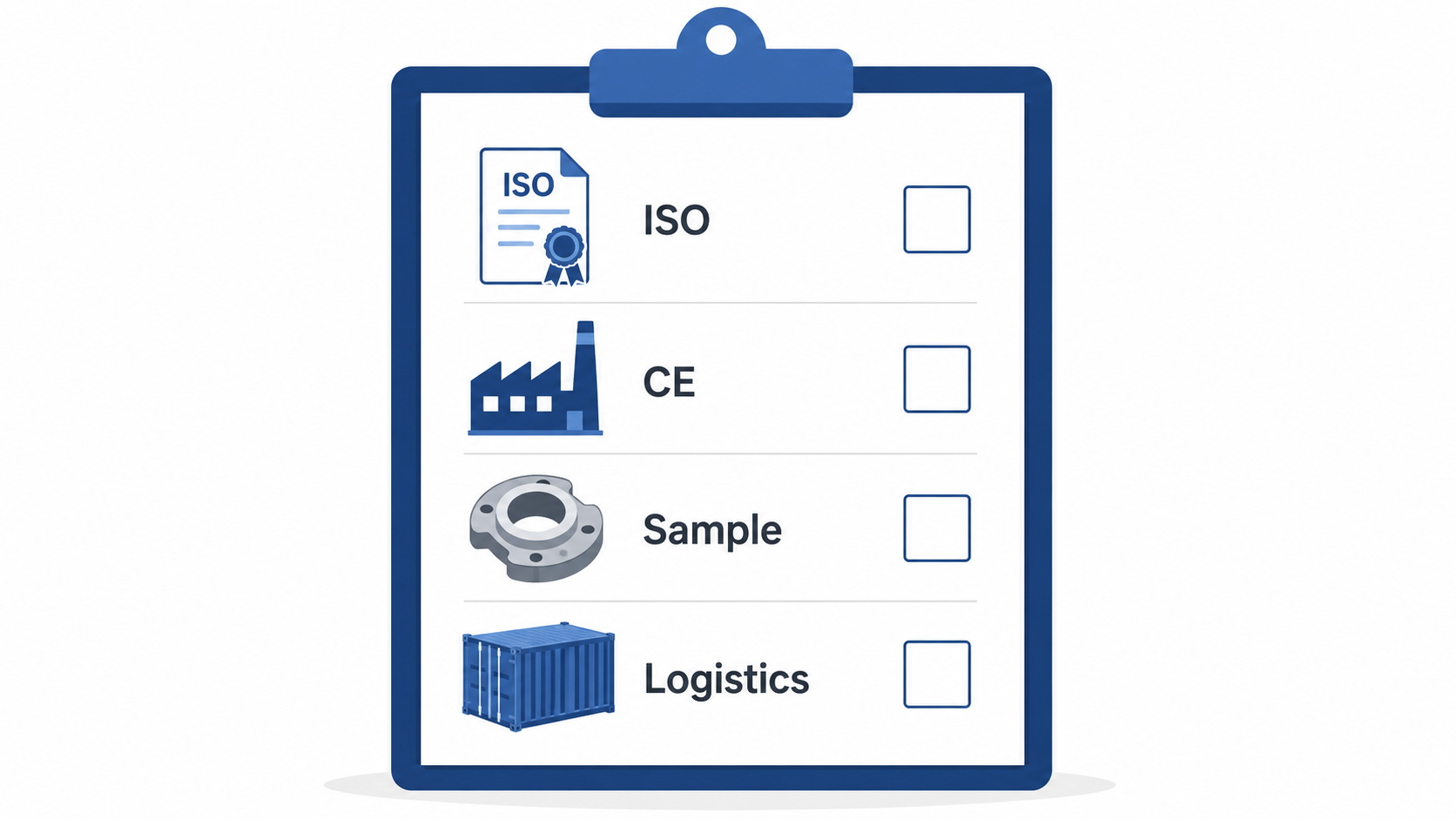
- Arrange sample cutting based on your drawings and materials either at the factory or through shipped plates. [adhmt]
- For Factory Acceptance Test (FAT), prepare a checklist including power stability, repeatability tests, cutting on full sheet area, and alarm/safety interlock validation.
- On logistics, align Incoterms (FOB, CIF, DAP), packaging standard (sea‑worthy crates, anti‑rust treatment), and off‑loading requirements before shipment.
- Confirm who will handle installation and initial calibration at your site—factory engineers, local agents, or third parties. [dxtech]
- Plan operator and maintenance training sessions during installation, plus scheduled remote follow‑ups in the first 3–6 months.
| Factor | Large integrated brands (e.g., Han's, Yawei) (dxtech) | Mid‑size export brands (e.g., HSGLASER, YUEMING) (dxtech) | Agile OEM/ODM factories (e.g., Maanshan Deyan) (dxtech) |
|---|---|---|---|
| Annual capacity (machines) | High – thousands, multiple lines | Medium – hundreds to low thousands | Focused – project‑based, flexible |
| Typical MOQ | 1 unit, but less flexible on customization | 1 unit, moderate customization | 1 unit, deep OEM/ODM even at low volume |
| Lead time for standard models | 30–90 days | 25–60 days | 30–70 days depending on customization |
| Certification depth | Broad ISO, CE across portfolio | ISO, CE for main exports | ISO‑based QC, CE on export lines (by project) |
| Ideal buyer type | Large OEMs, multi‑plant groups | Fabricators and regional dealers | Small–mid brands, integrators, niche users |
China's laser cutting machine industry combines strong R&D, dense industrial clusters, and rapidly improving quality systems, giving global buyers a wide spectrum of options from flagship integrated brands to highly flexible OEM/ODM factories. The key differentiator for long‑term success is not just price, but how well a chosen manufacturer aligns with your application requirements, component standards, service expectations, and growth roadmap. [mordorintelligence]
1. How can I confirm whether an ISO certificate from a Chinese manufacturer is still valid?
Check the certification body listed on the certificate, then use its online database or contact it directly using the certificate number, client name, and expiry date to confirm status. Also verify that the CB is accredited by a recognized accreditation body via IAF directories. [linkedin]
2. How do I verify that a manufacturer is a real factory, not a trading company?
Use NECIPS to check its registered business scope, cross‑check its address on satellite maps, and ask for workshop photos, equipment lists, and videos showing serial‑numbered machines in assembly. A factory visit or third‑party audit is the most reliable option. [metafuro]
3. What's the most effective way to compare cutting quality between suppliers?
Prepare a standard test package containing your drawings, materials, and thickness range, and have each supplier cut the same parts with the same gas and rough cycle‑time targets. Evaluate edge quality, burrs, dross, hole roundness, and repeatability on full sheet area. [arguslaser]
4. How should I negotiate after‑sales service terms for overseas sites?
Include guaranteed remote‑support response times, availability of on‑site intervention within a specified number of days, and a defined spare‑parts package with recommended stock levels. Clarify whether software updates and remote diagnostics are included during warranty. [facebook]
5. What's a reasonable warranty for an industrial fiber laser cutter?
It is common for mechanical structures to have 2–3 years warranty while the laser source and key electronics may be covered for 1–2 years depending on brand and usage hours. For high‑duty cycles, negotiate clear uptime expectations and consider extended warranties on the laser source. [dxtech]
1. DXTECH – "2024 Top 10 China Fiber Laser Cutting Machine Manufacturer List."[dxtech]
2. Mordor Intelligence – "Laser Cutting Machine Market Size, Share & Forecast 2031."[futuremarketinsights]
3. Future Market Insights – "Laser Cutting Machines Market."[futuremarketinsights]
4. Fortune Business Insights – "Laser Cutting Machines Market" [fortunebusinessinsights]
5. MarketsandMarkets – "Laser Processing Market Report 2025–2032."[marketsandmarkets]
6. Statista – Global laser cutting machines market statistics 2025/2026.[mordorintelligence]
7. China National Enterprise Credit Information Publicity System (NECIPS).[metafuro]
8. International Accreditation Forum (IAF) – Official Directory.[linkedin]
9. Metafuro – "Our 5‑Step Comprehensive Process to Verify Chinese Manufacturers."[metafuro]
10. Megha Soni – "How to Verify the Authenticity of an ISO Certificate – A Step Guide."[linkedin]
11. Argus Laser – "Top 5 Mistakes When Buying a Laser Cutting Machine."[arguslaser]
12. ADH Machine Tool – "2025 Laser Cutting Machine Buying Guide: 10 Manufacturers In‑Depth Review."[adhmt]
13. Wattsan – "Top 5 Applications of Laser Cutting."[wattsan]
14. Made‑in‑China – Laser Cutting Machines Section.[made-in-china]
15. WALDUN / HardfacingFTY – "Top 30 Laser Cutting Machine Manufacturers China."[hardfacingfty]
16. Maanshan Deyan Precision Machinery Technology Co., Ltd. (CNDY‑Press) – Official Website.[dxtech]
17. Industry forums / social media discussions – "Are Chinese laser cutters reliable for production?"[facebook]


