


Views: 222 Author: CNDY-Press Publish Time: 2026-05-28 Origin: Site


Content Menu
● Mistake 1: Overloading The CNC Press Brake Capacity
● Mistake 2: Neglecting Preventive Maintenance And Calibration
>> Essential maintenance best practices
● Mistake 3: Bypassing Press Brake Safety Systems
>> Safety best practices for CNC press brakes
● Mistake 4: Incorrect Tooling Selection And Setup
● Mistake 5: Poor Programming, Setup, And Operator Training
>> How to improve programming and training
● Mistake 6: Ignoring Material Variation And Bend Calculations
>> Material and bend calculation fundamentals
● Mistake 7: Choosing The Wrong Press Brake For The Job
>> How to specify the right CNC press brake
● Summary Table: Common CNC Press Brake Mistakes And Fixes
● Call To Action: Need Help Avoiding These CNC Press Brake Mistakes?
● FAQ
After spending years on the shop floor commissioning CNC press brakes and supporting OEM customers, I've learned that most bending problems do not come from the machine brand—they come from how the press brake is selected, set up, and used. If you rely on a CNC press brake for production, avoiding a few common press brake mistakes can save you thousands of dollars in scrap, tooling damage, downtime, and safety incidents. [durmapress]
In this guide, I will walk through seven critical mistakes to avoid with your CNC press brake, share practical examples from sheet metal OEM projects, and explain how a reliable CNC press brake manufacturer and service team can help you prevent them. [shop.adhmt]

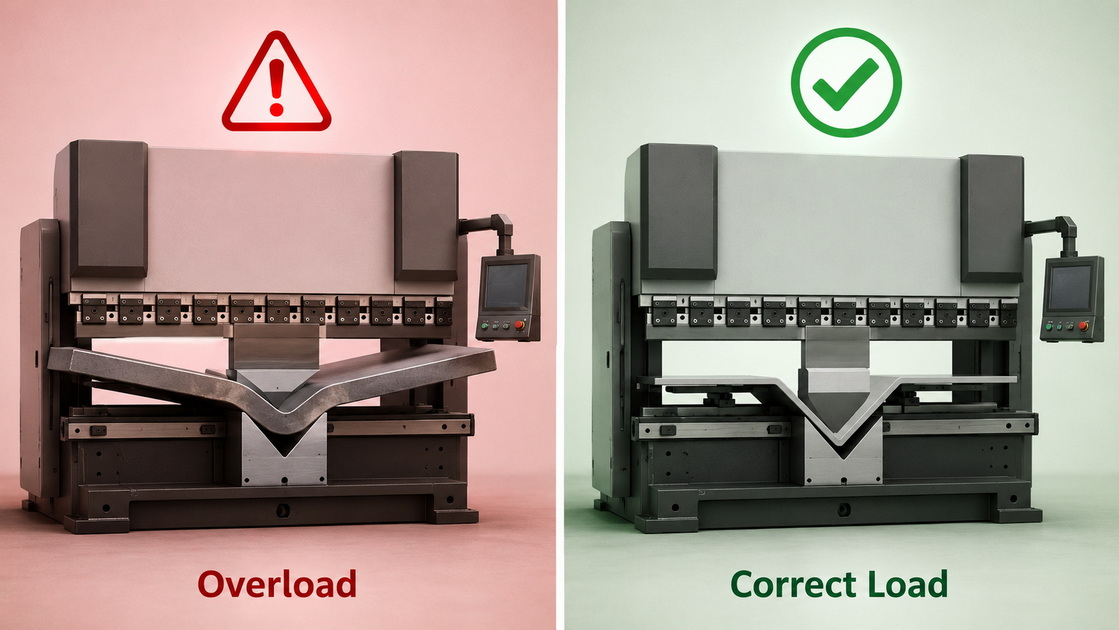
One of the most expensive mistakes I see in metal fabrication shops is overloading the press brake beyond its rated tonnage or length capacity. [vicla]
Overloading can cause:
- Permanent frame deformation and ram misalignment.
- Premature wear or breakage of punch and die tooling.
- Hydraulic system stress, leaks, or sudden pressure drops.
- Unexpected machine downtime and costly repairs. [jstmt]
- Always consult the manufacturer's tonnage chart and technical manual for each material thickness and V‑die opening. [southernfabsales]
- Use more light bends instead of one heavy bend when possible to spread forces. [chaoero]
- Select dies with the correct V‑width ratio (for example, 6–8× material thickness for carbon steel). [accurl]
- Never concentrate the total tonnage on a very short section of tooling unless the machine is specifically designed for that. [chaoero]
If you are unsure about the press brake tonnage required for a new part, ask your CNC press brake supplier to verify the bending force data and suggest the right machine configuration. [garantmachinerie]
The second big mistake is treating the press brake as "fit and forget". Skipping maintenance gradually destroys bending accuracy and dramatically increases failure risk. [durmapress]
Typical consequences of poor press brake maintenance:
- Inaccurate bends and inconsistent angles across the length of the part. [jstmt]
- Increased hydraulic leaks, overheating, or low pressure. [durmapress]
- Unexpected breakdowns that stop production at the worst possible moment. [shop.adhmt]
- Perform daily checks: check for unusual noises, leaks, error messages, and verify safety devices are working. [southernfabsales]
- Maintain proper hydraulic oil levels, replace contaminated oil, and inspect filters and valves on schedule. [jstmt]
- Keep linear guides, ball screws, and mechanical components clean and lubricated. [shop.adhmt]
- Calibrate the machine periodically to correct for wear in cylinders, backgauge, and crowning systems. [accurl]
A good CNC press brake manufacturer should provide a clear maintenance plan and, ideally, remote support to help your team troubleshoot issues before they cause downtime. [southernfabsales]
Trying to "work faster" by bypassing safety devices is one of the most dangerous press brake mistakes you can make. [vicla]
Temporarily disabling:
- Light curtains or laser guards
- Two‑hand controls
- Emergency stop circuits
may seem harmless, but it dramatically increases the chance of a serious hand or body injury and exposes your company to legal and compliance risk. [shop.adhmt]
- Ensure all safety systems are tested before each shift and never overridden. [southernfabsales]
- Train operators to understand OSHA/ANSI safety standards and your internal safety rules. [shop.adhmt]
- Use clear SOPs that define when to stop the machine, lockout/tagout, and call maintenance. [shop.adhmt]
Modern CNC press brakes are designed to maintain high productivity and safety together when used properly; bypassing safety is never a sustainable productivity strategy. [southernfabsales]
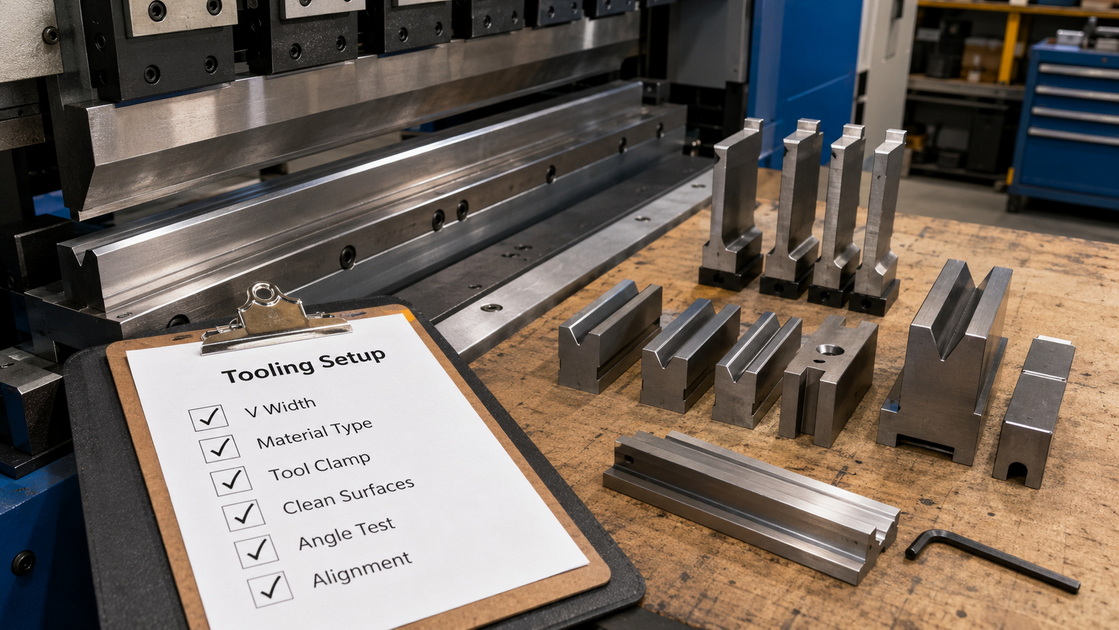
Even with a high‑end CNC press brake, using the wrong press brake tooling or installing it incorrectly leads to poor results and tool damage. [chaoero]
Common tooling mistakes:
- Choosing a V‑die that is too small or too large for the material thickness.
- Using incompatible tooling materials for hard or stainless steels. [accurl]
- Failing to seat and clamp tooling correctly, causing misalignment or unexpected movement. [durmapress]
- Skipping bend radius calculations and relying on trial and error. [chaoero]
- Follow the recommended V‑width ratios (e.g., 6–8× material thickness for carbon steel, 8–10× for stainless steel). [accurl]
- Use high‑quality, hardened tooling suitable for your material type and tonnage. [chaoero]
- Inspect punches and dies regularly for wear, chipping, and deformation. [durmapress]
- Use dedicated storage and labeling for dies and punches to avoid mix‑ups and corrosion. [chaoero]
Many shops find that standardizing a set of preferred tooling combinations and bending charts drastically reduces press brake setup errors. [accurl]
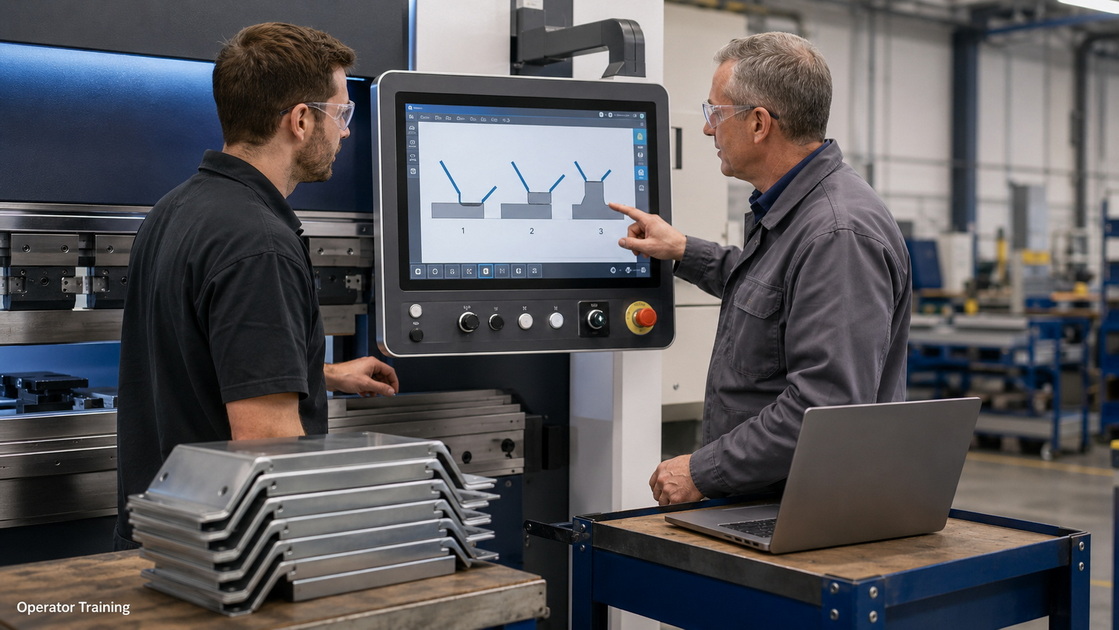
A CNC press brake is only as good as the data and skills behind it. Incorrect or incomplete CNC programs are a major source of scrap and slowdowns. [linkedin]
Typical symptoms:
- Inconsistent bend angles and springback issues.
- Wrong bend sequence causing collisions or complex re‑handling.
- Backgauge positions that do not match part drawings.
- Long setup times because operators are "debugging" the program on the machine. [linkedin]
- Train operators on material properties, bend allowance, and springback compensation. [linkedin]
- Use offline programming or bending simulation software for complex parts to validate sequences and avoid collisions. [linkedin]
- Standardize bending parameters (tool combinations, angles, speeds) for frequently repeated parts.
- Provide structured operator training rather than relying only on "shadowing" experienced staff. [linkedin]
As an OEM or job shop, investing in continuous operator training pays off faster and more reliably than buying a bigger machine to cover programming gaps. [linkedin]
Another subtle but costly mistake is treating all sheet metal as if it behaves the same. In reality, material thickness, tensile strength, and rolling direction significantly affect bending results. [durmapress]
If you ignore material variation, you will see:
- Bend angles drifting between batches.
- Cracks or surface damage on hard materials.
- Excessive springback, especially in high‑strength steels and aluminum. [accurl]
- Always check actual sheet thickness with a gauge; do not rely only on nominal values. [southernfabsales]
- Use proper bend allowance and bend deduction formulas, factoring in K‑factor or rely on proven tables for each material. [linkedin]
- Consider grain direction relative to the bend line to minimize cracking and improve consistency. [chaoero]
A good CNC press brake control, combined with accurate material data and bend libraries, can automatically compensate for much of this variation—but only if you feed it the right inputs. [durmapress]
From a manufacturer's point of view, one of the root causes behind many of these problems is that the original press brake selection was not aligned with the customer's parts, materials, and future growth. [accurl]
Common selection errors:
- Buying a machine that is too small and constantly running it at 90–100% of its tonnage.
- Choosing a general‑purpose configuration when production really needs advanced crowning, angle measurement, or automation.
- Ignoring tooling compatibility and local support availability.
When we help customers select a CNC press brake, we always start with:
- A part mix analysis: material types, thicknesses, and maximum lengths.
- Required accuracy and repeatability for your industry (e.g., architectural vs automotive).
- Target cycle times, shifts, and automation level (manual, semi‑automatic, or robotic bending).
- Future OEM or ODM projects you plan to take on, so we can build in capacity headroom.
Selecting the right machine from the beginning eliminates many of the "mistakes" you would otherwise fight for the next 10–15 years of the machine's life. [linkedin]
| Mistake | Main Risk | Key Prevention Step |
|---|---|---|
| Overloading machine capacity | Frame and tooling damage (garantmachinerie) | Use tonnage charts and correct V‑die sizing (garantmachinerie) |
| Skipping maintenance and calibration | Inaccurate bends, downtime (durmapress) | Follow a scheduled maintenance plan (durmapress) |
| Bypassing safety devices | Severe injuries, legal risk (shop.adhmt) | Keep safety systems active and tested (shop.adhmt) |
| Wrong tooling and setup | Poor quality, tool breakage (chaoero) | Match tooling to material and tonnage (chaoero) |
| Poor programming and operator training | Scrap and slow setups (linkedin) | Invest in training and offline programming (linkedin) |
| Ignoring material variation | Angle variation, cracking (linkedin) | Use proper bend data and consider grain (linkedin) |
| Wrong machine selection | Chronic capacity and quality issues (linkedin) | Align press brake specs to part mix and growth (linkedin) |
If you're planning to invest in a new CNC press brake or want to stabilize your existing bending process, you don't have to solve it alone. Our engineering team can:
- Review your part drawings and material mix.
- Recommend the right CNC press brake configuration, tooling, and automation level.
- Provide OEM and ODM customization and training packages so your operators avoid the mistakes listed above.
Share your current challenges—such as inconsistent angles, tool damage, or downtime—and we will propose a practical upgrade or process plan tailored to your shop.
1: How do I know if my press brake is overloaded?
Watch for unusual noises, frame deflection, hydraulic pressure alarms, and tooling damage when bending near the machine limit. Check tonnage charts and never exceed the rated capacity across the length of the tooling. [garantmachinerie]
2: How often should a CNC press brake be calibrated?
Frequency depends on usage, but many shops schedule at least annual calibration, plus additional checks after major repairs or heavy accidents. High‑precision industries may calibrate more frequently according to internal quality standards. [jstmt]
3: What is the most important safety device on a modern press brake?
There is no single "most important" device; light curtains or laser guarding, two‑hand controls, emergency stops, and interlocks all work together. The key is that these devices are active, tested, and never bypassed. [shop.adhmt]
4: Can better tooling fix all bending problems?
High‑quality tooling improves angle accuracy and surface finish, but it cannot compensate for wrong tonnage, poor programs, or lack of calibration. Tooling is one part of a complete, well‑managed bending process. [durmapress]
5: When should I consider replacing my press brake instead of repairing it?
If your press brake requires frequent major repairs, cannot meet required angle tolerance, or lacks essential safety and control features, you should evaluate the total cost of ownership. In many cases, a modern CNC press brake with efficient controls and safety systems quickly pays for itself by reducing scrap and downtime. [jstmt]
1. VICLA. "5 Mistakes To Avoid With Your Press Brake."
[https://www.vicla.eu/en/blog/5-mistakes-to-avoid-with-your-press-brake] [vicla]
2. Garant Machinerie. "5 Common Mistakes To Avoid When Using A Press Brake."
[https://www.garantmachinerie.com/en/press-brake-errors/] [garantmachinerie]
3. Durmapress. "CNC Press Brake Troubleshooting: Common Problems and Fixes."
[https://www.durmapress.com/cnc-press-brake-troubleshooting-common-problems-and-fixes/] [durmapress]
4. Chaoero. "Avoid These 6 Common Mistakes With Press Brake Bending Dies."
[https://www.chaoero.com/press-brake-bending-dies-mistakes-guide/] [chaoero]
5. ADH Machine Tool. "Press Brake Operation: Challenges and Safety Best Practices."
[https://shop.adhmt.com/press-brake-operation-challenges-and-safety-best-practices/] [shop.adhmt]
6. JSTMT. "Hydraulic Press Brake Troubleshooting and Solutions."
[https://jstmt.com/hydraulic-press-brake-troubleshooting-and-solutions/] [jstmt]
7. Accurl. "Press Brake Mistakes: 17 Bending Problems and Solutions."
[https://www.accurl.com/blog/press-brake-mistakes/] [accurl]
8. Southern Fab Sales. "The Best Safety Practices When Operating a Press Brake."
[https://www.southernfabsales.com/blog/best-safety-practices-when-operating-a-press-brake] [southernfabsales]
9. Shane Zhang, LinkedIn. "Press Braking Process: Key Techniques and Best Practices."
[https://www.linkedin.com/pulse/press-braking-process-key-techniques-best-practices-shane-zhang-hjxnc] [linkedin]


