


Views: 222 Author: CNDY-Press Publish Time: 2026-05-25 Origin: Site


Top 10 laser cutter manufacturers in China can offer strong price–performance, but only if you carefully vet their certifications, engineering capability, capacity and track record before signing a long‑term contract. For procurement managers, the goal is not just to find a machine, but to lock in a reliable OEM or ODM partner that can support product roadmaps for 5–10 years. [remcortechnology]
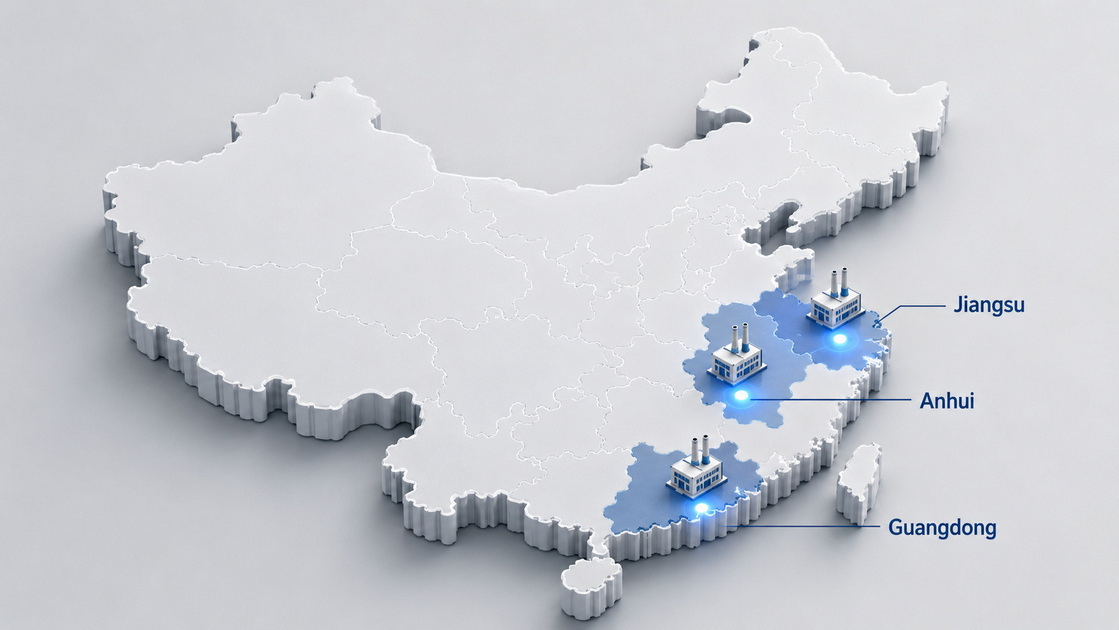
Before listing any manufacturer, it is essential to explain how we evaluate them so buyers can benchmark against their own internal vendor qualification processes. In practice, we look at four pillars: certifications, R&D capability, quality control, and delivery stability. [remcortechnology]
Key evaluation dimensions:
- Factory certifications and compliance
- ISO 9001 quality management, often combined with ISO 14001 and ISO 45001 for environment and safety. [shamana-china]
- CE and sometimes FDA registration for machines destined for the EU and US markets. [acctekgroup]
- RoHS for hazardous substances, especially when electronics and controls are exported to Europe. [remcortechnology]
- R&D capability and technical depth
- In‑house engineering teams capable of working with multi‑kilowatt fiber sources (3 kW, 6 kW, 12 kW and above) and optimising cutting performance by material and thickness. [senfenglaserusa]
- Ability to configure machines for different verticals (automotive, HVAC, furniture, heavy equipment) rather than just selling one generic model. [senfenglaserusa]
- Quality control and process management
- Documented QC checkpoints from incoming steel and components, through assembly, to final test cuts and factory acceptance tests. [remcortechnology]
- Acceptance of third‑party inspections (SGS, TÜV, Bureau Veritas) and openness to virtual factory audits. [remcortechnology]
- Capacity and delivery performance
- Clear data on monthly output, standard lead times, and fast‑track options.
- Stable supply chains for critical parts such as laser sources, CNC controllers and high‑precision motion components. [maximizemarketresearch]
We also look at export history and customer mix, using customs data platforms and buyer feedback to understand whether a manufacturer has sustained relationships in North America, Europe or Southeast Asia, not just occasional trial orders. [remcortechnology]
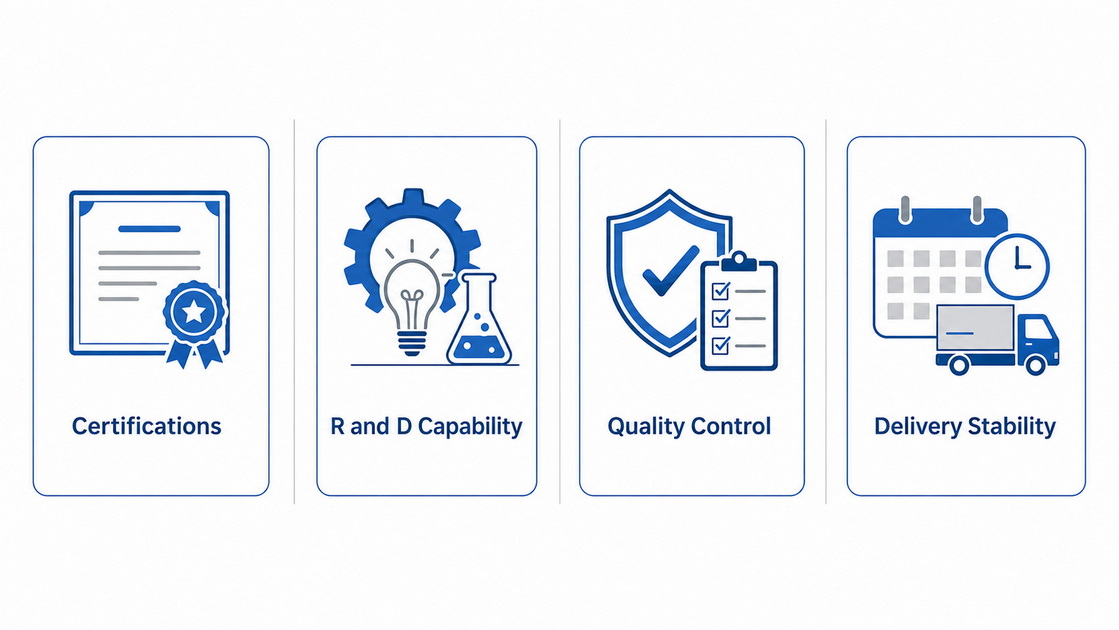
China has become one of the most important global hubs for laser cutting and metal fabrication equipment, driven by its large domestic metalworking base and strong industrial clusters in provinces such as Guangdong, Jiangsu and Anhui. These clusters concentrate metal fabrication, laser source suppliers, CNC control vendors and sheet‑metal OEMs, which helps manufacturers shorten development cycles and control costs. [maximizemarketresearch]
According to recent market research, the global metal fabrication market has surpassed USD 23 billion and is projected to grow steadily through 2032, supported by automation, Industry 4.0 and infrastructure investment. Chinese equipment makers have benefited from this trend by offering more automated, digitally connected laser cutting solutions at competitive price points. [mordorintelligence]
At the same time, top Chinese brands increasingly meet or exceed global safety and quality certifications such as CE, FDA registration, ISO 9001 and RoHS, narrowing the perceived gap with long‑established European and Japanese brands. For buyers, this means it is now realistic to source mid‑ to high‑end laser cutters from China, provided supplier vetting is disciplined and data‑driven. [remcortechnology]
Maanshan Deyan Precision Machinery Technology Co., Ltd., also known as CNDY‑Press, represents a class of high‑value, engineering‑driven manufacturers that focus on fiber laser cutting machines and complete sheet‑metal processing lines. Located in a metalworking cluster area, the company combines R&D, manufacturing, sales and service with a strong emphasis on OEM and ODM projects. [hypertherm]
- Founded: 2010s (based on company profile) [hypertherm]
- Core strengths:
- Development and production of fiber laser cutting machines and automated sheet‑metal equipment.
- Flexible engineering support for tailored cutting solutions and line configurations. [hypertherm]
- Main markets: Export customers requiring high cost‑performance and reliable support, including small and mid‑sized brands with growth potential. [hypertherm]
- OEM/ODM scope:
- Deep involvement in customer projects from specification to final acceptance.
- Customisation of machine configurations, control interfaces and integration with upstream/downstream processes. [hypertherm]
Compared with some large, more standardised brands, CNDY‑Press' value lies in its flexibility and communication efficiency—traits that are particularly important for smaller brands that need iterative development, shorter feedback loops and tailored service. For buyers, this makes Maanshan Deyan a strong candidate when project‑specific engineering and long‑term OEM cooperation are more important than having a big global logo on the nameplate. [hypertherm]
HSG Laser is known for its focus on high‑power fiber laser cutting machines for sheet and tube, serving mid‑ to high‑end fabricators. The company emphasises smart control systems, high‑speed cutting and automated production lines. [acctekgroup]
- Founded: 2000s
- Core strengths: High‑speed cutting, strong automation options, complete solutions for sheet and tube.
- Main markets: Europe, Asia, Latin America.
- OEM/ODM scope: Tailored equipment configurations, integration with customer MES and production systems.
Senfeng is a widely referenced Chinese laser equipment manufacturer with a growing international footprint, particularly in Europe and North America. Their portfolio spans 3 kW to 80 kW fiber laser cutters, with detailed guidance on selecting power levels based on thickness and production volume. [senfenglaserusa]
- Founded: 2000s
- Core strengths: Broad power range (3–80 kW), detailed application guidance, high throughput machines for thick plate. [senfenglaserusa]
- Main markets: Europe, North America, Asia. [senfenglaserusa]
- OEM/ODM scope: Customised machine configurations, special fixtures and process optimisation for heavy industry.
Bodor Laser focuses heavily on export markets, often promoting ROI comparisons between high‑power lasers and plasma or other cutting methods. Their machines target customers who are upgrading from plasma or CO₂ to fiber laser for higher productivity.
- Founded: 2000s
- Core strengths: High‑power fiber laser cutters, clear focus on export customers, competitive price–performance.
- Main markets: Europe, Americas, Asia.
- OEM/ODM scope: Customised layouts and automation packages, co‑branding for regional integrators.
AccTek positions itself as a provider of cost‑effective yet certified laser cutting solutions, highlighting CE, FDA and ISO compliance for overseas buyers. They emphasise the importance of verifiable certifications and encourage buyers to check certificate details with issuing bodies. [acctekgroup]
- Founded: 2010s
- Core strengths: Compliance‑oriented approach, clear documentation, and export‑ready machine configurations. [acctekgroup]
- Main markets: Europe and North America.
- OEM/ODM scope: Private‑label machines, customised options for SMEs upgrading to automated cutting.
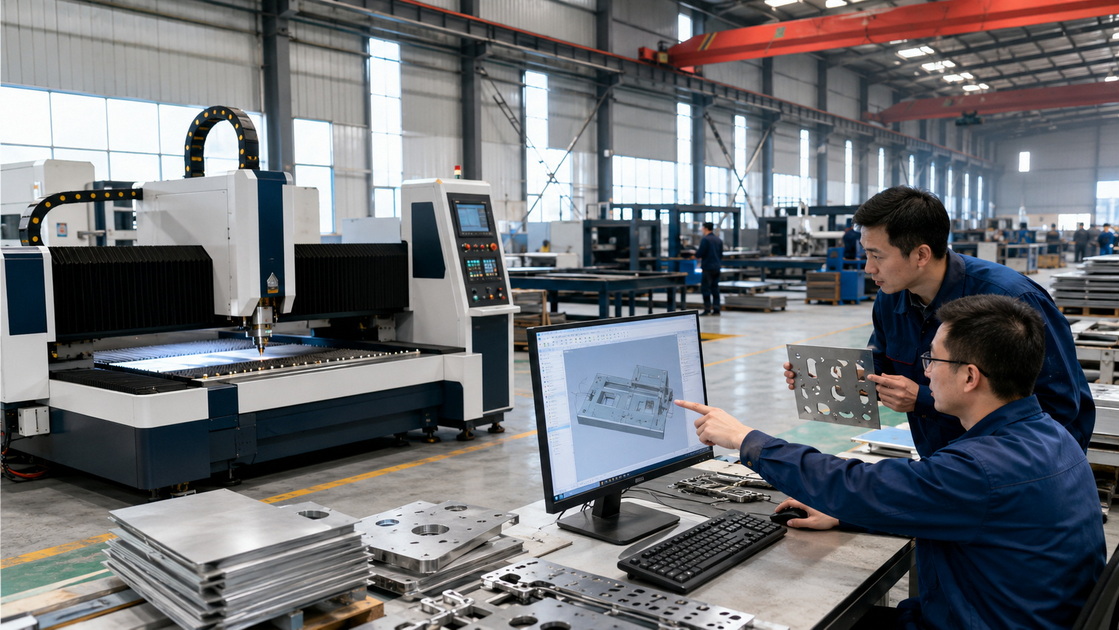
Some Chinese manufacturers specialise less in branding and more in white‑label OEM/ODM production for global integrators. Guides from industry consultants highlight the importance of checking their ISO, CE and RoHS documentation, factory audits and export history before signing contracts. [remcortechnology]
- Founded: Typically 2000s–2010s
- Core strengths: Flexible production, willingness to manufacture under customer brands, competitive pricing.
- Main markets: EU, US, emerging markets via integrators. [remcortechnology]
- OEM/ODM scope: Full private‑label solutions, mechanical and electrical customisation according to partner specifications.
Han's Laser is one of the most recognised Chinese laser equipment brands, often appearing in global rankings alongside European and Japanese players. Founded in the 1990s, the company has grown into a diversified group covering laser cutting, welding, marking and automation systems. [linkedin]
- Founded: 1990s
- Core strengths: Full product range from entry‑level to high‑power fiber lasers, strong in‑house R&D, and extensive application labs.
- Main markets: China, Europe, North America, Southeast Asia. [linkedin]
- OEM/ODM scope: Complex system integration, automated lines, customised configurations for automotive and electronics customers.
Beyond the headline brands, there are medium‑sized manufacturers located in Jiangsu and Guangdong industrial clusters that specialise in sheet‑metal equipment and OEM/ODM work. These companies often supply domestic OEMs and gradually expand abroad through regional trading houses and integrators. [remcortechnology]
- Founded: 2000s–2010s
- Core strengths: Proximity to steel suppliers and fabrication customers, competitive labour and logistics.
- Main markets: Domestic China plus targeted exports to Southeast Asia and Eastern Europe. [mordorintelligence]
- OEM/ODM scope: Flexible MOQs, partial customisation of machine frames, controls and branding.
Some Chinese laser cutter manufacturers specialise in specific verticals, such as elevator panels, electrical cabinets or furniture sheet‑metal. They develop machines, fixtures and process recipes optimised for those verticals, often with narrower but deeper expertise. [maximizemarketresearch]
- Founded: 2010s
- Core strengths: Application‑specific process knowledge, pre‑set cutting libraries for narrow use cases.
- Main markets: Domestic OEMs, with selected exports where the same vertical exists overseas.
- OEM/ODM scope: Project‑based co‑development, often including custom tooling and automation.
A final category includes smart factory integrators that build laser cutting lines with digital twins, MES integration and IoT‑enabled monitoring, following broader trends in global metal fabrication. These companies may not always manufacture the laser source themselves, but they integrate lasers, automation and software into turnkey solutions. [maximizemarketresearch]
- Founded: 2010s–2020s
- Core strengths: Software, system integration, and Industry 4.0 features such as data dashboards and remote monitoring. [maximizemarketresearch]
- Main markets: Large domestic and international OEMs that want integrated, data‑driven cutting lines.
- OEM/ODM scope: Turnkey line design, integration of third‑party lasers and equipment under a unified control architecture.
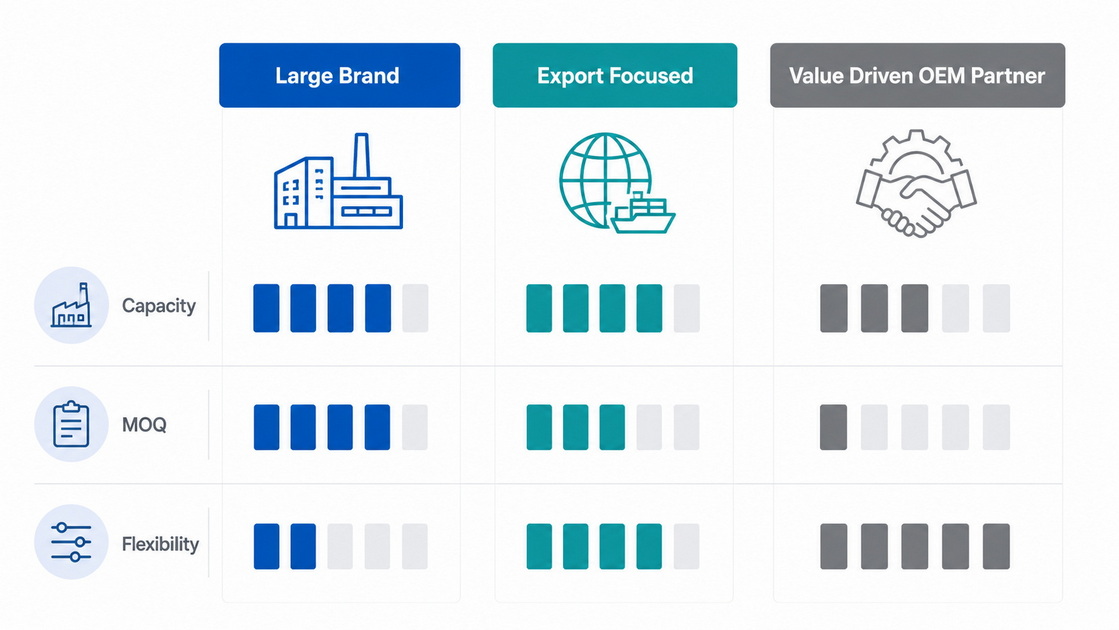
The table below summarises typical patterns you will observe when comparing different Chinese laser cutter suppliers. Exact numbers must be confirmed case by case, but it offers a practical benchmark. [remcortechnology]
| Supplier Type | Typical Monthly Capacity (Units) | Typical MOQ (Units) | Key Certifications Commonly Found |
|---|---|---|---|
| Large Brand (e.g., Han’s, Senfeng) | 50–200 | 1–2 | ISO 9001, CE, sometimes FDA, RoHS |
| Export‑Focused Brand (e.g., AccTek) | 20–80 | 1 | ISO 9001, CE, RoHS |
| Value‑Driven Maker (e.g., CNDY‑Press) | 10–50 | 1–3 | ISO 9001, CE for key models |
| Cluster Medium‑Sized Manufacturer | 5–30 | 1–3 | ISO 9001, selective CE |
| OEM/ODM White‑Label Partner | 10–40 | 2–5 | ISO 9001, project‑specific CE |
For buyers, this illustrates that smaller MOQs and flexible engineering support are most often found in value‑driven and OEM/ODM‑oriented manufacturers, while large brands prioritise standard configurations and higher volumes. [s-shaper]
- Always request clear scans of ISO 9001, CE, RoHS and any FDA registration certificates, with certificate numbers and issuing bodies. [remcortechnology]
- Verify certificates directly via certification bodies' websites or by emailing them; avoid relying on screenshots embedded in PowerPoints. [acctekgroup]
- Check the National Enterprise Credit Information Publicity System in China to confirm the company's legal registration and operational status. [remcortechnology]
Industry guides emphasise that serious manufacturers will support structured sample testing and factory acceptance tests (FAT). This typically includes: [remcortechnology]
- Sending your own material samples and drawings for test cuts, with videos and measurement reports.
- Witnessing a FAT in person or via live video, checking cutting quality, speed, and safety features before shipment. [remcortechnology]
- Commissioning a third‑party inspection (SGS, TÜV, Bureau Veritas) for pre‑shipment checks when order value is high. [remcortechnology]
- Discuss packaging, sea freight, insurance and Incoterms (FOB, CIF, DAP) early in the negotiation.
- Confirm whether the supplier can support on‑site installation and training or only remote guidance—this affects your internal resource planning.
- Clarify spare parts strategy (stock in your region, consignment, or drop shipment from China) to avoid long downtimes.
Many buyers worry about materials being downgraded, components substituted or documentation overstated once the contract is signed. While this risk exists in any country, certain patterns are more common in fast‑growing export sectors. [remcortechnology]
One internal practice rarely discussed publicly is "certificate recycling"—using a valid certificate issued for one model or configuration to claim conformity for a different model that has not been tested. To mitigate this: [acctekgroup]
- Ask for model‑specific declarations and ensure that the model number on the certificate matches your purchase order.
- Verify whether critical components like laser sources, chiller units and electrical cabinets are the same as those listed in the original certificate documents. [acctekgroup]
- During FAT, cross‑check the nameplate and BOM against the certified configuration; any major deviation should trigger a re‑evaluation.
In addition, watch for:
- Unrealistic lead times promised during sales discussions that later slip significantly.
- Incomplete documentation (electrical schematics, software manuals, maintenance schedules) delivered only after repeated reminders.
- Over‑reliance on traders or non‑manufacturing intermediaries who cannot provide engineering answers promptly. [remcortechnology]
Buyers who proactively set expectations around certification, configuration control and documentation tend to experience far fewer issues over the lifecycle of the machine. [remcortechnology]
China's laser cutter industry now ranges from large brands with global footprints to agile engineering‑driven manufacturers like Maanshan Deyan (CNDY‑Press) that specialise in OEM and ODM projects. For procurement managers, the real advantage lies in combining China's industrial cluster strengths with a rigorous supplier evaluation framework that addresses certifications, R&D capability, QC and delivery performance. [linkedin]
If you are currently building a supplier shortlist, the next step is to:
- Define your target power range, material thickness and annual volume.
- Shortlist 3–5 manufacturers from different categories (large brand, export‑focused, value‑driven OEM partner).
- Run structured test cuts and factory acceptance tests using your own drawings and materials.
Manufacturers like Maanshan Deyan Precision Machinery Technology Co., Ltd. (CNDY‑Press) can then work with you to design cost‑effective, custom laser cutting solutions that align with your long‑term product roadmap and compliance requirements. [hypertherm]
1. How can I verify that a Chinese manufacturer's ISO 9001 certificate is still valid?
Ask for the original certificate with number and issuing body, then check the issuer's website or email them directly, confirming both the expiry date and whether the certified scope covers "design and manufacture of laser cutting machines." [remcortechnology]
2. What is the safest way to confirm CE compliance for a laser cutter?
Request the EU Declaration of Conformity, test reports and the notified body's details, then confirm that the specific model and configuration you are buying matches the tested version; if in doubt, consult a third‑party lab or inspection company. [acctekgroup]
3. How do I differentiate between a real manufacturer and a trading company?
Real manufacturers can provide factory layout drawings, equipment lists, engineering org charts and detailed process descriptions, while traders often rely on generic brochures and cannot answer technical questions about cutting parameters or software configuration. [remcortechnology]
4. What is a reasonable MOQ for a laser cutter OEM project?
For branded machines, MOQs are often one or two units, but for private‑label OEM projects involving custom covers, control panels or branding, suppliers may ask for 2–5 units to amortise development costs. [s-shaper]
5. How can I ensure long‑term spare parts availability?
Include in your contract a spare parts list for 3–5 years, agreed pricing and lead times, and clarification on whether parts will be stocked locally by a distributor or shipped from China; reputable manufacturers will also specify compatible third‑party alternatives for critical items where possible. [acctekgroup]
1. How to Choose Laser Cutting Machine Manufacturers in China – Remcor
2. Comparison of Laser Cutting Machines with Different Cutting Abilities – Senfeng
3. Metal Fabrication Market: Global Industry Analysis and Forecast – Maximise Market Research
https://www.maximizemarketresearch.com/market-report/metal-fabrication-market/13591/
4. Are Chinese Laser Cutting Machines Good – AccTek Group
https://www.acctekgroup.com/are-chinese-laser-cutting-machines-good/
5. China Metal Fabrication Equipment Market – Mordor Intelligence
https://www.mordorintelligence.com/industry-reports/china-metal-fabrication-equipment-market
6. Certificates — ISO 9001, Export License & Authorizations – Shamana
https://www.shamana-china.com/ourcertificates
7. Laser Labels: Understanding CDRH and IEC – Clarion Safety Systems
https://www.clarionsafety.com/safety-resources/machinery/laser-labels-understanding-cdrh-and-iec/
8. EHS Guideline – Laser Cutter Safety – Carnegie Mellon University
https://www.cmu.edu/ehs/Guidelines/ehs-guideline-laser-cutter-safety-v.11.pdf


