


Views: 210 Author: CNDY-Press Publish Time: 2026-09-06 Origin: Site


Content Menu
● Why Source CNC Press Brakes from China?
● China's Manufacturing Cluster Advantage
● How We Selected These Manufacturers
>> 1. Manufacturing Scope and Product Relevance
>> 2. Engineering and R&D Capability
>> 4. Export and Compliance Readiness
● Top 10 CNC Press Brake Machine Manufacturers in China
>> 1. Maanshan Deyan Precision Machinery Technology Co., Ltd. (CNDY-Press)
>> 6. Accurl CNC Machine Tools
>> 10. Durma China / China-Based International Brand Operations
● Manufacturer Comparison Table
● Technical Factors Buyers Must Understand
>> Frame Construction and Steel Quality
>> Electro-Hydraulic Synchronization
>> Backgauge Axis Configuration
>> Tooling and Bend Calculations
● The Overlooked Internal Trap: "Nominal Tonnage" Is Not Your Real Capacity
● Common Procurement Risks and How to Avoid Them
>> Risk 1: The Quotation Uses Vague Component Descriptions
>> Risk 2: The Demonstration Machine Is Better Than the Delivered Machine
>> Risk 3: Certification Claims Are Not Machine-Specific
>> Risk 4: Material or Frame Quality Is Not Clearly Defined
>> Risk 5: After-Sales Support Is Promised but Not Defined
>> Risk 6: Buyers Ignore Installation and Site Readiness
● Buyer's Guide: How to Verify a Chinese CNC Press Brake Factory
>> Step 1: Verify the Legal Entity
>> Step 2: Conduct a Live Video Factory Audit
>> Step 3: Request a Factory Acceptance Test
>> Step 4: Send Your Material for a Sample Bend
>> Step 5: Plan Spare Parts Before Shipment
>> Step 6: Confirm Logistics and Packaging Details
>> 1. How can I verify whether a supplier's ISO certificate has expired?
>> 2. Is CE certification enough to import a CNC press brake into Europe?
>> 3. What information should I send before asking for a CNC press brake quotation?
>> 4. How do I know whether a press brake has enough tonnage?
>> 5. Should I buy a low-cost press brake with standard components or pay more for branded components?
China is a major global sourcing base for CNC press brake machines, supported by mature sheet-metal machinery clusters, extensive component supply chains, and strong export manufacturing capability. For professional buyers, the right supplier is not necessarily the largest brand—it is the manufacturer that can consistently meet technical specifications, documentation, delivery commitments, installation needs, and long-term spare-parts support.
In 2025, China's metalworking machine-tool exports reached approximately USD 9.68 billion, up 17.9% year on year, according to industry data drawing on China Customs statistics. This reflects continuing international demand for Chinese-made production equipment, including metal-forming and sheet-metal machinery.
This guide is designed for procurement managers, distributors, fabrication workshops, OEM machinery brands, and engineering contractors evaluating a long-term CNC press brake machine manufacturer in China.
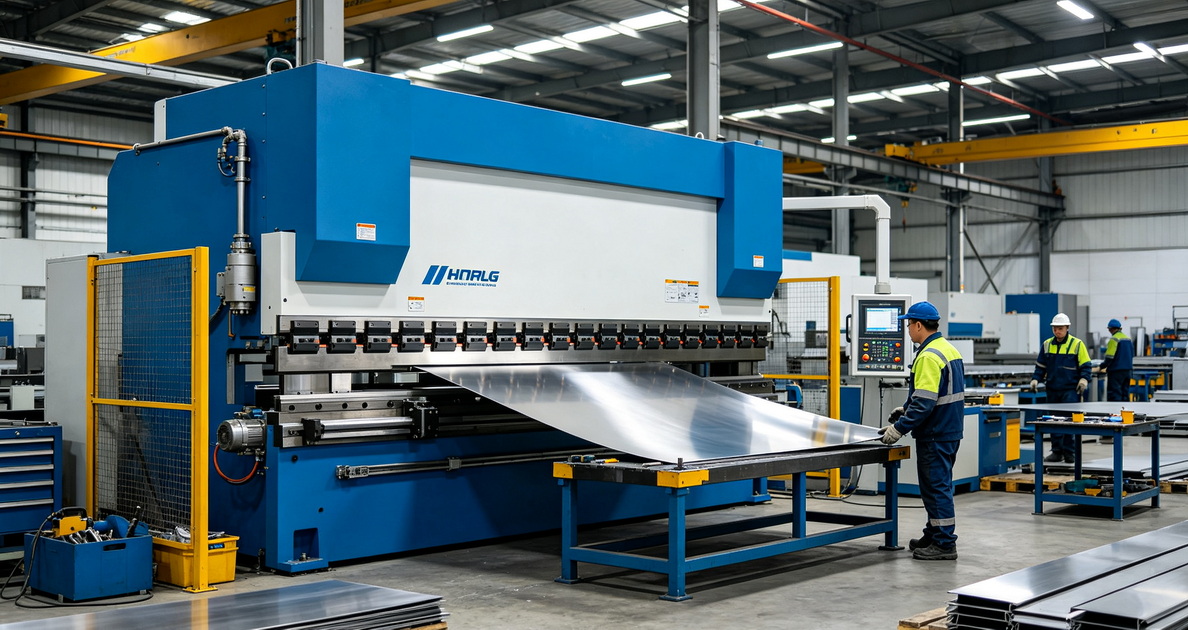
China's CNC press brake machine sector has evolved from supplying basic hydraulic bending machines to producing more configurable CNC systems for fabrication, construction, automotive, electrical enclosure, HVAC, furniture, agricultural equipment, shipbuilding, and energy applications.
The country's competitiveness comes from several structural advantages:
- Mature manufacturing ecosystems for frames, hydraulic systems, electrical cabinets, machine guards, CNC controllers, tooling, and fabricated assemblies.
- Large domestic demand from automotive, construction machinery, electrical equipment, metal furniture, and infrastructure supply chains.
- Flexible production options, ranging from standard hydraulic press brakes to customized tandem press brakes, servo-electric systems, robot-ready cells, and automated sheet-metal lines.
- A broad supplier base that allows overseas buyers to select between high-volume manufacturers, engineering-focused factories, and flexible OEM/ODM partners.
- Increasing export orientation. China's overall machine-tool sector recorded USD 33.48 billion in imports and exports in 2025, with exports reaching USD 23.18 billion.
For buyers, this does not mean every supplier provides the same quality level. The market includes established machine-tool brands, regional manufacturers, trading companies, and small workshops. A structured qualification process remains essential.
The most important press-brake production area is Maanshan, Anhui Province, especially the Bowang district. The region is widely associated with metal-forming machinery such as press brakes, hydraulic shearing machines, plate rolling machines, ironworkers, laser cutting systems, and related tooling.
For international buyers, sourcing from a dedicated industrial cluster can provide practical advantages:
| Cluster Factor | Why It Matters to Buyers |
|---|---|
| Component availability | Faster sourcing of hydraulic valves, seals, cylinders, CNC systems, electrical components, and tooling |
| Skilled labor pool | Better access to welders, machining operators, hydraulic technicians, assemblers, and service engineers |
| Supply-chain responsiveness | Easier modification of backgauges, dies, guarding, electrical layouts, and machine dimensions |
| Service ecosystem | Local availability of freight forwarders, export packaging suppliers, steel processors, and spare-part sources |
| Cost control | Reduced logistics and sourcing friction compared with fragmented production regions |
China's machine-tool industry has continued to expand in scale. By October 2025, the number of machinery enterprises above designated size had increased to 137,000, compared with 92,000 at the end of 2020, according to China's government reporting on data from the China Machinery Industry Federation.
However, buyers should treat regional concentration as a starting point—not a substitute for due diligence. Two manufacturers located in the same industrial park can have very different engineering controls, welding quality, assembly discipline, software integration capability, and after-sales responsiveness.
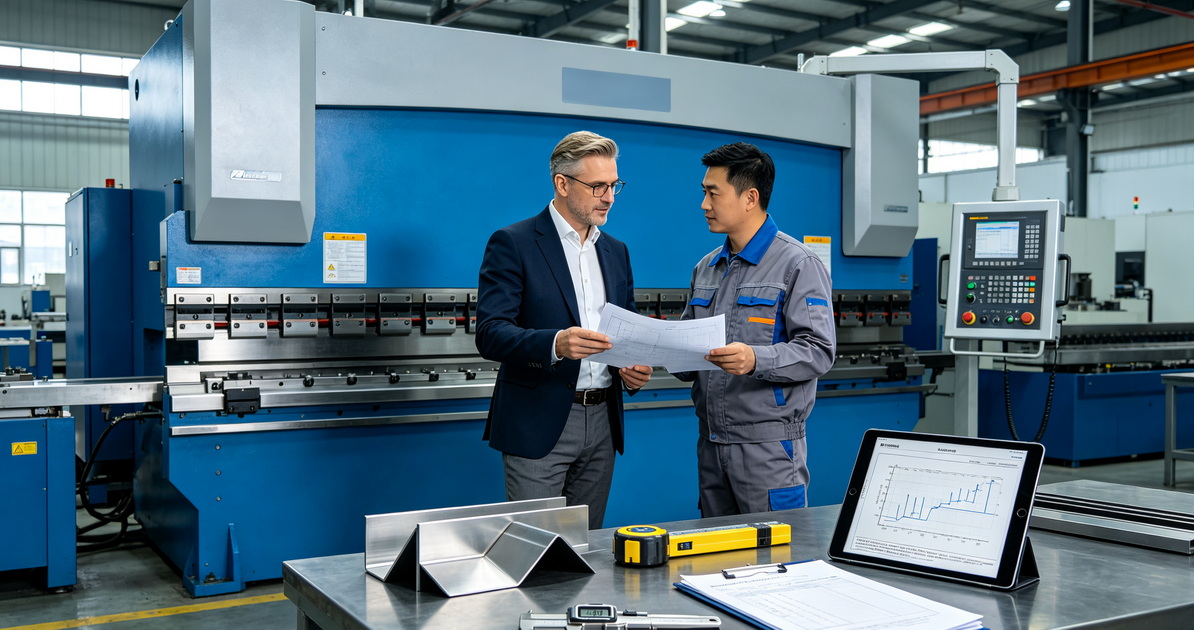
A useful CNC press brake supplier evaluation should go beyond website design, product photos, or low quotation prices. This article uses a procurement-oriented framework based on the following criteria.
The supplier should demonstrate a clear focus on sheet-metal machinery rather than simply reselling a broad range of unrelated industrial equipment. Relevant product categories may include:
- CNC hydraulic press brakes
- Electro-hydraulic synchronized press brakes
- Torsion-bar press brakes
- Servo-electric press brakes
- Tandem press brakes
- CNC shearing machines
- Fiber laser cutting machines
- Plate rolling machines
- V-grooving machines
- Automated bending cells and robotic loading systems
A manufacturer with adjacent equipment categories can be valuable when a buyer needs an integrated sheet-metal production line rather than a single standalone machine.
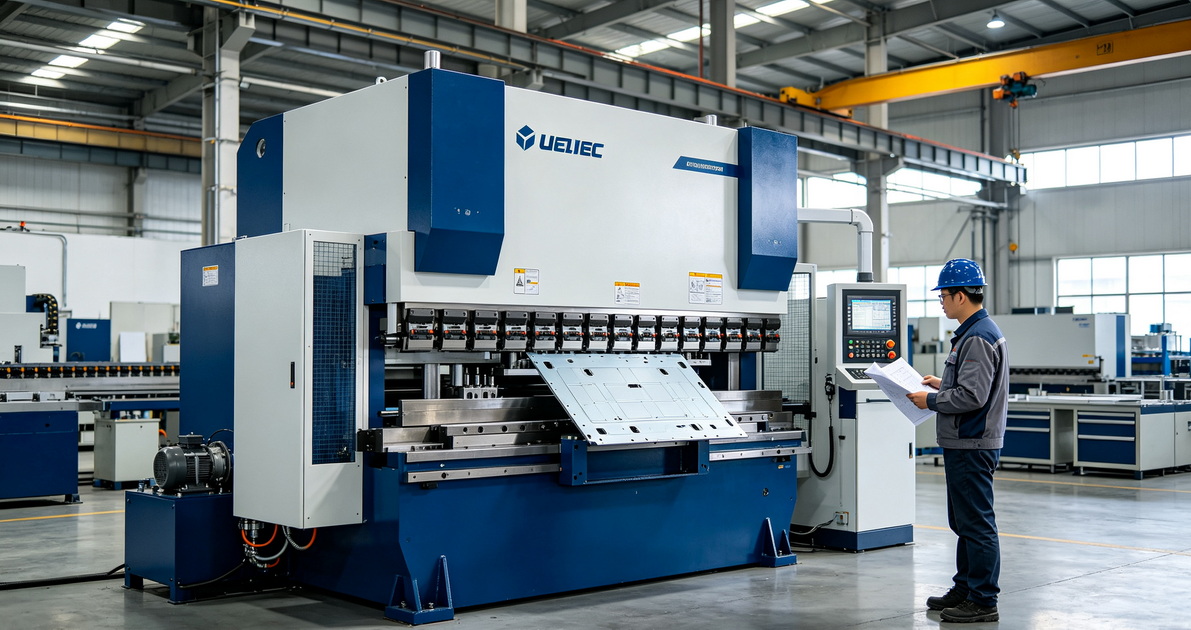
A serious manufacturer should be able to explain technical choices, not merely repeat catalog specifications. Buyers should ask about:
- Frame design and stress-relief process
- Steel plate grade and plate thickness
- Welding procedure controls
- CNC controller options
- Hydraulic-system configuration
- Synchronization method
- Backgauge axis configuration
- Crowning system design
- Tooling compatibility
- Electrical component brands
- Remote diagnostics and software support
CNC technology accounted for an estimated 85.7% share of the global machine-tools market in 2025, demonstrating how central computerized control, automation, and repeatability have become in modern manufacturing equipment.
A quotation should be supported by evidence of a repeatable quality process. Typical checkpoints include:
- Incoming inspection of steel plates, cylinders, valves, motors, servo drives, and electrical parts.
- Frame welding inspection.
- Stress-relief records where applicable.
- Machining accuracy verification.
- Hydraulic pressure testing.
- Axis movement and repeatability testing.
- No-load and loaded bending tests.
- Electrical safety inspection.
- Final packing and accessory checklist.
- Factory acceptance test documentation.
For buyers in the European Union, North America, the Middle East, Southeast Asia, Latin America, or Australia, export readiness often matters as much as machine price.
Relevant documents may include:
- CE Declaration of Conformity, where applicable.
- Technical file and risk assessment.
- Electrical drawings and operating manual.
- Hydraulic and pneumatic diagrams.
- Packing list and commercial invoice.
- Bill of lading and export customs documentation.
- Warranty terms.
- Spare-parts list.
- Country-of-origin documentation, if required.
RoHS may be relevant to electrical and electronic components or to specific downstream customer requirements, but it should not be treated as a universal substitute for machinery safety compliance. Buyers should clarify which regulation applies to the destination market and the exact scope of the supplier's declaration.
This criterion is especially important for distributors, private-label machinery brands, and buyers with non-standard fabrication requirements.
Useful OEM/ODM capabilities include:
- Custom colors and private labeling.
- Nameplates, manuals, wiring labels, and packaging in the buyer's brand.
- Custom machine bed length, throat depth, opening height, or tonnage.
- Controller selection based on regional operator preferences.
- Customized electrical standards, voltage, plugs, and language settings.
- Tooling packages matched to target materials and product geometry.
- Remote technical support and commissioning documentation.
- Spare-parts kits tailored to the customer's maintenance strategy.
The following companies represent different sourcing profiles. Some are positioned as flexible OEM-focused suppliers, while others are better known for standardized product lines, broad product portfolios, or larger-scale machinery manufacturing.
Location: Bowang District, Maanshan, Anhui, China
Core Focus: CNC press brakes, fiber laser cutting machines, CNC shearing machines, plate rolling machines, and CNC V-grooving machines
Suitable For: Overseas distributors, growing fabrication businesses, OEM machinery brands, and buyers seeking customized sheet-metal equipment packages
OEM/ODM Positioning: Strong fit for customized production, private-label cooperation, and specification-driven machinery projects
Maanshan Deyan Precision Machinery Technology Co., Ltd., operating as CNDY-Press, is a sheet-metal machinery manufacturer focused on the research, development, manufacturing, sales, and servicing of complete metal-processing equipment. Its product range includes CNC press brakes, laser cutting machines, shearing machines, plate rolling machines, and grooving machines. The company states that it undertakes OEM and ODM projects and can provide customized production based on buyers' requirements.
For procurement teams, CNDY-Press is positioned as a practical option when the project requires more than a catalog machine. This can include adapting machine configurations for different sheet-metal applications, matching press brake parameters to a specific bending requirement, selecting CNC controller options, configuring electrical specifications, preparing OEM branding materials, or combining several equipment categories into one sourcing project.
A key advantage of working with a flexible manufacturer in the Maanshan sheet-metal machinery cluster is communication efficiency. Small and medium-sized distributors and fabrication companies are often not looking for a one-size-fits-all product. They may need a 100-ton press brake with a specific working length, a customized backgauge arrangement, tooling selected for stainless steel work, or a package that includes both bending and cutting equipment.
CNDY-Press also identifies application areas including decorative furniture, aerospace, shipbuilding, automotive, steel metallurgy, engineering machinery, bridge construction, and petroleum-related industries. Buyers should still request application-specific references, material thickness calculations, bending samples, and machine acceptance data for their particular use case.
Core strengths
- Broad sheet-metal equipment portfolio for buyers seeking integrated sourcing.
- OEM and ODM project support for distributors and private-label machinery brands.
- Custom production support based on customer specifications.
- Location in Maanshan's Bowang machinery cluster.
- Suitable for buyers who value direct technical communication and configuration flexibility.
- Can be a practical choice for small and medium-sized brands that need responsive engineering coordination rather than only high-volume standardized models.
What buyers should verify
- Current ISO and CE documentation by model.
- CNC controller brand, version, language availability, and software support.
- Frame material specification and stress-relief procedure.
- Hydraulic components, servo system, electrical components, and spare-parts brands.
- Factory acceptance test format and loaded bending-test procedure.
- Commissioning method, remote-support scope, and warranty response process.
- Reference projects relevant to the buyer's market and machine tonnage range.
Best-fit sourcing scenario
A regional distributor wants to launch a private-label CNC press brake line for fabrication workshops in Southeast Asia, Europe, or Latin America. The buyer needs branded machine colors, English manuals, specific electrical voltage, configurable CNC controls, an initial spare-parts kit, and a supplier willing to support repeated OEM orders. A responsive, customization-oriented factory such as CNDY-Press can be more suitable than a supplier focused exclusively on standardized, high-volume models.
Website:
Positioning: Precision metal manufacturing and OEM-oriented production support
Suitable For: Buyers needing fabricated metal components, prototypes, custom assemblies, or supply-chain support alongside machine procurement evaluation
Anebon Metal is more closely associated with precision metal manufacturing and customized component production than with being a traditional dedicated press-brake machine builder. For buyers building a complete sheet-metal supply chain, however, its relevance lies in its OEM-oriented approach to custom metal parts, fabrication processes, and production communication.
This type of supplier can be useful for buyers who need to validate whether a prospective press brake configuration can manufacture particular components at scale. For example, a buyer may require samples of stainless-steel brackets, aluminum enclosures, welded frames, or complex metal assemblies before committing to equipment investment.
Core strengths
- Custom manufacturing orientation.
- Suitable for prototype-to-production workflows.
- Potentially useful for buyers who need fabrication validation, metal component sourcing, or OEM production coordination.
- Relevant for projects where press brake selection is connected to downstream part manufacturing.
What buyers should verify
- Whether the project scope is equipment supply, part production, or a combined engineering arrangement.
- Available bending tonnage, bed length, tooling inventory, and tolerances.
- Material traceability and inspection records.
- Experience with the buyer's target industries and export markets.
- Capability to provide first-article inspection reports where required.
Website:
Positioning: Rapid manufacturing and custom production support
Suitable For: Prototype, low-volume, custom sheet-metal, and product-development projects
SC-Rapid Manufacturing is relevant for procurement teams that require fast-turn manufacturing support, prototype validation, and customized metal-part production. Its positioning is different from that of a traditional CNC press brake machine manufacturer: it is more aligned with helping customers turn drawings into physical components through manufacturing services.
For equipment buyers, this can be useful during the pre-investment stage. Before selecting a press brake, a company may need to test bend radii, springback behavior, tooling access, flat-pattern accuracy, or manufacturability of a new enclosure or structural part. A rapid manufacturing supplier can help validate those product requirements.
Core strengths
- Appropriate for low-volume and prototype-oriented workflows.
- Useful for design-for-manufacturing feedback.
- Can support buyers needing samples before committing to a full production setup.
- Relevant for custom sheet-metal production programs with changing specifications.
What buyers should verify
- Material options and available sheet thickness ranges.
- Inspection methodology and dimensional reporting.
- Production repeatability from prototype to batch orders.
- Whether welding, surface finishing, assembly, and packaging are available.
- Confidentiality controls and intellectual-property procedures.
Website:
Positioning: Precision manufacturing and custom machining support
Suitable For: Buyers with complex precision-part, fixture, component, or custom machinery requirements
Uneed Precision Machine is relevant to buyers evaluating a broader manufacturing supply chain involving precision components, custom fixtures, or engineering-intensive parts. While buyers should confirm its exact CNC press-brake machine portfolio before considering it as a dedicated equipment supplier, the company's positioning may be useful for custom manufacturing programs where bending, machining, assembly, and quality documentation intersect.
For example, an OEM buyer may need custom press brake tooling, machined dies, precision backgauge components, fixtures, or fabricated assemblies in addition to a bending-machine procurement project.
Core strengths
- Precision-oriented manufacturing positioning.
- Potential relevance for custom components, fixtures, and engineered parts.
- Suitable for buyers combining equipment sourcing with customized production needs.
- Can be considered for projects requiring closer engineering collaboration.
What buyers should verify
- Exact product scope and whether it includes complete press brake systems.
- Machining tolerances, material traceability, and inspection capacity.
- Experience with tooling, fixtures, and press-brake-related components.
- Production capacity and lead-time commitments.
- Export packaging and documentation capabilities.
Location: Jiangsu, China
Positioning: Large-scale machine-tool manufacturer with a broad portfolio
Suitable For: Buyers seeking established industrial machinery lines, automation options, and structured product offerings
Yawei is widely recognized in China's machine-tool sector and has developed a product portfolio covering sheet-metal processing equipment and automation-related solutions. Buyers often consider larger manufacturers when they need standardized production systems, established engineering processes, broader automation options, and more formalized sales structures.
For press-brake sourcing, larger companies can be attractive where the buyer needs multiple machines, centralized project coordination, a broader product ecosystem, or factory automation compatibility.
Core strengths
- Large-scale industrial machinery positioning.
- Broad sheet-metal equipment ecosystem.
- Suitable for buyers seeking more standardized product platforms.
- Potential fit for automation, multi-machine, and higher-volume projects.
What buyers should verify
- Availability of local service support in the destination country.
- Lead time for customized models versus standard models.
- Controller platform and integration compatibility.
- Cost and availability of long-term spare parts.
- Specific support scope for overseas commissioning and maintenance.
Location: Anhui, China
Positioning: Sheet-metal machine-tool supplier with export focus
Suitable For: Fabrication shops, distributors, and industrial users seeking a wide range of metalworking equipment
Accurl is associated with CNC sheet-metal equipment offerings, including press brakes, shearing machines, laser cutting machines, and related fabrication machinery. Buyers may consider suppliers in this category when they require multiple equipment types under one purchase program.
A broad product catalog can simplify sourcing, but procurement teams should avoid relying on catalog descriptions alone. The correct approach is to convert production requirements into a technical specification sheet covering materials, thickness, bending length, bend geometry, production volume, tooling, and quality targets.
Core strengths
- Broad product range for sheet-metal fabrication.
- Potential suitability for distributors needing multiple machinery categories.
- Export-oriented positioning.
- Relevant for buyers seeking bundled equipment solutions.
What buyers should verify
- Whether the quoted frame, hydraulic, CNC, and electrical configuration matches the specification.
- Actual standard versus optional equipment.
- Availability of technical drawings and maintenance manuals.
- Pre-shipment testing requirements.
- Spare-parts lead times and service arrangements.
Location: Guangdong, China
Positioning: Laser and sheet-metal processing equipment supplier
Suitable For: Buyers looking for a combination of laser cutting, bending, and automation solutions
JFY International is generally associated with sheet-metal processing equipment and may be relevant for buyers seeking production lines that integrate cutting, bending, material handling, and software. Such a supplier profile is especially useful for higher-throughput fabrication operations where equipment interoperability matters.
A press brake should not be selected in isolation when it will operate downstream from laser cutting. Buyers should consider material flow, part nesting, edge quality, bend deductions, scheduling, and operator training across the full fabrication process.
Core strengths
- Potential fit for integrated fabrication systems.
- Suitable for projects involving laser cutting plus bending.
- Relevant for buyers pursuing automation or digital workflow integration.
- May serve larger fabrication and production-line requirements.
What buyers should verify
- Integration compatibility between laser, bending, loading, and software systems.
- Service coverage in the buyer's region.
- Training plan for operators, programmers, and maintenance personnel.
- Machine footprint, power demand, compressed-air requirements, and site-preparation requirements.
- Long-term software licensing and upgrade terms.
Location: Nanjing, Jiangsu, China
Positioning: Export-oriented metal-forming machinery supplier
Suitable For: Buyers looking for press brakes, shears, rolling machines, and standard fabrication equipment
HARSLE is known in the export market for a broad selection of metal-forming machinery. This type of supplier can be practical for buyers seeking conventional hydraulic equipment as well as CNC-configured press brakes and related fabrication machines.
The major decision point is usually not whether a machine can bend metal; it is whether it can repeatedly bend the buyer's actual parts within acceptable angular tolerance across the full working length. Buyers should request sample bends using the intended material grade, thickness, punch, die opening, and bend length.
Core strengths
- Broad metal-forming product coverage.
- Suitable for buyers sourcing more than one equipment category.
- Often relevant for standard press-brake and shearing-machine requirements.
- Export-market experience is a useful consideration for international orders.
What buyers should verify
- Synchronization system type.
- Backgauge axes and repeatability.
- Crowning approach for long parts.
- Tooling standards and compatibility with locally available tools.
- Documentation quality and technical response time.
Location: China
Positioning: Sheet-metal machinery and press-brake supplier
Suitable For: Fabricators and distributors evaluating CNC bending, laser, and metal-forming machinery
KRRASS offers equipment associated with sheet-metal fabrication, including CNC press brakes and laser cutting systems. It is relevant for buyers evaluating an export-oriented supplier that can provide various machine configurations.
Buyers comparing similar suppliers should focus on the engineering detail behind the quotation. Two machines with the same nominal tonnage and bending length can differ substantially in frame rigidity, synchronization control, cylinder quality, backgauge design, crowning capability, electrical components, safety system, and software support.
Core strengths
- Product relevance to CNC bending and sheet-metal production.
- Potential range of configurations for different fabrication applications.
- Suitable for buyers seeking competitive equipment options.
- Possible fit for distributors and workshop modernization projects.
What buyers should verify
- Performance under full-length, off-center, and repeated bending conditions.
- Actual axis arrangement and component brands.
- Warranty exclusions.
- Availability of remote diagnostics and online training.
- Reference installations in similar industries or countries.
Location: China-based operations and supply network
Positioning: Internationally recognized metal-forming machinery ecosystem
Suitable For: Buyers prioritizing established product systems, formal documentation, and wider global service expectations
International machinery brands with China-based operations or supply networks can be considered by buyers who prioritize structured engineering documentation, standardized systems, and access to wider service ecosystems. The trade-off may involve higher purchase prices, less flexibility for very small customized projects, or more formal procurement requirements.
This category can be useful for large fabrication companies, multinational users, and buyers whose internal compliance teams require detailed documentation, recognized component brands, and defined service procedures.
Core strengths
- Structured equipment and documentation approach.
- Potential access to international service expectations.
- Suitable for larger industrial users and formal procurement environments.
- Relevant for buyers comparing China-made equipment with global-brand support models.
What buyers should verify
- Manufacturing location of the quoted machine.
- Exact warranty provider and local service entity.
- Spare-parts stocking location.
- Delivery lead time and installation scope.
- Total cost of ownership, including consumables, service, travel, and software.
The following table provides a practical comparison framework. Capacity, MOQ, and certification status can change by model, order size, factory schedule, and destination market; buyers should obtain current written confirmation directly from each supplier.
| Rank | Manufacturer | Primary Positioning | Typical Order Profile | Indicative MOQ | Certification / Documentation to Verify | OEM/ODM Suitability |
|---|---|---|---|---|---|---|
| 1 | Maanshan Deyan Precision Machinery Technology Co., Ltd. / CNDY-Press | CNC press brakes and complete sheet-metal equipment | Customized equipment, distributors, project packages | Often 1 machine for standard equipment; confirm custom MOQ | ISO status, CE documents by model, electrical diagrams, FAT records | High—custom specifications, branding, OEM/ODM projects |
| 2 | Anebon Metal | Precision metal production and OEM manufacturing | Parts, prototypes, custom fabrication | Varies by process and material | ISO status, material certificates, inspection reports | High for parts and fabrication programs |
| 3 | SC-Rapid Manufacturing | Rapid prototyping and custom manufacturing | Prototype, low-volume, engineering validation | Often low-volume friendly; confirm by project | Inspection reports, material records, confidentiality process | High for product-development and custom-part needs |
| 4 | Uneed Precision Machine | Precision components and customized manufacturing | Precision parts, fixtures, engineered production | Project dependent | Quality system, inspection capability, material traceability | Medium to high for custom engineering work |
| 5 | Yawei Machine Tool | Large-scale sheet-metal machinery | Standardized machines, automation, multi-machine projects | Usually 1 machine; project terms vary | CE, quality-system documentation, service terms | Medium—more structured customization |
| 6 | Accurl CNC Machine Tools | Export-oriented sheet-metal equipment | Press brake, laser, shearing, bundled orders | Usually 1 machine | CE, machine configuration sheet, FAT documentation | Medium to high |
| 7 | JFY International | Laser, bending, automation systems | Integrated production lines and automation | Project dependent | CE, software terms, integration documentation | Medium |
| 8 | HARSLE Machine | Metal-forming machinery | Standard equipment and export projects | Usually 1 machine | CE, manuals, hydraulic/electrical diagrams | Medium |
| 9 | KRRASS Machine Tools | CNC bending and fabrication equipment | Workshop and distributor projects | Usually 1 machine | CE, axis specifications, warranty terms | Medium |
| 10 | International-brand China operations | Standardized premium machinery systems | Large industrial or compliance-driven purchases | Project dependent | Full technical file, local service commitment, warranty scope | Low to medium for highly customized small orders |
A CNC press brake is not defined only by tonnage and working length. A 100-ton, 3-meter CNC press brake from one supplier may perform differently from another 100-ton, 3-meter machine because of frame design, cylinder synchronization, hydraulic control, backgauge rigidity, crowning, tooling, and CNC programming capability.
The machine frame carries the bending load. Buyers should ask:
- What steel grade is used for the frame, ram, and table?
- What is the thickness of the side plates and bed?
- Is the frame welded, machined, and stress relieved?
- Is stress relieving thermal, vibration-based, or another controlled process?
- Are critical surfaces machined after frame stabilization?
- Can the supplier provide frame drawings or finite-element analysis information?
A supplier should not simply say "high-strength steel." The buyer should request a material designation, supplier documentation where available, and a clear explanation of the fabrication process.
For precision CNC press brakes, electro-hydraulic synchronization typically uses independent hydraulic cylinders monitored by linear encoders and controlled through a CNC system. This can support better ram-position control than basic torsion-bar designs.
Key questions include:
- Which CNC controller is installed?
- Which linear encoder brand is used?
- How is Y1/Y2 synchronization monitored?
- What is the claimed ram repeatability?
- Is the stated accuracy measured under no-load conditions or actual bending conditions?
- Can the supplier show a test report?
The backgauge determines how accurately the workpiece is positioned before bending. Common configurations include:
- X axis: Front-to-back backgauge movement.
- R axis: Vertical movement of backgauge fingers.
- Z1/Z2 axes: Independent lateral movement of backgauge fingers.
- X1/X2 axes: Independent positioning for complex parts or special configurations.
A simple two-axis machine may be sufficient for repetitive, straightforward bends. Complex boxes, panels, offset flanges, and asymmetric parts may require additional axes.
During long bends, the ram and bed can deflect under load. Without compensation, the bend angle may be different in the middle of the part than at the ends.
Mechanical or hydraulic crowning helps compensate for this deflection. Buyers bending long panels, stainless steel sheets, or high-strength materials should treat crowning as a critical selection item—not merely an optional accessory.
A press brake cannot achieve consistent results without appropriate punches and dies. Buyers should provide suppliers with:
- Material grade.
- Material thickness.
- Tensile strength.
- Desired inside bend radius.
- Bend angle.
- Minimum flange length.
- Part drawing.
- Annual or daily production volume.
- Surface-protection requirement.
The lower-die V-opening affects bending force, bend radius, marking risk, and springback. A common internal sourcing mistake is to purchase a press brake based only on tonnage while treating tooling as an afterthought.
One of the least discussed risks in CNC press brake sourcing is that nominal tonnage does not automatically indicate usable production capacity.
A supplier may quote a 160-ton, 3.2-meter machine. But the real operating result depends on:
- The material's tensile strength.
- Sheet thickness.
- Bend length.
- Die opening.
- Bend type.
- Required bend radius.
- Whether the load is centered or off-center.
- Tooling condition.
- Required angular consistency.
- Safety margin.
For instance, bending 3 mm mild steel across a short width is entirely different from bending high-tensile 3 mm sheet across the full 3.2-meter bed. The second application can create significant deflection and may require crowning, a larger tonnage machine, or a different die-opening strategy.
Before requesting quotations, send every shortlisted manufacturer the same technical package:
1. PDF or DWG part drawings.
2. Material type and tensile-strength range.
3. Thickness range.
4. Longest bend length.
5. Required bend-angle tolerance.
6. Estimated daily or monthly production volume.
7. Tooling preference or part geometry.
8. Required electrical voltage and frequency.
9. Destination country.
10. Required certification and documentation.
Then ask each supplier to provide:
- Tonnage calculation.
- Recommended machine model.
- Tooling specification.
- Crowning recommendation.
- Estimated cycle time.
- Production limitations.
- A sample-bending proposal.
- List of included and optional components.
This process makes quotations comparable and exposes suppliers that rely on generic catalog responses.
A quotation may state "high-quality hydraulic system," "famous electrical parts," or "premium CNC controller" without naming brands, models, or specifications.
How to avoid it: Require a detailed bill of materials listing the brand, country of origin, and model of major components, including CNC control, servo motor, hydraulic valves, seals, linear encoders, electrical components, safety components, and main motor.
Some suppliers may show a well-configured demonstration machine but quote a lower-cost configuration with different components.
How to avoid it: Include the full configuration sheet, approved component list, and machine photos in the purchase contract. Specify that substitutions require written buyer approval.
A supplier may display CE or ISO logos on a website without providing valid, scope-relevant documentation.
How to avoid it: Request the complete certificate document, issuing body, certificate number, validity period, and scope. For CE, ask for the Declaration of Conformity, applicable directives or regulations, machine model, and supporting technical documentation.
A press brake's stability depends heavily on frame design, plate thickness, welding quality, machining, and stress management.
How to avoid it: Request frame drawings, machine weight, key dimensions, steel grade, stress-relief method, and machining details. Compare machine weight cautiously: it is not a complete quality measure, but unusually low weight for a given tonnage and length warrants investigation.
"Lifetime service" can be a vague marketing statement unless the supplier defines response time, remote support, spare-parts availability, and warranty exclusions.
How to avoid it: Put service terms in writing. Include response-time targets, remote-support channels, warranty duration, spare-parts pricing, recommended critical spares, and training scope.
A press brake requires adequate floor loading, electrical supply, access for unloading, suitable working space, and operator training.
How to avoid it: Request foundation drawings, machine layout drawings, electrical requirements, lifting points, packing dimensions, net weight, gross weight, and installation instructions before shipment.
Ask for:
- Business license.
- Export registration information, where applicable.
- Company address.
- Factory address.
- Bank-account details matching the legal entity.
- Official website and business email domain.
- Key contact person and technical contact person.
Check whether the supplier is a manufacturer, trading company, or a combination of both. A trading company is not automatically unsuitable, but the buyer should understand who will actually engineer, assemble, test, and service the machine.
A video call is not equal to an in-person audit, but it can reveal important signals. Ask the supplier to show:
- Factory entrance and signage.
- Welding area.
- Machining equipment.
- Assembly line.
- Hydraulic assembly.
- Electrical cabinet assembly.
- Quality inspection area.
- Finished machine inventory.
- Packaging process.
- Spare-parts warehouse.
- Current production orders.
Do not rely only on edited marketing videos.
For higher-value machines, require a documented factory acceptance test before final payment or shipment.
A suitable FAT may include:
- Machine serial number verification.
- Visual inspection.
- Full configuration verification.
- Electrical safety inspection.
- Axis movement test.
- Backgauge positioning test.
- Hydraulic pressure test.
- Loaded bending test.
- Bend-angle consistency check.
- Emergency-stop and safety-device test.
- Tooling and accessory checklist.
- Photos and video records.
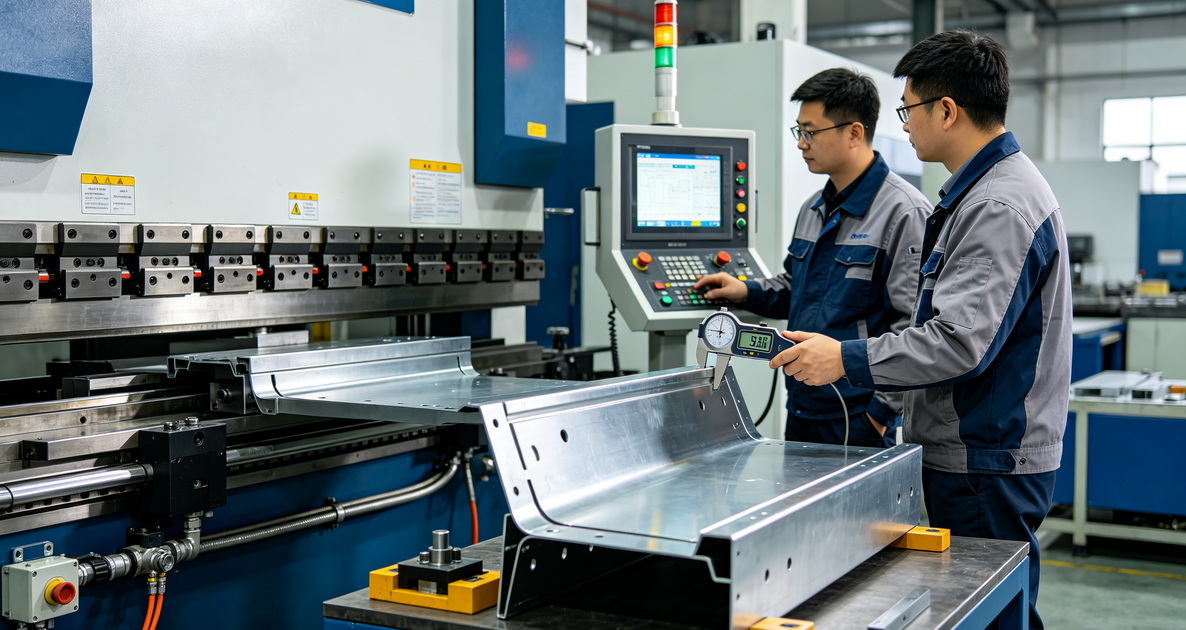
Whenever the application is demanding, provide actual sheets from your intended production material. This is especially important for:
- High-tensile steel.
- Stainless steel with cosmetic surface requirements.
- Aluminum with marking sensitivity.
- Thick plate.
- Long panels.
- Complex box profiles.
- Parts with tight angular tolerances.
A sample bend is more informative than a generic machine demonstration.
The first spare-parts kit should be specified before the machine leaves China. Recommended items may include:
- Hydraulic seals.
- Filters.
- Fuses and relays.
- Limit switches.
- Sensors.
- Encoder-related components, where applicable.
- CNC backup media or software files.
- Critical electrical contactors.
- Foot-pedal components.
- Lubrication items.
- Tool clamps or wear parts.
The exact list should match the machine configuration and local availability of components.
CNC press brakes are heavy, high-value cargo. Buyers should clarify:
- FOB, CIF, DDP, or other Incoterm.
- Port of loading.
- Container type.
- Whether the machine fits a standard container, open-top container, flat rack, or breakbulk shipment.
- Export packing material.
- Anti-rust treatment.
- Moisture protection.
- Lashing and securing method.
- Marine insurance.
- Destination-country import duty and customs requirements.
- Local unloading equipment and crane capacity.
China remains a strategically important sourcing destination for CNC press brake machines because it combines manufacturing scale, mature sheet-metal equipment clusters, configurable product options, and a broad range of supplier types. The best sourcing outcome comes from matching the supplier's real capabilities to your technical requirements—not from choosing the lowest quotation or the most polished catalog.
For buyers seeking a flexible China-based partner, Maanshan Deyan Precision Machinery Technology Co., Ltd. (CNDY-Press) is worth considering for CNC press brakes and related sheet-metal processing equipment, particularly where OEM/ODM support, customized configurations, responsive communication, and integrated equipment sourcing are important. CNDY-Press states that it supports customized production and OEM/ODM projects across CNC press brakes, laser cutting machines, CNC shearing machines, plate rolling machines, and grooving machines.
Before placing an order, prepare a complete technical specification, validate the proposed machine with a sample-bending test, review compliance documents, conduct a factory audit, define the factory acceptance test, and put service obligations into the contract.
Ask for the full certificate, not a cropped image. Check the certificate number, issuing certification body, scope of certification, company legal name, factory address, issue date, and expiry date. Then contact the issuing certification body or use its online verification system if available. Also confirm that the certificate applies to the manufacturing entity—not an unrelated affiliate or trading company.
Not necessarily. A CE mark should be supported by a machine-specific Declaration of Conformity, applicable legal references, safety documentation, manuals, risk assessment, and appropriate technical records. Buyers should consult a qualified compliance professional for their destination market and machine application, especially where automation, robotic loading, guarding changes, or custom integrations are involved.
Provide the material type, tensile strength, sheet thickness, maximum bend length, desired bend radius, part drawings, annual output, acceptable angle tolerance, available power supply, destination country, and preferred controller. Without this information, suppliers may quote a generic machine that does not match real production needs.
Ask the supplier for a written bending-force calculation based on your exact material, thickness, bend length, die opening, and tensile strength. Check whether the calculation includes a realistic safety margin. For long parts or tight tolerances, also assess frame deflection, crowning, tooling, and off-center loading limits.
The answer depends on machine utilization, downtime cost, local technical capability, and spare-parts access. For occasional fabrication, a cost-controlled configuration may be appropriate. For high-throughput production, automotive supply chains, export fabrication, or operations with expensive downtime, investing in reliable CNC controls, hydraulic components, safety systems, and documented service support may reduce lifecycle cost.
1. CNDY-Press, "About Us" — company product scope, OEM/ODM positioning, applications, and Maanshan location. [cndypress]
2. China Machine Tool & Tool Builders' Association / China Machinery Industry Federation, "2025 Annual Economic Operation Report of the Machine Tool Industry" — industry revenue and China Customs import/export data. [60.205.228]
3. China State Council / China Government Network, "China's Machinery Industry Sees Robust Growth During 14th Five-Year Plan Period" — machinery-sector scale and enterprise figures. [english.www.gov]
4. Grand View Research, "Machine Tools Market Size, Share & Trends Report, 2026–2033" — global market estimates and CNC technology share. [grandviewresearch]
5. Association For Manufacturing Technology, "China Posts Record Auto and Machine Tool Output" — 2025 machine-tool trade data and international market context. [amtonline]


