


Views: 222 Author: CNDY-Press Publish Time: 2026-05-16 Origin: Site


Fiber laser cutting is usually the more cost‑effective choice for thick metal plate in 2026, but waterjet still wins in certain niche scenarios where extreme thickness, mixed materials, or zero heat input are non‑negotiable. [ivycnc]
If you run a fabrication shop in 2026, the choice between fiber laser and waterjet for thick plate is no longer just a technology question; it is a profit and risk‑management decision. From my experience helping metal fabricators evaluate new lines and from CNDY‑Press project feedback on OEM/ODM builds, I see shops miscalculate total cost of ownership far more often than they misread machine specs. This article walks through real‑world economics, process capability, and strategic trade‑offs, so you can decide whether a high‑power fiber laser or a waterjet delivers the better long‑term value for your thick‑plate work. [adhmt]
Understanding the physics behind each process helps explain why costs and capabilities diverge so sharply. [proleantech]
A fiber laser cutting machine focuses high‑density laser energy through a fiber optic cable and cutting head to melt and eject material along a programmed path. Modern high‑power systems (12–30 kW) can cut carbon steel plates over 40 mm with the right optics, nozzles, and assist gases. For OEM/ODM lines, builders like CNDY‑Press integrate automatic loading, high‑pressure air or nitrogen cutting systems, and real‑time monitoring to sustain production‑grade speed. [primafiberlaser]
Key process characteristics:
- High cutting speeds on metals, especially steel and stainless. [rapiddirect]
- Heat input creates a heat‑affected zone (HAZ) and possible micro‑hardening. [zintilon]
- Best suited to metals and some engineering plastics; not ideal for very thick non‑metals. [zintilon]
A waterjet accelerates water to ultra‑high pressure (typically 3,800–6,000 bar) through a small orifice; abrasive grains (like garnet) are added to cut thick and hard materials. Because the process is purely mechanical erosion, it introduces virtually no heat into the workpiece. [proleantech]
Key process characteristics:
- Cuts almost any material: metal, stone, glass, composites, and layered stacks. [zintilon]
- Produces a very small or zero HAZ, preserving base material properties. [rapiddirect]
- Cutting speeds are significantly slower than high‑power fiber lasers on steel. [ivycnc]
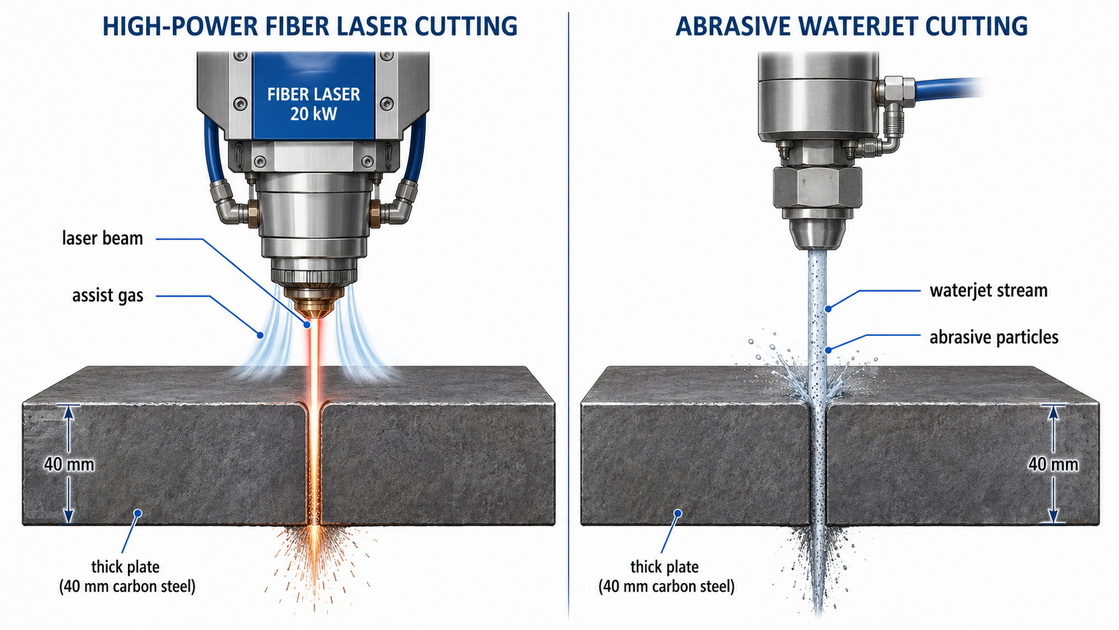
From a pure capability standpoint, both technologies can cut thick plate, but their sweet spots differ. [proleantech]
- Fiber laser:
- Practical production thickness: up to around 40–50 mm carbon steel with high‑power sources and optimized cutting parameters. [adhmt]
- Beyond this range, cutting speed drops sharply and edge quality becomes more sensitive to setup. [ivycnc]
- Waterjet:
- Commonly used for 50–150 mm metals and thick non‑metals, with acceptable speeds for low‑volume or high‑value parts. [zintilon]
- Capable of even greater thickness if cycle time is acceptable. [proleantech]
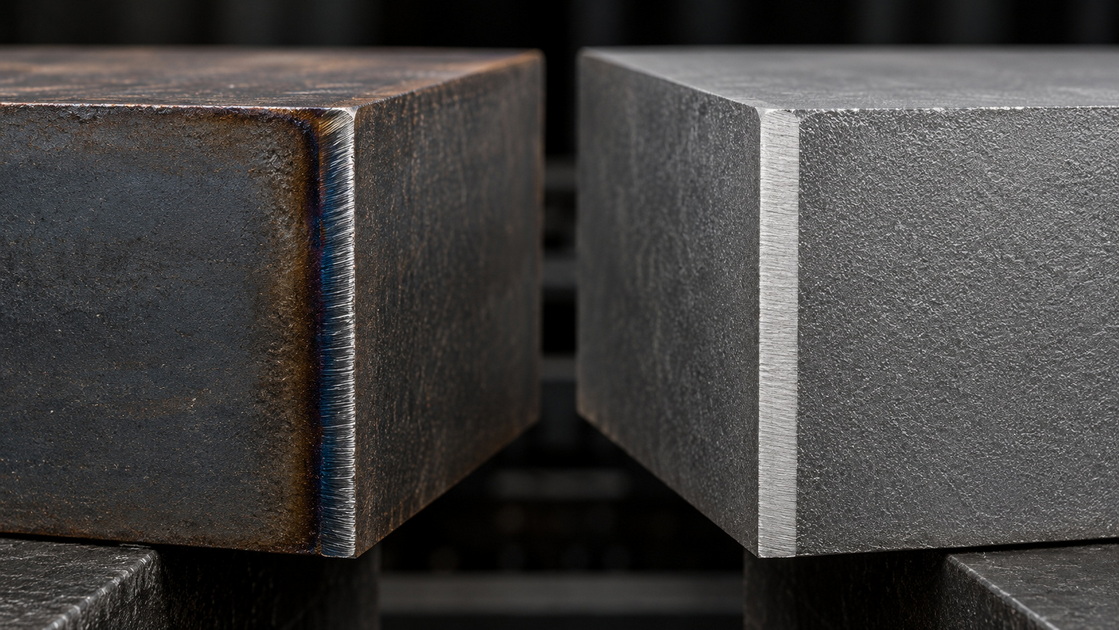
Fiber laser advantages:
- Excellent for mild steel, stainless steel, aluminum, and many non‑ferrous metals. [rapiddirect]
- Ideal when parts will go directly to bending, welding, and powder coating in a steel‑focused fabrication workflow. [lantek]
Waterjet advantages:
- Handles metals plus stone, ceramics, glass, composites, and material stacks without tool changes. [zintilon]
- Near‑zero HAZ preserves the microstructure for high‑alloy steels, hardened parts, and aerospace components where heat input is restricted. [rapiddirect]
From a 2026 cost‑benefit perspective, you should consider capital cost, consumables, energy, labor, and secondary operations. [ivycnc]
Industry price ranges vary, but market data and published manufacturer examples show that: [goldenfiberlaser]
- A high‑power fiber laser line with automation often requires a higher upfront investment than a basic waterjet, but it can replace multiple older machines if utilization is high. [adhmt]
- A waterjet system typically has lower laser‑class safety and optics costs but needs high‑pressure pumps, intensifiers, and robust plumbing. [proleantech]
In my experience supporting OEM/ODM projects, shops that run 2–3 shifts on thick steel plate often recover fiber laser investment faster because throughput is the main driver of payback, not just purchase price. [goldenfiberlaser]
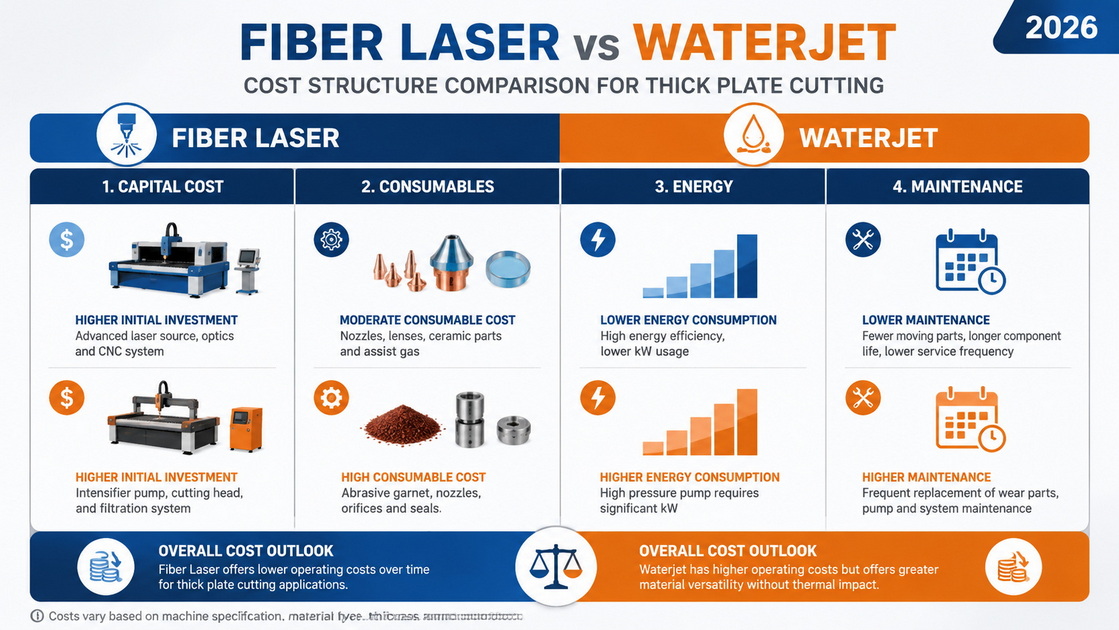
Fiber laser operating cost drivers: [adhmt]
- Assist gases: oxygen, nitrogen, or high‑pressure air.
- Nozzles, lenses, protective windows.
- Electricity consumption, which increases with power level but is relatively efficient per cut length.
Waterjet operating cost drivers: [ivycnc]
- Abrasive garnet, which can represent a major share of cost per part.
- Pump maintenance, seals, and orifices at very high pressure.
- Water consumption and, in some regions, wastewater treatment or disposal.
Recent comparison studies and vendor calculations show that per‑meter cutting costs for thick steel are often lower with fiber lasers when the part fits within the laser's thickness and tolerance envelope. However, for very thick or exotic materials, waterjet may still be cheaper overall because it eliminates thermal distortion and reduces secondary machining. [adhmt]
Multiple independent guides comparing laser and waterjet cutting show that fiber lasers typically deliver much higher cutting speeds on metal. In a typical workshop: [rapiddirect]
- Fiber laser cuts thick steel plate at speeds several times faster than waterjet in the same thickness range, even when using conservative parameters for edge quality. [ivycnc]
- Waterjet slows significantly with thickness and can become the bottleneck in high‑volume production, especially on single‑material steel jobs. [proleantech]
For CNDY‑Press customers focused on steel fabrication, this speed difference often turns into one laser replacing multiple slower cutting processes such as plasma plus mechanical finishing. [lantek]
Both technologies can achieve tight tolerances when properly set up. [zintilon]
- Fiber laser offers very fine kerfs and excellent repeatability, but thick sections may show slight taper, HAZ, and dross if parameters are not optimized. [zintilon]
- Waterjet typically provides a smooth edge with minimal burrs and no HAZ, but may show a small taper or striation lines at higher cutting speeds. [proleantech]
If your downstream process includes machining critical surfaces, the reduced thermal impact of waterjet may shorten machining time on aerospace‑ or energy‑grade parts. For general structural steel and fabrication, properly tuned fiber lasers deliver more than adequate edge quality with minimal post‑processing. [adhmt]
Beyond headline numbers, you should evaluate the entire life cycle of each technology. [rapiddirect]
Fiber laser cutting for thick plate tends to be more cost‑effective when:
1. Your core business is metal fabrication. Most of your revenue comes from steel, stainless, and aluminum parts. [lantek]
2. You run medium to high volumes. High productivity allows the machine to earn its keep quickly. [ivycnc]
3. You value automation. Integrating loading/unloading, pallet changers, and smart nesting software maximizes uptime. [goldenfiberlaser]
4. You have reliable power and gas infrastructure. This keeps per‑part costs predictable. [adhmt]
Under these conditions, the combination of speed and relatively low consumables often makes fiber lasers a "profit engine" for thick‑plate metal shops. [adhmt]
Waterjet continues to be the better option when:
1. You need extreme material flexibility. You cut metals plus stone, ceramics, glass, composites, or laminated stacks. [zintilon]
2. Thermal distortion is unacceptable. Aerospace, medical, or energy applications may restrict any HAZ. [rapiddirect]
3. You work with ultra‑thick materials. Thick plate beyond practical laser limits, especially when volume is low but precision is high. [proleantech]
4. You offer job‑shop flexibility. Customers bring unpredictable materials that lasers cannot process safely. [ivycnc]
If your business model revolves around specialty materials and low‑volume, high‑value orders, waterjet's versatility outweighs its slower cutting speed. [zintilon]
| Factor | Fiber laser for thick plate | Waterjet for thick plate |
|---|---|---|
| Core materials | Metals only or mostly metals (zintilon) | Almost any material mix (zintilon) |
| Typical thickness sweet spot | Up to ~40–50 mm steel (adhmt) | 50–150 mm and exotic materials (zintilon) |
| Cutting speed | Very high on metals (ivycnc) | Much slower on metals (ivycnc) |
| HAZ | Present, manageable (zintilon) | Nearly zero (zintilon) |
| Per‑part cost (steel) | Usually lower at volume (ivycnc) | Higher due to abrasive (ivycnc) |
| Material flexibility | Limited compared to waterjet (zintilon) | Excellent versatility (zintilon) |
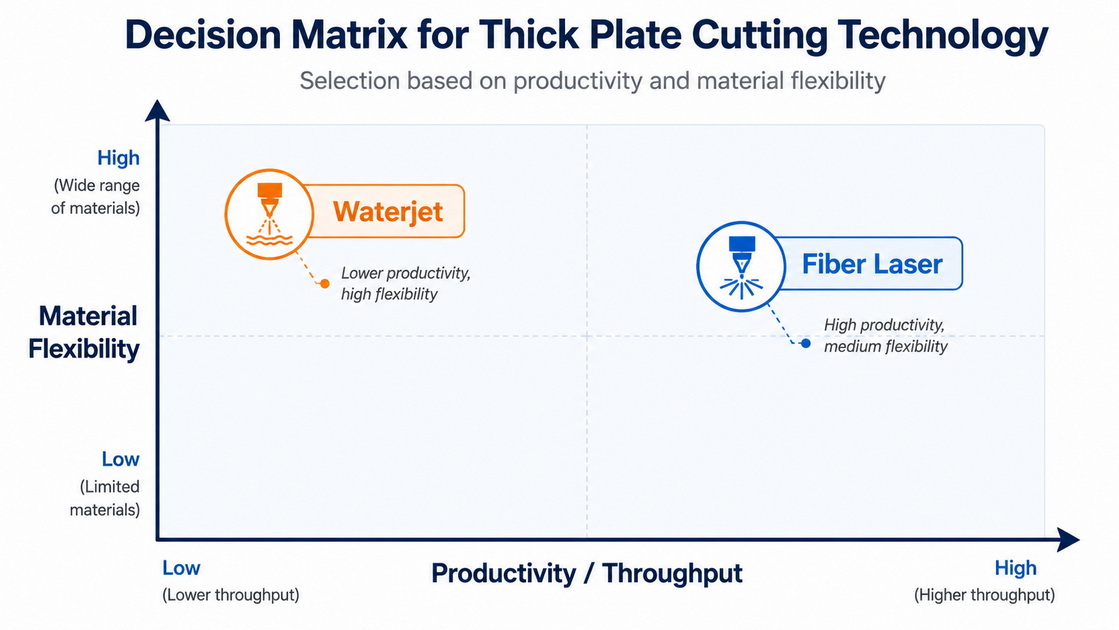
In the last few years, several in‑depth comparison articles and application notes from machine builders and fabrication service providers have converged on similar conclusions. [rapiddirect]
Industry experts emphasize three recurring themes: [ivycnc]
- Do not compare only "can it cut?" speeds. Production‑grade speeds for your specific material and thickness are what drive profitability. [adhmt]
- Factor in maintenance and downtime. Waterjet pumps and intensifiers require disciplined maintenance; fiber lasers need optics protection and regular service, but generally show high uptime in clean environments. [proleantech]
- Train operators for both process and software. Nesting, parameter management, and fixture design often deliver more savings than minor hardware tweaks. [ivycnc]
Some published guides share data points like 20–30% savings from bulk consumables purchasing and up to 25% reduction in material waste with proper operator training and nesting strategies. These numbers align with what OEM/ODM integrators see when customers upgrade from older cutting lines to modern automated systems. [goldenfiberlaser]
Before committing to fiber laser or waterjet as your primary thick‑plate technology, ask:
- What are the top three materials and thickness ranges that drive our revenue? [proleantech]
- Is our competitive edge based on speed, flexibility, or special materials? [zintilon]
- Can we realistically run enough hours to justify a high‑power fiber laser line? [goldenfiberlaser]
- Do our key customers have strict HAZ or surface integrity requirements? [rapiddirect]
Using these questions alongside cost models from your equipment vendors will give you a much clearer view of long‑term ROI. [rapiddirect]
As a manufacturer focused on fiber laser cutting machines and complete sheet‑metal processing lines, CNDY‑Press typically recommends high‑power fiber laser solutions for customers whose core business is thick steel plate. OEM and ODM projects often combine custom welding, automation, and control integrations to match specific workflows rather than selling a "one‑size‑fits‑all" machine. [goldenfiberlaser]
For example, when a fabricator primarily cuts 20–40 mm carbon steel but occasionally handles ultra‑thick or special materials, one effective strategy is: [adhmt]
- Install a high‑power fiber laser line as the main production engine.
- Maintain or outsource waterjet capacity for exceptional jobs that require cold cutting or special materials. [lantek]
This hybrid approach matches what many industry experts describe: laser and waterjet are not always direct competitors but often complementary technologies within a modern fabrication ecosystem. [lantek]
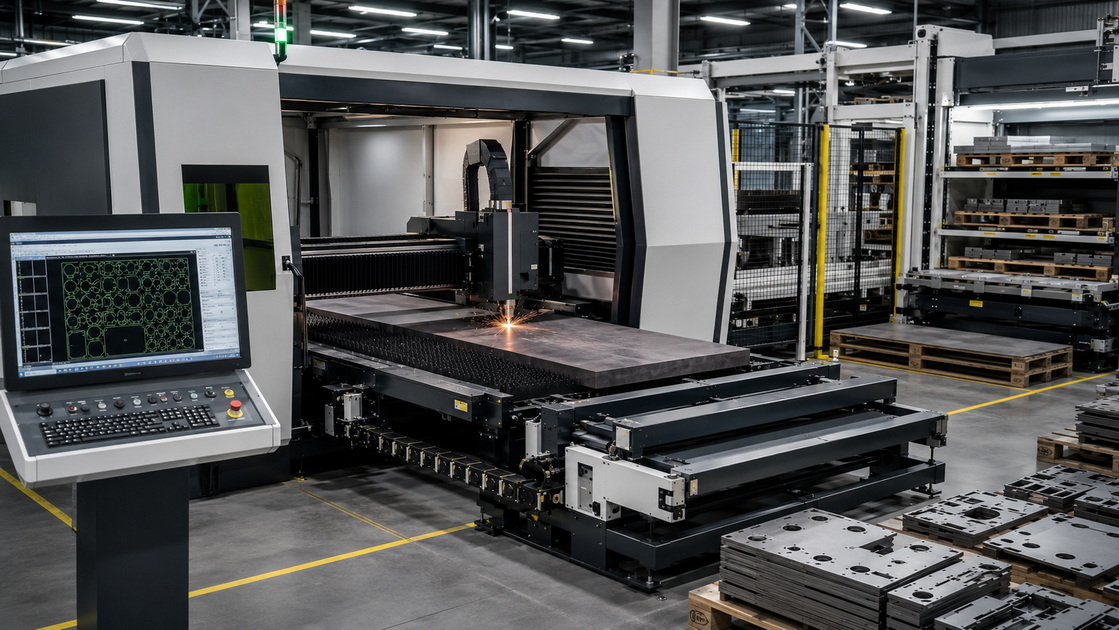
If you are evaluating thick‑plate cutting investments for 2026, your decision should balance throughput, material mix, quality requirements, and total cost of ownership. Fiber laser is usually the most cost‑effective choice for metal‑focused, high‑volume production, while waterjet remains critical for special materials and ultra‑thick or heat‑sensitive work. [ivycnc]
Ready to model your own business case?
Share your typical materials, thickness ranges, monthly cutting hours, and current bottlenecks, and CNDY‑Press can help simulate a cost‑benefit scenario for a custom fiber laser solution—including OEM/ODM adaptations—to see how quickly a 2026‑ready line can pay for itself. [goldenfiberlaser]
1. Is fiber laser always cheaper than waterjet for thick plate?
Not always. Fiber laser usually offers lower per‑part costs on standard steel plate within its practical thickness range, but waterjet can be more economical for very thick or specialized materials where laser requires extra machining or causes unacceptable thermal effects. [zintilon]
2. What fiber laser power do I need for 30–40 mm steel?
Many manufacturers recommend high‑power fiber lasers (often 12 kW or above) with appropriate cutting heads and assist gas systems to achieve production‑grade speeds on 30–40 mm carbon steel. Exact requirements depend on your edge quality targets and throughput needs. [primafiberlaser]
3. Can a waterjet replace a fiber laser in a steel‑focused shop?
A waterjet can technically cut steel plate, but its slower cutting speeds and ongoing abrasive costs often make it less competitive as the primary process in a high‑volume, steel‑only workshop. It is better positioned as a complementary technology for special jobs. [lantek]
4. How does HAZ impact downstream processes?
Fiber laser's HAZ can slightly change hardness or microstructure near the cut edge, which may affect machining, bending, or fatigue life in highly critical parts. For general fabrication, proper parameters minimize these effects, while waterjet's cold cutting eliminates them entirely. [proleantech]
5. What about environmental and safety considerations?
Fiber lasers require laser safety measures and fume extraction but generate relatively little waste beyond dust and small dross. Waterjets require safe handling and disposal of abrasive‑laden water, as well as strict management of high‑pressure components, but do not produce fumes or HAZ. [rapiddirect]
1. IVYCNC. "Laser vs Water Jet Cutting: A Comprehensive Comparison Guide."
Technical overview comparing laser and waterjet cutting on speed, cost per part, material range and edge quality for industrial metal fabrication. [engineering]
2. ADH Machine Tool. "Fiber Laser Cutting vs. Waterjet Cutting – A Comprehensive Comparison."
In‑depth article detailing thickness ranges, productivity, investment cost and operating expenses for fiber laser and waterjet systems. [shop.adhmt]
3. Esprit Automation. "Fiber Laser vs Waterjet: Which Is Best?"
Practical guide for fabricators explaining where fiber laser or waterjet is more suitable based on material type, sheet thickness and tolerance requirements. [espritautomation]
4. MITechNews / TECHNI Waterjet. "Waterjet vs. Fiber Laser Cutting: Choosing the Best Method for Precision Manufacturing."
Explores precision, tolerance, speed and cost implications of waterjet and fiber laser cutting in automotive, aerospace and other precision industries. [mitechnews]
5. Arcus CNC. "Laser vs Waterjet: Which Method Is Best for Thick Metal Plates?"
2025 article focusing on thick‑plate cutting, comparing speed, achievable thickness, edge quality, cost per hour and typical use cases for each process. [arcuscnc]
6. Engineering.com. "Cutting Process Options: Fiber Laser vs. Water Jet."
Technical comparison of fiber laser and waterjet cutting technologies, covering process principles, material capability and typical industrial applications. [engineering]
7. Kimla. "Fiber Laser or Waterjet?"
Manufacturer guide providing indicative thickness ranges, power levels and speed ratios between fiber laser and waterjet for different metals. [kimla]
8. Fortune Laser. "Laser and Waterjet Cutting Technologies: A 2025 Technical Guide for Engineers and Fabricators."
Data‑driven analysis of speed, cycle times and throughput differences between high‑power fiber lasers and abrasive waterjets. [fortunelaser]
9. Ultima Metals. "Comparing Cutting Technologies: Fiber Laser, Waterjet, and Plasma."
Industry article positioning fiber laser and waterjet within the broader landscape of metal cutting options and explaining when each technology is most cost‑effective. [ultimametals]
10. Southern Fab Sales. "Waterjet vs Fiber Laser: Which Process Is Right for You?"
Buyer‑oriented explanation of pros and cons, maintenance needs and capital considerations for shops choosing between waterjet and fiber laser equipment. [southernfabsales]


