


Views: 249 Author: CNDY-Press Publish Time: 2026-10-18 Origin: Site


Content Menu
● Automated Press Brake vs Standard CNC Press Brake: The Main Difference
● Why Faster Bending Does Not Automatically Mean Higher Output
>> Ram Speed Is Only One Part of the Cycle
>> The Real Bottleneck May Be Elsewhere
● Which Parts Are Good Candidates for Automated Bending?
>> Evaluate Handling Before Batch Size
>> High Mix Does Not Automatically Rule Out Automation
● When a Standard CNC Press Brake Is the Better Investment
>> The Workload Changes Frequently
>> Handling Is Difficult to Standardize
>> Demand Does Not Support Additional Capacity
● When Press Brake Automation Becomes Worthwhile
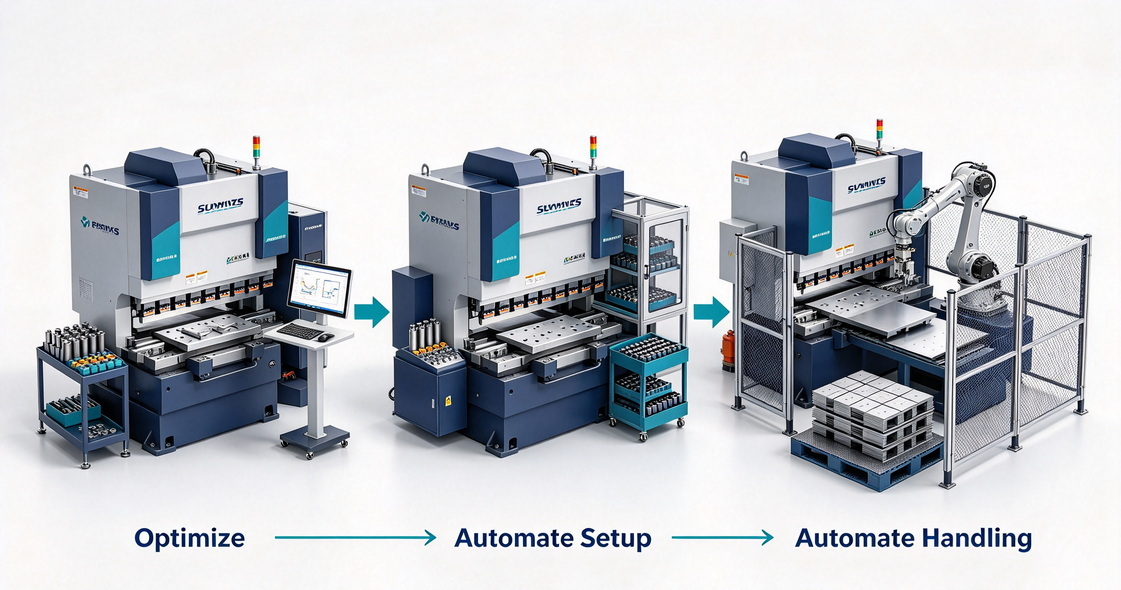
● An Intermediate Option: Automate Setup Before Handling
● How to Calculate Press Brake Automation Payback
>> Compare Incremental Investment
>> Count Benefits That Can Actually Be Realized
>> Use a Transparent Illustrative Calculation
● "Unattended" Time That Needs Frequent Intervention
● Safety Must Be Evaluated at Cell Level
● A Practical Acceptance Plan Before Ordering
>> 1. Build a Representative Part Portfolio
>> 2. Agree on Quality and Throughput
>> 3. Verify Programming and Changeover
>> 4. Assess Support and Ownership
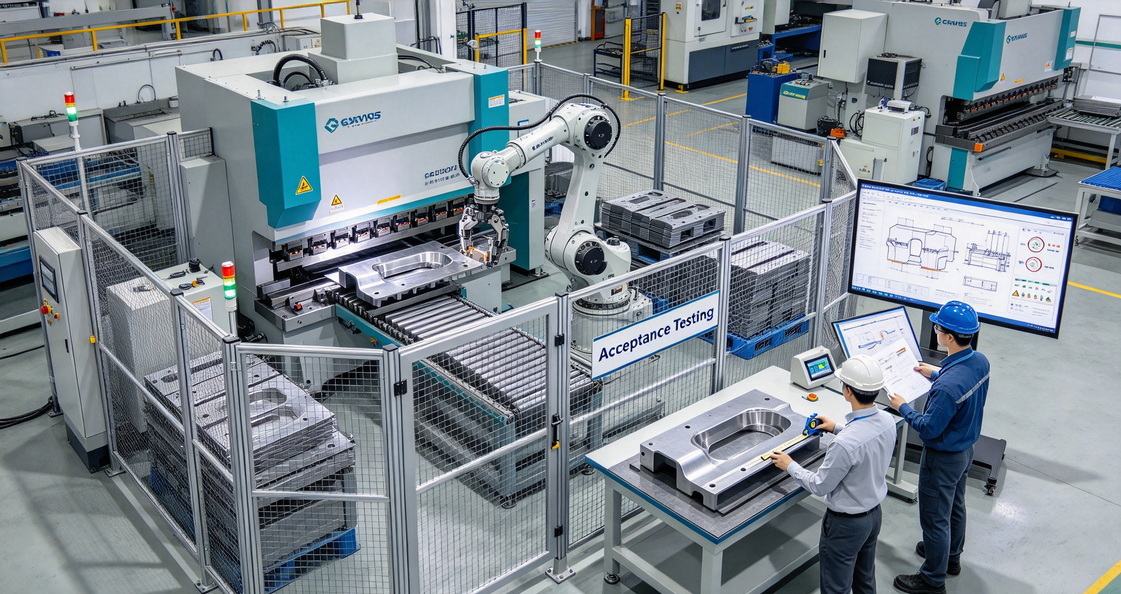
>> 5. Plan Factory and Site Acceptance
● How CNDY-Press Can Support the Decision
>> 1. Is an automated press brake always faster?
>> 2. Can small batches justify automated bending?
>> 3. Can my existing CNC press brake be automated?
>> 4. Does automation eliminate skilled labor?
>> 5. What is the most important acceptance requirement?
The automated press brake vs standard CNC press brake decision depends on your part mix, handling requirements, available labor, and realistic production demand. Automation becomes attractive when it can deliver repeatable, saleable output with less operator involvement—not simply when a robot completes an impressive demonstration.
A standard CNC press brake often remains the better choice for unpredictable jobs, frequent engineering changes, and parts requiring flexible manual handling. An automated bending cell becomes more compelling when enough suitable work can keep the complete system productive.
My recommendation is to evaluate utilization before purchasing equipment. A capable cell with insufficient eligible work can be a poor investment, while a well-matched system can improve capacity, consistency, and workforce deployment.
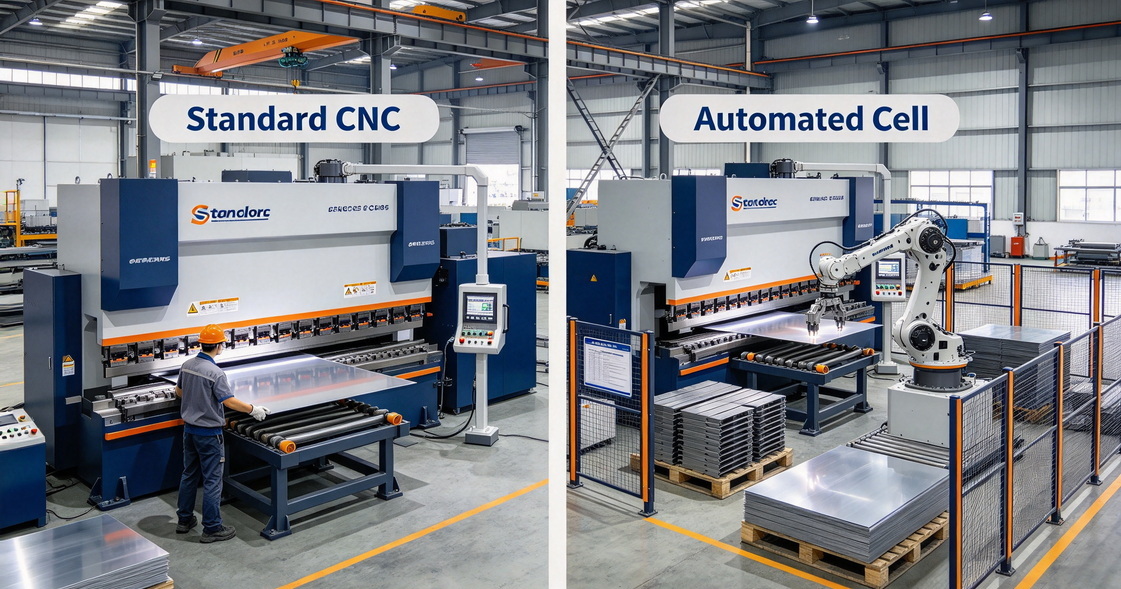
Both systems can use CNC controls. The distinction is how much of the surrounding bending process is automated.
A standard CNC press brake typically controls ram movement, backgauges, and other programmed functions while an operator loads, positions, turns, and unloads the workpiece.
An automated press brake system may additionally manage:
- Blank loading and separation.
- Part positioning and reorientation.
- Gripper changes.
- Tool changes.
- Finished-part unloading and stacking.
- Program scheduling.
Not every automated system includes all these functions. Define the proposed scope before comparing quotations.
| Comparison factor | Standard CNC press brake | Automated press brake system |
|---|---|---|
| Part handling | Primarily operator-managed | Robot or dedicated handling equipment |
| Initial investment | Generally lower for comparable bending capability | Higher once integration and supporting equipment are included |
| Job flexibility | Strong for changing or unfamiliar work | Depends on programming, tooling, and gripping capability |
| Operator requirement | Usually continuous involvement during bending | Lower direct handling, but supervision and support remain |
| Setup | Operator-led or partly automated | Can include automatic tooling and gripper changes |
| Production consistency | Depends on machine, process, material, and operator | Can standardize handling, but does not remove material variation |
| Floor-space needs | Machine plus safe working and handling space | May require loading, stacking, guarding, and service areas |
| Best evaluation basis | Good parts per staffed production period | Good parts across the complete operating cycle |
A production cycle includes more than the bending stroke.
Time may be spent finding blanks, separating sheets, orienting parts, changing tools, measuring results, clearing finished products, and correcting problems.
Automation can reduce some of these losses. However, a robot may need additional regripping or intermediate positioning that an experienced operator performs differently.
Compare complete cycles using representative parts. A higher advertised ram speed does not establish a faster production process.
A bending cell cannot create useful throughput if cutting cannot supply suitable blanks or downstream welding cannot absorb the output.
Excess work-in-progress can occupy space and complicate scheduling without improving shipments.
Before automating, map the flow from blank preparation through finished-part delivery. Determine whether bending is genuinely constraining production.
A repeat order is not automatically an automation-ready order.
Suitable parts must fall within the proposed cell's capabilities for:
- Weight, dimensions, and center of gravity.
- Gripper access.
- Surface condition.
- Bend sequence.
- Reorientation.
- Tool clearance.
- Finished-part stacking.
Thin flexible blanks, difficult gripping surfaces, and awkward geometries may require specialized engineering.
Ask the supplier to evaluate the actual drawings and material samples—not just a photograph of the finished component.
Automatic tool changes, adjustable gripping systems, and programming tools can make some smaller-batch work more practical.
However, their value depends on how often setups change and how much preparation remains outside the machine.
The relevant question is not simply, "How many pieces are in each batch?"
Ask instead, "How much repeatable work can this system process across our actual job schedule?"
A standard CNC machine can suit prototyping, repair work, engineering changes, and unpredictable orders.
An experienced operator may accommodate unfamiliar shapes without the same level of robotic handling preparation.
This flexibility matters when the production schedule contains many jobs that are unlikely to repeat.
Some parts require unusual support, frequent visual checks, or handling that does not justify dedicated automation engineering.
Manual operation is not automatically inefficient. The appropriate choice depends on the cost of achieving a reliable process.
A company should not purchase theoretical capacity without a credible plan to use it.
If the existing machine already meets delivery requirements, improving programming, tooling organization, and material flow may be the more economical first step.
Automation deserves closer evaluation when several conditions occur together:
1. Enough suitable parts repeat across the year.
2. Direct handling consumes substantial production time.
3. Staffing limits available operating hours.
4. Upstream blank quality is consistent.
5. Programming and process support are available.
6. Downstream operations can use the additional output.
7. The financial case remains acceptable under conservative assumptions.
There is no universal annual volume or batch-size threshold. A small part family running frequently may justify automation better than a large one-time order.
The choice is not always "manual machine or fully robotic cell."
Potential intermediate steps include:
- Offline programming.
- Tool setup optimization.
- Automatic tool changing.
- Improved part support.
- Material presentation improvements.
- Automation-ready interfaces.
A supplier-published agricultural machinery example describes a phased approach: one press brake received automatic tool changing, while another used detachable bending automation.
The useful lesson is the investment strategy, not a guaranteed financial result. Different machines can perform different roles within the same production system.
A staged approach can reduce commitment, but only if future compatibility is technically defined.
If you are choosing between two new machines, compare the automated solution's additional cost over the standard CNC alternative.
Include more than the robot:
- Grippers and change stations.
- Loading and unloading equipment.
- Tooling.
- Guarding and integration.
- Software and programming.
- Installation and training.
- Acceptance testing.
- Production ramp-up.
If the standard machine is already owned, use the appropriate upgrade or replacement baseline.
Potential benefits include reduced paid overtime, lower outsourcing costs, reduced scrap, or additional profitable sales.
Freed operator hours are valuable, but they are not automatically cash savings. Identify whether those hours reduce expenditure or support useful redeployment.
Likewise, additional capacity has financial value only if demand and downstream resources can convert it into contribution.
Suppose the automated option requires an additional US$180,000.
If verified annual benefits are US$85,000 and additional annual operating costs are US$25,000:
Annual net benefit=85,000−25,000=60,000
Simple payback=180,000÷60,000=3 years
These figures are illustrative—not a quotation, industry average, or promised result.
Simple payback excludes financing, tax, discounting, and residual value. Larger investments should also receive a discounted cash-flow assessment.
Avoid counting the same gain twice as both labor savings and output value without explaining the relationship.
A cell may bend a demonstration batch successfully while requiring frequent assistance during a real shift.
Possible interruptions include blank separation problems, inconsistent pickup, unsuitable stacking, material variation, and recovery after a stoppage.
My recommended acceptance metric is good output over a defined operating window—not the fastest demonstrated cycle.
The test should include:
- The intended part mix.
- Normal blank presentation.
- Job transitions.
- Finished-part handling.
- Required inspection.
- Documented operator interventions.
- Recovery time after agreed test interruptions.
Distinguish hands-off running time from scheduled availability and total productive time.
A compliant press brake and a separately documented robot do not automatically form a safe integrated system.
Risk assessment must address the complete application, including loading, grippers, tooling, guards, access, and foreseeable recovery tasks.
Programming, adjustment, maintenance, and fault recovery deserve particular attention because workers may enter areas normally separated during automatic operation.
Define responsibility for:
- Cell-level risk assessment.
- Safeguarding and interlocks.
- Emergency stopping.
- Energy isolation.
- Safe operating modes.
- Training and recovery procedures.
- Final validation.
Do not assume that using a collaborative robot eliminates application-specific safeguarding requirements.
Include routine production, difficult geometry, different materials, and relevant loading conditions.
Avoid selecting only the easiest parts.
Define dimensional tolerances, inspection methods, acceptable output, and how setup and interruptions are counted.
Separate first-off approval from sustained production testing.
Identify who creates programs, how revisions are controlled, and what skills the buyer must maintain.
Test realistic job transitions rather than assuming automatic tooling resolves every setup task.
Clarify software access, backups, spare grippers, critical components, remote support, and responsibility for faults involving multiple suppliers.
Factory testing should establish the agreed technical capability. Site testing should confirm installation, interfaces, utilities, and operation under the buyer's conditions.
Maanshan Deyan Precision Machinery Technology Co., Ltd., operating as CNDY-Press, provides CNC press brakes and related sheet-metal processing equipment, with stated OEM, ODM, and customized manufacturing services.
A useful starting point is a production brief covering parts, materials, schedules, staffing, and destination requirements.
Ask CNDY-Press to compare:
- A standard CNC configuration.
- A setup-focused improvement package.
- A defined automation proposal, where technically available.
Do not assume that every robot interface, integration service, or turnkey cell is included in its standard offering. Require a written scope identifying the machine builder, integrator, and service responsibilities.
A standard CNC press brake remains attractive for flexible work, uncertain demand, and applications requiring adaptable operator handling.
Automation becomes worthwhile when suitable recurring work, reliable material flow, realistic operating time, and measurable financial benefits support the additional investment.
Start with your actual production losses and part portfolio.
No. Handling, regripping, setup, and interruptions affect overall output. Compare good parts over a representative production window rather than ram speed or one ideal cycle.
Yes, where programming, tooling, gripping, and recurring demand make changeovers economical. There is no universal minimum batch size that applies to every system.
Possibly. Compatibility depends on controls, interfaces, safety architecture, physical access, machine condition, and integration feasibility. Obtain a machine-specific assessment.
No. Skills shift toward programming, setup, inspection, maintenance, scheduling, and recovery. Determine the required support workload before calculating labor benefits.
Require the system to produce agreed-quality parts over a realistic operating window using representative materials and job transitions. Document intervention frequency and recovery responsibilities.
1. TRUMPF. "Bending Machines." Official product overview distinguishing conventional CNC bending, automated cells, programming tools, and setup optimization. Supports the discussion of automation scope and intermediate investment options; product marketing claims were not treated as universal performance guarantees. [trumpf]
2. TRUMPF. "Automation for Bending Machines." Official descriptions of automatic tool changing and detachable handling automation. Supports the distinction between setup automation and complete robotic handling. [trumpf]
3. TRUMPF. "New TRUMPF Gripper Boosts Productivity for Automated Bending Processes." December 14, 2022. Manufacturer explanation of gripper preparation and smaller-batch automation considerations. Its reported capabilities are product-specific, not universal thresholds. [trumpf]
4. TRUMPF. "Flexible Bending: How CLAAS Is Embracing Automation in Agricultural Machinery." Supplier-published customer example describing phased investment in automatic tool changing and detachable bending automation. It is not independent evidence of a guaranteed payback period. [trumpf]
5. Occupational Safety and Health Administration. "OSHA Technical Manual, Section IV, Chapter 4: Industrial Robot Systems and Industrial Robot System Safety." Official guidance on task-based risk assessment, integration, operation, maintenance, and safeguarding. [osha]
6. Occupational Safety and Health Administration. "Robotics—Standards." Official reference explaining the relevance of robot integration, integrated manufacturing systems, and task-based risk assessment standards. Applicable editions and local requirements must be confirmed for the project. [osha]
7. Occupational Safety and Health Administration. "Robotics—Overview." Official guidance highlighting hazards during programming, maintenance, setup, adjustment, and other non-routine conditions. [osha]
8. Maanshan Deyan Precision Machinery Technology Co., Ltd. "About Us—CNDY-Press." Official source for the company's stated sheet-metal equipment manufacturing, customization, OEM/ODM, training, and maintenance capabilities. A specific turnkey robotic bending-cell capability was not independently established. [cndypress]


