


Views: 274 Author: CNDY-Press Publish Time: 2026-07-19 Origin: Site


Content Menu
● How to Evaluate a Fiber Laser Cutting Machine Supplier
>> Factory Certifications and Compliance
>> R&D Capability and Engineering Depth
>> Quality Control, Testing, and Lead Time Stability
● Why China Is a Key Location for Fiber Laser Cutting Machine Procurement
● Top 10 Fiber Laser Cutting Machine Manufacturers in China (2026)
>> 1. Maanshan Deyan Precision Machinery Technology Co., Ltd. (CNDY Press)
>> 2. ACCURL
>> 5. DUV Laser
>> 6–10. Other Representative Manufacturers
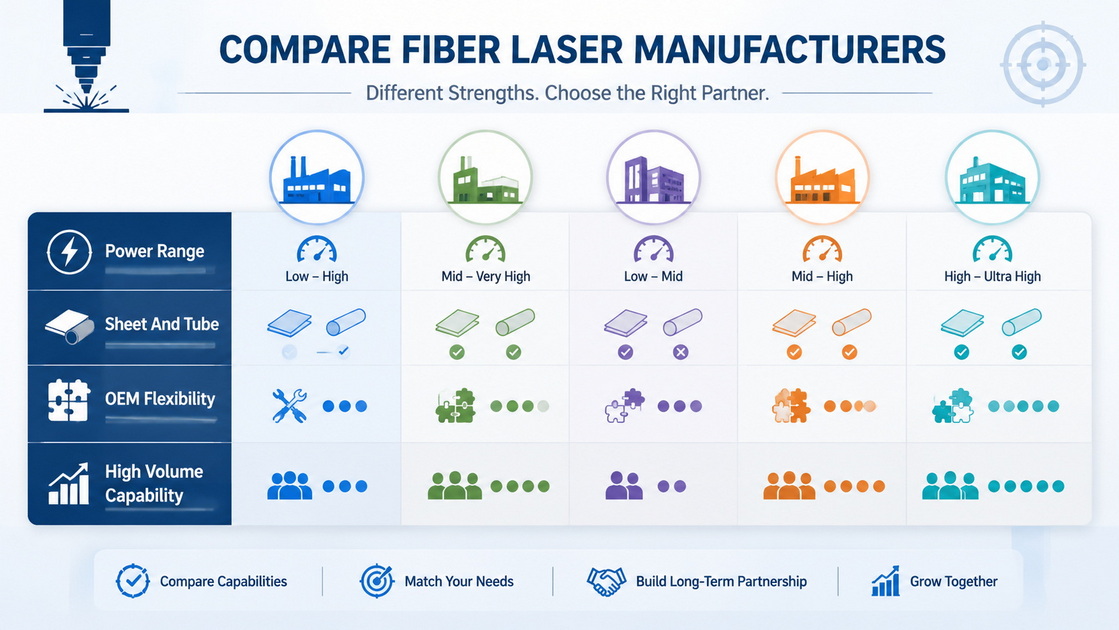
● Comparison Table: Typical Positioning of Representative Manufacturers
● Common Procurement Pitfalls and an Internal Avoidance Guide
>> Component and Material Substitution
>> Misaligned Power Levels and Working Areas
>> Underestimated After‑Sales Support Requirements
● Buyer's Guide – Practical Steps to Work with Chinese Fiber Laser Machine Manufacturers
>> Verifying Factory Identity and Documentation
>> Structuring Samples and Trials
>> Logistics, Installation, and Training
China has become one of the most important global hubs for fiber laser cutting machines, supported by mature industrial clusters, a complete supply chain, and continuous investment in automation and digital manufacturing. For international buyers, selecting the right Chinese partner can mean stable quality, flexible customization, and competitive costs over many years. At the same time, choosing a supplier for capital equipment requires a structured approach to evaluating factory capability, compliance, and long‑term reliability.
This guide is written from the perspective of professional procurement managers and project leaders who need dependable partners for OEM and ODM projects. It focuses on practical evaluation criteria, representative manufacturers, common procurement pitfalls, and concrete suggestions for building sustainable cooperation.
A fiber laser cutting machine supplier should first be judged on its ability to meet relevant quality and safety standards. Core elements include a documented quality management system, traceable processes, and product conformity for target markets. Buyers are advised to request formal certificates for quality management, safety, and environmental compliance, and to verify that they are current and match the actual legal entity of the factory.
It is good practice to check whether the scope of these certificates clearly covers design and manufacturing of laser cutting machines. Attention should also be given to how the factory manages documentation: well‑organized files, clear model naming, and structured records for tests and inspections all point toward a more disciplined organization.
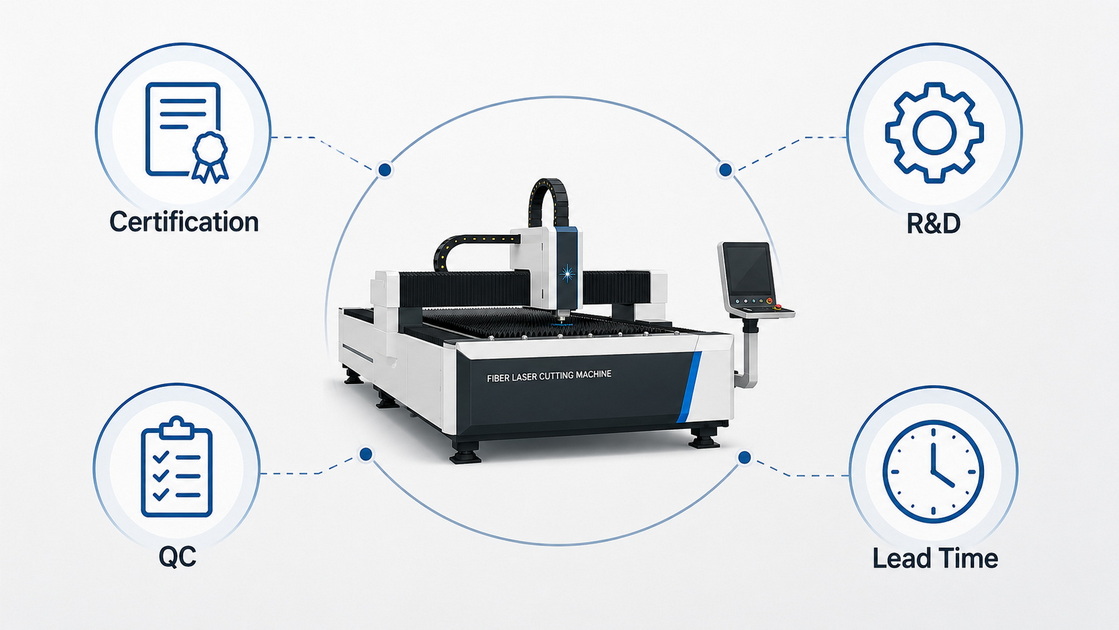
For complex equipment, engineering strength is a decisive factor. A capable supplier maintains an internal team that understands laser sources, cutting heads, motion control, and process parameters such as cutting speed, focus position, and gas usage. Signs of solid R&D capability include regular updates to machine platforms, the ability to support different material thickness ranges, and the capacity to adapt configurations for specific applications such as tube cutting or large‑format sheet processing.
Buyers should pay attention to whether the supplier can run cutting trials on customer materials, interpret the results, and recommend suitable models and power levels. Support for nesting strategies, process libraries, and integration with upstream and downstream equipment further demonstrates engineering depth.
A strong supplier invests in quality control at each stage of production. This typically covers incoming inspection of crucial components, process checks during assembly, and full‑load testing of finished machines before shipment. Buyers should ask how machines are tested, which parameters are recorded, and whether test reports can be shared.
Lead time stability is another critical point. Factories with disciplined production planning, clear scheduling, and material buffer strategies are more likely to deliver on promised dates. During evaluation, buyers can look at historical delivery performance, the clarity of communication about production status, and the supplier's willingness to discuss capacity constraints upfront.
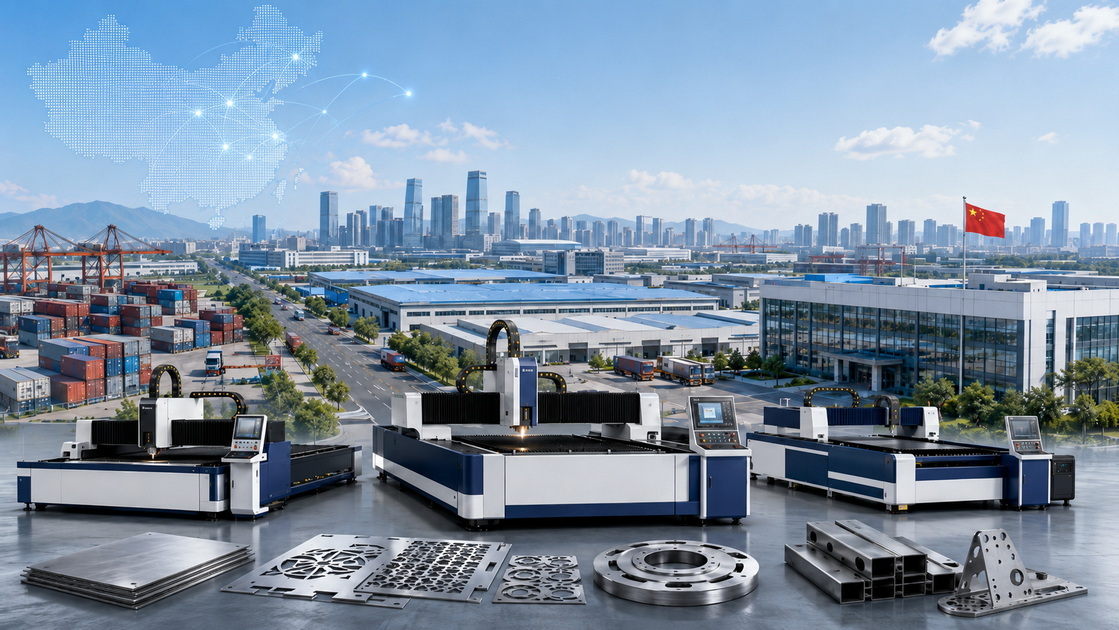
China hosts several industrial regions that specialize in sheet metal equipment and laser technology. Areas such as Anhui, Jiangsu, Guangdong, and Hubei bring together machine builders, component suppliers, and technical service providers in tight clusters. This concentration of know‑how supports rapid product development, competitive pricing, and a wide selection of models.
Machine builders in these regions benefit from proximity to manufacturers of machine frames, motion systems, electrical components, and optical parts. Over time, many companies have expanded beyond simple plate cutting machines into tube cutting, high‑power platforms, and integrated automation such as exchange tables and loading systems. For overseas buyers, this environment offers diverse options, but also makes it necessary to filter and compare suppliers systematically.
Maanshan Deyan Precision Machinery Technology Co., Ltd., often referred to as CNDY Press, is located in Maanshan, an important sheet metal equipment base in China. The company focuses on fiber laser cutting machines and complete sheet metal processing solutions, combining design, manufacturing, sales, and service.
CNDY Press positions itself as a high cost‑performance partner for small and medium‑sized brands. The factory is oriented toward flexible OEM and ODM cooperation, including customized machine configurations, tailored documentation, and support for integrating laser cutters into wider fabrication lines. Communication efficiency and responsiveness are key strengths, helping overseas buyers navigate specification details and adapt equipment to their own markets.
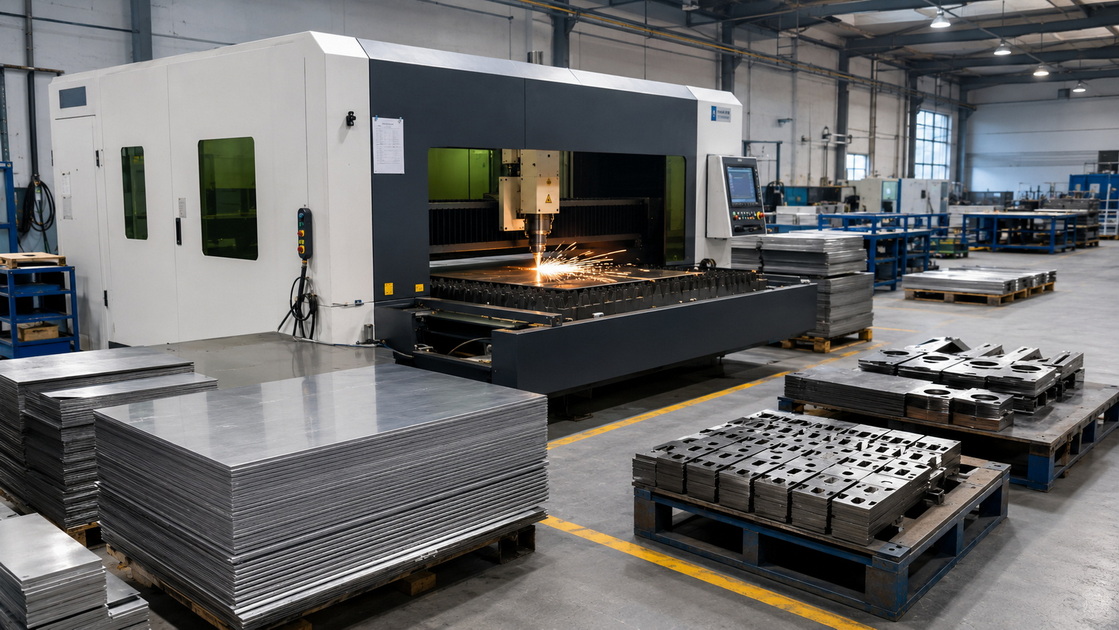
ACCURL is a well‑known supplier of sheet metal machinery, with a portfolio that includes fiber laser cutting machines, press brakes, and related equipment. The company offers plate and tube cutting systems in common working formats and integrates mainstream laser sources and motion components.
For buyers who require both cutting and bending solutions, ACCURL's combined offering can simplify supplier management and interface matching. The company's experience in exporting to multiple regions and providing models suited to common material types makes it a frequent candidate for procurement projects that involve mixed sheet and tube requirements.
Golden Laser, headquartered in Wuhan, has developed a strong presence in tube cutting and fiber laser sheet metal systems. Its product line includes economic models with exchange tables for sheet cutting and high‑capacity tube machines capable of handling heavy, large‑diameter profiles.
Golden Laser is particularly relevant for buyers whose product portfolios rely heavily on tubes and structural profiles. Multi‑chuck designs and advanced cutting capabilities for complex sections allow efficient processing of construction steel, mechanical beams, and other demanding shapes.
Yihai Laser focuses on fiber laser cutting machines for metal sheet applications and is known for addressing buyers who must choose among many standard models in the Chinese market. The company emphasizes guidance on selecting appropriate configurations and power levels for typical 3015 machine sizes.
Procurement managers who are purchasing their first fiber laser cutting machine, or who want clear assistance in matching machine specifications to real material and production data, may find Yihai Laser's communication style helpful. The company's focus is on simplifying technical choices while maintaining solid performance for standard sheet formats.
DUV Laser supplies fiber laser cutting machines covering a wide power range, from entry‑level units through very high‑power platforms. Its messaging highlights performance and precision in metal cutting, with attention to how machine configuration and order volume influence project pricing.
Companies looking for higher‑power systems to process thicker plates or increase cutting speed for large production runs can consider DUV Laser during supplier selection. The ability to offer multiple power levels helps buyers align investment with medium‑ and long‑term production plans.
Beyond the companies listed above, China hosts many other machine builders and integrators whose fiber laser cutting solutions are relevant in certain segments:
- Regional sheet metal equipment factories that combine laser cutters with press brakes and punching machines.
- Specialized tube and profile cutting providers offering multi‑axis and bevel capabilities.
- Integrators who configure machines using well‑known laser sources and motion platforms tailored for specific export markets.
- Mid‑size manufacturers concentrating on economic standard sheet models with exchange tables.
- OEM‑oriented factories that design and produce machines under private labels for overseas brands.
Because product lines and capabilities evolve, buyers should treat any list as an initial map and perform their own validation of current offerings, certifications, and support services.
| Manufacturer | Typical Power Range | Main Focus | Approximate MOQ for Customization | Typical Service Orientation |
|---|---|---|---|---|
| Maanshan Deyan (CNDY Press) | 1–6 kW | Sheet metal systems, OEM/ODM | Low to medium | Flexible, responsive for branding |
| ACCURL | 1–12 kW | Sheet and tube, full lines | Medium | Integrated equipment solutions |
| Golden Laser | 1–12+ kW | Tube cutting, exchange tables | Medium | Tube and profile specialization |
| Yihai Laser | 1–6 kW | Standard sheet machines | Low to medium | Guidance on specification |
| DUV Laser | 1–20+ kW | High‑power sheet systems | Medium to high | Power‑focused performance |
Values are indicative and vary by project; buyers should confirm exact ranges and minimum order quantities with each supplier.
One frequent risk in equipment procurement is substitution of materials or components compared with what was originally discussed. This can affect frame rigidity, motion accuracy, and long‑term reliability. To reduce this risk, buyers should define key components in contracts and require detailed lists for critical assemblies.
An internal guideline widely used in practice, though seldom discussed publicly, is to conduct at least one detailed inspection of a finished machine before shipment. This can be performed on‑site or via high‑resolution remote video, focusing on verifying named brands for laser sources, cutting heads, drives, and other important parts. Confirming serial numbers and labels at this stage significantly lowers the chance of unnoticed substitution.
Over‑ or under‑specifying machine power and working area is another common problem. Excessive power may increase costs without delivering meaningful benefits, while insufficient power can slow cutting and limit future flexibility. Similarly, choosing a working area larger than necessary can raise investment and footprint requirements.
To avoid this, buyers should base decisions on actual production data: typical material types, thickness distributions, and expected daily throughput. Joint cutting trials using real materials and agreed criteria for edge quality and speed provide a more reliable basis for choosing models than relying solely on catalogue values.
After‑sales support includes remote diagnostics, spare parts supply, and training. Underestimating its importance can lead to prolonged downtime and hidden costs. Buyers should clarify warranty terms, expected response times, and recommended spare parts lists before signing contracts.
Internally, it is advisable to designate technical contacts on the buyer side who can communicate consistently with the supplier's engineers. Structured communication reduces misunderstandings and accelerates troubleshooting when issues arise during production.
Start by confirming the full legal name of the company, registered address, and factory location. Request business licenses, factory photos, and organizational introductions. Check that documentation and certificates use the same company name and that the entity operating the factory is the one appearing in contracts.
Ask for clear label schemes for machines, including model codes, serial numbers, and version control. This makes it easier to track equipment history and coordinate future upgrades or spare parts.
Before committing to large orders, arrange cutting trials using the buyer's own materials. Define measurable evaluation criteria such as edge quality, burr level, dimensional accuracy, and cycle time. Compare results across different suppliers to see how each machine performs under realistic conditions.
In many successful projects, buyers run a pilot phase with one machine, monitor performance over several months, and then use the collected data to inform decisions about additional machines and potential specification adjustments.
Plan logistics and installation carefully. This includes packaging specifications, transport routes, insurance, and customs handling. Coordinate schedules so that the machine arrives when installation teams and electricians are available, and ensure that site conditions such as foundation, power supply, and ventilation meet the requirements.
Training should cover daily operation, basic maintenance, safety procedures, and routine inspections. Good training improves uptime and helps operators respond quickly to minor issues without waiting for external support.
1: How can I check whether a factory's quality certification is current and applicable to my machine?
A: Request the latest certificate and confirm the validity date, issuing body, and scope. Verify that the scope explicitly includes design and manufacture of laser cutting machines and that the certificate's company name matches the contracting entity.
2: What is a practical way to separate true machine developers from simple assemblers?
A: Look for evidence of in‑house engineering teams, regular machine platform updates, custom projects, and the ability to adjust control software or process parameters. Ask for examples of application‑specific solutions they have delivered.
3: How should I design a pilot project before ordering multiple machines?
A: Define clear performance targets, select representative materials and product types, and install one machine under agreed support conditions. Track uptime, cut quality, and maintenance events over an extended period and use the findings to guide future purchases.
4: What documents should I insist on receiving with each machine delivery?
A: At minimum, require operation and maintenance manuals, wiring diagrams, hydraulic or pneumatic schematics if relevant, test reports, and bills of materials for key assemblies. A recommended spare parts list with part numbers is also important.
5: How can I reduce communication risk when working across time zones and languages?
A: Establish fixed communication windows, use written channels to record decisions, and involve bilingual staff or partners where possible. Maintain a clear contact list on both sides so that technical questions reach the right people quickly.
China offers a broad and evolving landscape of fiber laser cutting machine manufacturers, ranging from flexible partners for growing brands to high‑capacity suppliers for demanding industrial projects. By focusing on certifications, R&D capability, quality control, and support structures, buyers can identify factories that align with their long‑term goals.
Maanshan Deyan Precision Machinery Technology Co., Ltd. (CNDY Press) illustrates the value of working with a manufacturer that combines cost‑effective equipment with strong attention to customization and communication. Along with other established companies, it forms part of a diversified ecosystem that can support a wide range of sheet metal and tube cutting projects. Careful evaluation, structured trials, and clear documentation help turn this potential into reliable cooperation over many years.
1. CNDY Press – Customized Laser Cutter Manufacturer & Supplier. https://www.cndypress.com/laser-cutter.html
2. CNDY Press – Top 10 Metal Laser Cutting Machine Manufacturers in China. https://www.cndypress.com/top-10-metal-laser-cutting-machine-manufacturers-in-china.html
3. CNDY Press – What Materials Can A Fiber Laser Cutting Machine Process In Modern Metal Fabrication? https://www.cndypress.com/what-materials-can-a-fiber-laser-cutting-machine-process-in-modern-metal-fabrication.html
4. CNDY Press – News. https://www.cndypress.com/news.html
5. ACCURL – Professional Supplier Metal Fiber Cutting Laser Machine From China. https://cn.laser-cutter-machine.com/professional-supplier-metal-fiber-cutting-laser-machine-from-china.html
6. Golden Laser – Economic Fiber Laser Cutting Machine Exchange Table For Metal Sheet Cutting. https://www.goldenfiberlaser.com/zh/economical-fiber-laser-cutting-machine.html
7. Golden Laser – Fiber Laser Cutting Systems. https://www.goldenfiberlaser.com/zh/
8. Yihai Laser – Fiber Laser Cutting Machine Manufacturers In China. https://yihailasers.com/zh-CN/product/fiber-laser-cutting-machine-manufacturers-in-china/


