


Views: 222 Author: CNDY‑Press Publish Time: 2026-06-14 Origin: Site


Content Menu
● What Sheet Metal Bending Really Is (Beyond The Textbook Definition)
● How The Sheet Metal Bending Process Works On The Shop Floor
● Key Bending Methods (And When I Recommend Each One)
>> Air Bending – The Flexible Workhorse
>> Bottom Bending And Coining – When Precision Comes First
>> Folding, Wiping And Rolling – For Large Panels And Curved Parts
>> Advanced Methods: Rotary And Three‑Point Bending
● The Physics That Actually Affect Your Parts: Bend Allowance, Radius And Springback
● Choosing The Right Material For Sheet Metal Bending
● Design Rules That Save You From Costly Bending Problems
● Advanced Bending + Laser Cutting: Modern Sheet‑Metal Cells
● Cost, Quality And Safety: What Bending Really Costs Over Time
● How Experienced Benders Fix Common Problems
● Where CNDY‑Press Adds Value For OEM And ODM Fabricators
● Call To Action For Fabrication Buyers
● FAQ
When I walk into a new fabrication shop, I can usually tell within minutes how mature their sheet metal bending process is: I look at their press brakes, tooling condition, flat patterns and scrap bins. Shops that treat bending as a precise, data‑driven process consistently deliver better quality, shorter lead times and lower costs for OEM and ODM customers—and that is exactly where modern CNC press brakes from manufacturers like CNDY‑Press make the difference. [adhmt]
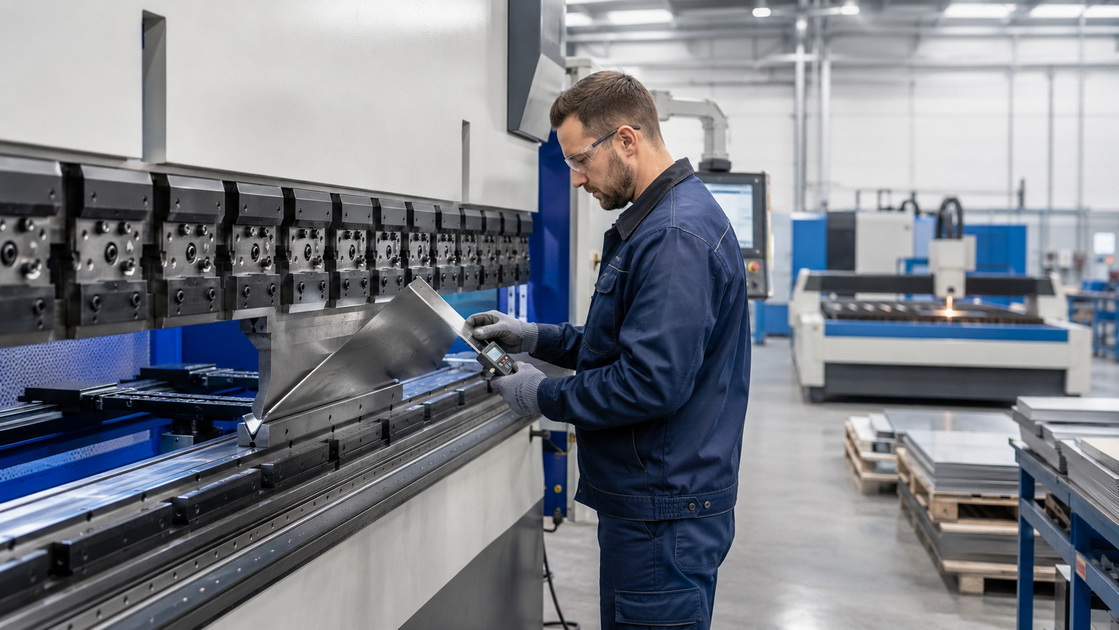
At its core, sheet metal bending means using force to plastically deform a flat sheet around a straight axis without removing material, transforming blanks into functional 3D parts like brackets, enclosures and panels. The process uses tools such as press brakes, folding machines, roll benders and rotary benders to achieve specific angles and radii without cracking or excessive thinning. [fortunebusinessinsights]
What makes bending critical in real production is that it sits between cutting and welding/assembly in the value chain, so any errors here cascade into fit‑up problems, rework and costly delays. This is why serious OEMs increasingly specify bending accuracy, flat‑pattern tolerances and even machine type (for example CNC press brake with crowning) in their supplier requirements. [youtube]
From a practical standpoint, a robust bending workflow follows a clear sequence. [youtube]
Typical sheet metal bending workflow: [youtube]
1. Design and planning
- Select material (steel, stainless, aluminum, copper, etc.), thickness and target bend angles. [youtube]
- Define minimum bend radii and tolerance classes based on the application. [youtube]
2. Material preparation
- Cut blanks to size, often via laser or punch, and mark bend lines if needed. [youtube]
- Ensure burrs are removed in critical bend areas. [youtube]
3. Machine and tooling setup
- Choose tools (V‑dies, punches, special tooling) and set up the CNC press brake or other bending equipment. [adhmt]
- Program bend sequence, backgauge positions and crowning parameters on CNC machines. [adhmt]
4. Bending operation
- Perform air bending, bottom bending, coining or alternative methods depending on required precision and tonnage. [youtube]
- Adjust for springback by slightly overbending or using compensated tools. [youtube]
5. Verification and finishing
- Check bend angle and dimensions against drawings; correct deviations early. [youtube]
- Deburr, inspect and move parts to downstream operations. [youtube]
Modern CNC press brakes simplify steps 3–5 significantly by storing bending programs, automatically positioning backgauges and applying intelligent crowning, which improves repeatability for OEM batches. [adhmt]
The original article outlines several bending techniques; from a process‑engineering perspective, I group and use them like this. [youtube]
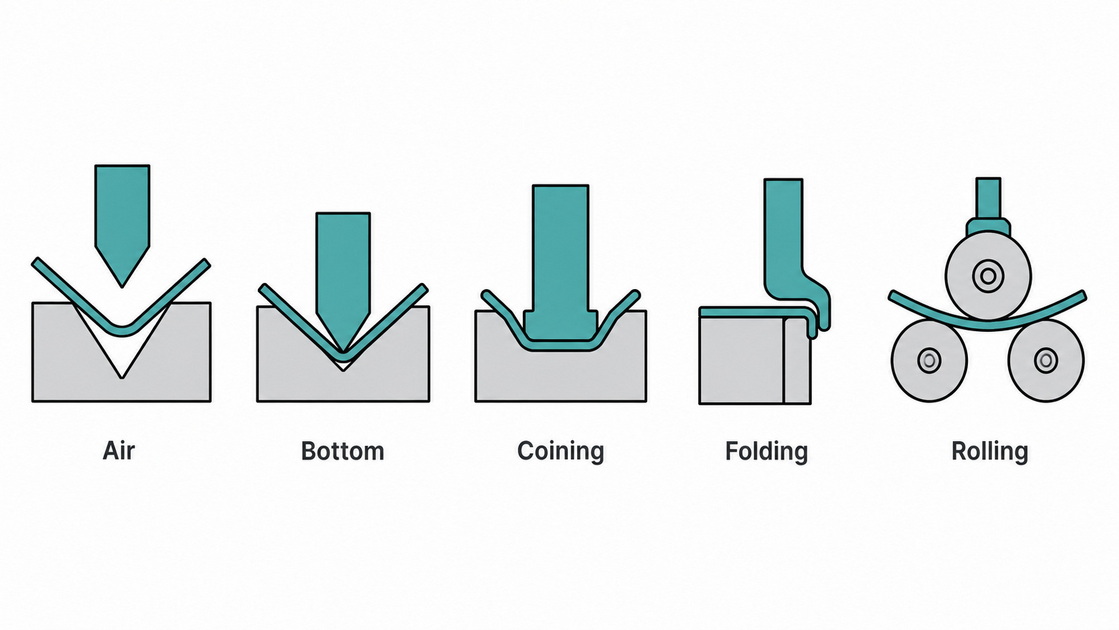
Air bending uses a punch that does not bottom out in the die, leaving a gap and relying on controlled penetration to set the angle. [youtube]
- Strengths: Very flexible, supports multiple angles with one tool set, lower tonnage requirements. [youtube]
- Weaknesses: More sensitive to material thickness and springback, requiring good CNC control and skilled setup. [youtube]
- Typical use: High‑mix OEM work where you frequently change programs and materials. [adhmt]
On CNC press brakes from suppliers like CNDY‑Press, air bending is the default choice because the control system can store springback compensation per material and thickness. [ruchengmachinery]
Bottom bending forces the sheet fully into the die, while coining compresses the material at high pressure, imprinting the angle with minimal springback. [youtube]
- Bottom bending:
- Higher precision and repeatability than air bending. [youtube]
- Suitable for thicker materials and repeated high‑volume parts. [youtube]
- Coining:
- Maximum precision, almost no springback; excellent for tight‑tolerance parts. [youtube]
- Higher tonnage and tooling stress; better suited to dedicated, high‑volume jobs. [youtube]
I recommend these methods when you produce repetitive safety‑critical or fit‑critical parts (for example in aerospace, medical, or certain automotive components) and can justify the extra tonnage and tooling cost. [fortunebusinessinsights]
- Folding clamps the sheet and folds over a straight edge, ideal for large panels and architectural pieces. [youtube]
- Wiping uses a blade to "wipe" the sheet around a die, useful for complex shapes but harder on tooling. [youtube]
- Rolling passes sheet through rollers to form cylindrical or curved parts (tanks, structural arches). [youtube]
These techniques are often complementary to press‑brake work in a complete sheet‑metal shop, especially for long parts and large radii. [fortunebusinessinsights]
- Rotary bending protects surface finish and offers high precision, commonly used where appearance matters (trim, decorative and aerospace components). [youtube]
- Three‑point bending uses two supports and a central loading point, useful for beams and structural members. [youtube]
For OEM customers, I see rotary and three‑point bending most often where surface quality and structural behavior are critical. [larsenmfg]
Bending is governed by a few core concepts that every engineer and buyer should understand. [youtube]
- Bend allowance and K‑factor: These determine how much of the flat blank is "consumed" in each bend and are essential for accurate flat‑pattern development. [youtube]
- Bend radius: Too small a radius for a given material and thickness increases the risk of cracking; a common rule of thumb is minimum inside radius ≈ material thickness for many steels. [youtube]
- Springback: Elastic recovery after unloading; higher‑strength metals and larger bend radii show more springback. [youtube]
Most modern CAD/CAM systems now include material libraries that automate bend allowance and K‑factor calculations, but you still need to verify with shop trials and adjust tooling data in your CNC press brake for repeatable results. [adhmt]
The original guide catalogs mechanical properties of common metals; from an OEM perspective, I reduce it to a selection checklist. [youtube]
When choosing material for bending, ask: [youtube]
- What mechanical properties do I need (yield strength, tensile strength, hardness)?
- How critical are corrosion resistance and appearance (stainless, galvanized, painted steel, aluminum, brass)?
- How tight is my minimum bend radius relative to thickness?
- What is the cost/weight trade‑off for my application?
The article provides typical property ranges for steel, aluminum, copper, brass, stainless and galvanized steel, which align with how these materials are actually used in automotive, aerospace, construction and electronics. For OEM and ODM equipment makers like CNDY‑Press, understanding these choices is key to specifying the right press brake tonnage, tooling and crowning for each customer project. [fortunebusinessinsights]
One strength of the original content is the detailed design tips; these are exactly the types of rules we enforce when reviewing OEM drawings. [youtube]
Important design guidelines for sheet‑metal bending: [youtube]
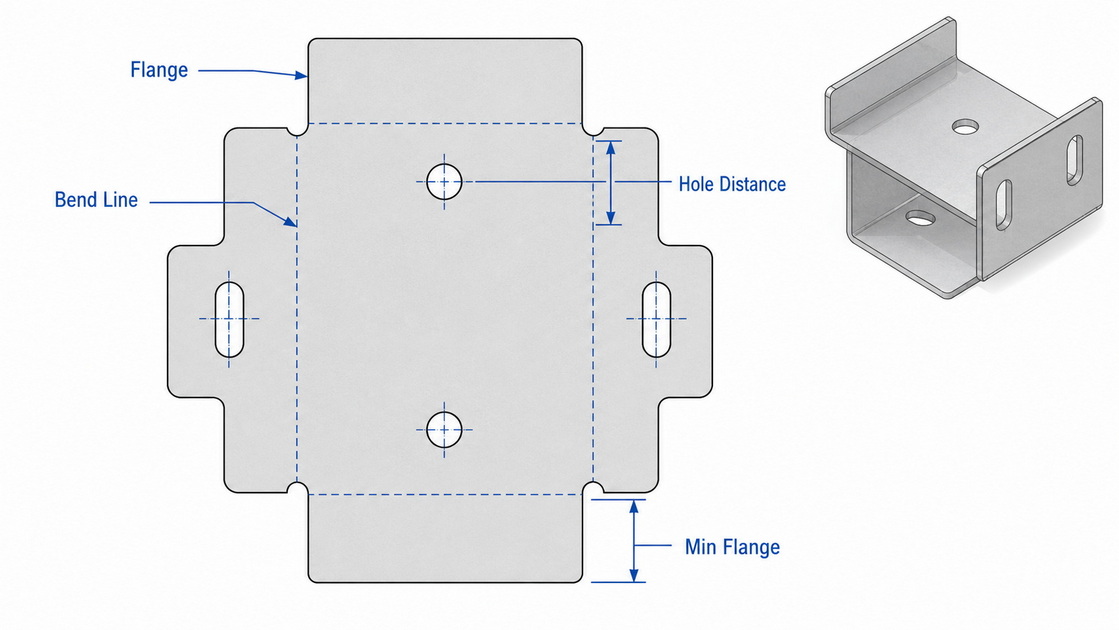
- Minimum flange length: At least 4 × material thickness to prevent distortion.
- Hole distance from bend: At least 2 × thickness from the bend line to avoid warping and cracking.
- Grain direction: Bending perpendicular to grain reduces cracking risk in metals like aluminum.
- Bend line alignment: Keeping bends on the same axis simplifies setup and improves accuracy.
- Bend relief and hemming: Use relief cuts in tight corners and hems to strengthen edges.
For clients, we often run a "flat‑pattern and bendability review" before committing to tooling, using these rules to flag potential issues early rather than discovering them on the press brake. [millerfabricationsolutions]
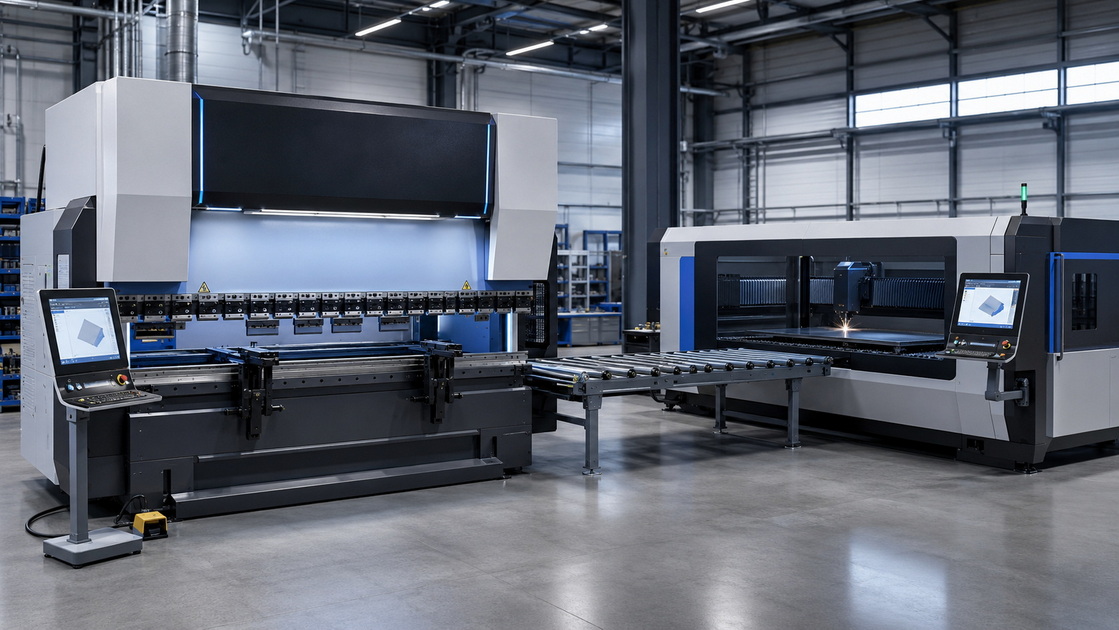
The article rightly highlights how laser cutting and bending are increasingly integrated into one automated cell. Laser cutting provides accurate blanks and clean edges, which improves bend quality and reduces manual preparation. [larsenmfg]
From a process‑engineering view:
- Laser cutting enhances accuracy of bend positions, making backgauge referencing more reliable. [youtube]
- Pre‑pierced features and reliefs can be optimized for bending, reducing secondary operations. [youtube]
- Combined with CNC press brakes, this allows lights‑out or semi‑automated production for high‑mix sheet‑metal parts. [larsenmfg]
This is exactly the ecosystem where CNDY‑Press CNC press brakes are intended to work: as part of turnkey sheet‑metal processing lines, not isolated machines. [fortunebusinessinsights]
The original article lists many cost factors; let me summarize them in the way I use them with buyers. [youtube]
Main cost drivers in sheet‑metal bending: [fortunebusinessinsights]
- Material type and thickness.
- Machine type (manual brake, NC, CNC press brake) and energy consumption. [ruchengmachinery]
- Tooling complexity and changeover time. [youtube]
- Labor skill level and wage rates. [millerfabricationsolutions]
- Scrap/rework and material utilization. [larsenmfg]
Safety also has real cost implications: consistent use of PPE, machine guarding, training and preventive maintenance reduces both incidents and unplanned downtime. Industry data shows that better‑designed CNC machines with integrated safety features often help shops meet customer and regulatory requirements more easily. [fortunebusinessinsights]
The article does a good job enumerating typical issues. In practice, here is how we usually tackle them on CNC press brakes. [youtube]
- Springback too high
- Apply controlled overbending through the CNC program; switch to bottom bending or coining for critical angles. [youtube]
- Cracking at the bend
- Increase bend radius, change bend direction relative to grain, or choose a more ductile material. [youtube]
- Warping and twist
- Balance bends (symmetry where possible), adjust bend sequence, and check material flatness. [youtube]
- Surface marks and scratches
- Use protective films, cleaner tooling and, where necessary, special dies or tools for cosmetic surfaces. [youtube]
Shops that document these remedies and integrate them into standard work instructions see dramatic improvements in first‑pass yield over time. [millerfabricationsolutions]
While the original article concludes with a focus on ACCURL, the same logic applies to CNDY‑Press, which specializes in CNC press brakes and complete sheet‑metal processing equipment. [fortunebusinessinsights]
For global OEM/ODM customers, a partner like CNDY‑Press can provide:
- Configurable CNC press brakes with appropriate tonnage, bed length and axis configuration for your specific part mix. [ruchengmachinery]
- Integration with laser cutting and automation, aligning with Industry 4.0 trends for connected, data‑driven fabrication. [larsenmfg]
- Project‑based engineering support to tailor tooling, backgauges and controls for your OEM products rather than offering a generic "one‑size‑fits‑all" machine. [millerfabricationsolutions]
That combination is what procurement teams should look for when choosing a long‑term bending‑equipment partner, not just headline tonnage and price. [persistencemarketresearch]
Share your part drawings, material range and annual volumes with CNDY‑Press to receive a tailored proposal for CNC press brakes and sheet‑metal bending cells, including throughput, accuracy and ROI estimates matched to your factory.
1. Why are CNC press brakes preferred for modern sheet metal bending?
Because CNC press brakes combine programmable backgauges, crowning and bend‑sequence control, they significantly reduce setup time, scrap and variation, which improves ROI in high‑mix production. [adhmt]
2. How do I choose between air bending and bottom bending for my parts?
Use air bending when you need flexibility and lower tonnage across many part types; choose bottom bending or coining when the same part runs at volume and requires higher angle precision and consistency. [adhmt]
3. What design mistakes most often cause bending cracks?
The most common issues are too small bend radii for the material and thickness, bending along the grain in sensitive alloys, and placing holes or cutouts too close to the bend line. [youtube]
4. How does laser cutting improve sheet metal bending quality?
Laser cutting delivers precise edges and accurate bend‑line positions, which reduce setup adjustments, improve backgauge repeatability and lower rework during bending. [larsenmfg]
5. What should I ask a press brake supplier before buying?
Ask about machine type (hydraulic, hybrid, electric), axis configuration, tonnage and length, accuracy specs, CNC control capabilities, service network and references from customers with similar parts. [adhmt]
1. ACCURL – "What is Sheet Metal Bending: Definition, Types & Tips" (technical explanations of bending methods, design rules and applications). [youtube]
2. ADH and similar sources – NC vs CNC press brake comparisons (setup time, scrap rate, ROI). [ruchengmachinery]
3. Global sheet‑metal processing and bending equipment market reports (segment growth and technology trends). [persistencemarketresearch]
4. Metal forming and fabrication trend articles (automation, Industry 4.0 and integrated laser + bending cells). [millerfabricationsolutions]
5. Energy‑efficiency studies and vendor data on press brakes (electric vs hydraulic energy consumption and lifecycle cost). [automec]


