


Views: 222 Author: CNDY-Press Publish Time: 2026-05-31 Origin: Site


Content Menu
● What Press Brake Accuracy Really Means On The Shop Floor
● Accuracy vs Precision: Why Both Matter To Your Customer
● Typical Accuracy And Tolerance Ranges By Material
● Core Machine Factors: Frame, Hydraulics, Backgauges, and Crowning
>> Frame Rigidity and Table Flatness
>> Hydraulic System Stability and Servo Control
>> Back Gauge Accuracy and Ram Positioning
>> Dynamic Crowning and Deflection Compensation
● Tooling: The Hidden Foundation Of Bending Accuracy
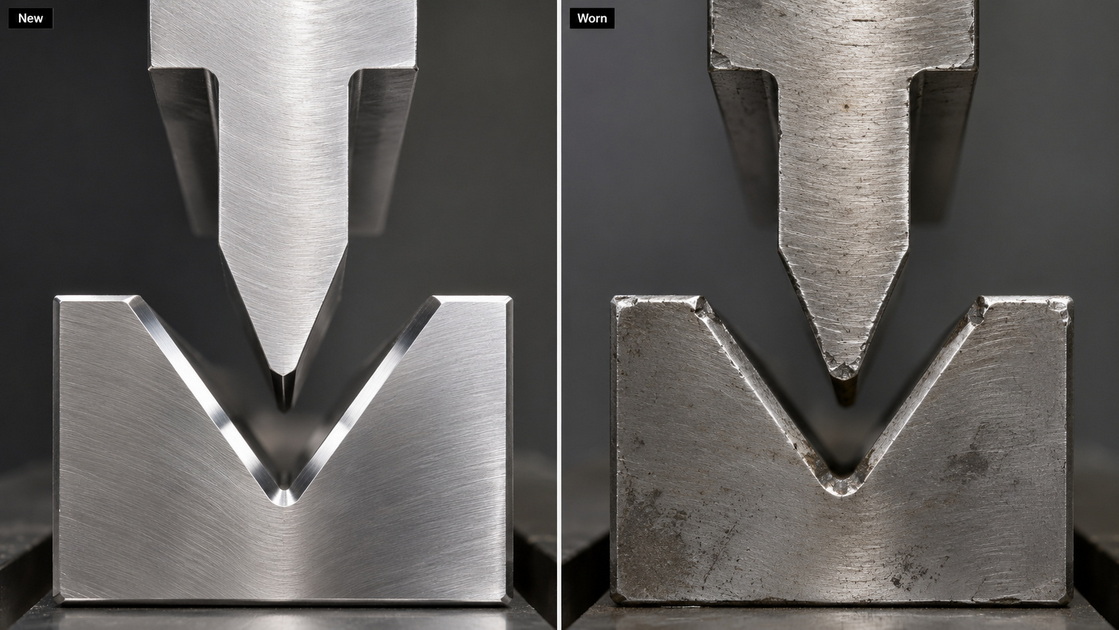
>> Tool Quality, Material, and Wear
>> V‑Die Opening, Radius, and Geometry
● Material: Thickness, Hardness, Grain, and Springback
>> Thickness and Hardness Variation
>> Grain Direction, Residual Stress, and Flatness
>> Surface Condition and Coating
● Operator Skill, Process Discipline, and Data
>> Why Skilled Operators Still Matter In The CNC Era
>> Standardized Setups, Documentation, and Job Libraries
● Practical Checklist: How To Improve Press Brake Accuracy Step By Step
● Digitalization, Data, And Accuracy Benchmarking
● CNDY‑Press Perspective: Designing For Accuracy From Day One
● Call To Action: Validate Your Accuracy With A Data‑Backed Assessment
● FAQ
Press brake accuracy is no longer a "nice to have" in sheet metal fabrication; it directly controls your scrap rate, assembly fit, and profitability. When you look closely at modern CNC press brakes, you discover that real‑world bending accuracy is a system result: frame rigidity, tooling quality, material behavior, operator skill, and disciplined maintenance all pull in the same direction—or they don't. [bendforcebrakes]

In practice, press brake accuracy is the closeness of your bend angle, flange length, and bend position to the values specified on the drawing. It includes not just one "perfect" part, but repeatability over hundreds or thousands of bends. [sinowayindustry]
In a typical, well‑maintained CNC press brake, you can expect angle accuracy around ±0.5° and linear positioning of about ±0.1–0.2 mm for normal production work. Under optimized conditions—with dynamic crowning, high‑grade tooling, and stable material—high‑end machines can push angle tolerances down toward ±0.1–0.2° and positioning in the thousandths of an inch range. [accurl]
Accuracy answers: "How close is this bend to the print?"
Precision answers: "How consistent are all my bends to each other?" [accurl]
You can have:
- A press brake that hits the nominal angle but produces parts that vary from piece to piece (accurate but not precise).
- Or a machine that repeats a wrong angle very consistently (precise but not accurate). [accurl]
In mass production, your customer feels precision first: if every part assembles the same way, they trust your process. Once that baseline is stable, you tighten accuracy so those consistent parts also fall inside the drawing tolerance. [bendforcebrakes]
Different materials respond differently under the punch. Springback, thickness variation, and hardness all influence achievable tolerances. [sinowayindustry]
| Material Type | Typical Angle Tolerance | Notes |
|---|---|---|
| Aluminum | ±0.5° to ±1.0° | High springback, sensitive to thickness variation (accurl) |
| Carbon Steel | ±0.3° to ±0.5° | Lower elasticity, easier to control angles (accurl) |
| Stainless Steel | ±0.5° or more if uncompensated | Requires more force; machine deflection is critical (accurl) |
If you are chasing tighter tolerances (for example ±0.2° on high‑value stainless assemblies), you must treat accuracy as a full system: machine, tooling, process, and people. [bendforcebrakes]
A press brake cannot bend more accurately than its frame allows. Even a small frame tilt or a 0.06 mm table flatness error over a 3200 mm bed can produce around 0.17° of angle variation. That shows up as a visible gap during assembly. [accurl]
Key points:
- Rigid welded frame and heavy cross‑beams resist deflection. [energymission]
- Verified longitudinal flatness keeps the workpiece straight along the full length. [accurl]
Uneven or unstable force distribution leads directly to angle drift:
- Hydraulic pressure fluctuations of only a few percent can generate ±0.2–0.3° angle variation. [accurl]
- Worn valves, contaminated oil, or air pockets cause ram drift and inconsistent ram response. [accurl]
Modern high‑accuracy CNC brakes use servo‑controlled axes and carefully tuned hydraulics to maintain constant speed and tonnage through the stroke. [energymission]
The back gauge determines where the bend line sits. If it's off, your flange length is off:
- Well‑maintained CNC gauges routinely achieve positioning of ±0.05 mm or better. [accurl]
- Multi‑axis back gauges (R, Z1/Z2, X1/X2) help maintain accuracy on complex profiles. [bendforcebrakes]
High‑end systems pair this with micro‑encoders or linear scales that keep ram position repeatability at ±0.01 mm level. [energymission]
Under load, every beam bends. Crowning and deflection compensation are your tools against this:
- Mechanical or hydraulic crowning systems pre‑curve the bed so that under load, it straightens and the angle remains uniform across the length. [bendforcebrakes]
- Advanced CNC systems use sensor feedback to adjust crowning and ram depth in real time, compensating for part length, thickness, and position. [sinowayindustry]

Even the best machine cannot overcome bad tooling:
- Precision‑ground punches and dies maintain consistent V openings and radii. [bendforcebrakes]
- High‑grade tool steels and coatings (for example nitriding) reduce edge rounding and wear. [accurl]
Dull or chipped tooling introduces angle variation, burrs, and surface marks that accumulate into poor fit and rework. [accurl]
Choosing the right V‑die is essential for predictable angles:
- As a rule of thumb, a V opening around 8× material thickness gives stable, controllable bends. [bendforcebrakes]
- A too‑large opening increases springback; too tight an opening increases force, risk of cracking, and tooling wear. [accurl]
Specialized die shapes (gooseneck, offset, multi‑V) must be regularly checked for wear and verified with gauges to prevent uneven angles along their length. [accurl]
Misalignment in fractions of a millimeter can cause noticeable angle taper:
- Use dial indicators or laser alignment tools to ensure punch and die parallelism across the bed. [accurl]
- Quick‑change or hydraulic clamping systems reduce human error and keep tools seated correctly. [accurl]
A simple "wiggle test" before production—physically confirming that tooling does not move—is still one of the cheapest ways to protect accuracy. [bendforcebrakes]
Material is often the most overlooked source of inaccuracy:
- Variations as small as 0.1 mm in thickness significantly change springback and required tonnage. [accurl]
- Harder or high‑strength steels need more force, which amplifies any machine deflection. [sinowayindustry]
Best practices include measuring thickness at multiple points and using test coupons from each batch to tune the program before running full production. [sinowayindustry]
Bending parallel to the rolling direction raises the risk of cracking and inconsistent angles. Many shops now mark the rolling direction on each sheet and orient critical bends perpendicular to the grain. [accurl]
Residual internal stresses—especially in thick plate or near welds—can cause the part to warp or twist after bending. Leveling, stress relief, and proper blanking strategies help stabilize these effects. [accurl]
Coatings and surface contamination affect friction and flow:
- Excessive coating thickness or debris changes how the material slides over the die shoulders, altering the final angle. [accurl]
- Cleaning and, if needed, removing coating along the bend line can improve accuracy and protect the coating itself. [accurl]
Modern CNC controls can automate many steps, but a skilled operator remains critical:
- They understand differences between air bending, bottoming, and coining, and when to use each. [sinowayindustry]
- They read small deviations early and make fine corrections to ram depth or back gauge before scrap piles up. [accurl]
Mentoring programs, documented best practices, and clear visual aids dramatically shorten the learning curve and stabilize quality. [bendforcebrakes]
Consistency is a major part of precision:
- Use standard loading references, bend sequences, and stop blocks for repeated jobs. [accurl]
- Maintain a digital job library with photos, parameters (ram depth, crowning, die selection), and note springback adjustments. [accurl]
Well‑documented setups turn operator memory into repeatable process knowledge and reduce dependency on a few "heroes" on the shop floor. [sinowayindustry]
You can systematically raise bending accuracy without replacing every machine. A structured approach often delivers the fastest gains. [shop.adhmt]
1. Baseline Your Current Accuracy
- Run a standard test part in typical materials.
- Measure angle and flange length at multiple points and record actual tolerances.
2. Verify Machine Geometry And Level
- Check frame level and bed flatness at several positions. [shop.adhmt]
- Correct leveling issues and recalibrate the machine to factory specifications.
3. Audit Tooling
- Inspect punches and dies for wear, nicks, and rounding.
- Replace or regrind critical tools and confirm die openings with gauges. [bendforcebrakes]
4. Standardize Materials And Programs
- Agree on default V‑die selection rules by thickness and material.
- Use test coupons and store final correction values in the CNC program. [sinowayindustry]
5. Introduce Routine Calibration And Maintenance
- Plan monthly or quarterly calibration for back gauge, ram position, and crowning systems. [shop.adhmt]
- Maintain hydraulic oil, filters, and seals to prevent pressure fluctuation. [accurl]
6. Train And Certify Operators
- Teach the difference between accuracy and precision, and how springback behaves by material.
- Use checklists and "stop‑run" protocols when deviations are detected. [choongngaiengineering]

Recent industry analysis shows that sheet metal fabrication is undergoing a data‑driven shift, with digital threads extending from CAD to final inspection. For press brakes, that means: [larsenmfg]
- More machines ship with IoT connectivity, logging bend data, error codes, and usage patterns. [market-prospects]
- OEMs and advanced shops use factory test reports (including bend accuracy, repeatability, and speed) as proof of performance before equipment sign‑off. [energymission]
- Analytics help correlate bend accuracy with factors like ambient temperature, material batch, and tooling age. [choongngaiengineering]
For a manufacturer like CNDY‑Press, this digital layer allows us to verify that each CNC press brake or integrated bending system leaves the factory within a tightly defined accuracy envelope—and to prove it with data, not just brochures. [market-prospects]
As an OEM focused on CNC press brakes and complete sheet‑metal systems, CNDY‑Press does not treat accuracy as a single spec. We design around:
- Rigid frames and precise machining to control bed flatness and deflection.
- Servo‑driven backgauges, dynamic crowning, and angle measurement options for demanding applications. [energymission]
- OEM/ODM customization so your machine, tooling, and automation match your real parts, not generic demo pieces.
Whether you run a high‑mix job shop or a dedicated OEM line, we can configure a machine and workflow that balances tight tolerances, cycle time, and budget instead of chasing theoretical numbers that do not match reality.
If you are unsure whether your current press brakes are hitting the tolerances your customers expect, now is the ideal time to run a press brake accuracy audit.
CNDY‑Press can support you by:
- Reviewing your drawings, parts, and current tolerance issues.
- Recommending machine upgrades, tooling changes, or process improvements.
- Proposing a tailored CNC press brake or integrated solution designed around your real‑world accuracy needs.
1. What is a good general accuracy for a CNC press brake?
Most modern CNC press brakes can maintain about ±0.5° in bend angle and ±0.1–0.2 mm in length under normal production conditions, assuming proper tooling and maintenance. [sinowayindustry]
2. Why do my angles drift during longer production runs?
Common causes include tool wear, hydraulic temperature changes, pressure fluctuations, or small changes in material thickness and hardness over the batch. Regular checks and dynamic compensation features can minimize this drift. [shop.adhmt]
3. Do I need angle measurement systems to be accurate?
No, but in‑process angle sensors and laser systems help you hold tighter tolerances with less trial and error, especially on difficult materials or long bends. They are particularly valuable when customers demand very tight assembly fits. [bendforcebrakes]
4. How often should a press brake be calibrated?
Many shops perform calibration checks monthly or quarterly, or after major repairs, focusing on ram alignment, back gauge accuracy, crowning, and hydraulic performance. [shop.adhmt]
5. Can older press brakes still achieve high accuracy?
Yes, if the frame is sound. Retrofitting better tooling, modern backgauges, updated controls, and disciplined maintenance can significantly improve accuracy on older machines. [bendforcebrakes]
1. Accurl, "Press Brake Accuracy: Tolerances and How to Improve Press Brake Bending Accuracy."[accurl]
2. BendForce Brakes, "Accuracy in CNC Press Brakes: What Matters Most." [bendforcebrakes]
3. Sinoway Industry, "How CNC Press Brake Bending Achieves Accuracy in Every Bend." [sinowayindustry]
4. ADH Machine Tool, "Press Brake Specifications: From Geometry to ROI." [adhmt]
5. ADH Shop, "How to Level a Press Brake: A Complete Guide." [shop.adhmt]
6. Larsen Manufacturing, "Latest Trends in Sheet Metal Fabrication." [larsenmfg]
7. ChoongNgai Engineering, "Top 5 Trends Shaping Sheet-Metal Fabrication in 2025." [choongngaiengineering]
8. Energy Mission, "Factory Test Report: CNC Press Brake Performance." [energymission]
9. Market Prospects, "The Future of Sheet Metal Fabrication: 2026 Trends and Strategic OEM ODM Insights." [market-prospects]


