


Views: 283 Author: CNDY-Press Publish Time: 2026-07-18 Origin: Site


Content Menu
● What Is Laser Cutting and How Does It Work?
● Key Advantages of Laser Cutting in Sheet Metal Manufacturing
>> High Precision and Dimensional Accuracy
>> Versatility Across Materials and Applications
>> Production Speed and Throughput
>> Cost Effectiveness Over Time
>> Design Flexibility and Complex Geometries
>> Contactless Processing and Consistent Edge Quality
>> Reliability, Repeatability, and Automation Readiness
● Disadvantages and Limitations of Laser Cutting
>> High Upfront Investment and Operating Requirements
>> Thickness Constraints and Alternative Processes
>> Fume Generation, Gas Use, and Safety Considerations
>> Need for Skilled Programming and Process Control
● Emerging Trends in Fiber Laser Cutting for Sheet Metal
>> Increasing Power and Capability
>> Integration with Smart Manufacturing and Data‑Driven Improvement
● Practical Guidelines for Implementing Laser Cutting in Sheet Metal Projects
>> Assessing Product Families and Material Ranges
>> Structuring Workflows Around Laser Cutting
>> Building Process Knowledge and Training
● Why Laser Cutting Matters for Long‑Term Sheet Metal Partnerships
Laser cutting has become a core process in modern sheet metal fabrication because it combines high precision, repeatable quality, and fast production cycles in a single, flexible technology. It is especially valuable for manufacturers handling OEM and ODM projects, where dimensional accuracy, consistency across batches, and reliable delivery timelines are critical. At the same time, it is important to understand both the strengths and the limitations of laser cutting so that it is applied in the right material ranges, thicknesses, and project types.
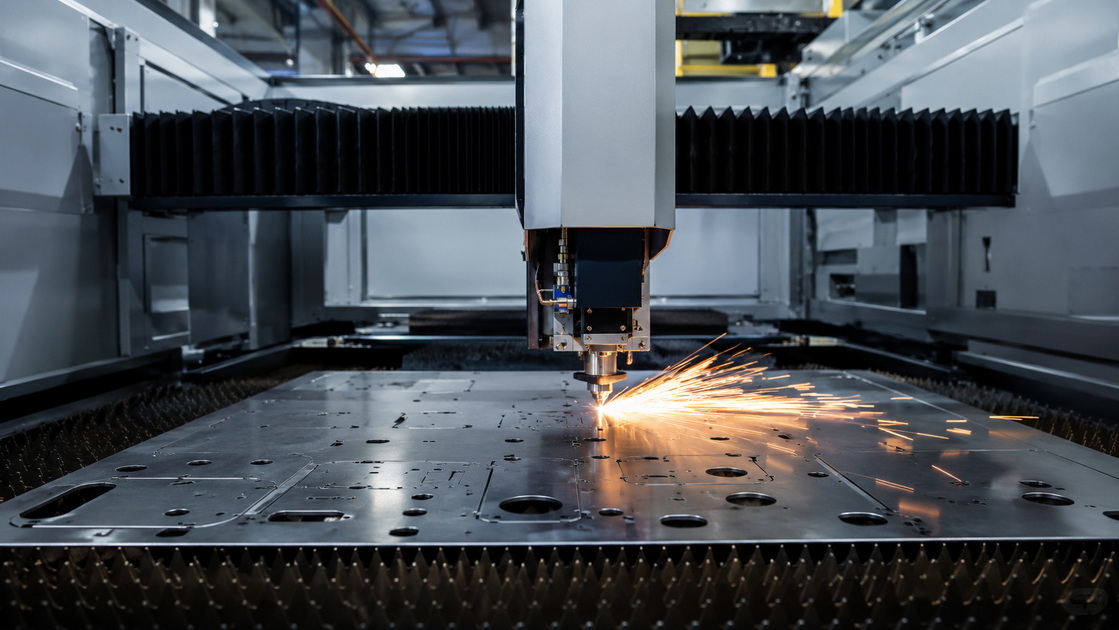
Laser cutting is a thermal cutting process that focuses a concentrated beam of light onto a material to melt or vaporize a narrow path, creating a clean kerf line. In fiber laser cutting systems, the beam is generated within fiber‑optic cables and directed through optical components and a cutting head to the surface of the sheet. The process is controlled by CNC programs, which translate digital designs into precise motion and beam parameters.
For sheet metal manufacturers, this means that any two‑dimensional geometry defined in CAD can be translated into repeatable cut paths. The machine does not require physical tools shaped to each part; instead, it relies on digital programs and carefully tuned process parameters. This is particularly useful for companies that run a mix of parts for different industries, or that need to update designs frequently without incurring tooling delays.
One of the most important strengths of laser cutting is its ability to deliver tight tolerances and clean, consistent edges on appropriately selected materials and thicknesses. The laser beam is extremely narrow, which keeps the width of the cut small and allows complex contours and fine details to be produced with high repeatability. Because the motion system is controlled digitally, the machine follows the same path for every part in the batch.
This level of precision matters wherever components must fit together without extensive manual adjustment. Examples include welded assemblies, frames that interface with machined parts, and housings that must align with purchased components. By minimizing variation, laser cutting helps reduce rework, scrap, and quality issues that can otherwise appear late in the production process.
Laser cutting equipment can process a broad range of materials commonly used in sheet metal fabrication. These typically include carbon steels, stainless steels, aluminum alloys, and selected non‑ferrous metals, as well as certain non‑metallic materials when the machine configuration allows. Within the recommended ranges, the same system can switch between different materials and thicknesses with relatively minor adjustments to parameters and assist gas.
This versatility supports a wide variety of applications. Typical parts include panels and enclosures for machinery, brackets and structural components for equipment, frames and chassis for vehicles, and architectural or decorative elements with intricate cutouts. Because the process is driven by digital programs rather than manual tool changes, shops can handle diverse part families while keeping changeover time under control.
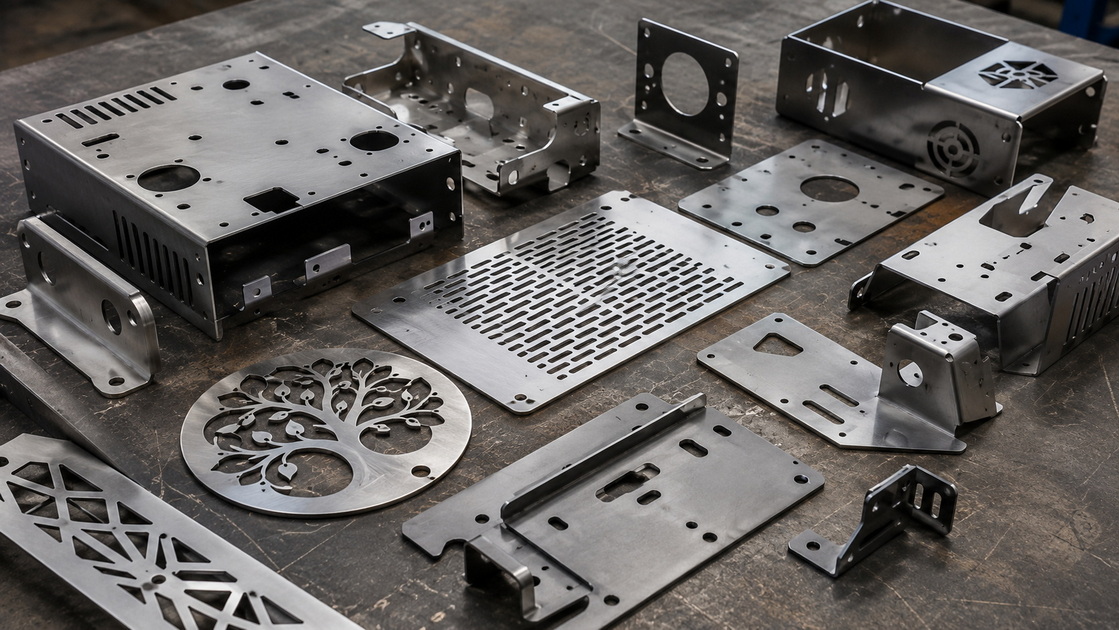
Laser cutting is capable of very high cutting speeds, especially in thin‑to‑medium sheet thicknesses. When combined with efficient nesting, automated loading and unloading, and streamlined material flow, this translates into strong throughput performance. The process reduces both cycle time per part and overall lead time for many job types.
Fast cutting is not the only factor that improves throughput. Consistent quality reduces the need for repeated inspections and manual adjustments. Digital programs make it easier to schedule and reschedule jobs as priorities change. For manufacturers serving multiple customer projects simultaneously, this combination of speed and flexibility helps keep delivery dates reliable and production capacity well utilized.
Although the initial investment in a laser cutting system can be substantial, the process often becomes cost effective over the lifetime of the equipment. Several factors contribute to this. Energy use per part can be favorable compared with some older thermal cutting solutions. The absence of physical cutting tools means less frequent tool replacement and sharpening. Stable quality lowers scrap rates and reduces hidden costs related to rework and late‑stage corrections.
When a manufacturer runs the machine in multi‑shift or high‑volume mode, these advantages accumulate. Over time, the combination of reduced consumable usage, lower scrap, and optimized labor can offset the initial capital cost. For companies that depend on long‑term OEM or ODM contracts, this long‑range cost picture is often more important than the simple purchase price of the equipment.
Laser cutting excels at producing complex two‑dimensional shapes. Because the cutting path is defined by CAD and translated into CNC code, the process supports sharp corners, small holes, intricate patterns, and micro‑features that would be difficult or expensive with many mechanical methods. The narrow kerf and small heat‑affected zone help preserve fine details even when materials are relatively thin.
This design freedom allows engineers to optimize parts for function and appearance without being constrained by tooling limitations. It becomes possible to integrate logos, vent patterns, lightweighting cutouts, and alignment features into structural components. For projects that move from prototype to volume, the same digital design can be used throughout, avoiding the need for new physical tools as quantities increase.
Laser cutting is a non‑contact process. The beam does the cutting, while the nozzle and cutting head remain at a controlled distance from the material surface. This reduces mechanical stress on both the part and the machine. Sheets are less likely to be bent or marked by cutting forces, and delicate features can be cut without physical interference.
The process also delivers characteristic edge quality. In properly selected materials and thicknesses, edges are smooth and nearly burr‑free. This often reduces or eliminates the need for extensive deburring and grinding before parts move on to bending, welding, or coating. As a result, downstream operations can proceed more quickly, and finished products benefit from consistent, visually appealing edges.
Modern laser cutting systems are designed for continuous, predictable operation. With appropriate maintenance and process control, they deliver stable performance over long runs and across multiple shifts. Digital control ensures that each part follows the same programmed path, which is essential for maintaining uniformity across production batches.
In many facilities, laser cutting is integrated into automated lines with loading, unloading, and part sorting systems. As monitoring and control technologies advance, it becomes easier to track machine status, schedule preventive maintenance, and analyze process data. This supports more reliable planning, higher utilization, and steady performance on demanding customer programs.
The benefits of laser cutting must be balanced against several limitations. One of the most obvious is the high initial investment required for the machine and its supporting infrastructure. Beyond the core system, manufacturers must plan for ventilation, safety enclosures, material handling, and suitable floor space. These elements add to the capital cost and require careful project planning.
Operating the equipment properly also demands training and structured procedures. Staff members need to understand programming, parameter selection, and safe operating practices. Maintenance routines must be established to keep optics, filters, and mechanical components in good condition. For smaller organizations, these requirements can be challenging, and the business case must be evaluated carefully.
Laser cutting performs best in thin and medium thickness ranges. As material thickness increases, cutting speeds may fall, edge quality can change, and operating costs may rise. At some point, other processes such as plasma cutting, oxy‑fuel, or waterjet can become more appropriate. This is particularly true for very thick structural plate, where robustness and rough cutting are more important than fine detail.
Many manufacturers therefore adopt a hybrid approach. Laser cutting is used for precision sheet metal parts, brackets, and enclosures, while other processes handle heavy plate and specialized requirements. Understanding where the laser is strong and where other methods are preferable helps avoid misapplication and ensures that projects use the most suitable cutting method for each material and thickness.
Laser cutting generates fumes, particulates, and gases, especially when processing coated materials, plastics, or certain alloys. To protect workers and maintain a safe environment, appropriate ventilation and filtration systems are necessary. Enclosures, interlocks, and monitoring equipment help confine emissions and prevent exposure.
Assist gases are another factor. Different materials and thicknesses require different gas types and pressures. Gas use must be managed to balance cut quality, speed, and cost. Overall, the process demands responsible handling of fumes and gases, clear procedures for operators, and attention to regulatory requirements. These considerations add complexity but are essential for sustained, safe operation.
Laser cutting depends heavily on correctly chosen parameters and well‑structured digital programs. Focus position, feed rate, power level, assist gas type, and nesting strategy all influence edge quality, dimensional accuracy, and cost per part. Achieving the best results is not simply a matter of pressing a start button; it requires understanding how these factors interact.
Without skilled programming and process optimization, the process can fall short of its potential. Parts may show inconsistent edges, cycle times may be longer than necessary, and scrap rates may rise. As machines become more capable, the emphasis shifts from manual dexterity to knowledge of process engineering and data‑driven improvement. Ongoing training and knowledge sharing therefore remain important.
Recent years have seen a steady increase in the power levels available in fiber laser cutting systems. Higher‑power machines are capable of cutting thicker materials and maintaining higher speeds in demanding applications. This expands the range of parts that can be produced and allows some projects that previously required other methods to move into the laser cutting domain.
Alongside power growth, improvements in optics, beam delivery, and control software continue to refine edge quality and process stability. Combined, these advancements make it possible to take on more complex projects and to push productivity further, especially in facilities that invest in newer generations of equipment.
Laser cutting is increasingly aligned with broader initiatives in connected and intelligent manufacturing. Modern systems can collect and share data on machine status, process parameters, and production results. This supports continuous improvement efforts, predictive maintenance planning, and more accurate capacity management.
As these capabilities mature, manufacturers gain better visibility into how the cutting process performs across different materials, jobs, and shifts. This helps refine standards, optimize schedules, and identify opportunities for further efficiency gains. The result is a more stable and predictable operation that aligns well with long‑term customer commitments.
A successful implementation starts with a clear understanding of which parts will be processed on the laser. Manufacturers should identify their key product families, common material types, and thickness distributions. This information helps match machine specifications to real demand and avoid oversizing or undersizing equipment.
By analyzing existing and planned projects, companies can determine where laser cutting offers the greatest benefit. Typical candidates include parts with complex contours, tight tolerances, and high repeat volumes. Once these are identified, the cutting system and supporting infrastructure can be configured to meet those needs.
Laser cutting does not exist in isolation; it is part of a wider fabrication workflow that includes bending, welding, machining, coating, and assembly. Effective use of the process therefore requires attention to material flow, scheduling, and routing. Material must move smoothly from storage to cutting, then onward to downstream operations without bottlenecks.
Manufacturers can improve performance by standardizing cut programs, defining clear routing paths, and integrating inspection points at logical stages. Automation solutions such as loading towers, sorting systems, and software for job management can further reduce manual handling and coordination efforts. The goal is to let the strengths of laser cutting support the entire production chain, not just the cutting stage.
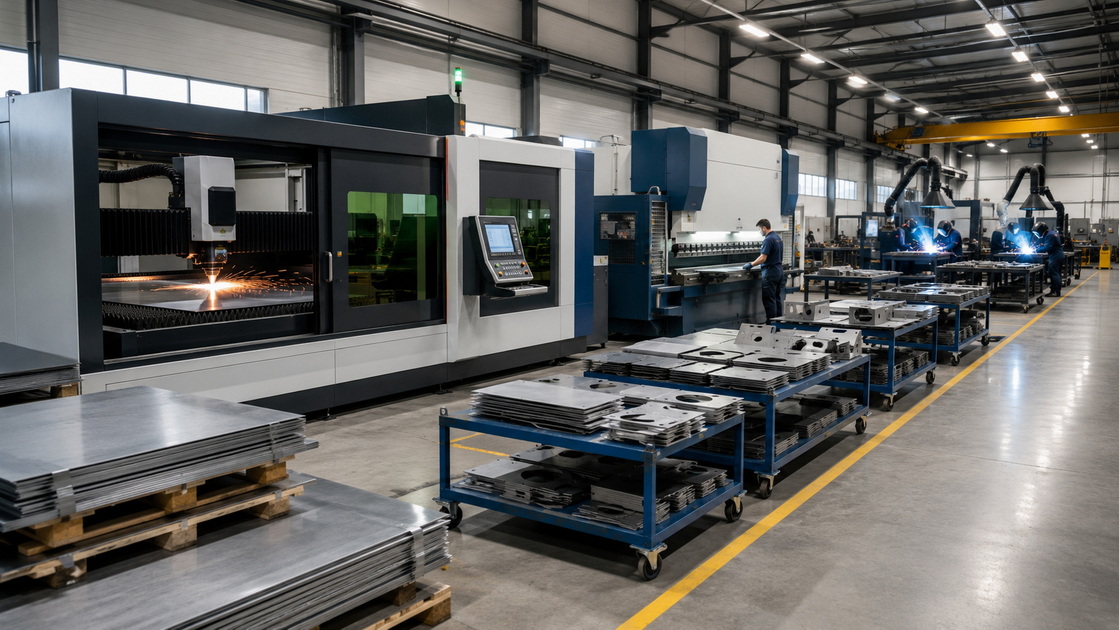
Equipment alone does not guarantee successful laser cutting. Process knowledge and human expertise are equally important. Teams need to understand parameter selection, troubleshooting, maintenance requirements, and quality evaluation. Formal training, mentorship, and documentation all play a role in building this capability.
As experience grows, manufacturers can create libraries of proven cutting parameters for common materials and thicknesses. These libraries help ensure consistency across shifts and operators. They also support faster onboarding of new staff and more reliable performance when new parts are introduced. Over time, continuous learning and refinement become a core strength of the operation.
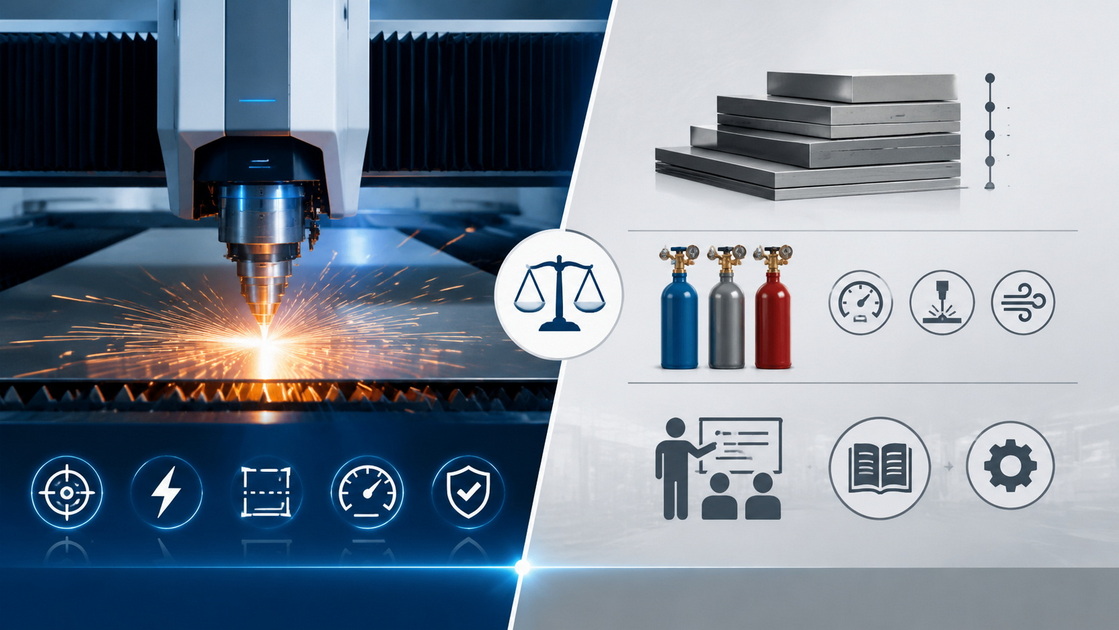
Laser cutting offers a combination of precision, speed, flexibility, and reliability that aligns well with long‑term relationships between manufacturers and their customers. It supports fast prototyping, smooth transitions to volume production, and consistent quality across repeated orders. It also provides room for design evolution and optimization without tying projects to fixed tooling.
Understanding both advantages and limitations helps manufacturers and their partners set realistic expectations and choose the right processes for each project. When laser cutting is applied in suitable material and thickness ranges, and when workflows and skills are developed around it, the process becomes a strong foundation for durable, high‑value collaboration in sheet metal fabrication.
1. ACCURL. "11 Advantages of Laser Cutting: Are There any Disadvantages?" https://www.accurl.com/blog/laser-cutting-advantages-and-disadvantages/
2. Xometry. "Advantages and Disadvantages of Laser Cutting." https://www.xometry.com/resources/sheet/laser-cutting-advantages/
3. 3DEXPERIENCE Make. "Laser Cutting: Advantages & Inconvenients." https://www.3ds.com/make/solutions/blog/laser-cutting-advantages-inconvenients
4. Building Highrise. "2026 Top Fiber Laser Cutting Machine Trends You Need to Know?" https://www.buildinghighrise.com/blog/2026-fiber-laser-cutting-machine-trends/
5. Intel Market Research. "High Precision Fiber Laser Cutting Machine Market Outlook 2026–2034." https://www.intelmarketresearch.com/high-precision-fiber-laser-cutting-machine-market-39915
6. Global Growth Insights. "Fiber Laser Cutting Machines Market Size, Share, Trends." https://www.globalgrowthinsights.com/market-reports/fiber-laser-cutting-machines-market-126897
7. The Fabricator. "9 Steps to Custom Metal Fabrication Excellence." https://www.thefabricator.com/thefabricator/article/shopmanagement/9-steps-to-custom-metal-fabrication-excellence
8. FMBT. "8 Steps towards Successful Custom Metal Fabrication." https://www.fmbtne.com.sg/8-steps-towards-successful-custom-metal-fabrication/
9. Vocal Media. "Strategies to Optimize Costs in Custom Metal Fabrication." https://vocal.media/journal/strategies-to-optimize-costs-in-custom-metal-fabrication/


