


Views: 222 Author: CNDY-Press Publish Time: 2026-04-25 Origin: Site


As a manufacturer who has spent years working with fiber laser cutting machines on real production floors, I've seen laser beam machining evolve from a "nice-to-have" to the backbone of competitive metal fabrication. In this guide, I want to step away from theory-only explanations and walk you through how laser beam machining really works in 2026, where fiber laser cutting fits in, and what you should look for if you're considering OEM or ODM solutions for your own business. [hncnclaser]
Laser beam machining (LBM) is a non-contact machining process that removes or modifies material using a highly concentrated laser beam instead of a physical tool. The laser (Light Amplification by Stimulated Emission of Radiation) focuses energy on a very small spot so that the material absorbs heat, melts, or vaporizes in a controlled way.
From a production engineer's perspective, that means:
- No cutting tools to wear out.
- Minimal mechanical stress on the part.
- Very high repeatability once the process window is set.
In contrast to conventional punching or milling, laser beam machining can generate intricate contours, micro-features and tight tolerances without changing tools or clamping the part repeatedly.
LBM's roots go back to early laser physics: Einstein laid the theoretical foundation for stimulated emission in 1917, but it was Theodore H. Maiman who built the first operational laser in 1960. Shortly after, laser energy was adapted for drilling and cutting, especially in aerospace and defense, where precision justified the high initial cost.
What changed in the last decade is the maturity of fiber laser technology and CNC control systems. Power levels, beam quality, and reliability have all improved while cost per watt has dropped, so LBM is now practical for: [accurl]
- General job shops. [machitech]
- Mid-size OEMs in automotive, agriculture, and construction equipment. [linkedin]
- High-mix, low-volume production where flexibility matters more than cycle time alone. [linkedin]
Even though the physics is complex, the basic workflow of LBM is straightforward from a shop-floor point of view.
1. Laser Generation
Depending on the machine, the beam is generated by a CO₂ source, a solid-state Nd:YAG crystal, or – increasingly – a fiber laser using diode banks and optical fiber as the gain medium.
2. Beam Manipulation and Delivery
Mirrors, fiber optics, and lenses transport and shape the beam, then focus it on the workpiece through a cutting head.
3. Material Interaction
At the focal point, the energy density is high enough to melt or vaporize the material. Assist gases (oxygen, nitrogen, or air) blow molten material out of the kerf and stabilize the cut. [cn.laser-cutter-machine]
4. Process Control
A CNC or dedicated laser control (e.g., Cypcut-type systems) coordinates motion, power, focus position, and gas pressure. CAD/CAM software outputs the cutting path, nesting, lead-ins, and micro-joints. [cn.laser-cutter-machine]
The result is a controlled thermal process: you're not "pushing" a tool through metal, you're managing a tiny, mobile heat source with micrometer-level precision.
Not every laser is equal in a production environment. The main industrial laser types are:
CO₂ lasers have long been used for cutting metals, plastics, and glass because of their relatively high power and broad application range. They still have a place in non-metals and thick-section cutting, but they require complex optics, alignment, and more maintenance than fiber sources.
Nd:YAG lasers operate near 1064 nm and can run in continuous or pulsed modes, making them suitable for deep drilling or welding in aerospace and automotive where high power density is needed. They are robust but typically less efficient than fiber lasers.
Fiber lasers, with wavelengths around 1070 nm, have become the preferred choice for sheet and tube metal cutting due to: [accurl]
- High electrical efficiency and low operating cost. [hpclaser.co]
- Excellent beam quality, enabling fine kerfs and high cutting speeds. [phillipscorp]
- Long service life of fiber modules, often exceeding 100,000 hours. [cn.laser-cutter-machine]
- Compact footprint and easier integration with automation. [hncnclaser]
For manufacturers investing in new equipment today, a fiber laser cutting machine is usually the most future-proof option for metal fabrication. [hpclaser.co]
A laser cutting system is more than just a beam source. Core components include: [cn.laser-cutter-machine]
- Power supply – Delivers stable energy to the laser; its quality directly affects reliability and cut consistency.
- Optical path (mirrors or fiber) – Transfers the beam with minimal loss and distortion.
- Focusing optics and cutting head – House lenses, protective glass, height sensors, and nozzles that shape and protect the beam. [cn.laser-cutter-machine]
- CNC motion system – High-precision servo motors, racks, pinions, and linear guides that position the cutting head. [cn.laser-cutter-machine]
- Assist gas system – Regulates gas type, pressure, and switching for different materials and thicknesses. [cn.laser-cutter-machine]
- Cooling and lubrication – Closed-loop chillers for lasers and optics, plus automatic lubrication for motion assemblies. [cn.laser-cutter-machine]
Well-engineered machines combine these into a compact, robust system where thermal stability, mechanical precision, and software control are all aligned. [cn.laser-cutter-machine]
From an operator's or process engineer's viewpoint, three groups of parameters determine LBM performance:
Power is measured in watts and directly affects how quickly you can remove material.
- Low power (10–500 W): engraving, thin foils, plastics.
- Medium power (500–2000 W): medium-gauge metals and thicker plastics, balanced speed and quality.
- High power (≥2000 W): thick stainless steel, carbon steel, and high-strength alloys.
For modern fiber cutters, mid- to high-power sources (e.g., 1–4 kW and above) are standard for production sheet metal. [phillipscorp]
Cutting speed (m/min or m/s) must match power, material, and thickness.
- Slow (0.1–1 m/s): fine details, highly heat-sensitive materials.
- Moderate (1–10 m/s): typical industrial cutting for balanced throughput.
- Fast (10 m/s+): thin sheet high-volume production where slight edge quality trade-offs are acceptable.
Proper feed control also includes lead-ins, corner management, and pierce strategies, which modern controllers optimize automatically.
LBM can routinely achieve:
- ±0.1–0.2 mm for general fabrication.
- ±0.025–0.05 mm for high-precision components in aerospace or medical.
- Down to ±0.005–0.01 mm in ultra-precision and micro-machining applications.
For most sheet-metal OEM work, what matters is not just the absolute tolerance, but the ability to hold that tolerance over long runs with minimal rework.
From a business standpoint, the question is: Why should I invest in laser-based processes instead of mechanical cutting, punching, or plasma? The core advantages include: [hpclaser.co]
- Exceptional precision and accuracy – Micrometer-level features, clean internal contours, and tight repeatability. [hpclaser.co]
- High cutting speed – Shorter cycle times, especially in thin- and medium-gauge metals, compared to mechanical processes. [phillipscorp]
- Versatility across materials – Metals, plastics, ceramics, glass, composites, textiles, and more. [hpclaser.co]
- Non-contact process – No tool wear, less fixture damage, fewer mechanical stresses on parts.
- Energy efficiency and sustainability – Modern fiber lasers use less power per part and generate less scrap, supporting greener manufacturing. [hpclaser.co]
- Customization and design freedom – Rapid changeover between part designs without tooling changes; ideal for high-mix production. [linkedin]
For many fabricators, these benefits translate directly into shorter lead times, higher part quality, and lower total cost per piece. [accurl]
LBM is now embedded in almost every modern manufacturing sector. [machitech]
- Micro-hole drilling in turbine and high-stress components.
- Cutting titanium and nickel alloys for structural and engine parts.
- Precision welding of critical joints.
- Cutting body panels, brackets, exhaust components, and battery trays. [machitech]
- Tailored blanks and lightweight structures to reduce vehicle weight. [machitech]
- Repeatable quality on safety-critical parts.
- Micro-via drilling in printed circuit boards and connectors.
- Fine-cut medical instruments and implants from stainless steel and titanium.
- Marking and serialization without damaging underlying components.
- Cutting structural steel, façade components, and decorative panels. [machitech]
- Producing custom brackets, enclosures, and architectural details on demand.
The material range is one of LBM's key strengths.
- Metals: stainless steel, carbon steel, aluminum, copper, brass, and various nickel alloys.
- Non-metals: plastics (acrylic, polycarbonate, ABS), glass, ceramics, composites, wood.
- Special materials: photomachinable glass, rubber, foams, textiles, leather, stone, paper, and cardboard.
In practice, fiber laser cutting machines are most widely used for metals and metal composites, but the broader LBM toolbox covers many other materials in specialized lines. [phillipscorp]
LBM is powerful, but not perfect. Knowing its limits helps you build realistic ROI models. [linkedin]
- High initial investment: A complete laser cutting system (including extraction and automation) often costs tens to hundreds of thousands of dollars, depending on power and configuration.
- Thermal effects: Very thick or highly reflective materials require careful process tuning to avoid warping and poor edge quality. [phillipscorp]
- Complexity of process control: Optimizing parameters (power, focus, gas, speed) for every material/thickness combination requires experience and good technical support.
- Safety requirements: Laser safety classes, protective eyewear, enclosures, and fume extraction add complexity but are mandatory for safe operation.
For many OEMs, partnering with an experienced laser-cutting manufacturer helps bypass these learning curves while still capturing the benefits. [euchio]
A modern fiber laser cutting machine for sheet metal typically offers: [accurl]
- Power options from a few hundred watts up to multi-kilowatt ranges tailored to your material thickness. [accurl]
- High-speed motion systems with rapid traverse speeds reaching tens of meters per minute. [machitech]
- Long-life fiber modules rated for more than 100,000 hours of operation. [cn.laser-cutter-machine]
- Integration with professional control systems that support nesting, micro-jointing, automatic edge detection, and pierce optimization. [accurl]
- Optional tube cutting, bevel cutting, and automation modules such as load/unload towers and robotic part sorting. [hncnclaser]
When you evaluate suppliers, look not only at power but at total system performance: reliability, after-sales support, and flexibility for OEM/ODM customization. [fortunelaser]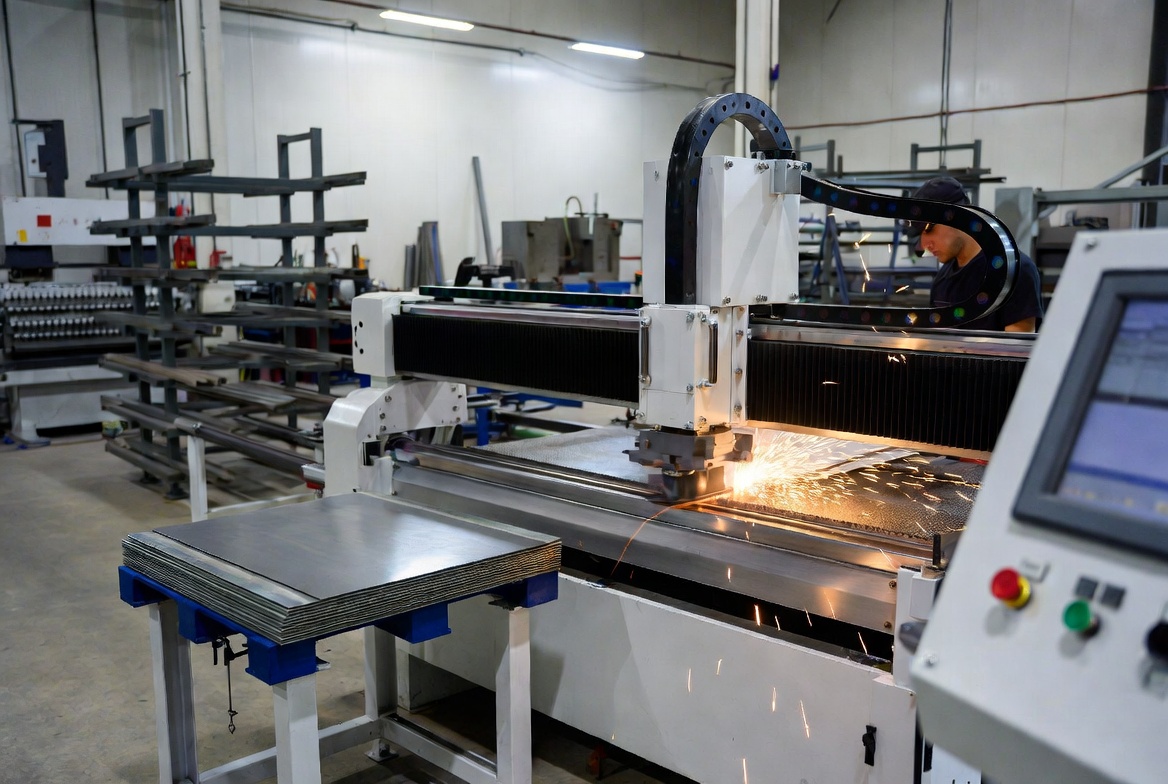
If you are an equipment brand, system integrator, or regional distributor, OEM/ODM manufacturing can significantly reduce your time-to-market. [euchio]
An experienced OEM/ODM partner can help you:
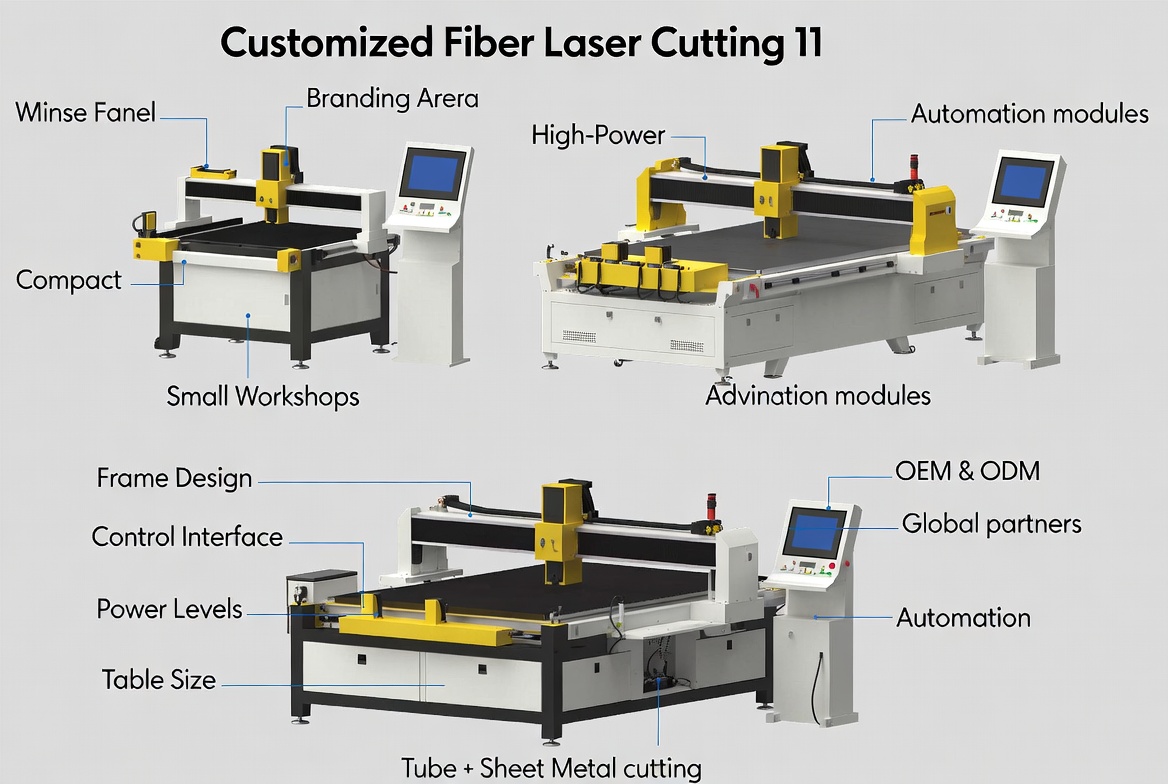
- Develop customized machine frames, covers, and control layouts to match your house style. [fortunelaser]
- Configure different power levels, table sizes, and automation packages for specific market segments. [euchio]
- Localize HMI language, electrical standards, and safety features for target countries. [euchio]
- Provide engineering, installation, and training support, both remotely and on-site, to ensure your end customers are successful. [fortunelaser]
For many brands, this approach combines strong local sales and service presence with the manufacturing expertise of a dedicated laser equipment producer, creating a win–win for end users. [fortunelaser]
Comparing LBM with other advanced processes helps clarify when to choose which technology.
- Laser uses concentrated light energy and works in air; electron beam machining needs a vacuum and uses electrons.
- Laser is more versatile across materials and thicknesses; electron beam is favored for specific welding and micro-machining tasks.
"Laser beam machining" is a broad term covering cutting, drilling, engraving, and surface modification. "Laser cutting" usually refers specifically to high-speed contour cutting of sheet or plate.
In practice, most shop-floor conversations about fiber laser cutting machines focus on sheet metal cutting capability, but the same platform can often support marking and piercing operations as well. [accurl]
Proper safety and process discipline are essential if you want 24/7 laser production.
- Protective equipment: Class-appropriate laser eyewear and interlocked machine enclosures.
- Operator training: Clear instructions for startup, shutdown, parameter changes, and emergency procedures.
- Preventive maintenance: Regular inspection of optics, nozzles, filters, and lubrication systems. [cn.laser-cutter-machine]
- Environment control: Stable temperature, clean power, and adequate dust/fume extraction.
These practices not only protect staff but also stabilize cut quality and extend machine lifespan, improving overall ROI. [hpclaser.co]
If you are looking to:
- Upgrade from mechanical or plasma cutting.
- Expand your product line with fiber laser cutting capability.
- Partner with an OEM/ODM manufacturer to bring your own laser cutting brand to market.
then now is the right time to evaluate a modern fiber laser cutting solution built on proven laser beam machining technology. [hncnclaser]
Reach out to an experienced laser equipment manufacturer with strong OEM/ODM capabilities to discuss your materials, part mix, target cycle times, and budget. With the right partner, you can transform LBM from a theoretical advantage into a real, measurable improvement in throughput, quality, and profitability. [euchio]

Q1: What is the main difference between laser beam machining and laser cutting?
A1: Laser beam machining is a broad term covering cutting, drilling, engraving, and surface treatment, while laser cutting refers specifically to contour cutting of sheet or plate materials.
Q2: Why are fiber laser cutting machines preferred for sheet metal?
A2: Fiber lasers offer high efficiency, excellent beam quality, long module life, and fast cutting speeds on metals, making them ideal for sheet metal fabrication. [hpclaser.co]
Q3: Can laser beam machining handle reflective materials like aluminum and copper?
A3: Yes, modern fiber lasers with appropriate wavelengths and process parameters can cut aluminum and copper, though they require careful setup due to reflectivity and heat conduction. [phillipscorp]
Q4: How precise is laser beam machining compared to conventional machining?
A4: LBM can achieve tolerances from ±0.1 mm for general work down to ±0.005 mm in ultra-precision applications, often equal or superior to many conventional cutting methods.
Q5: What should I look for in an OEM/ODM laser cutting machine partner?
A5: Focus on proven laser and motion technologies, strong application engineering, flexible customization options, and long-term after-sales service and training support. [fortunelaser]
1. ACCURL. "What is Laser Beam Machining: Process, Types & Methods."
https://www.accurl.com/blog/laser-beam-machining/
2. ACCURL. "Advantages of Fiber Laser Cutting: What are the 27 Benefits."
https://www.accurl.com/blog/fiber-laser-cutting-advantages/ [accurl]
3. ACCURL. "CNC Metal Laser Cutting Machine Parameters and Services."
https://cn.laser-cutter-machine.com/cnc-metal-laser-cutting-machine.html [cn.laser-cutter-machine]
4. Phillips. "Fiber Laser Cutting: Everything You Need to Know."
https://www.phillipscorp.com/india/fiber-laser-cutting-everything-you-need-to-know/ [phillipscorp]
5. HPC Laser. "Top 5 Benefits of Fibre Laser Cutting Machines."
https://hpclaser.co.uk/benefits-of-fiber-laser-cutters/ [hpclaser.co]
6. Euchio Machinery. "Laser Cutting Machines – OEM/ODM Solutions."
https://www.euchio.com/product-category/laser-cutting-machines/ [euchio]
7. Fortune Laser. "OEM/ODM Manufacturer Fiber Laser Cutting Machine Overview."
https://www.fortunelaser.com/oemodm-manufacturer-fiber-laser-cutting-machine-hs-code-high-precision-fiber-laser-cutting-machine/ [fortunelaser]
8. Machitech. "Emerging Trends for 2026 in the Metal Fabrication Industry."
https://machitech.com/emerging-trends-for-2026-in-the-metal-fabrication-industry [machitech]
9. HN CNC Laser. "The Future of Laser Cutting: Trends to Watch in 2026."
https://www.hncnclaser.com/the-future-of-laser-cutting-trends-to-watch-in-2026/ [hncnclaser]
10. LinkedIn. "Laser Machining Market Size: Segmentation & Trends 2026–2033."
https://www.linkedin.com/pulse/laser-machining-market-size-segmentation-trends-2026-2033-ggpvc [linkedin]


