


Views: 222 Author: CNDY-Press Publish Time: 2026-05-04 Origin: Site


When I first started working with fiber laser cutting machines in textile and light‑gauge applications, I quickly learned that fabric behaves very differently from metal—but the same core principles of power, speed, focus and stability still decide whether you get clean edges or a bin full of scrap. As demand for fast, customized production rises in fashion, automotive interiors and technical textiles, more manufacturers are turning to fabric laser cutting systems to stay competitive. [marketveep]
In this guide, I'll walk you through how fabric laser cutting works, which fabrics are suitable, how different laser types compare, and how to optimize your process for industrial‑grade quality and cost efficiency. I'll also share practical tips we use when configuring fiber laser cutting equipment for OEM and ODM customers who process both sheet metal and textiles on the same production floor. [bigmarketing]
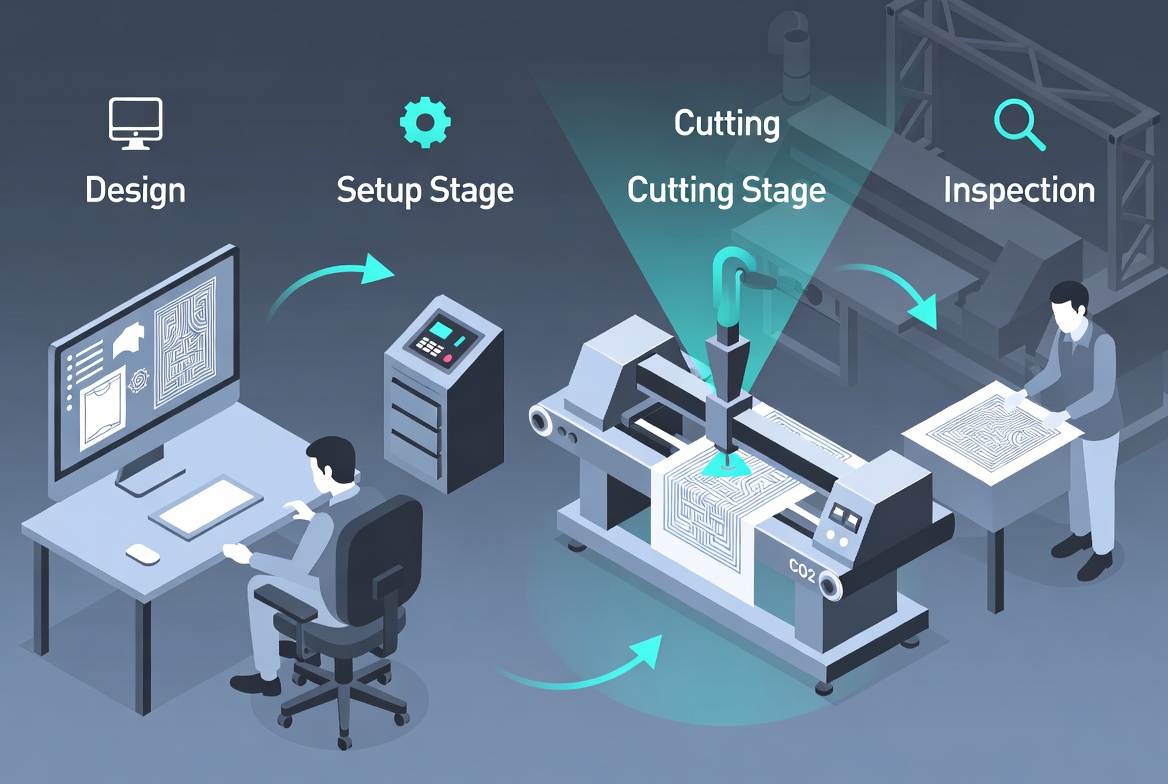
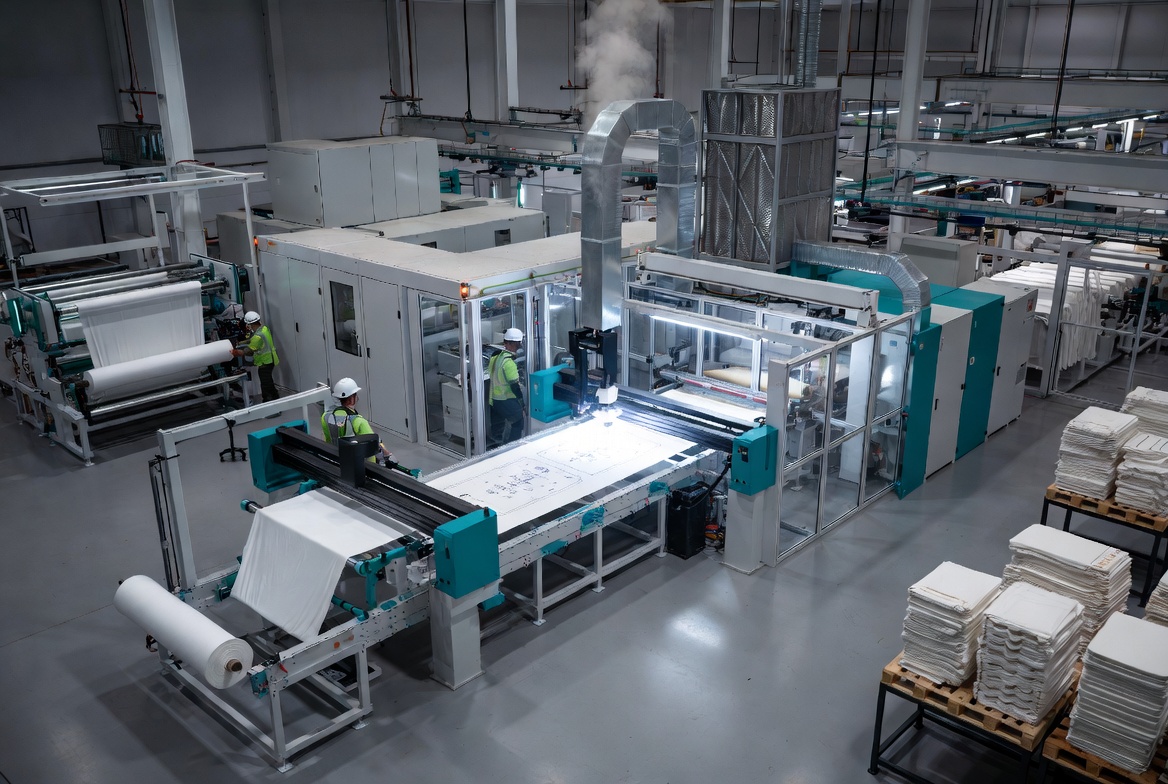
Fabric laser cutting uses a focused laser beam to melt or vaporize textile fibers along a programmed path, creating accurate cuts with clean, sealed edges. Unlike mechanical blades, the laser never touches the fabric, which greatly reduces distortion, tool wear and operator risk.
For manufacturers, this matters because:
- You can handle short runs and mass customization without changing tooling.
- Complex patterns and nested layouts become routine instead of difficult.
- Waste is reduced because each cut follows a precise digital file. [kirinlaser]
In markets where margins are thin and lead times are tight, this combination of precision, repeatability and flexibility is what makes fabric laser cutting a strategic capability rather than just another cutting method. [primafiberlaser]
Yes—you can reliably cut fabric with a laser, provided you match laser type and process settings to the fabric. Modern systems are widely used in fashion, sportswear, automotive interiors, medical textiles and home décor precisely because they deliver clean edges with minimal fraying on both natural and synthetic materials.
From a practical engineering standpoint, the key questions are:
- Does the fabric burn, melt or discolor at your chosen power and speed?
- Can your laser optics and motion system maintain a consistent focal distance over the full bed?
- Is your exhaust system strong enough to remove fumes from synthetic fabrics?
If you can answer "yes" to all three, a properly configured fiber or CO₂ laser cutting machine will outperform manual cutting and die‑cutting in both speed and accuracy for most textile applications. [kirinlaser]
At its core, fabric laser cutting is a closed‑loop interaction between design file, laser source and motion control. Here's how it works on the shop floor:
1. Digital design
A CAD or graphics file (DXF, AI, etc.) defines the cutting path and any engraving details.
2. Machine setup
The operator selects material presets or manually sets laser power, cutting speed, frequency and focus height based on fabric type and thickness. [primafiberlaser]
3. Beam–fabric interaction
A concentrated laser beam is positioned at the start of the path; as the head moves, the beam melts or vaporizes the textile along the programmed contour.
4. Edge sealing and finishing
For many synthetics, localized heat causes the fibers to melt slightly, sealing edges and significantly reducing fraying without secondary operations.
5. Process monitoring
Experienced operators watch for signs of burning, incomplete cuts or smoke buildup and adjust parameters in real time to stabilize quality.
This combination of software‑controlled motion and a precisely focused beam is what enables extremely detailed patterns and consistent batch‑to‑batch results. [primafiberlaser]
Most commonly used apparel and technical textiles can be laser cut, but they behave differently under heat. Below are the fabrics that typically perform best in production environments:
- Denim – Handles higher power; good for fashion and decorative elements.
- Linen – Burns cleanly and produces sharp edges for home décor or garments.
- Felt – Dense structure supports intricate shapes without losing stability.
- Satin and silk – Require fine tuning of power and speed to avoid heat marks.
- Polyester and fleece – Melt slightly, creating sealed, fray‑resistant edges; ideal for sportswear and outerwear.
- Cotton – Very popular due to its durability and predictable cutting behavior.
- Hardest: Leather
- Thick, dense and prone to charring if power is too high or speed too low.
- Requires careful parameter control and powerful extraction due to fumes.
- Easiest: Polyester
- Synthetic fibers melt and reseal, giving very clean, closed edges.
- Frequently used in performance sportswear, branding patches and flags.
From an OEM perspective, we always recommend small‑scale test cuts whenever you introduce a new fabric or supplier lot, as slight changes in coating, weave or finish can alter cutting behavior. [kirinlaser]
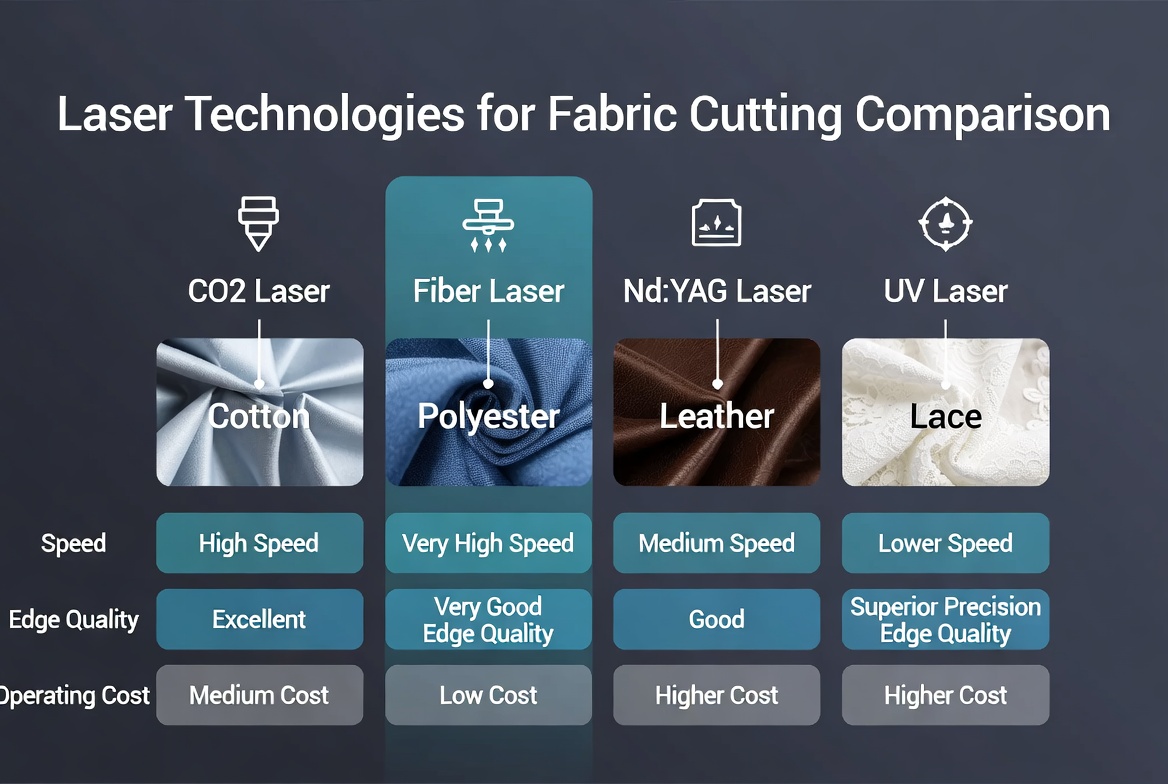
Different laser sources can be used to cut fabric, each with distinct strengths. Choosing the right one is critical if you want to balance throughput, quality and long‑term cost.
| Laser type | Best for fabrics | Key advantages | Typical use cases |
|---|---|---|---|
| CO₂ laser | Natural and synthetic textiles | Versatile, smooth edges, widely adopted | Apparel, décor, textile engraving |
| Fiber laser | Synthetic and technical textiles | High speed, excellent beam quality, low operating cost | Technical fabrics, labels, industrial textiles primafiberlaser |
| Nd / Nd:YAG | Tough, specialized textiles | High energy density for thicker or resistant materials | Aerospace, automotive technical textiles |
| UV laser | Very delicate, thin fabrics | Cooler cut, minimal heat‑affected zone | Lace, fine silk, high‑detail fashion elements |
CO₂ remains the most common fabric cutting technology today, but fiber laser systems are quickly gaining ground in synthetic and technical textile applications because of their efficiency and integration with modern CNC platforms. [primafiberlaser]
From a manufacturing engineer's standpoint, fabric laser cutting delivers several measurable benefits over traditional methods.
- High precision and repeatability
Complex shapes and micro‑details can be reproduced accurately across large batches with minimal variation. [primafiberlaser]
- Material savings
Nesting software allows patterns to be placed with minimal spacing, reducing off‑cut waste significantly. [kirinlaser]
- Edge quality and fraying control
The localized heat seals fabric edges, often eliminating secondary hemming or trimming on synthetics.
- Higher safety and lower physical strain
No exposed blades, less manual handling and an enclosed cutting area create a safer work environment.
- Productivity gains
Automated cutting and continuous roll‑feeding (on suitable systems) dramatically increase throughput compared to manual cutting tables.
For operations that already run fiber laser metal cutting machines, adding fabric laser capability can complement existing workflows and unlock new product lines—from branded textile accessories to interior components. [bigmarketing]
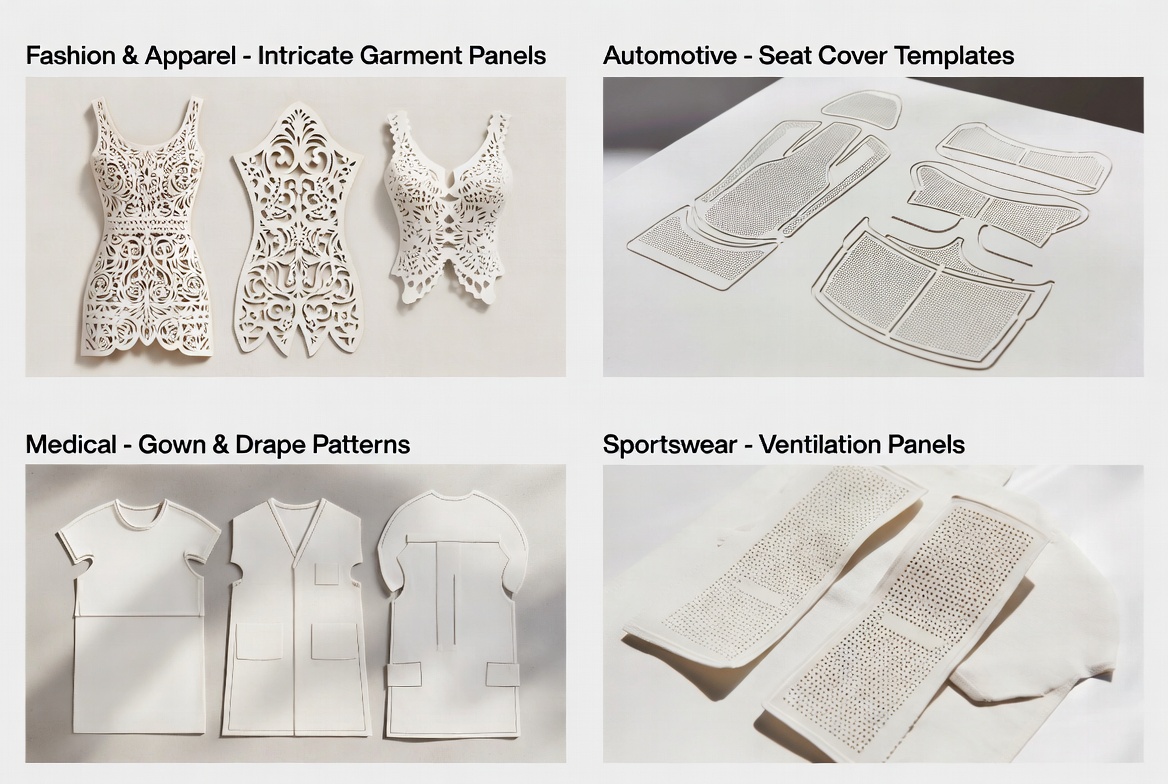
Fabric laser cutting is not just a lab technology; it is used every day in production environments across multiple sectors.
- Fashion and apparel – Intricate lace‑like patterns, branded cut‑outs and highly detailed garment pieces.
- Automotive – Seat covers, headliners, trunk liners and interior trim made from technical textiles.
- Medical – Disposable gowns, masks and technical textiles where clean, consistent edges are critical.
- Home décor – Curtains, upholstery, acoustic panels and custom decorative elements.
- Sportswear – Performance fabrics with ventilation patterns and logo cut‑outs.
- Crafts and personalization – Short‑run custom projects, patches and promotional items.
- Textile manufacturing – Large‑scale cutting for garments and technical textiles with tight tolerances.
In each case, the ability to move from digital design to finished cut parts without tooling changes is the biggest driver of ROI. [marketveep]
Selecting a fabric laser cutter is ultimately a question of aligning machine capabilities with your material mix and production goals. As a manufacturer and OEM/ODM partner, these are the factors we advise customers to evaluate first:
- Material compatibility
Confirm the machine can handle your primary fabrics—natural, synthetic or technical—and has presets or parameter libraries.
- Working area
Choose a bed large enough for your typical fabric size or roll width to avoid manual repositioning.
- Laser power
Higher wattage supports thicker or denser materials, while lower power is enough for light fabrics and reduces risk of scorching.
- Dual capability (cutting + engraving)
Engraving options unlock value‑added applications such as logos, serial numbers or decorative textures.
- Cooling and ventilation
A robust cooling system and exhaust fan are mandatory to maintain consistent performance and protect optics.
- Software and workflow integration
Look for compatibility with your CAD or pattern‑making tools and nesting software to streamline programming. [kirinlaser]
- Safety and compliance
Features like automatic shut‑off, interlocked doors and certified enclosures reduce risk and simplify training.
- Total cost of ownership
Beyond purchase price, consider power consumption, consumables and availability of local service and spare parts. [bigmarketing]
For manufacturers that already run fiber laser cutting machines for sheet metal, integrating a dedicated textile laser cutter—or a hybrid solution—often yields faster payback because your team already understands laser process fundamentals. [bigmarketing]
Even the best machine cannot compensate for poor preparation. Below is a field‑tested workflow we use when setting up new fabric jobs:
1. Select and test fabric
- Start with a small sample of the exact fabric from your supplier.
- Check for scorching, discoloration or uncontrolled melting during test cuts.
2. Pre‑treat the material
- Pre‑wash fabrics prone to shrinkage or heavy wrinkling.
- Iron or tension the fabric so it lies flat on the cutting bed.
3. Prepare the design file
- Clean up paths and ensure closed contours for cutting.
- Define separate layers or colors for cutting and engraving operations.
4. Set laser parameters
- Adjust power, speed, frequency and focus based on fabric type and thickness.
- Use test matrices to find the "sweet spot" instead of guessing. [kirinlaser]
5. Secure the fabric
- Smooth out wrinkles and use weights, vacuum or low‑tack adhesives to prevent movement.
6. Run small test cuts
- Test representative details: small holes, tight corners, long straight cuts.
- Inspect edge quality, accuracy and discoloration before scaling.
7. Monitor the first production run
- Observe cut quality, smoke extraction and any signs of contamination on the lens.
- Log the final parameters in a standard operating procedure for repeat runs. [wellows]
Laser cutting introduces specific safety considerations that must be built into your standard operating procedures. [wellows]
- Eye protection
Always use certified laser safety goggles for the wavelength of your laser, especially during open‑door maintenance.
- Ventilation and filtration
Many fabrics—particularly synthetics—release fumes and particulates; a dedicated exhaust or filtration system is required.
- Fire readiness
Keep a suitable fire extinguisher nearby and never leave the machine unattended when cutting flammable textiles.
- Electrical safety and grounding
Ensure proper grounding and regular inspection of power connections, especially on high‑power systems.
- Clean optics and work area
Dust and lint buildup on lenses or around the cutting bed increase the risk of flare‑ups and reduce cut quality.
- Emergency stops
Train operators to use emergency stop buttons instinctively and verify they are unobstructed before each shift.
Written procedures, logged inspections and clear operator training are all strong trust signals that support both plant safety and compliance with modern quality systems. [wellows]
Once your basic process is stable, the next step is optimization. From an operations point of view, small improvements in setup and maintenance can generate substantial productivity gains.
- Fine‑tune laser parameters per fabric
Delicate fabrics like silk run best with lower power and slower speed, while thick denim may require higher power at optimized speeds. [primafiberlaser]
- Improve fabric stability
Use vacuum beds, pin tables or adhesive mats to remove wrinkles and prevent micro‑shifts that cause dimensional errors.
- Maintain optics and optics path
Regular cleaning of lenses and mirrors ensures consistent power delivery and reduces burning marks.
- Optimize nesting and pattern layout
Nesting software can dramatically improve material utilization, especially for complex patterns and mixed‑size pieces. [kirinlaser]
- Schedule preventive maintenance
Plan inspections, calibrations and consumable replacement to avoid unplanned downtime during peak orders. [bigmarketing]
By recording settings, defects and corrective actions in a central log, your team can continuously refine standard recipes for each fabric and application—an important E‑E‑A‑T best practice for technical operations content. [quickcreator]
When customers evaluate a new laser system, the conversation inevitably turns to cost. The economics of fabric laser cutting can be broken down into three main components:
- Equipment investment
CO₂ and fiber laser systems vary in price depending on power, bed size and automation level, with fiber systems generally commanding a higher initial investment but lower long‑term operating cost. [bigmarketing]
- Operating expenses
Electricity, operator time, assist gases (if used), exhaust filtration and occasional parts replacement make up the bulk of running costs.
- Maintenance
Regular cleaning, calibration and replacement of consumables (like tubes or optics, depending on laser type) are needed to maintain performance.
Compared to traditional cutting or die‑cutting, laser cutting often becomes more cost‑effective over time because it reduces labor, material waste and tooling costs, especially on short runs or customized designs. While the initial purchase can be significant, manufacturers frequently recoup the investment through higher throughput and reduced rework. [kirinlaser]
If you are exploring fiber laser cutting solutions for fabric and sheet metal, our engineering team can help you select the right configuration, run test cuts on your materials and design a production‑ready workflow. Contact our specialists today to schedule a free application consultation and sample cutting session.
The optimal settings depend on fabric type and thickness, but most light fabrics cut well with low to medium power and moderate speed, while thicker textiles require higher power and adjusted speed. Always start with test cuts to dial in power, speed, frequency and focus for each new fabric batch. [primafiberlaser]
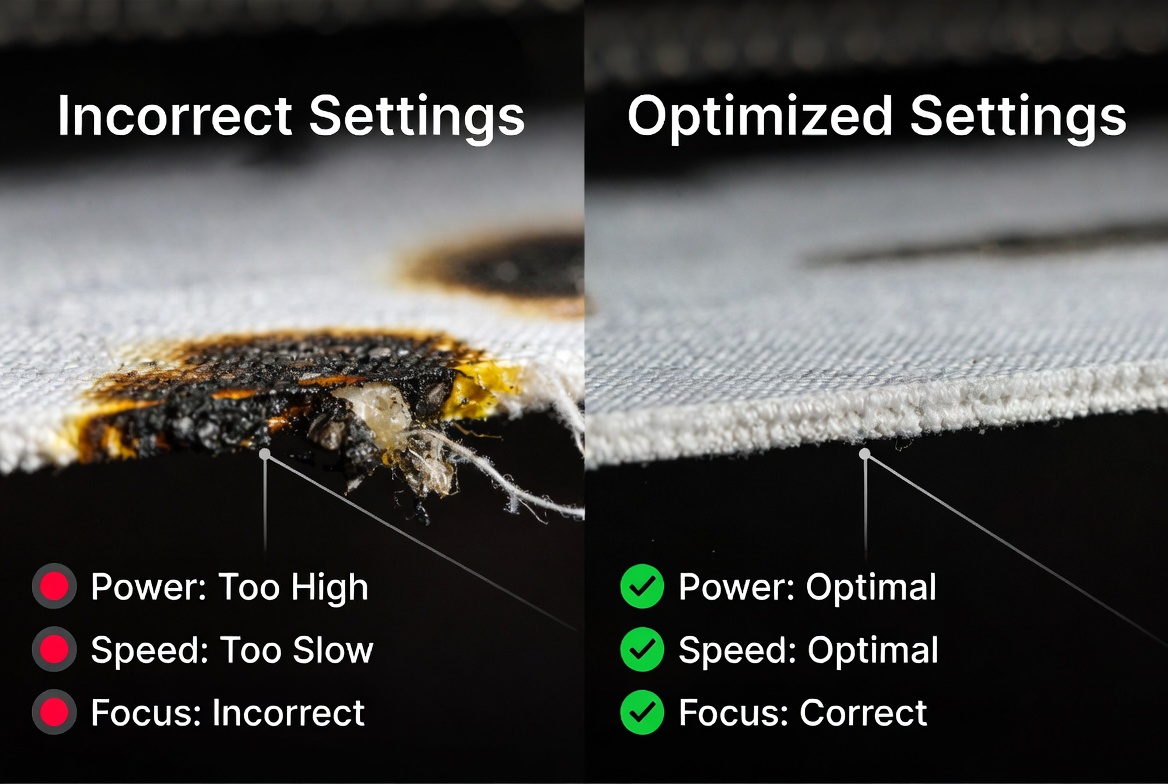
When parameters are properly set, laser cutting produces clean, sealed edges without significantly weakening the fabric structure. Problems such as burning, discoloration or stiff edges usually indicate excessive power, low speed or poor focus, all of which can be corrected through testing and parameter tuning. [kirinlaser]
Yes, fabric laser cutting is widely used in high‑volume textile manufacturing because it combines automation with rapid, repeatable cuts. With the right bed size, roll‑feeding system and nesting software, laser cutting can support both mass production and on‑demand customization in the same line. [marketveep]
Die‑cutting can be economical for very long, stable production runs with simple shapes, but it requires tool manufacturing and storage. Laser cutting removes tooling costs and significantly reduces scrap for complex or frequently changing designs, which often makes it more cost‑effective over the full product lifecycle. [bigmarketing]
Provide clean vector files with clearly separated layers for cutting and engraving, specify fabric type and thickness, and share any critical tolerances or edge‑quality requirements. If possible, include a small test area in your design so the operator can verify settings on your actual fabric before starting the full run. [kirinlaser]
1. ACCURL. "Fabric Laser Cutting: Process, Benefits and Optimization."
[https://www.accurl.com/blog/laser-cutting-fabric/]
2. QuickCreator. "E‑E‑A‑T for Technical Content: 2025 Best Practice Guide."
[https://quickcreator.io/blog/eeat-for-technical-content-2025-best-practice-guide/] [quickcreator]
3. Wellows. "E‑E‑A‑T Checklist for SEO: Strengthen Content with LLM."
[https://wellows.com/blog/e-e-a-t-checklist/] [wellows]
4. Kirin Laser. "How to Optimize Your File for Laser Cutting Projects."
[https://kirinlaser.com/how-to-optimize-your-file-for-laser-cutting-projects/] [kirinlaser]
5. Prima Fiber Laser. "Fiber Laser Cutting Settings: Tips for Optimal Performance."
[https://www.primafiberlaser.com/fiber-laser-cutting-settings-tips-for-optimal-performance/] [primafiberlaser]
6. BigMarketing. "Manufacturing SEO: 10 Proven Strategies for Top Rankings."
[https://bigmarketing.com/manufacturing-seo/] [bigmarketing]
7. MarketVeep. "4 Best Practices for Your Content SEO Strategy in Manufacturing."
[https://www.marketveep.com/blog/4-best-practices-for-your-content-seo-strategy-in-manufacturing] [marketveep]


