


Views: 251 Author: CNDY-Press Publish Time: 2026-10-07 Origin: Site


Content Menu
● Electric and Hydraulic Drive Basics
>> What Is a Small Electric Press Brake?
>> How Does a Hydraulic Press Brake Work?
● What Small Parts Actually Require
>> Bending Accuracy and Repeatability
>> Tonnage, Tooling, and Short Flanges
>> Productivity Beyond Ram Speed
>> Ergonomics, Footprint, and Safeguarding
● Energy, Maintenance, and Cost
>> Compare Energy per Accepted Part
>> Maintenance and Service Availability
>> An Illustrative Ownership Calculation
● Application Choices and Acceptance Testing
>> When a Small Electric Machine Fits
>> When Hydraulic Equipment Fits Better
>> A Practical Factory Acceptance Test
>> Specify OEM and ODM Requirements
● FAQ
>> 1. Is an Electric Press Brake More Accurate?
>> 2. Can a Hydraulic Press Brake Bend Small Parts?
>> 3. Is Servo Hydraulic the Same as All Electric?
>> 4. Which Machine Costs Less to Operate?
>> 5. How Much Tonnage Do Small Parts Need?
A small electric press brake is often the better starting point for repetitive, light-gauge sheet metal parts when its force, tooling, and working envelope fit the job. A hydraulic press brake is often more practical when the same workshop also processes thicker materials, longer bends, or a wider range of forming requirements.
Neither drive system guarantees better finished parts. For small brackets, electronic enclosures, and precision covers, the decisive factors often include tool access, backgauge capability, setup time, and safe handling.
My recommendation is to compare both machines using your actual drawings and production schedule, not maximum ram speed alone.
At CNDY-Press, our business covers the development, manufacturing, sales, and service of CNC press brakes and related sheet metal equipment. We also undertake OEM and ODM projects and customized manufacturing. The following guide explains how buyers can translate production needs into a machine specification.

Here, electric means an all-electric or servo-electric ram drive. Servo motors transmit force through mechanical systems such as screws or belts, depending on the design.
This is different from a servo-hydraulic machine, where an electric servo motor drives a pump but hydraulic cylinders still produce the bending force.
Compact servo-electric machines can suit repeated production of small components. AMADA's EG 4010, for example, is presented as an all-electric solution for small sheet metal parts using a Dual Servo Power drive.
That example demonstrates a real application, not a universal specification for every electric press brake.
A hydraulic press brake uses pressurized oil and cylinders to move the ram. CNC hydraulic machines may include synchronized axes, multi-axis backgauges, crowning, and angle measurement.
Do not equate hydraulic with outdated. Modern servo-hydraulic and demand-controlled systems can reduce idle energy use compared with conventional continuously running arrangements.
Bystronic, for example, describes demand-based drive control on its ByBend Smart platform. The appropriate comparison is between specified machines, not an efficient electric model and an unspecified older hydraulic machine.
| Buying factor | Small electric press brake | Hydraulic press brake |
|---|---|---|
| Best starting application | Repetitive small parts within rated capacity | Mixed work, including higher-force applications |
| Ram actuation | Servo motor with mechanical transmission | Hydraulic cylinders |
| Energy profile | Often favorable during light-duty and intermittent work | Depends strongly on pump and drive control |
| Precision potential | High with suitable controls and tooling | High with suitable controls and tooling |
| Maintenance focus | Transmission, lubrication, drives, and bearings | Oil, filtration, seals, valves, and drive components |
| Shop flexibility | Limited by the selected force and envelope | Broad capacity choices, subject to model |
| Main purchasing risk | Undersizing for difficult parts | Buying more capacity than daily work requires |
For small sheet metal parts, angle error and flange-length variation can affect assembly. However, ram positioning accuracy is not the same as finished-part accuracy.
Material thickness, tensile strength, grain direction, springback, tool condition, and blank consistency all influence the result. A very repeatable machine can repeatedly make the wrong angle if the program does not account for the material.
Ask suppliers to distinguish axis positioning specifications from demonstrated part tolerances. Evaluate the final bend after unloading, using an agreed measurement method.
Both electric and hydraulic CNC press brakes can be suitable for precision work. Neither drive label replaces evidence from representative parts.
A small part does not necessarily need little force. A short, thick stainless steel bracket can be more demanding than a longer thin-steel cover.
Determine force using the material, thickness, bend length, die opening, and bending method. Cincinnati's load calculator includes these variables and reports related flange and radius information.
WILA gives a general starting range of six to eight times sheet thickness for V-openings in air bending thin steel. This is a tooling guideline, not a universal rule for every alloy or geometry.
A narrow die opening may help accommodate shorter flanges, but it can increase force demand and affect the achievable radius. Check machine and tooling ratings before committing to that solution.
For each difficult part, verify:
- Required bending force and tool load limits.
- Minimum flange support for the selected die.
- Punch geometry and return-flange clearance.
- Access around the backgauge fingers.
- Collision-free bending sequence and part removal.
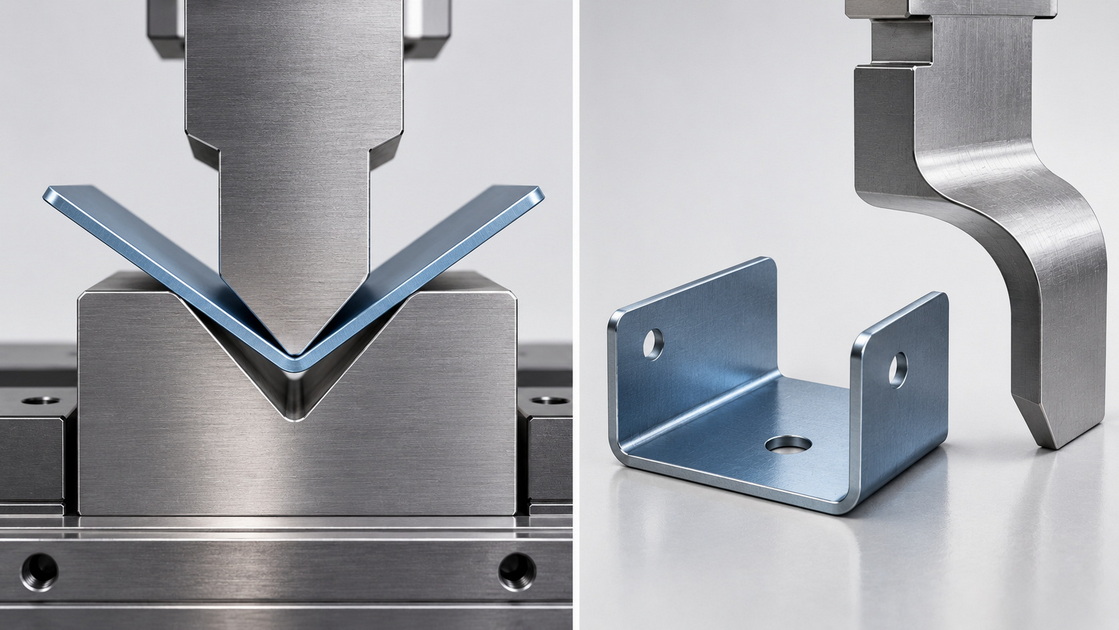
Fast approach and return movements can improve output when machine motion is a significant part of the cycle. They matter less when the operator spends most of the time orienting parts or changing tools.
Compare the full production sequence: loading, positioning, bending, rotating, checking, and unloading. Include first-piece adjustment and batch changeover.
A compact machine with convenient access may outperform a larger machine on small components. But a better backgauge, suitable tooling, or offline programming can also improve a hydraulic machine's productivity.
Measure acceptable parts per hour, not bends per minute alone.
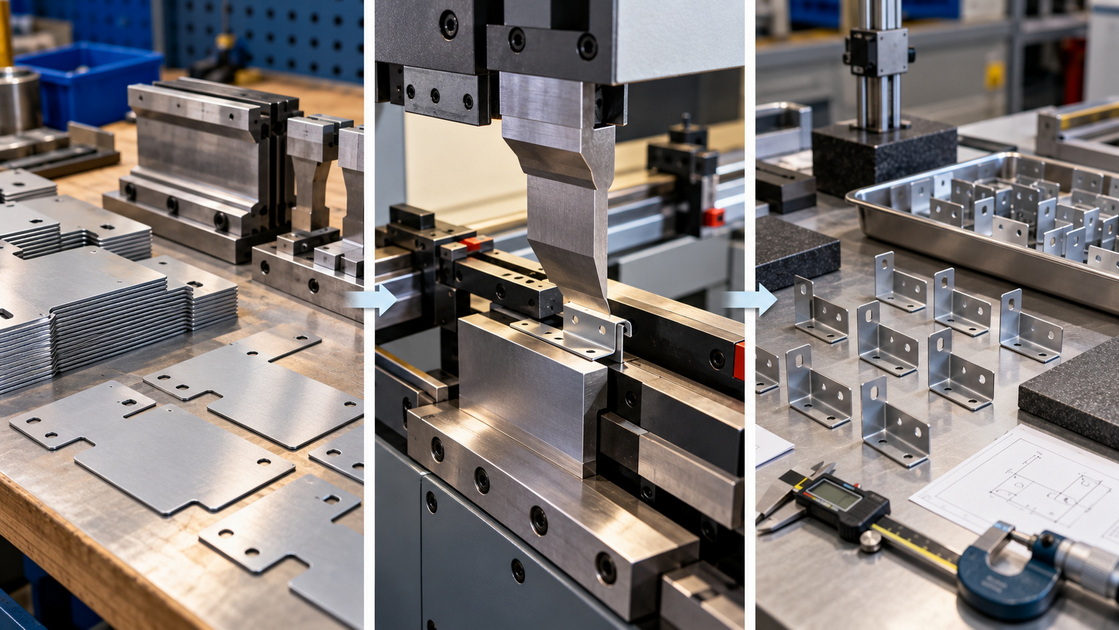
Small parts may place hands close to the tooling. Electric actuation does not remove crushing hazards, and a compact machine is not automatically safer.
OSHA identifies point-of-operation and other hazards for powered press brakes. Safeguarding must suit the machine, application, and applicable requirements.
Confirm that the intended tooling, workholding, and protective devices can process the smallest parts without bypassing safety functions. Have a qualified person assess the arrangement.
Also review operator access, lighting, part containers, maintenance clearance, and workflow. The installation footprint is larger than the machine's outline drawing.
A servo-electric ram does not need a conventional hydraulic power unit. This can make energy use attractive, particularly when compared with older hydraulic systems with substantial idle consumption.
However, controls, cooling, and auxiliary equipment still consume electricity. Modern demand-controlled hydraulic systems can narrow the difference.
Use a defined test period that includes production and realistic idle time. Compare kilowatt-hours per accepted part under the same material, tooling, part program, and quality criteria.
Avoid estimating electricity cost from motor nameplate power multiplied by operating hours. Rated power does not describe the complete duty cycle.
All-electric does not mean maintenance-free. Mechanical transmissions, lubrication points, bearings, servo drives, and electrical connections require attention according to the manufacturer's instructions.
Hydraulic machines add maintenance related to fluid condition, filtration, seals, and hydraulic components. Actual intervals depend on the equipment and operating conditions.
Ask for preventive maintenance schedules, critical spare-parts lists, troubleshooting arrangements, and local service availability. A machine with lower routine maintenance expense can still be costly if a specialized component has a long replacement lead time.
Include operator training and diagnostic support in the purchase discussion.
Suppose an electric option costs $12,000 more than a comparable hydraulic option. Assume testing indicates savings of 2 kW in average electrical demand over 2,000 annual hours.
At $0.15 per kWh, the assumed annual electricity saving is $600. If demonstrated maintenance savings add another $400, the combined saving is $1,000 per year.
On those assumptions, simple payback is 12 years, before financing, downtime, resale value, or production benefits.
These numbers are illustrative, not CNDY-Press prices or measured machine results. A productivity improvement could shorten payback, but only if the saved time has commercial value.
The lesson is straightforward: electricity savings alone may not justify a purchase premium. Compare cost per accepted part and the capacity needed for future work.
Consider servo-electric equipment when your workload mainly consists of thin-sheet brackets, covers, and other compact parts within its verified capacity.
It becomes particularly attractive when recurring batches make short handling cycles, convenient access, and predictable motion valuable. Check that the chosen backgauge can locate your shortest flanges reliably.
For cosmetic parts, evaluate tooling marks and surface protection as carefully as dimensional accuracy. Drive type alone does not prevent marking.
Consider hydraulic equipment when small parts share the schedule with thicker brackets, longer components, or higher-force forming operations.
A suitably specified hydraulic CNC press brake may avoid splitting jobs between machines or outsourcing difficult work. However, extra capacity does not automatically increase output on delicate small parts.
For high-mix workshops, prioritize tooling compatibility, quick setup, useful axis travel, service support, and sufficient force. Compare modern servo-hydraulic options where appropriate.
Instead of requesting a generic bending demonstration, send three representative drawings: your highest-volume part, your tightest-tolerance part, and your most demanding part for force or clearance.
Agree on the following procedure before testing:
1. Use production-representative material and document its grade and thickness.
2. Record tooling, die opening, program, and machine configuration.
3. Measure setup time and first-piece adjustment separately.
4. Produce consecutive parts and inspect agreed dimensions and angles.
5. Test the difficult sequence for interference and safe handling.
6. Record full-cycle time, energy use, and rejected parts where practical.
7. Document acceptance limits, corrective actions, and retest conditions.
An illustrative trial might use 30 consecutive parts, but that is not a certification standard or a statistically complete capability study. The required sample size depends on production risk and your quality plan.
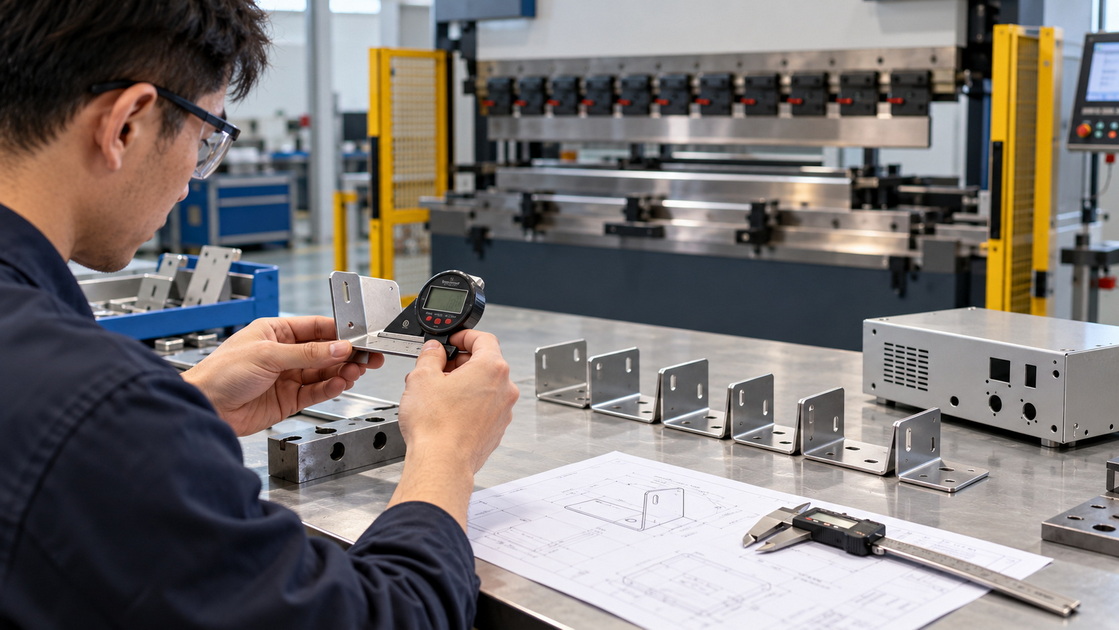
For customized procurement, give CNDY-Press a part-family summary rather than only a desired tonnage. Include materials, thickness range, bend lengths, shortest flanges, tolerances, batch sizes, and shift patterns.
Also identify installation power, available space, tooling preferences, controller requirements, and destination-market compliance needs.
Discuss the proposed drive configuration and available customization before treating an option as confirmed. Final specifications should define scope, documentation, acceptance testing, training, warranty, and service responsibilities.
Not automatically. Both technologies can produce accurate parts. Compare finished-part results, measurement conditions, tooling, controls, and material variation rather than assuming one drive system guarantees tighter tolerances.
Yes, when suitable tooling, backgauge positioning, operator access, and safeguarding are provided. An oversized machine may be inconvenient, but hydraulic actuation itself does not prevent small-part bending.
No. Servo-hydraulic equipment still uses hydraulic cylinders for ram force. All-electric equipment transmits ram force mechanically from electric motors. Clarify this distinction when reviewing supplier quotations.
It depends on duty cycle, energy demand, maintenance, output, and downtime. Measure cost per accepted part. Lower electricity use is helpful, but it is only one component of ownership cost.
Calculate it for the specific material, thickness, bend length, die opening, and bending method. Small overall dimensions do not prove low force demand, especially with thick material or narrow dies.
1. AMADA AMERICA. ["EG 4010 All-Electric Press Brake."]
Manufacturer information supporting the use of compact all-electric equipment for small sheet metal components and describing the Dual Servo Power drive system. Product-specific information should not be generalized to all electric press brakes. [amada]
2. Power & Motion. ["Servo-Driven vs. Hydraulic Press Brakes: Comparing Their Capabilities and Use Cases."]
Published June 22, 2026. Discusses mechanical servo actuation, hydraulic cylinder actuation, application differences, and energy considerations. Conventional hydraulic energy descriptions must be distinguished from modern demand-controlled systems. [powermotiontech]
3. Bystronic. ["ByBend Smart."]
Manufacturer information describing demand-based drive control and energy-saving features. Supports distinguishing modern hydraulic drive arrangements from continuously running conventional systems. [bystronic]
4. WILA. ["V-Opening."]
Tooling guidance covering V-opening selection, the general six-to-eight-times-thickness starting range for thin-steel air bending, and the relationship between die opening and minimum leg length. [wilatooling]
5. Cincinnati Incorporated. ["Press Brake Tonnage Load Calculator."]
Supports calculating bending loads using material, thickness, bend length, and die opening, with related information on flange length and inside bend radius. [e-ci]
6. The Fabricator. ["The Rules of Press Brake Tool Selection."]
Explains practical relationships among die opening, flange length, material thickness, and tool selection. These guidelines require application-specific verification. [thefabricator]
7. American Machine Tools. ["Press Brake Tonnage Chart."]
Provides air-bending load guidance and explains how wider die openings affect force, minimum flange length, and bend radius. [americanmachinetools]
8. Occupational Safety and Health Administration. ["Powered Press Brakes."]
Identifies point-of-operation, workpiece movement, and other hazards associated with powered press brakes, together with safeguarding considerations. [osha]
9. Occupational Safety and Health Administration. ["Guidelines for Point of Operation Guarding of Power Press Brakes."]
Provides US enforcement guidance on press brake safeguarding. It does not replace an application-specific risk assessment or the requirements applicable in the installation market. [osha]


